


Ukraine launched one of its largest long-range drone attacks of the war overnight into June 26, reportedly sending more than 660 drones against targets across Russia and occupied Crimea. Russian officials claimed more than 700 drones were intercepted across multiple regions, while Ukrainian officials highlighted successful strikes against industrial and military targets. Beyond the immediate damage, the operation illustrates how inexpensive, mass-produced drones are reshaping strategic calculations—even against sophisticated air defense networks.
A Massive Attack on Russia from Ukraine
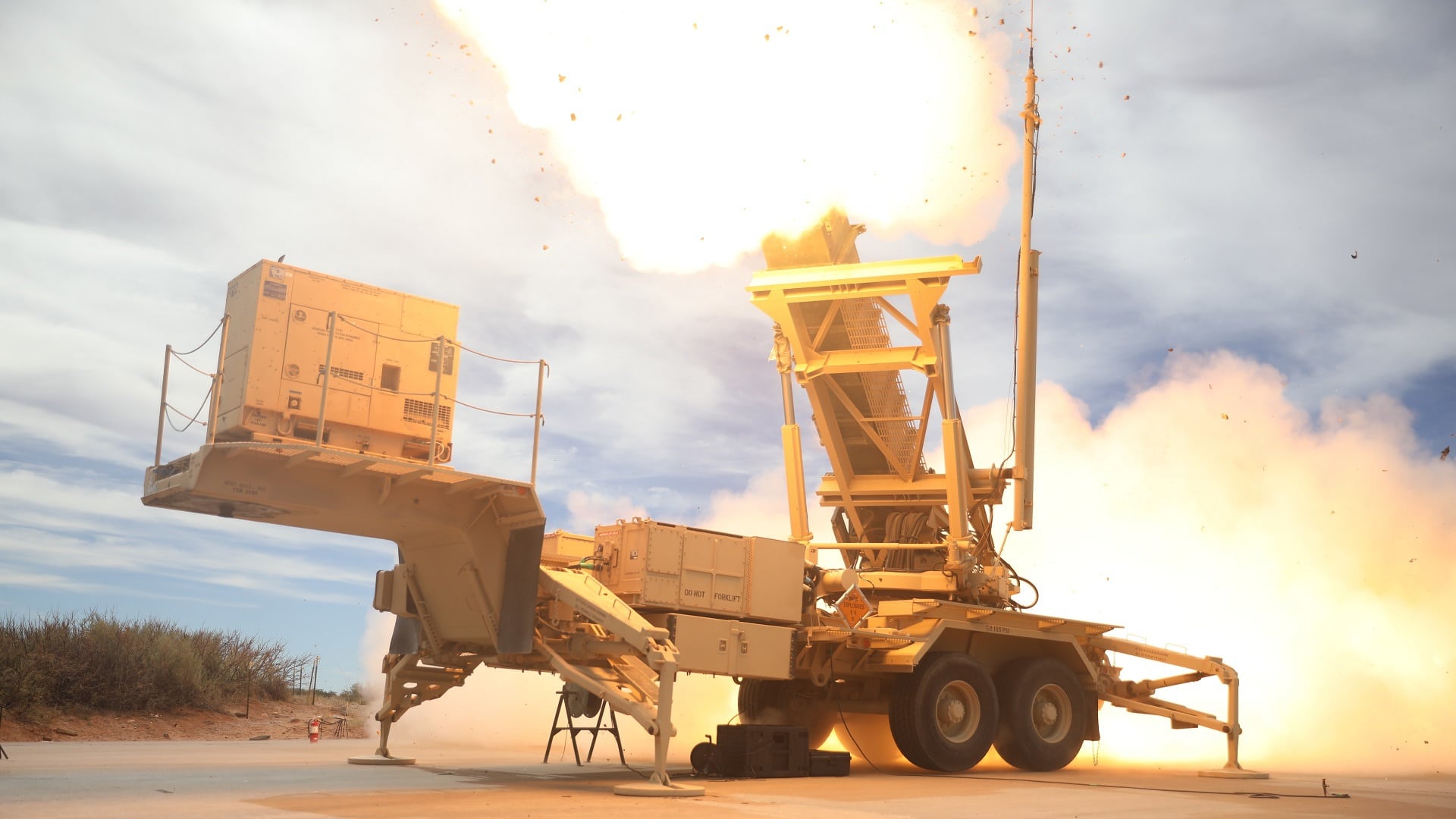
Patriot Missile. Image Credit: Creative Commons.
The scale of the attack was possibly unprecedented, clearly one of the largest since the war began. Ukraine attacked multiple Russian locations simultaneously, rather than concentrating on one objective. Russia was forced to intercept hundreds of drones at Moscow, Crimea, and other interior industrial sites. The breadth of the Ukrainian attack seems intentionally designed to stretch Russian defensive resources and force Russia to make difficult choices across a wide geographic area.
Key targets included the Azot chemical plant in the Tula region. Ukrainian strikes reportedly ignited fires at the Azot chemical complex, an important producer of ammonia and nitrogen-based chemicals.
Such facilities can have both civilian and military significance; chemical feedstocks support the production of explosives and fertilizer manufacturing. Increasingly, Ukraine has been targeting Russia’s industrial infrastructure.
Other targets of the attack included Crimea, the Kerch area, naval infrastructure, military logistics, air defense assets, and military airfields. Russian authorities reportedly declared emergency measures following repeated attacks.
The Ukrainian Tactics
Rather than rely on expensive cruise missiles, Ukraine is deploying domestically produced long-range drones, with layers of strike drones, decoys, and recon platforms intended to complicate Russian defensive decision-making.
The general tactical sequence is as follows: an initial drone wave forces Russian radars to activate; then, Russian air defenses begin engaging numerous targets simultaneously; then, Ukrainian follow-on strike drones are deployed to exploit gaps created by Russia’s saturated air defenses, while multiple attacks across a wide geography prevent Russian defenders from concentrating their defensive resources.
The scale of the attack is important. The overwhelming numbers create a resource-management problem. Russian air defenses aren’t just forced to intercept drones, missiles, and aircraft; they’re also forced to make choices about what to intercept.

Iskander-M. Image Credit: Creative Commons.
Every engagement consumes missiles, radar time, operator attention, and reload capacity.
Large drone swarms seek to overload those finite resources rather than overpower any single system, such as a sophisticated cruise missile or fighter jet. Accordingly, cheap drones, produced at scale, are changing the calculus of warfare.
Difficult Defensive Choices
The swarm attacks are putting Russia in a tough spot.
It cannot perfectly defend Moscow, Crimea, the front line, every piece of industrial infrastructure in the country, military airfields, and logistics hubs all at once.
Every additional protected site requires additional radar coverage, interceptor missiles, and mobile air defense batteries. Defending everything simultaneously is roughly impossible, forcing tradeoffs.
Ukraine, cleverly, has recognized this and expanded its target set. Rather than focusing exclusively on tactical battlefield targets like tanks and artillery, Ukraine has increasingly emphasized refineries, fuel depots, ammunition infrastructure, transportation hubs, chemical production, and military logistics. The objective is to gradually reduce Russia’s capacity to sustain military operations, not just destroy front-line equipment.
Strategic Implications
Ukraine’s latest attack reinforces multiple developments. First, Russia’s geographic depth is less important than it once was. Infrastructure located hundreds of miles behind the front is now being attacked.
Second, affordable mass is increasingly challenging expensive defensive systems. This has been clear in Ukraine and Iran. Defenders must often spend significantly more resources intercepting drones than attackers spend producing them. Another example is the US expense of interceptor missiles to counter cheap Iranian drone swarms.
Third, in the war in Ukraine, industrial resilience is becoming as important as battlefield performance. Wars are fought not just against soldiers on the front but against production capacity, transportation networks, and energy infrastructure.
If the pattern continues, which is likely, Russia may need to devote additional air defense resources to protecting domestic infrastructure.
So expect Ukraine to continue emphasizing deep strikes that impose economic and military costs on Russia.
About the Author: Harrison Kass
Harrison Kass is a writer and attorney focused on national security, technology, and political culture. His work has appeared in Tablet, City Journal, The Hill, The Spectator, and The Cipher Brief. He holds a JD from the University of Oregon and a master’s in Global & Joint Program Studies from NYU. More at harrisonkass.com.


