


Growing Ukrainian Drone Strikes Overwhelm Russian Air Defenses: Ukraine is overwhelming Russia’s air defenses with a growing fleet of long-range drones that target oil and gas refineries, port infrastructure, military industries, and Russian air defense systems.
This growing campaign, which Ukrainian President Zelenskyy refers to as “Ukraine’s long-range sanctions,” is leading to shortages of fuel in Russia, rationing in gas stations, surging gas prices, and the now common images of black smoke clouds over parts of the country that thought the war in Ukraine was far away.
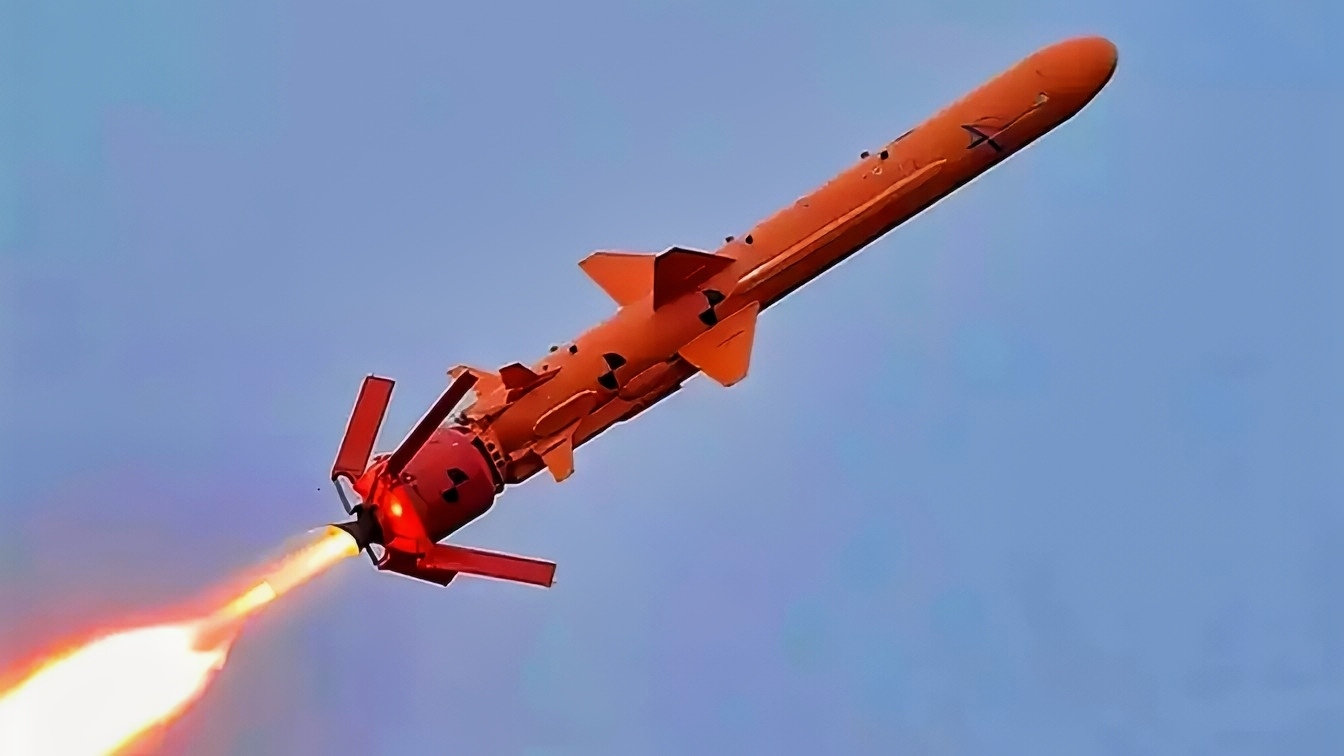
Ukraine Cruise Missile Ministry of Defense Photo
Ukrainian drone attacks have cut about 25 percent of Russia’s oil refining capacity, hitting 8 of the country’s 10 biggest refineries since March. The large Gazprom refinery in Moscow was set on fire, and analysts believe it will take more than six months to restore it to operation.
The IEA reported that as of late June, 55 of Russia’s 83 oblasts (regions) were reporting fuel restrictions.
Attacks in Crimea have isolated and completely disrupted Russian attempts at fuel resupply, causing long lines at gas stations, fuel shortages, rationing, and bottlenecks in the Army’s operational logistics chain.
Ukraine’s Drone Production Soaring
Ukrainian drone production is set to exceed 8 million in 2026, up from 4 million in 2025 and 2.2 million in 2024. Long-range strikes are reaching deep into Russia, hitting key military and energy targets and exposing the Kremlin’s vulnerabilities.
Ukraine has rapidly built a massive domestic drone manufacturing sector, scaling output from just a few thousand imported systems in 2022 to an annual production capacity of over 8 million FPV (first-person view) drones and 4 million units of other types (reconnaissance, loitering munitions, and heavy bombers).
Over 500 companies currently manufacture drones in Ukraine, with the private sector accounting for roughly 90 percent of all FPV output.
Russia’s Air Defenses Are Struggling To Protect Its Airspace
As we wrote here recently, Russia’s vast size, historically an advantage for the country’s defense, is now working against it.
For hundreds of years, Russia’s enormous size has been widely regarded as the country’s greatest asset. From Napoleon Bonaparte and Adolf Hitler to a long line of invaders, only to see their armies swallowed up by its vastness.
Ukraine has flipped the script with a strategic drone and missile campaign that aims to exploit Russia’s immensity and transform it from a key strength into a fatal weakness. Russia’s immense size makes it difficult to defend.
“Russian air defenses have to cover a 1,200-kilometer front line, as well as a vast territory where infrastructure is located,” Michael Kofman, a military analyst, said to the WSJ for their article.
Former Ukrainian air defense officer Valerii Romanenko pointed out that a Pantsir air defense missile and gun system can engage no more than four targets simultaneously, and an early wave of drones during an attack helps identify the locations of Russian air defense systems, allowing subsequent drones to find a route through.
Russian systems, including the Pantsir-S1, were designed to counter classic, large-scale attackers such as cruise missiles. However, the best air defense systems are layered to offer protection at various altitudes and ranges.
Russia’s air defense systems are now more of a patchwork.
Ukraine’s Growing Sophistication And Intelligence Integration
However, these latest drone and missile attacks in Moscow and in Crimea indicate that the Ukrainian military has found and is taking advantage of weaknesses in Russia’s air defense systems.
Their drone and missile strikes have been evolving from attacking Russian front-line troop concentrations to conducting strikes deep inside Russia itself and occupied Crimea.
The attacks on Russia’s oil and gas infrastructure have taken a definite toll on the economy. Now, these attacks on Russia’s space communication centers indicate Kyiv’s growing intelligence and target-interdiction capabilities, employing excellent route planning and outstanding preparation.
But Russian air defenses are shooting. down upwards of 90 percent of drones sent in the attacks.
But the massive numbers of them overwhelm the air defenses in Russia, and the decision to pull back some of the air defenses to protect Moscow and Crimea is a double-edged sword, leaving their troops in the Donbas more unprotected against drone attacks.
But the United States should be taking copious notes about what is happening in Russia and Crimea. Because what has happened there can definitely happen against American infrastructure as well when swarms of drones are released against it. As the Iranian attack on the US naval base in Bahrain demonstrated.
Anatoliy Khrapchynskyi, a Ukrainian aviation expert and former air force officer, said, “Russia has fallen into the trap of the very ‘math of war’ it once tried to impose.”
That is, by trying to overwhelm Ukrainian air defenses with S-300 strikes, Russia drained its own stockpiles of interceptor missiles.
About the Author: Steve Balestrieri
Steve Balestrieri is a National Security Columnist. He served as a US Army Special Forces NCO and Warrant Officer. In addition to writing on defense, he covers the NFL for PatsFans.com and is a member of the Pro Football Writers of America (PFWA). His work was regularly featured in many military publications


