

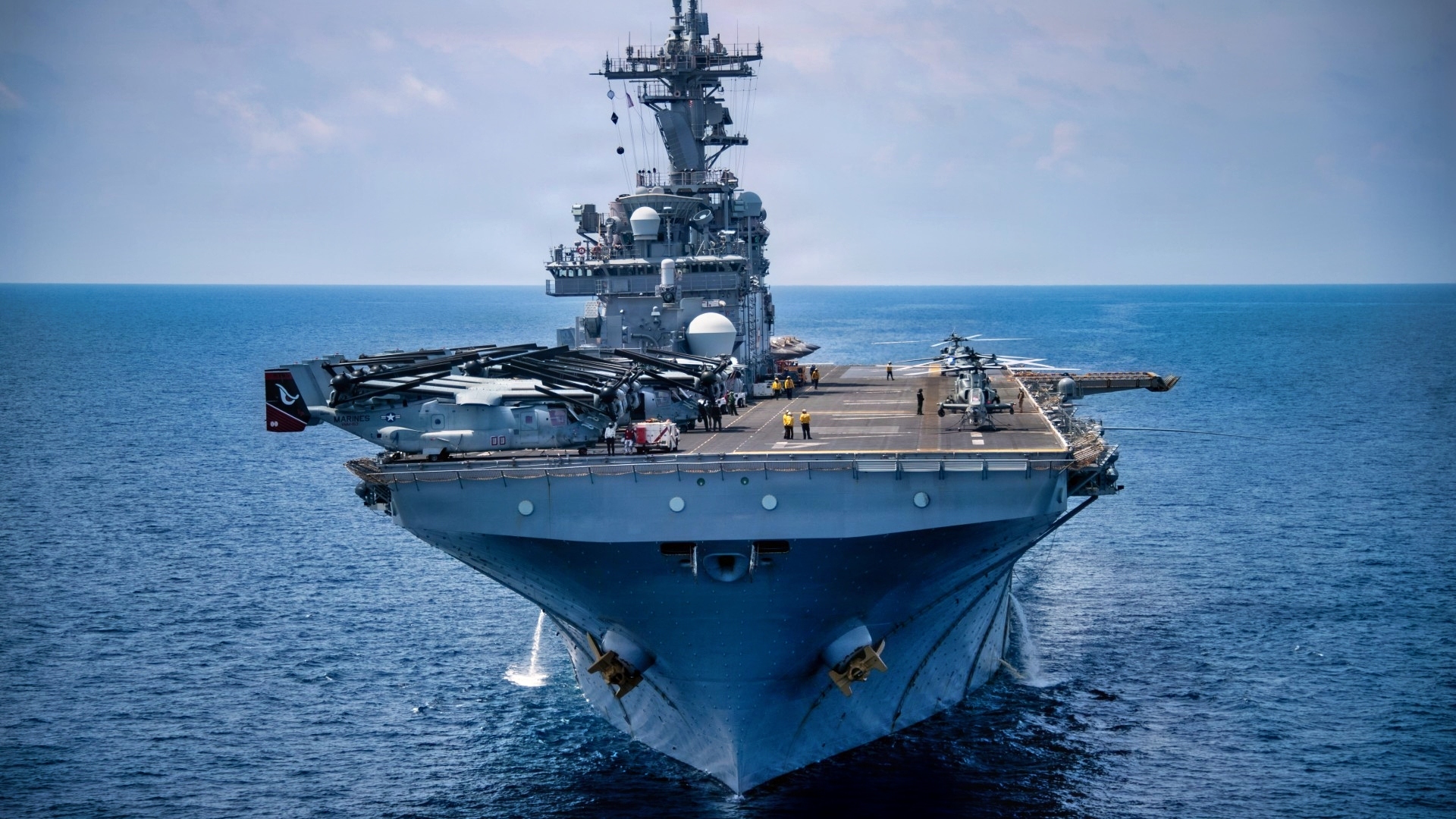
The worst of the oil shock looks like it is passing. The interim deal between the United States and Iran has begun reopening the Strait of Hormuz, tanker traffic is climbing back, and crude prices have fallen to their lowest levels since before the war.
The danger is what the United States spent to reach this point.
The Strategic Petroleum Reserve, the country’s main cushion against exactly this kind of disruption, now sits at its lowest level in more than four decades, drained steadily through the crisis.
With the reopening only partial and far from secure, America has very little margin left if the strait closes again.
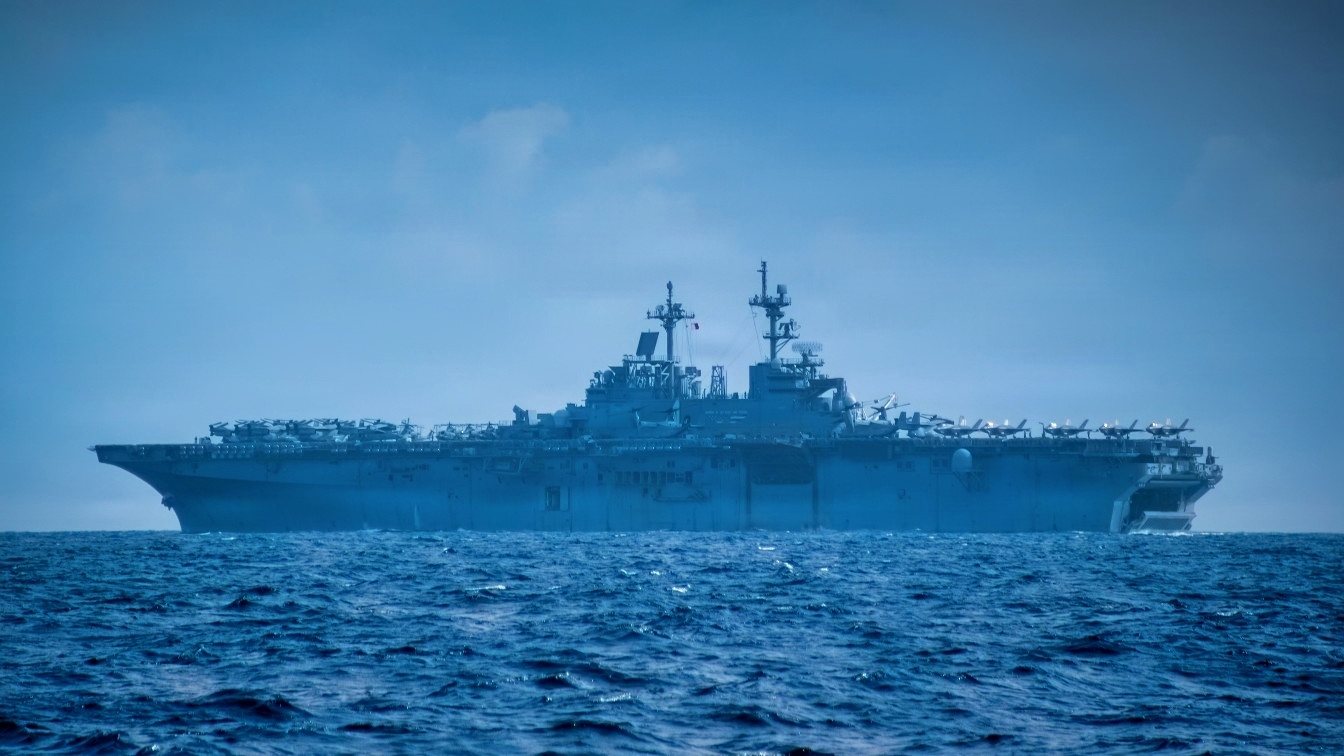
Wasp-class amphibious assault ship USS Boxer (LHD 4) transits the South China Sea, June 4, 2026. Boxer, flagship of the Boxer Amphibious Ready Group, is underway with the 11th Marine Expeditionary Unit in the U.S. 7th Fleet area of operations. U.S. 7th Fleet, the Navy’s largest forward-deployed numbered fleet, routinely interacts and operates with allies and partners to preserve a free and open Indo-Pacific (U.S. Navy photo by Mass Communication Specialist Seaman Eliora Sims)
A Partial And Fragile Reopening in the Strait of Hormuz
The strait is reopening, but it is a process rather than a switch, and the price relief reflects it.
Brent crude settled at $71.99 a barrel and US West Texas Intermediate at $69.23 in late June, the first time WTI had closed below $70 since February 27, the day before the war began.
The drop came as tankers resumed moving through the waterway, lifting Gulf flows from a May low of around 9.6 million barrels a day back to roughly 12 million barrels a day, according to the International Energy Agency, with exports recovering to about three-quarters of prewar levels and Saudi Arabia loading tankers again at its Ras Tanura terminal.
The calm is thin. The central deep-water channel remains closed, with dozens of sea mines still to clear in an operation expected to take weeks, and traffic is moving only because vessels hug the Omani coast.
The fragility was on display in late June, when a cargo ship was attacked off Oman, an assault a US official attributed to Iran, even as Iran’s Revolutionary Guard warned against any unauthorized crossings of the strait.
A single incident in those waters is enough to move the market, which is the clearest sign that the relief rests on a deal only days old and a passage that is still partly mined.
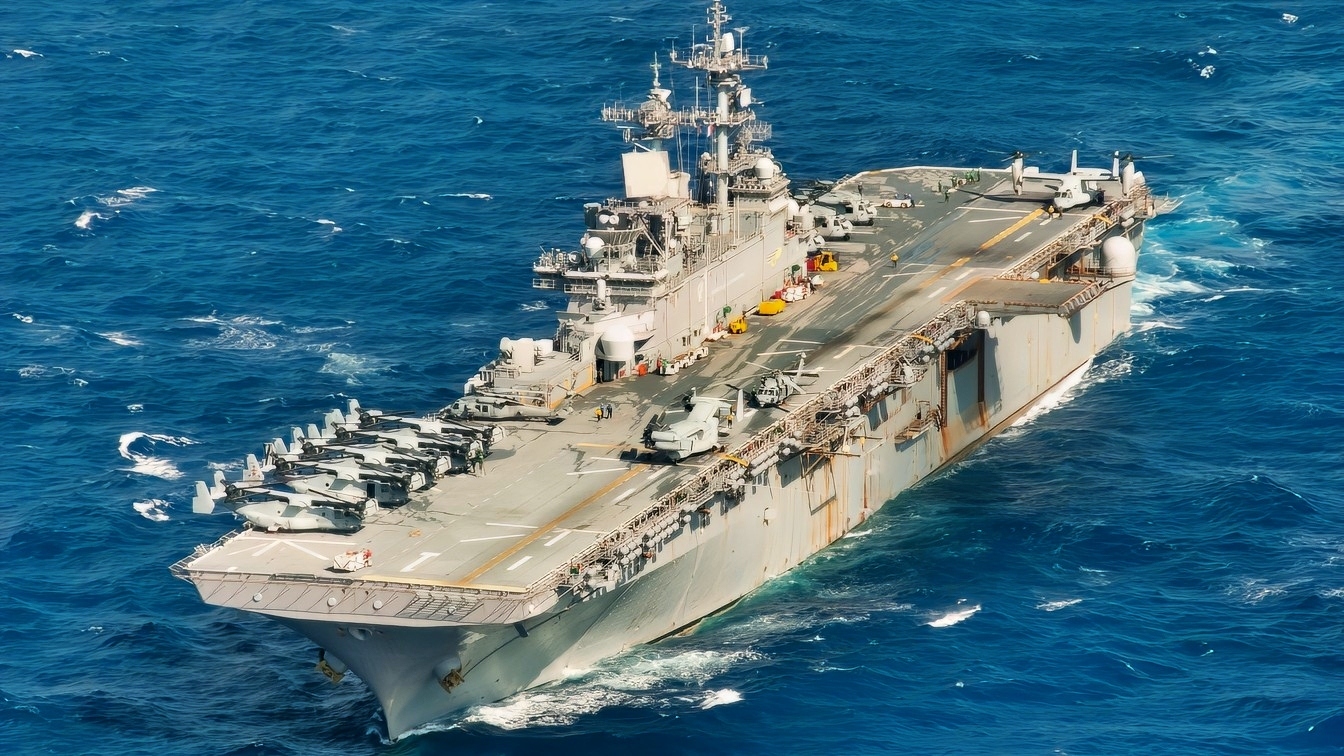
The amphibious assault ship USS Wasp (LHD 1) sails in the Philippine Sea Aug. 26, 2018 during a Passing Exercise (PASSEX) with the Japan Maritime Self Defense Force. PASSEX enabled the Wasp ARG and the JMSDF to practice communications and maneuvering procedures. The Wasp Amphibious Ready Group is currently operating in the region to enhance interoperability with partners and serve as a ready-response force for any type of contingency. (U.S. Navy photo by Mass Communication Specialist 3rd Class Taylor King)
The Reserve Is At A Four-Decade Low
The cushion America would normally rely on has been heavily depleted. As of the latest weekly data, the Strategic Petroleum Reserve held 331.2 million barrels, lower than the 2023 low reached during the Biden administration’s large drawdown and the lowest level in over four decades, leaving it close to 394 million barrels short of full capacity.
The reserve was already reduced before this crisis, and it was tapped further to ease the strain, part of the steep US stock releases the IEA credits, alongside rising American production, which helped push extra crude toward markets east of Suez during the war.
The commercial side thinned at the same time. Private crude inventories outside the reserve fell by roughly 53 million barrels over ten weeks, with draws from the SPR used in part to slow that decline.
The result is a country that has spent down both its emergency stockpile and its commercial buffer to get through the disruption, which is exactly why a relapse would be hard to absorb.
Why The Shock Absorbers Are Limited
The reason a reserve matters so much is that the alternatives are slow and partly out of reach. The world’s spare production capacity, the idle output that could replace lost barrels, sits mostly with Saudi Arabia and the United Arab Emirates, and the IEA notes that bringing it fully online can take up to 90 days.
Much of that capacity also sits inside the Gulf, dependent on the same strait that would be the problem, so it cannot simply be routed around a closure. The bypass pipelines that exist, the Saudi line to the Red Sea and the Emirati line to Fujairah, can carry only a fraction of Hormuz’s volume.
The cartel that would normally manage a shortfall is also fraying. The United Arab Emirates left OPEC in May, and Iraq has reportedly threatened to follow suit unless it receives a higher production quota, complicating any orderly effort to pump more in a crisis.
The scale of what moves through Hormuz explains the stakes: roughly 20 percent of the world’s oil, in a closure the IEA has called the largest supply disruption in the history of the oil market.
What A Stalled Reopening Would Cost
A reversal would land on an unusually exposed system. The World Bank has estimated that if hostilities re-escalate or Gulf flows face lasting impediments, average Brent prices in 2026 could run $95 to $115 a barrel, roughly 10 to 35 percent above its baseline, and the Bank notes that emergency reserves and limited output increases only partly cushioned the shock while global inventories fell sharply.
With the US reserve at a four-decade low and commercial stocks down, Washington would have far less ability to blunt a price spike than a year ago, and a sustained jump in crude feeds straight into gasoline prices, transport costs, and inflation.
That is the concrete case for why the United States pushed so hard to get the strait fully open and kept naval forces in the region. The buffer is largely spent, and rebuilding the reserve will take years.
The outlook is not uniformly grim, and the argument does not rest on catastrophe.
The months of high prices have already destroyed some demand, especially in price-sensitive economies in Asia and Africa, and producers in the Americas have raised output to fill part of the gap, so supply and demand do not need the Gulf to be fully restored to balance. The mines are being cleared, flows are rising, and the deal has held so far.
The risk is asymmetric rather than certain. If the reopening proceeds, prices will likely continue to ease, and the reserve can be slowly refilled.
If it stalls, through a breakdown in talks, another strike in the strait, or a return to mining, the United States would face a renewed shock with its emergency tank closer to empty than it has been in two generations, and that thin margin is the strongest argument for keeping Hormuz open.
About the Author: Harry J. Kazianis
Harry J. Kazianis (@Grecianformula) was the former Senior Director of National Security Affairs at the Center for the National Interest (CFTNI), a foreign policy think tank founded by Richard Nixon based in Washington, DC. Harry has over a decade of experience in think tanks and national security publishing. His ideas have been published in the NY Times, The Washington Post, The Wall Street Journal, CNN, and many other outlets worldwide. He has held positions at CSIS, the Heritage Foundation, the University of Nottingham, and several other institutions related to national security research and studies. He is the former Executive Editor of the National Interest and the Diplomat. He holds a Master’s degree focusing on international affairs from Harvard University.


