

Reporting about the 60-day Memorandum of Understanding (MoU) signed between the Trump administration and the leadership of the Islamic Republic of Iran is convoluted, and people globally are confused. That’s because the Israelis keep bombing targets in Southern Lebanon and insist the MoU does not bind them.
Plus, the Americans released the terms of the MoU on social media, which did not align with what the Iranian leadership was telling the world that they agreed to. One of the biggest points of concern for the whole world was whether the Strait of Hormuz would be reopened toll-free.

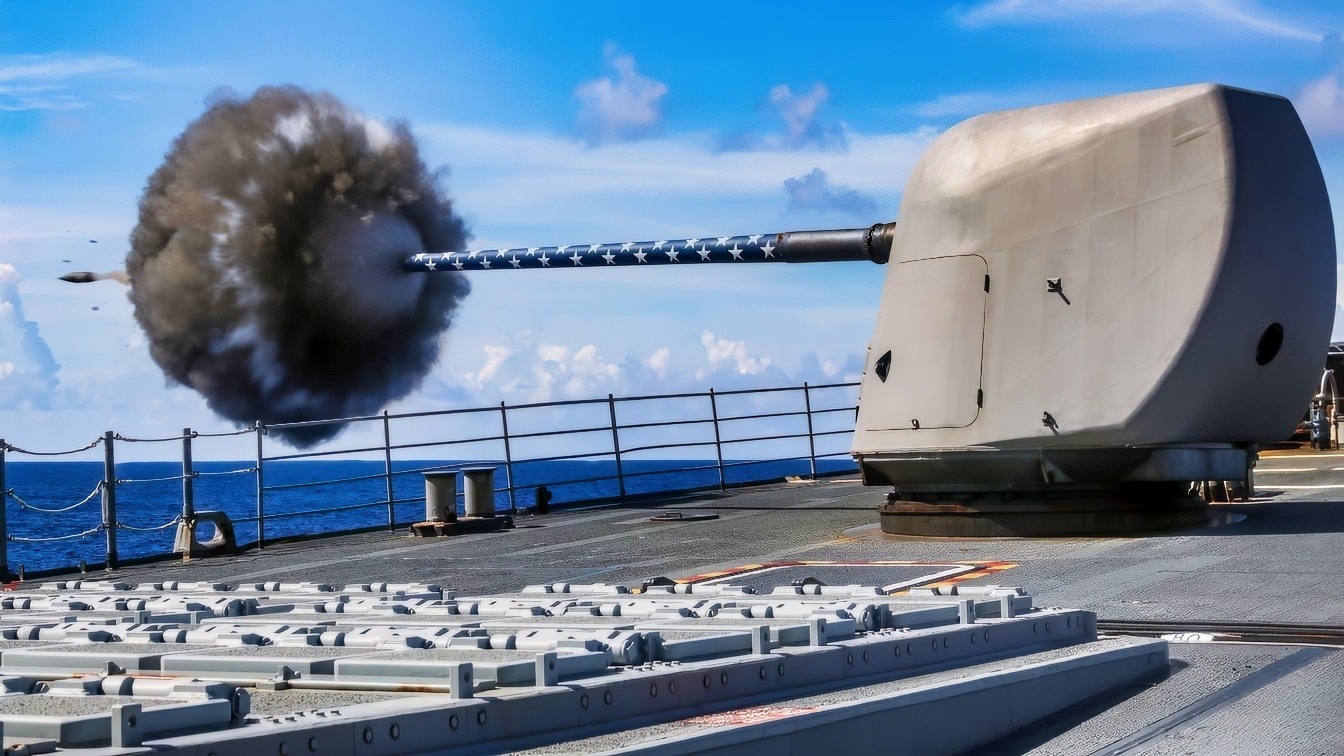
(Aug. 22, 2023) Gunner’s Mate 2nd Class Chase Allen maintains the barrel of a Mark 45 5-inch light-weight gun on the fo’c’sle of the Arleigh Burke-class guided-missile destroyer USS Paul Hamilton (DDG 60) in the Pacific Ocean, Aug. 22, 2023. Paul Hamilton is deployed to the U.S. 3rd Fleet area of operations. (U.S. Navy photo by Mass Communication Specialist 2nd Class Elliot Schaudt)
Iran’s Temporary Reopening of Hormuz
Currently, it appears that the Iranians are allowing some ships to pass through the blockaded Strait of Hormuz. But there is a caveat.
The Iranians claim that they will allow ships to pass through the Strait toll-free for the next 60 days. After that, Tehran has made it clear that it intends to divide management of the Strait between itself and its Omani neighbors.
In other words, Iran will establish a toll system that all ships intending to utilize the Strait must pay.
Here’s what no one seems to understand either in the White House or elsewhere in the West: the war is not over.
In fact, multiple Israeli accounts and pro-war advocates in the United States claim that the war will continue, with Israel taking action against suspected Iranian proxies in Lebanon and possibly elsewhere.
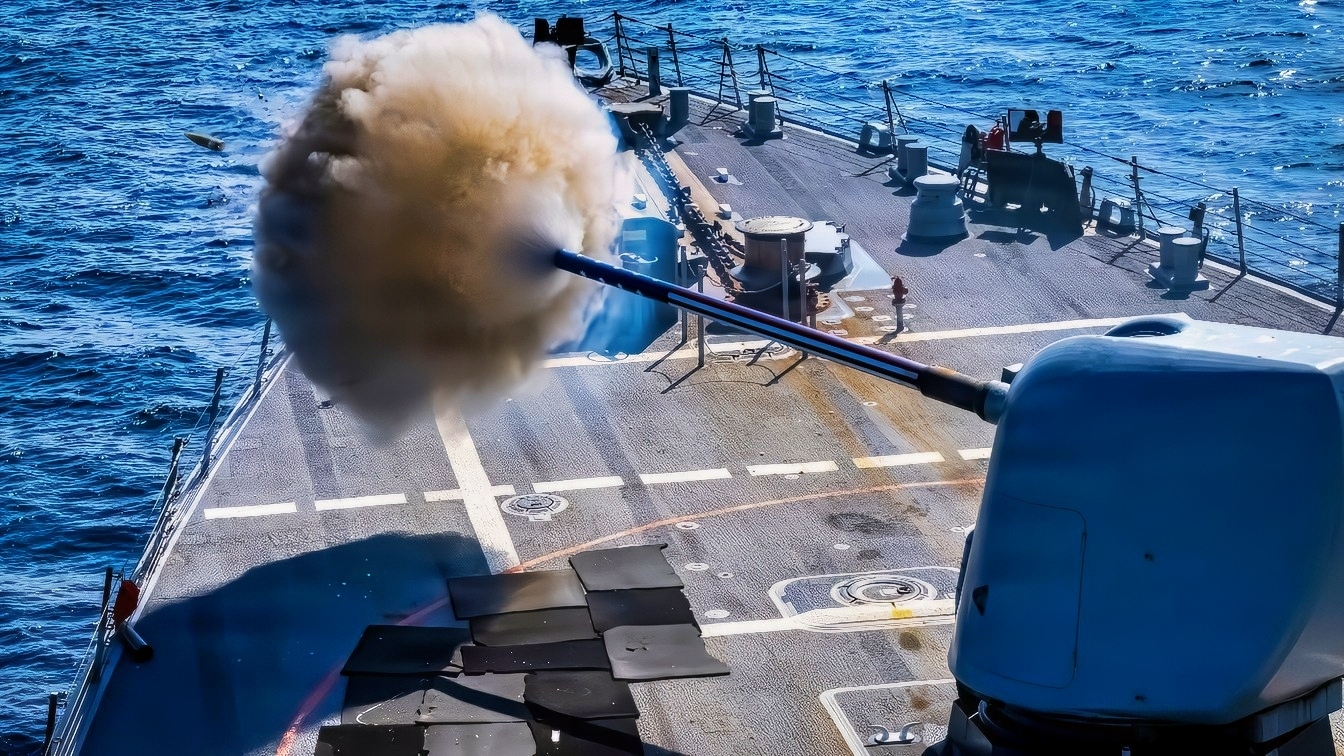
PACIFIC OCEAN (April 27, 2026) U.S. Navy Arleigh Burke-Class guided-missile destroyer USS John Paul Jones (DDG) 53, fires its Mk.45 5-inch deck cannon during a live fire exercise, April 27, 2026. John Paul Jones, part of the Theodore Roosevelt Carrier Strike Group, is underway in the U.S. 3rd Fleet area of operation conducting advanced training to bolster strike group readiness and capability. (U.S. Navy photo by Mass Communications Specialist 2nd Class Ryan Holloway)
What the MoU was supposed to do was buy time and space to allow for otherwise intractable US and Iranian negotiators to work out a real, lasting peace deal.
It was meant to give the two sides space to have a real conclusion to the ongoing impasse as to whether Iran should have nuclear technology or not.
Tehran’s Real Objective
Tehran has been very clear about what it will and will not do under the dictates of the MoU.
One of the primary elements of the MoU, aside from the fact that Tehran expects Israel to restrain itself over the next 60 days, is that Tehran believes the Strait of Hormuz is their territorial waters.
Iranian representatives argue their regime never ratified the United Nations Convention on the Law of the Sea (UNCLOS) and are, therefore, “persistent objectors” to the tenets of that law.
Tehran instead prefers to split control of the Strait of Hormuz between itself and Oman. With that control over the vital waterway, Tehran intends to levy fees on ships using it.
The Traffic Separation Scheme
Washington continues to delude itself with presidential tweets and Truth Social posts claiming the Strait is fully reopened, just as it was before the war began. That is simply false.
The Iranians have temporarily reopened the Strait of Hormuz to a limited number of ships that have been waiting for permission to leave.
Those ships, according to foreign press reports, are allowed to leave the Strait of Hormuz only with their goods if they follow Iran’s “Traffic Separation Scheme” (TSS), created during the recent war with the United States and unilaterally imposed on the Strait by Tehran.
From De Facto to De Jure Control
That move, by the way, is the first of many steps toward Iran shifting from de facto control of the Strait of Hormuz to de jure control. The Trump administration understood this.
They knew that this was what the Iranians always intended. It was the only way that Washington would get its desperately needed ceasefire with Iran.
Yet, the Trump administration continues to mislead the world by claiming not only that everything in the Strait is restored to the way it was before the war, but also that it will always be this way.
In fact, even if the MoU survives the next week under constant Israeli pressure, it will last only 60 days. And within that framework, the Iranians have 30 of those 60 days to reopen the Strait of Hormuz. In that time, the Iranians are clearly exercising control over the Strait through their new TSS protocols.
Iran’s parliament has already declared that the Strait will never return to being the purely open waterway it was before the war. They will resume hostilities if they don’t get that concession, even as peace negotiations are supposed to proceed after the 60-day MoU expires.
A Ceasefire Built on an Unresolved Dispute Leads to Only One Place
So, if the Trump administration wants to end the war, if they want to restore some semblance of global energy, trade, and agricultural flows through the contested Strait of Hormuz without risking a wider, longer, costlier war, then Washington will have no choice but to capitulate to this permanent Iranian demand.
If they do that, there will be a permanent realignment of all international waterways, as nations sitting astride the other key transit chokepoints see the massive wealth Iran makes off its tolling system and start wanting to do the same.
Here is yet another reason to believe that the MoU is fleeting and that peace will never be achieved between the United States and the Islamic Republic.
About the Author: Brandon J. Weichert
Brandon J. Weichert is the Senior National Security Editor at 19FortyFive.com. He also manages The Weichert Brief on Substack. Weichert also hosts “National Security Talk” on Rumble. He is the author of four bestselling national security books, the most recent of which is A Disaster of Our Own Making: How the West Lost Ukraine (Encounter Books). Follow him via Twitter/X @WeTheBrandon.


