

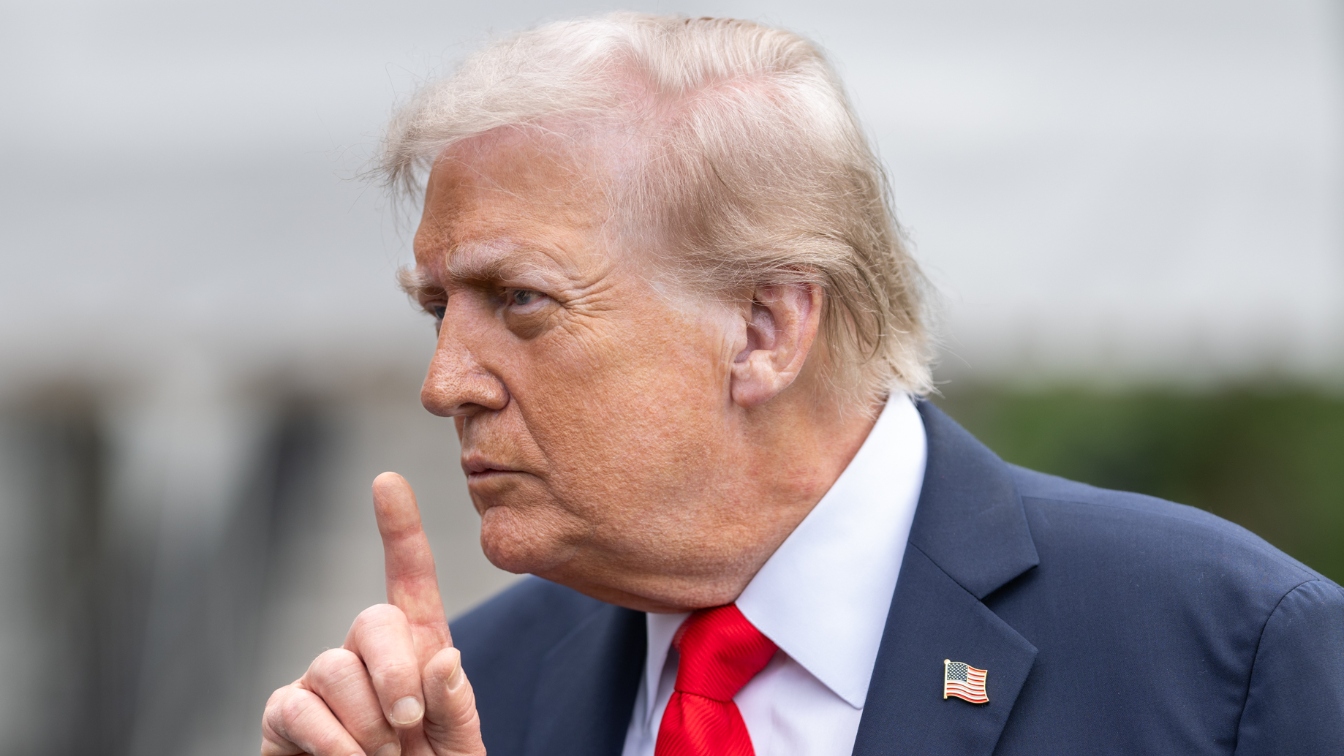
Are the ceasefire and peace framework with Iran dead? It is looking more and more like this is the case. President Donald Trump has even been given options by his national security team to resume all-out warfare against Iran.
While he has considered going the violent route, Trump has decided to give negotiations a chance for now.
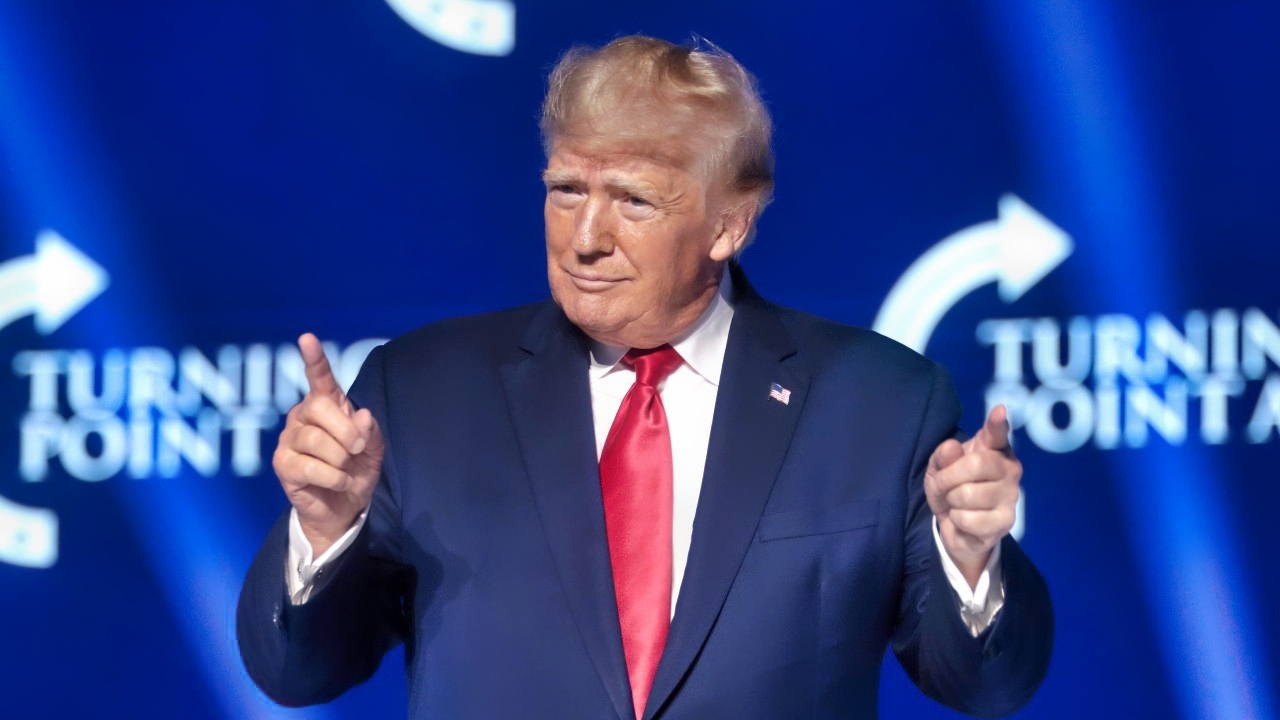
Donald Trump at Turning Points USA. Image by Gage Skidmore.
Secretary of Defense Pete Hegseth has reportedly briefed the president on a new war plan even though the two countries are supposed to keep the peace and talk it out for the next six to seven weeks.
Iran War: A Robust Attack Could Come Soon
Chairman of the Joint Chiefs of Staff General Dan Caine is also looking at resuming war operations against Tehran. The onus for deep military planning would fall on U.S. Central Command, which could include resuming air strikes using aircraft, missiles, and drones.
Marines and Paratroopers Are On Standby
There does not seem to be a political appetite for ground troops to attack Iran, but there are members of the U.S. Marine Corps and paratroopers from the U.S. Army in the theater.
Time to ‘Finish the Job’
The mood in the White House is urgent, and the support for more combat is split between hawks and doves. Some members of Trump’s inner circle favor the U.S. military “finishing the job.” It is not clear if this would consist of attacks on energy infrastructure, civilian targets, or more bombing of nuclear sites.
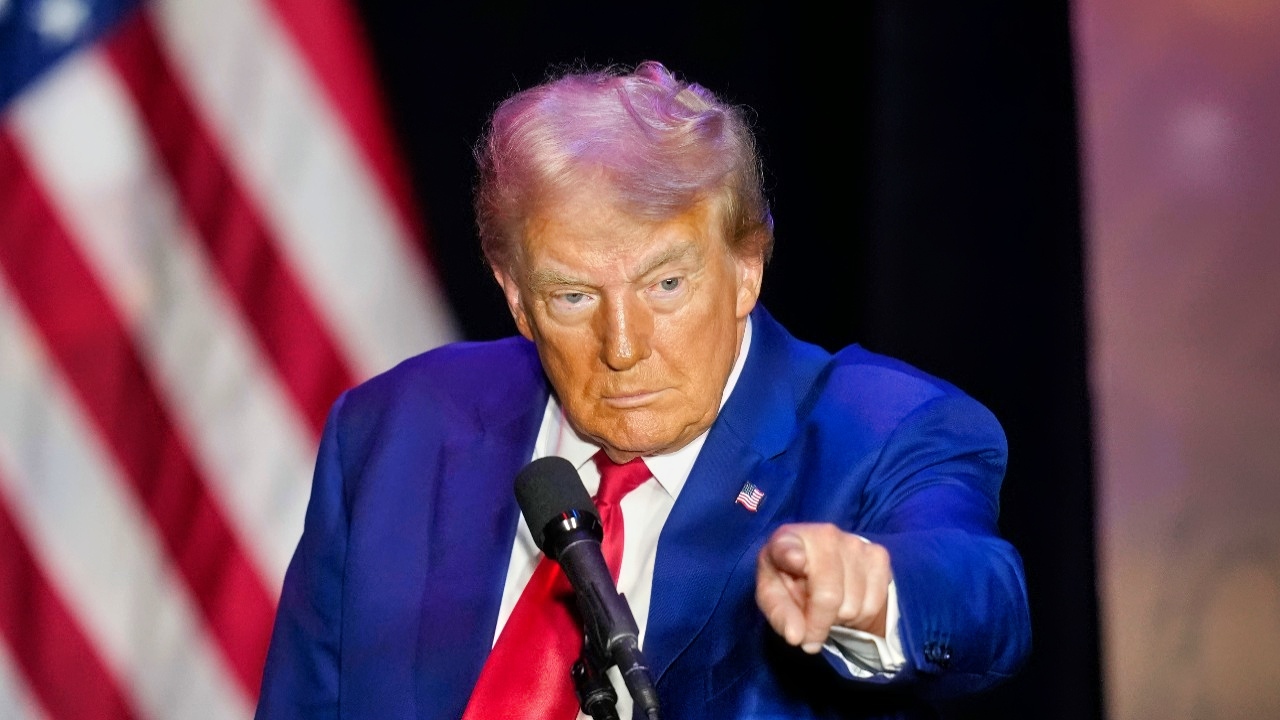
Donald Trump. White House Flickr.
Critical Oil Hub Could Be In the Crosshairs
The United States could seize the vital oil-processing station on Kharg Island, which would require shore bombardment and a combined amphibious and airborne operation.
Aircraft and warships would need to support the invasion, and supply vessels would be required to keep the combatants supplied with the logistical support to hold the territory.
Iran Is Still Resolute
Talks are supposed to last until August 18, and Trump may decide to give his diplomatic team the time to forge a lasting peace that would end the Iranian nuclear program and open up the Strait of Hormuz permanently with no tolls.
Iran is dead set against those two provisos at this point, has resisted resuming face-to-face talks with the Americans, and has instead opted for limited negotiations through an indirect mediator.
Itchy Finger on the Trigger
Trump has decided to forego a large military attack and will allow the peace process to run its course, but it is always likely that the temperamental president could lose his cool and order various military options that have different scenarios – all of them with violence of action and the possibility of incurring casualties on both sides.
Let’s Get This Thing Over With
The American people, who have long since soured on the war, are unlikely to support further military action.
They want a conclusion to this crisis and a full supply of oil to transfer through the strait to further reduce gasoline prices.
The price of West Texas Intermediate crude was $68.21 as of July 1 at 11 a.m. ET. This has dropped by 21 percent in the last month, but even though crude costs have dived, that doesn’t necessarily mean pain at the pump is gone.
Congress Is Growing Frustrated
Congress also has a say in the matter, and there have been numerous votes to enact a War Powers Resolution to give lawmakers oversight of the conflict.
This is mostly symbolic, as Trump holds a veto over most resolutions that could be passed to trim his control over the war, and he is trying to keep Republicans in line to make sure Democrats do not require him to end the conflict.
The White House maintains that since there is a ceasefire, the War Powers Act does not apply, but it has kept military forces in the region for months, and many legislators on Capitol Hill maintain that this is an illegal war.
Trump and Vance Say All Options Are on the Table
Trump and Vice President JD Vance have warned that new acts of war could be on the table and that they are not ruling out the resumption of strikes against Iran.
What that would entail militarily remains unclear, but frustration is mounting in the White House, and Iran continues to play a cat-and-mouse game with diplomacy.
Iran Is Playing Hard to Get
Middle East envoys Steve Witkoff and Jared Kushner have arrived in Doha, Qatar, for face-to-face negotiations, but the Iranians say they only want to speak with Qatari mediators.
The talks are still in a holding pattern, as both sides are breaching red lines.
Iran is still talking about pursuing a nuclear weapon and may not agree to have international inspectors examine its atomic program.
The Iranians also believe the Strait of Hormuz is their sovereign waterway, and they can continue to allow only a few ships through.
There are also numerous sea mines that must be removed from the strait to allow the same level of transit that occurred before the war.
Will Armed Diplomacy Win the Day?
Trump is correct to pursue armed diplomacy. Military options are always on the table, and it is important that the president not be hemmed in by a limited set of options for responding to the situation.
But the American people are tired of the crisis. It seems like every day they are promised a conclusion to hostilities, only to find that fighting breaks out periodically.
The situation is changing by the hour, and we will keep you updated. Military strikes could resume in the coming days if Iran does not bend.
It doesn’t seem like the talks are going anywhere, and Iran has proved to be an adept practitioner of diplomacy, knowing it has time on its side and the willingness to keep the Strait from opening as before.
The pursuit of peace is thus elusive, and it will take the highest level of diplomatic efforts to keep the two sides from entering into more violence.
About the Author: Brent M. Eastwood, PhD
Author of now over 3,500 articles on defense issues, Brent M. Eastwood, PhD, is the author of Don’t Turn Your Back On the World: A Conservative Foreign Policy and Humans, Machines, and Data: Future Trends in Warfare, plus two other books. Brent was the founder and CEO of a tech firm that predicted world events using artificial intelligence. He served as a legislative fellow for US Senator Tim Scott and advised the senator on defense and foreign policy issues. He has taught at American University, George Washington University, and George Mason University. Brent is a former US Army Infantry officer. He can be followed on X @BMEastwood.


