

Stalled on the battlefield, American and Iranian negotiators have slowly been hammering out the details of a tentative deal to keep the Strait of Hormuz open. Both sides are at a seeming stalemate: in the face of overwhelming American and Israeli military power, Iran has been badly battered, but seemingly not beaten. Both sides need a deal, albeit for different reasons. But negotiations involving American Mideast negotiators Steve Witkoff and the president’s son-in-law Jared Kushner, along with their Iranian counterpart, Kazem Gharibabadi, have not yet secured a permanent deal — agreeing mostly to continue talking.
Progress in Negotiations? Trump Says Yes, but Reality Unclear

U.S. Air Force F-22 Raptors assigned to the 27th Expeditionary Fighter Squadron and Philippine Air Force FA-50PH light jet fighters conduct joint combined exchange training, above Basa Air Force Base, Phillipines, on Aug. 9, 2024. Joint combined exchange training is critical to enhancing U.S. and Philippine Air Force interoperability in a free and open Indo-Pacific. (U.S. Air Force photo by Senior Airman Mitchell Corley)

U.S. Air Force Gen. Kevin B. Schneider, Pacific Air Forces commander, pilots the lead F-22 Raptor rendezvousing with a C-17 Globemaster III, both from Joint Base Pearl Harbor-Hickam, during a mission off the coast of O‘ahu, April 8, 2025. PACAF provides ready and lethal forces to ensure stability and security in the Indo-Pacific. (U.S. Air Force photo by Tech. Sgt. Emerson Nuñez)
Speaking to reporters on Wednesday, American President Donald Trump said that the meeting in Doha with Qatari and Iranian interlocutors was positive. “The denuclearization of Iran is moving along well,” the president explained to a group of reporters, adding that “We hit them very hard for three nights, as you know, but we’re getting along very well, so I call it the denuclearization.”
“They’ve had very good meetings, and we’ll see.” The dialogue, held in Qatar’s capital city, aims to both bring a durable end to the ongoing war and reach an agreement on the flow of international shipping through the Strait of Hormuz.
“We’re getting along very well,” the president said, and added that Iran has “come a long way.” The effect on oil prices was clear.
Oil Prices Sinking
Hopes buoyed by ongoing negotiations between the United States and Iran, investors saw Brent crude oil futures dip more than a percentage point to $72.82 per barrel, marking four consecutive weeks of declines.
The sentiment was echoed in West Texas Intermediate futures, which were also 1% lower at $67.88, marking the fourth week prices have fallen.
The opening salvoes of Operation Epic Fury, the joint Israeli-American campaign against Iran, saw devastation brought down on Iran on a grand scale.
Not only were the overwhelming majority of Iran’s naval assets and much of its missile and drone forces decimated, but the Supreme Leader and much of Iran’s theocratic leadership, plus a number of senior military figures, were killed in airstrikes.
Decisive as the opening stages of the campaign have been, the Iranian theocracy has managed to retain the reins of power and limp on, even as inflation soars and much of the country’s economy, particularly the energy sector, has decayed and atrophied.
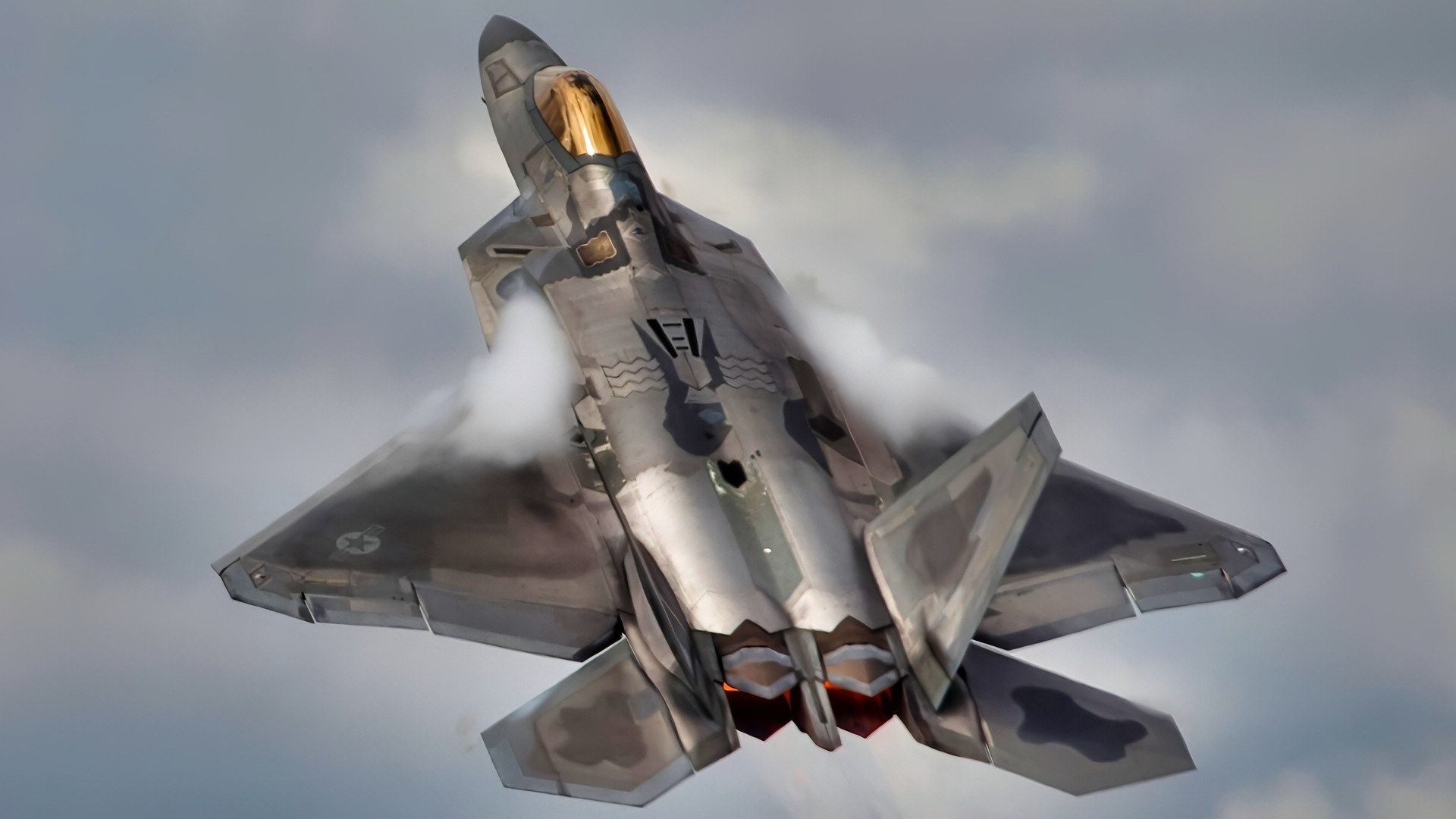
F-22 Raptor in UK. Image Credit: Creative Commons.
But despite the cash crunch and facing a war it cannot win militarily, Iran found it retained a powerful arrow in its quiver: closing the Strait of Hormuz.
The Strait of Hormuz
Only about 21 miles, or around 33 kilometers, wide at its narrowest, the Strait is one of the world’s vital maritime chokepoints. About a fifth of the world’s oil and liquefied natural gas transit the strait via tanker, as does about a third of the world’s fertilizers.
Iran has used the strait’s geography to its advantage, closing off the waterway and throwing energy markets into a panic in what can be described as a global game of chicken between the world growing weary and striking a deal, or Iran imploding internally under the strain of discontent at home and a lack of economic activity.
As part of an interim deal struck with the United States, Iran agreed to allow ships to pass through the strait at no cost for 60 days.
Later, Tehran said it would dictate exactly where ships sail and charge a transit fee.
But the United States, as well as several Gulf states, avowed it would not pay any shipping fees. For the Gulf states, those fees would be, in essence, an Iranian charge on the lifeblood of their economies, which prior to the conflict had passed through the strait without incident — or charge.
Differing Priorities
Iran appears to be enjoying a degree of confidence, as it has managed to cling to life following the many rounds of bombardment from the United States and Israel.
Talks in Doha have included an American offer to unfreeze billions of dollars in frozen Iranian assets, as well as a joint Iran-Qatar offer to levy a fee on ships transiting the strait and, in return, provide security and navigation assistance.
While fees would provide Iran with several hundred million dollars annually for Tehran — significantly less than the previous American proposal — they risk setting a precedent for global maritime trade that could then be attempted by other countries controlling other maritime chokepoints. The game of chicken continues.
About the Author: Caleb Larson
Caleb Larson is an American multiformat journalist based in Berlin, Germany. His work covers the intersection of conflict and society, focusing on American foreign policy and European security. He has reported from Germany, Russia, and the United States. Most recently, he covered the war in Ukraine, reporting extensively on the war’s shifting battle lines from Donbas and writing on the war’s civilian and humanitarian toll. Previously, he worked as a Defense Reporter for POLITICO Europe. You can follow his latest work on X.


