


According to intelligence assessments by more than one Western ally, Iran has rebuilt much of its pre-war arsenal of missiles with the help of a friend in Europe, and is believed to possess about 75 percent of the missiles it had before the beginning of Operation Epic Fury, the joint Israeli-American campaign that marked the start of hostilities between the three countries.
Tehran’s reconstituted missile stocks are thought to have been aided by missiles produced in Russia.
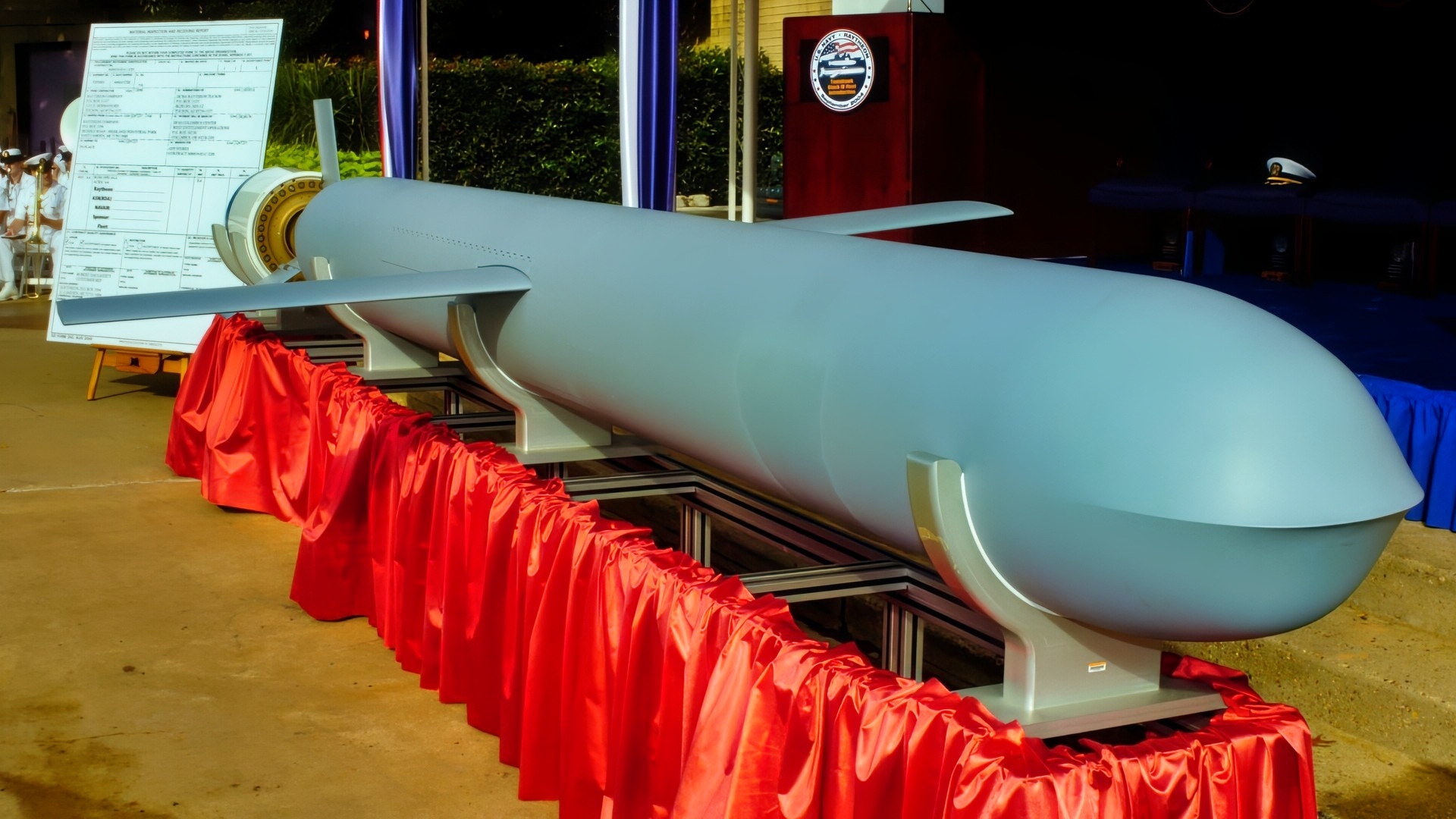
Tomahawk Block IV Missile. Image Credit: Creative Commons.
And while Russia has dug deeply into its Soviet-era stockpiles of weapons and ammunition to further its war aims in Ukraine, the missiles delivered to Iran are thought to be new-build weapons that came off Russian production lines sometime during the past year.
Differing Claims on Iran’s Missiles
During the first month of the war with Iran, the United States and Israel claimed to have destroyed around two-thirds of the missile launchers held by Iran — at one point, American Secretary of Defense Pete Hegseth claimed that up to 90 percent of Iran’s offensive capability was crippled.
But much of Iran’s missile capabilities were not necessarily destroyed. Rather, the underground sites where much of Tehran’s missile forces are stored were pummeled from the air and buried rather than destroyed.
During the previous ceasefire, Iran likely took advantage of the pause in fighting to dig out and redistribute a portion of its buried weaponry.
Reconstituted Drone Production
Iran’s production of Shahed drones has likewise not been completely eliminated by Israeli or American airstrikes.

Iran’s Drones That Russia Is Using. Image Credit: Creative Commons.
Distributed throughout the country in small, almost artisanal workshops, Tehran’s drone production network is resilient and can avoid the kind of knock-out blow that would take out centralized production sites.
Another round of strikes by Israel and the United States against Iranian missile and drone sites could find itself flying against targets previously hit in a kind of deja vu bombardment that could prove to be risky for pilots flying those missions.
The United States has been extremely fortunate thus far in the conflict, recovering the one pilot who was shot down over Iran.
“Despite all the tactical successes claimed by the United States, it hasn’t achieved its goals of crippling Iran’s defense industrial base or significantly degrading Iran’s missile program,” explained Becca Wasser, a defense lead for Bloomberg Economics. “Iran has shown remarkable resilience and ability to reconstitute its missile arsenal.”
A Prospective Peace Deal?
The tentative deal reportedly includes granting Tehran access to a $300 billion fund to foster investment in the country and is part of a wider incentive package aimed at coaxing all parties to end the fighting.
The fund reportedly contains no government money, but includes $150 billion in private funding that has already been committed.
Speaking to Reuters, a source with knowledge of the prospective peace deal specifics explained that grants, or related reparations or reconstruction money, are not part of the deal, but that firms across the world, including from the United States, the Gulf countries, Asia, South America, and Africa, have committed to investing in the deal.
Crucially, however, the deal won’t come into force until a final deal is inked on paper, which would happen sometime in the next 60 days, giving both sides time to strike a mutually satisfactory agreement.
But there are a number of thorny issues to be worked out before the handshakes begin. Iran’s nuclear program will, from the perspective of Israel and the United States, be the primary concession sought in exchange for an end to the war and an injection of money to repair the battered country.
Sanctions relief will certainly be secured by Tehran. One rather turbid topic is likely to be Iran’s involvement in the region’s broader security issues, and more specifically, its financing of radical Islamist terror groups throughout the region.
How sticky those issues prove to be — and how willing each country’s appointed interlocutors are to compromise — have yet to be seen.
But given the wide gulf between the parties’ objectives, it is unclear what the prospects are for a peace deal of any kind.
About the Author: Caleb Larson
Caleb Larson is an American multiformat journalist based in Berlin, Germany. His work covers the intersection of conflict and society, focusing on American foreign policy and European security. He has reported from Germany, Russia, and the United States. Most recently, he covered the war in Ukraine, reporting extensively on the war’s shifting battle lines from Donbas and writing on the war’s civilian and humanitarian toll. Previously, he worked as a Defense Reporter for POLITICO Europe. You can follow his latest work on X.


