

In a wide-ranging interview published just days ago by the Kremlin, Russian President Vladimir Putin directly addressed the current energy shortage experienced today in Russia — and acknowledged that Ukrainian drone and missile strikes are responsible for the fuel crunch.
“As for the attacks on critical infrastructure in general, and energy infrastructure in particular, they are, of course, creating problems,” Putin said. “That is obvious. We are currently seeing certain shortages, although they are not critical.”
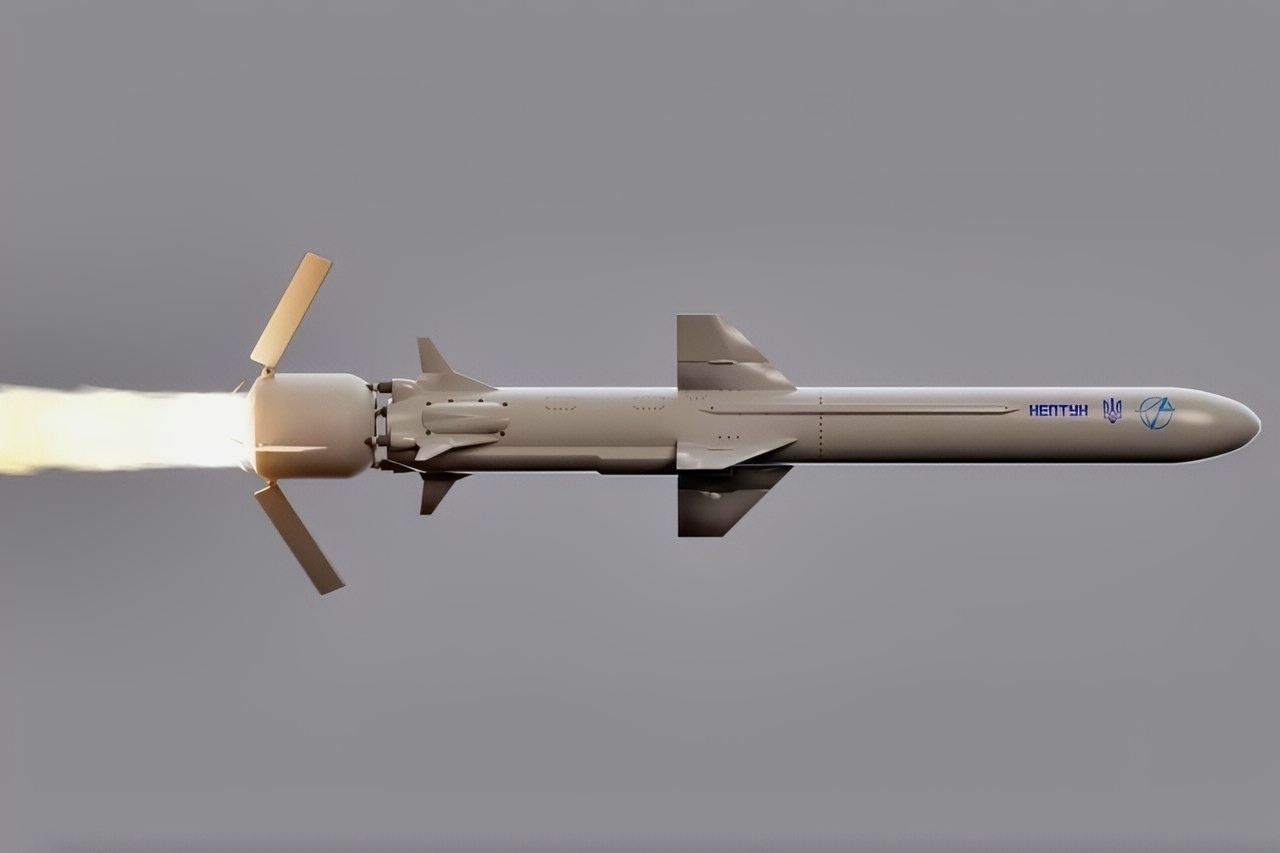
Neptune Missile. Image Credit: Government of Ukraine.
Russia’s Air Defenses Squeezed
The Russian leader’s admission was singular in its acknowledgment of the success Ukrainian forces have enjoyed in taking out a significant portion of Russia’s oil refining and transport capacity.
But that was not the only point of note from Putin — equally insightful was the president’s declaration that Russia would increase the production of air defense missile interceptors.
“The first is to rapidly and significantly increase production of the air defense systems that are most in demand. We must also continue improving them in line with the requirements of combat operations and the protection of key facilities, taking into account the capabilities the enemy is deploying, including the new unmanned aerial vehicles with advanced technologies being supplied from Europe,” Putin explained during the course of the interview.
“The challenge is to accelerate their production and delivery, whether to the armed forces or for the protection of critical infrastructure.”
Protecting critical infrastructure, as well as energy refining and transportation hubs, is an obvious priority from the Russian point of view. It was therefore somewhat of a surprise when satellite imagery revealed that air defense systems had been installed around the Moscow headquarters of the Innopraktika foundation. Vladimir Putin’s daughter, Katerina Tikhonova, heads the foundation.
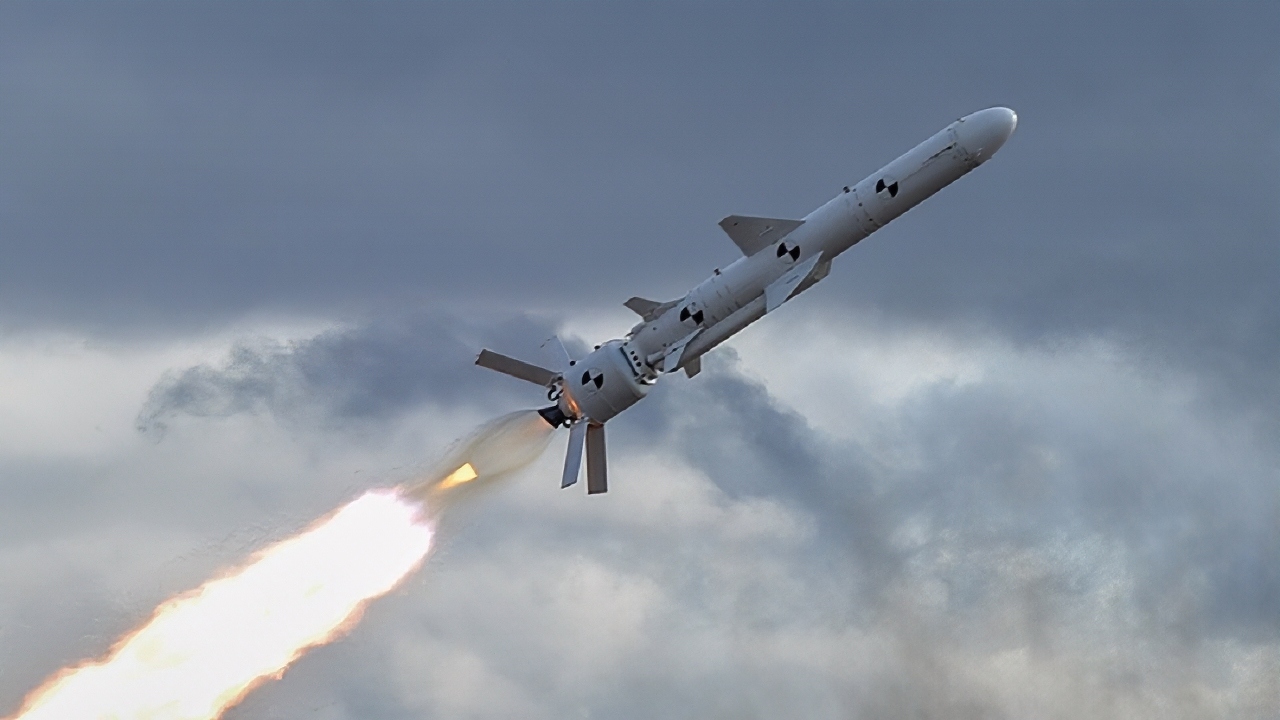
Neptune Missile. Image Credit: Creative Commons.
Why Russia Needs More Missile Interceptors
Speaking to CBS News, a trio of Ukrainians knowledgeable about their country’s intelligence assessments explained that Russian stocks of interceptor missiles for its S-300 air defense batteries are feeling pinched by Ukraine’s drone attacks on Moscow and other locations throughout Russia.
Although the S-300 has been eclipsed by newer, more capable air defense systems, including Russia’s Pantsir, the S-350 family, and the newer S-400, the Soviet-era S-300 air defense system remains an integral part of Russia’s missile defense network.
The Ukrainian who spoke to CBS News had several theories for why Russia is facing a shortage of S-300 missile interceptors.
While those missiles were developed to intercept aerial targets, they have also been leveraged by Russian forces as surface-to-surface missiles, augmenting Russia’s targeting options in Ukraine. But as is now apparent, their application to ground targets leaves sites in Ukraine and within Russia proper exposed to attack.
Bombarding the Russian Heartland
Ukraine’s ongoing bombardment of targets throughout Russia is part of what Ukrainian President Volodymyr Zelensky has dubbed his country’s “long-range sanctions” regime. The Ukrainian plan aims at hitting a vital pressure point of the Russian war machine: its war chest. Russia is one of the world’s leading energy producers, and the largest source of revenue for the Russian state is the taxation of energy products sent abroad. Thus far, the plan has enjoyed a great deal of success.
Analysts estimate that Russia’s total refining capacity has been knocked out by Ukrainian strikes, and the International Energy Agency reports that, due to Ukrainian bombardment, Russian crude production has dipped by five percent year-on-year.
In recent weeks, Russian social media has been rife with photos of acrid black smoke billowing into the sky. Refineries in the Moscow region, as well as much further afield, have been struck, sometimes on multiple occasions, hampering efforts to both extinguish the flames and repair the facilities.
Endgame Still Not in Sight
The Russian state — and Putin — are clearly experiencing a degree of pressure that neither has felt before. A survey by Mediazona, one of Russia’s few independent news outlets, reports that local authorities or gas station chains have limited fuel sales in 56 of Russia’s regions. In Russian-occupied Crimea, the sale of fuel to civilians has stopped completely.
Though certainly a boon for Ukrainian forces, Kyiv’s long-range sanctions regime is unlikely to seriously loosen Putin’s grip on power. Still, the Russian strongman’s frank mention of Ukrainian drones and the effect they are having not only on the battlefield in Ukraine but within Russia — and the capital itself — is a strong indicator that Russia is being squeezed in a way it has not been before during the course of the Kremlin’s war. The Russian war machine may find itself on the back foot — but as seen before in this war, even multiple serious setbacks have not been enough to cage the Russian bear for good.
About the Author: Caleb Larson
Caleb Larson is an American multiformat journalist based in Berlin, Germany. His work covers the intersection of conflict and society, focusing on American foreign policy and European security. He has reported from Germany, Russia, and the United States. Most recently, he covered the war in Ukraine, reporting extensively on the war’s shifting battle lines from Donbas and writing on the war’s civilian and humanitarian toll. Previously, he worked as a Defense Reporter for POLITICO Europe. You can follow his latest work on X.


