

U.S. and Iran Agree to More Talks In Doha – Is The Deal Dead?: The United States and Iran agreed to halt military strikes against each other on Sunday, June 28, following an exchange of fire that was already prohibited under the terms of the memorandum of understanding (MOU). Representatives of Tehran and Washington confirmed that emergency talks will take place in Qatar on Tuesday to prevent the collapse of their fragile MOU.
The news followed several days of escalating attacks across the Persian Gulf that began with Iranian drone strikes on a Singapore-flagged merchant vessel that was transiting the Strait of Hormuz close to the Omani coast.
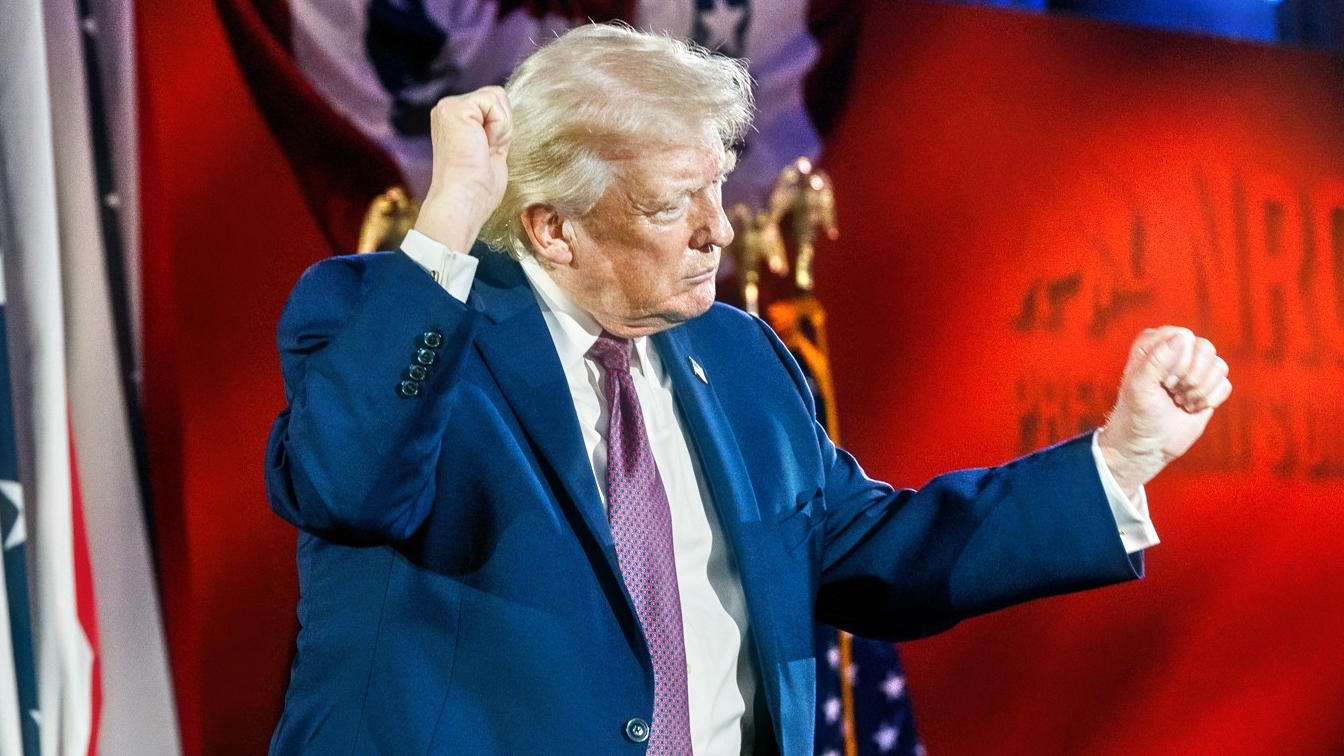
President Donald Trump delivers remarks at a meeting of the National Republican Congressional Committee, Wednesday, March 25, 2026, at Union Station in Washington, D.C. (Official White House photo by Joyce N. Boghosian)
Speaking to Axios, a senior U.S. official confirmed that the White House had “decided to stop all the kinetic activity.”
A second U.S. official also told the outlet that both sides plan to stand down “for now” and that vessels can still “move freely” through the Strait as negotiators prepare to continue technical talks.
Qatar to Host Emergency Talks
The next round of talks is now expected to take place in Doha after originally being planned for Switzerland.
Negotiators had originally planned to focus on Iran’s nuclear program in the next round of discussions, but instead, they are now expected to focus on the contentious dispute over the Strait of Hormuz.
Specifically, negotiators are likely to focus on Iran’s insistence that ships do not use alternative routes through the Strait that run primarily through Omani waters.
During negotiations in Switzerland last week, the United States and Iran reportedly agreed to establish a direct hotline between the U.S. military and Iran’s Islamic Revolutionary Guard Corps (IRGC) in an effort to safely coordinate commercial shipping through the Strait. U.S. officials claimed, however, that the channel remains nonoperational and that Tehran insists that vessels coordinate passage through the Strait directly with the IRGC.
Tit-For-Tat Strikes Derail MOU
The news that talks will continue in Doha is, in many ways, good news. But it’s also a sign of how fragile these negotiations are, how easily and quickly agreements can come apart, and how extraordinarily effective Tehran is at delaying negotiations.
With less than two months to go before the MOU expires, Iran is already stalling critical negotiations and forcing both sides to discuss matters that should already be considered settled for the time being.
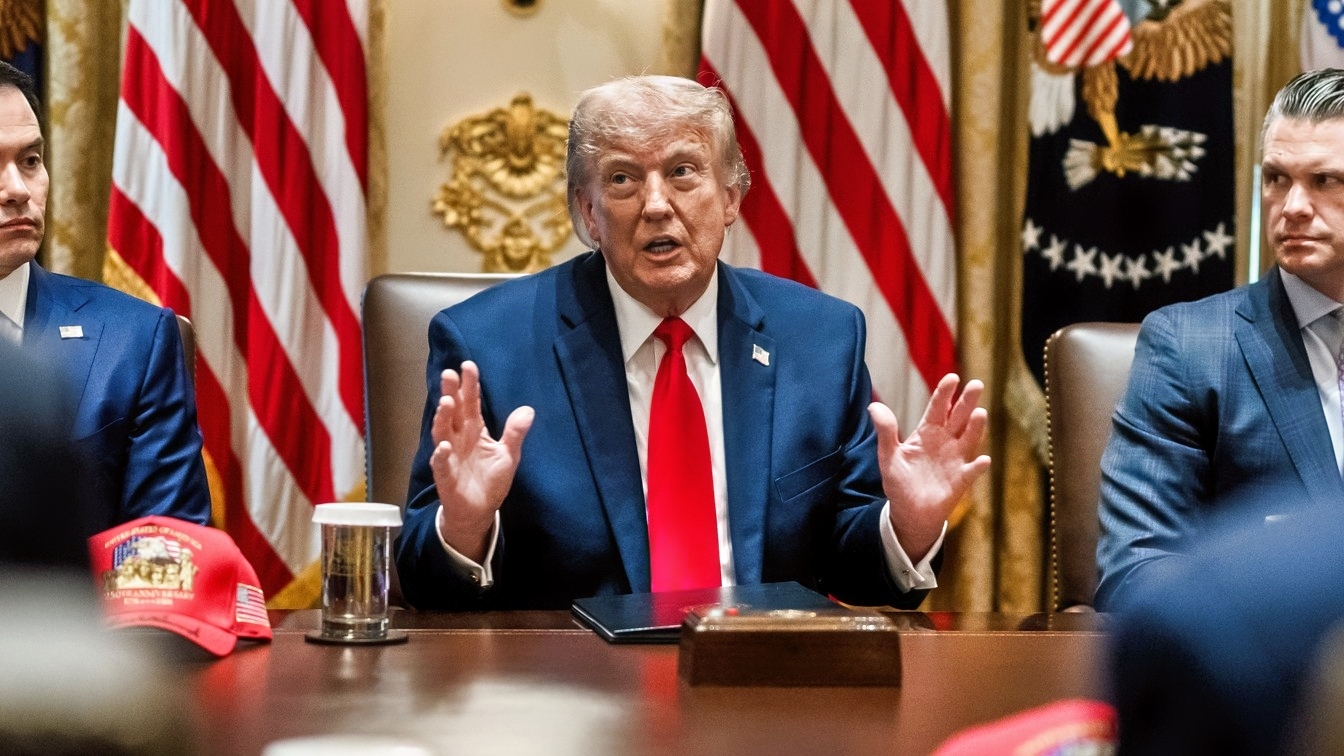
President Donald J. Trump holds a cabinet meeting in the Cabinet Room Wednesday, May 27, 2026. (Official White House Photo by Daniel Torok)
When Iran launched an attack on the Singapore-flagged Ever Lovely with one-way attack drones, it prompted a backlash from the United States in the form of military infrastructure strikes along the shores of the Strait of Hormuz.
The U.S. hit Iranian surveillance systems and coastal radar sites, as well as its drone facilities. Early Sunday, Iran responded by launching missiles and drones at U.S. military facilities across Bahrain and Kuwait.
The strikes resulted in no American casualties or significant damage, and Kuwaiti authorities also confirmed that they had intercepted two “hostile” ballistic missiles. Bahrain also reported damage to a residential building in Muharraq province but said no casualties were reported.
Constantly Undermining the Deal
Iran continues to undermine the MOU in varying ways that go beyond delaying negotiations or launching strikes.
While Iranian negotiators have repeatedly postponed progress on core issues, in part by taking days to respond to most U.S. communications, Tehran has simultaneously intensified a coordinated effort to weaken political support for the deal in the United States. According to counterterrorism expert Dr. Omar Mohammed, Iran is using centralized social media messaging strategies to “embarrass the deal the president owns.”
Analysts told Fox News on Sunday that Iran is using social media to hurt Trump’s support at home in a strategy that appears to give Iran additional leverage.
Every week spent delaying technical negotiations increases pressure on the White House to make new concessions to secure a deal before the world faces an historic oil supply crisis.
Is the Deal Over?
In a Truth Social post on June 27, President Trump expressed concern that Tehran may never be able to abide by the terms of the MOU. In a statement, Trump announced that the United States had just launched airstrikes on Iranian missile and drone storage facilities.
“United States aircraft just struck Iranian missile and drone storage locations, and coastal radar sites, for violating the Cease Fire Agreement, AGAIN!” Trump said.
“It is very possible that they will never learn!” the president continued.
“There may come a point when we are no longer able to be reasonable, and will be forced to militarily complete the job that we very successfully started. If that happens, the Islamic Republic of Iran will no longer exist!” the statement continued.
The president even went so far as to issue an extreme new threat, reminiscent of his April threat to wipe out an “entire civilization.”
Nonetheless, Iranian and American officials confirmed on Sunday that the talks would continue – but how long they will last is anyone’s guess.
About the Author: Jack Buckby
Jack Buckby is a British researcher and analyst specializing in defense and national security, based in New York. His work focuses on military capability, procurement, and strategic competition, producing and editing analysis for policy and defense audiences. He brings extensive editorial experience, with a career output spanning over 1,000 articles at 19FortyFive and National Security Journal, and has previously authored books and papers on extremism and deradicalization.


