
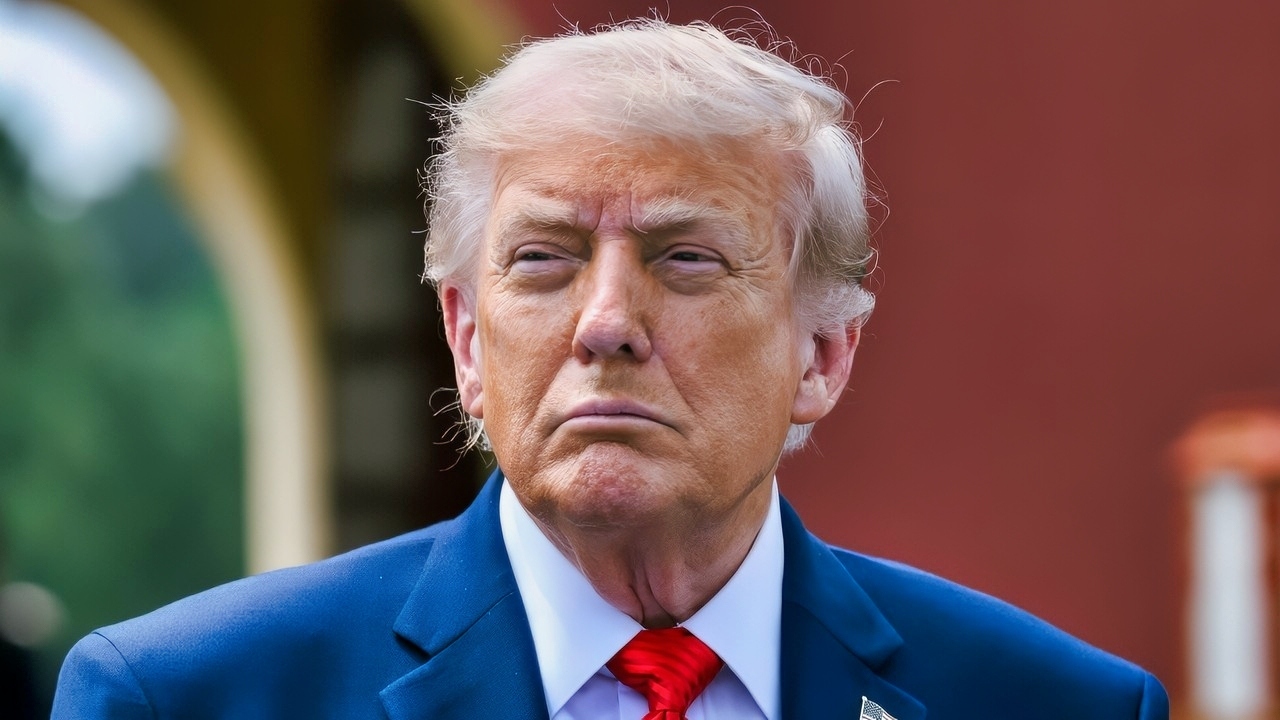
Before the U.S.-Israeli military strikes began, Iran’s Islamic Republic was arguably weaker than it had been in decades. The government’s violent crackdown on nationwide protests in January left thousands dead and exposed deep-running public anger over corruption and decades of political repression. Inflation was crippling, too, and sanctions were still squeezing the economy. While the regime focused on building a missile arsenal that would deter foreign powers from intervening, a revolution was brewing on the streets.
And it was amidst that chaos that U.S. President Donald Trump announced military action against Iran, arguing that Tehran’s nuclear program and ballistic missile capabilities had reached an unacceptable point. Trump’s objectives were laid out in a speech he gave immediately following the first strikes in February, noting that Iran’s ability to threaten its neighbors must be stopped, its nuclear program destroyed, its military infrastructure degraded, and its missile arsenal destroyed. The president even called on the people of Iran to rise up against the regime.
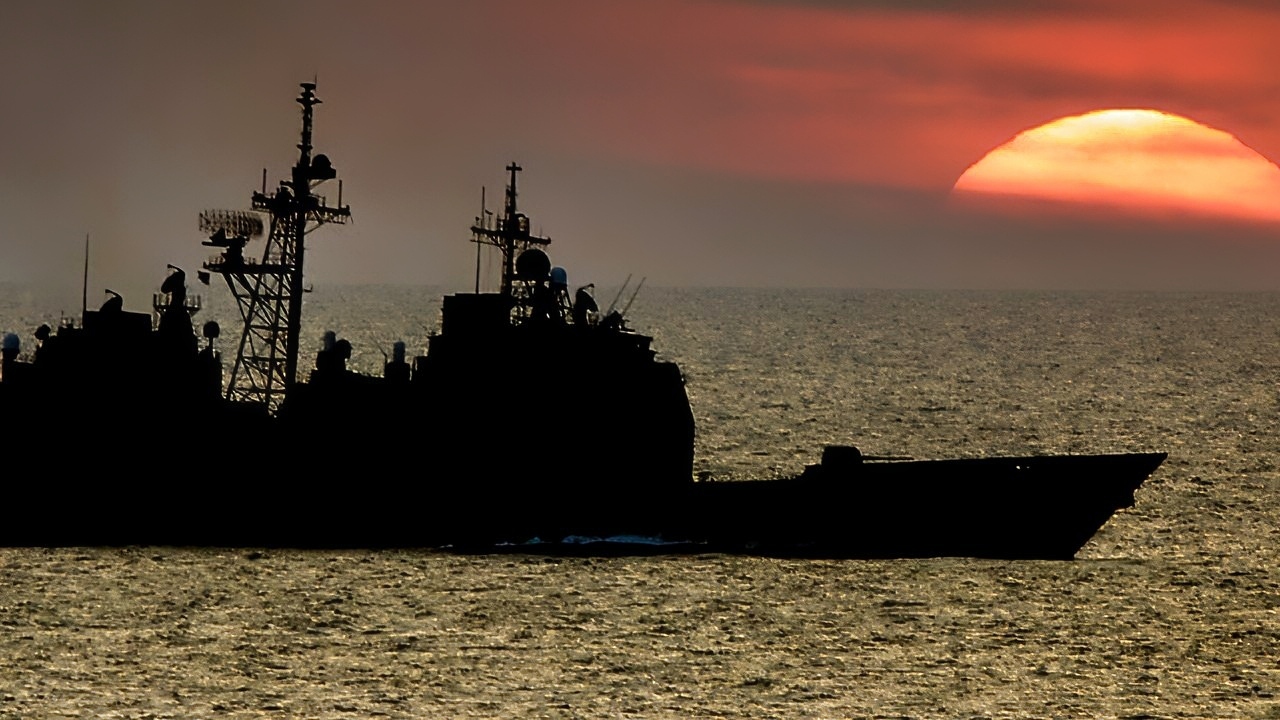
The Ticonderoga Class Cruiser USS Normandy (CG 60) steams at sunset in the Atlantic Ocean while operating with the USS George Washington battle group on May 18, 2000. The Normandy, homeported in Norfolk, Va., is participating in a Joint Task Force Exercise with the battle group.
(DoD photo by Petty Officer 2nd Class Shane McCoy, U.S. Navy. (Released))
Months later, Trump has achieved some of those goals – but the regime is still in place. Albeit with a new leader.
Iran Was Already Vulnerable
In June, President Trump repeated his claim that U.S. forces had left Iran’s military “totally destroyed.” And there is little doubt that the United States and Israel inflicted serious military damage on the regime.
Large portions of Iran’s integrated air defense network have been destroyed, allowing U.S. and Israeli aircraft to operate over much of the country with far less resistance than analysts expected at the beginning of the campaign. According to U.S. Central Command, more than 66% of Iran’s missile, drone, and naval production facilities have been struck, while 10,000 military targets were also hit during the war. Significant elements of Iran’s nuclear program have also been further damaged, setting back enrichment timelines and forcing Tehran to devote enormous resources to reconstruction. And Iran’s Air Force also suffered substantial losses.
But these victories deserve context.
Much of Iran’s combat aircraft were already, in many respects, useless. Its air force consisted of aging aircraft acquired before the 1979 revolution, including decades-old American fighters and obsolete Soviet-era designs. Many of its aircraft had limited operational value in the face of modern Western aircraft even before the war began, and destroying them was the easy part for the U.S. military. Early strikes reduced Iran’s military inventory, yes, but they removed capabilities that were already irrelevant on a modern battlefield.

Aug. 8, 2017 – The Arleigh Burke-class guided-missile destroyer USS Donald Cook (DDG 75) maneuvers between the Ticonderoga-class guided-missile cruiser USS Philippine Sea (CG 58), left, and the Nimitz-class aircraft carrier USS George H. W. Bush (CVN 77), right, for a photo exercise during exercise Saxon Warrior 2017, Aug. 8. Saxon Warrior is a United States and United Kingdom co-hosted carrier strike group exercise that demonstrates allied interoperability and capability to respond to crises and deter potential threats. (U.S. Navy photo by Mass Communication Specialist 1st Class Theron J. Godbold /Released)
The more significant accomplishments were the degradation of Iran’s missile infrastructure, air defenses, and nuclear facilities – not the destruction of an already antiquated air force and a largely unimpressive navy.
What’s more, those military successes did not produce the political outcome that Trump suggested he had hoped for during his speech announcing the invasion. The regime is still intact.
What Kind Of Victory Is This?
If the expectation was that military pressure would trigger the collapse of the Islamic Republic, Trump got this very wrong. On February 28, the U.S. president urged Iranians to “seize control of your destiny” and reportedly called it their “only chance for generations” to rise up. But the strikes killed Ayatollah Ali Khamenei, members ofh is family, senior commanders, and military officials. They did not destroy the regime. Mojtaba Khamenei is now the supreme leader, Mohammed Bagher Qalibaf is still a central power broker and negotiator, and the Islamic Republic is intact.
Worse, Tehran is now using its survival as a victory, and rallying the people against the United States when it might otherwise have been defending itself against charges of corruption. At Khamenei’s funeral this week, mourners burned Western flags, chanted for revenge, and displayed placards calling for Trump’s death.
And while Iran rallies its people against the West, Trump is now effectively trying to preserve the system he sought to overthrow through diplomacy.
Even recent reports that the president was considering resuming military strikes and “finishing the job” revealed that Trump prefers to hold off on further strikes because he would rather see the diplomatic process play out.
That process, by the way, includes access to as much as $24 billion in frozen assets and a proposed $300 billion reconstruction and investment fund – money that could help the regime rebuild while dodging the accusations that risked its collapse before the war.
This Was Not A Job For Half Measures
If it was truly the president’s aim to implement regime change in Iran, this was never a job for half measures – and making last-minute deals on the brink of a global oil supply crisis won’t improve the situation now. Trump has set back Iran’s nuclear program and degraded its missile arsenal, but has also breathed new life into a regime that was struggling.
If Trump had truly wanted to show strength and topple the regime, he may have been wise to listen to his former national security advisor John Bolton, who said that U.S. forces should have been used to strategically control some territory on Iran’s side, including its major oil infrastructure on the coast.
Would it have been risky? Yes. But that’s war, and choosing to launch military operations against a country always carries consequences. I
f Trump wanted to do this the easy way, he perhaps shouldn’t have used empty threats to pressure an ideologically motivated regime that will never give up.
About the Author: Jack Buckby
Jack Buckby is a British researcher and analyst specializing in defense and national security, based in New York. His work focuses on military capability, procurement, and strategic competition, producing and editing analysis for policy and defense audiences. He brings extensive editorial experience, with a career output spanning over 1,000 articles at 19FortyFive and National Security Journal, and has previously authored books and papers on extremism and deradicalization.


