

What Are Trump’s Options In Iran Now? President Trump is navigating the Iran crisis through a mix of diplomatic talks in Qatar and constant standby of military pressure.
His administration has weighed several direct measures to enforce concessions regarding uranium enrichment and the Strait of Hormuz tolls. Iran’s insistence on establishing the Persian Gulf Strait Authority (PGSA) to mandate, vet, and regulate maritime transit and to collect fees for vessels passing through the Strait of Hormuz is a red line for the US and other Gulf nations.
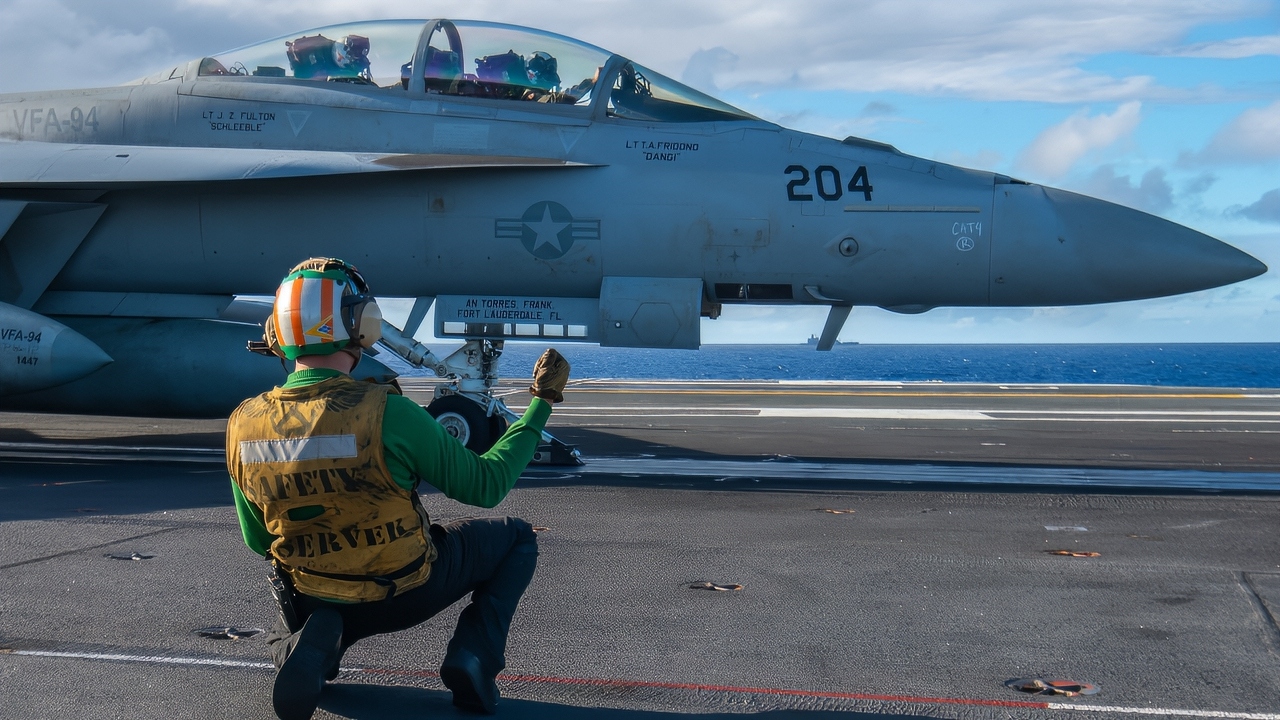
(Dec. 31, 2022) An F/A-18E Super Hornet assigned to the “Mighty Shrikes” of Strike Fighter Squadron (VFA) 94 prepares to launch from the aircraft carrier USS Nimitz (CVN 68) to participate in a long-range maritime strike demonstration. Nimitz is in 7th Fleet conducting routine operations. 7th Fleet is the U.S. Navy’s largest forward-deployed numbered fleet, and routinely interacts and operates with 35 maritime nations in preserving a free and open Indo-Pacific region. (U.S. Navy photo by Mass Communication Specialist 2nd Class Justin McTaggart)
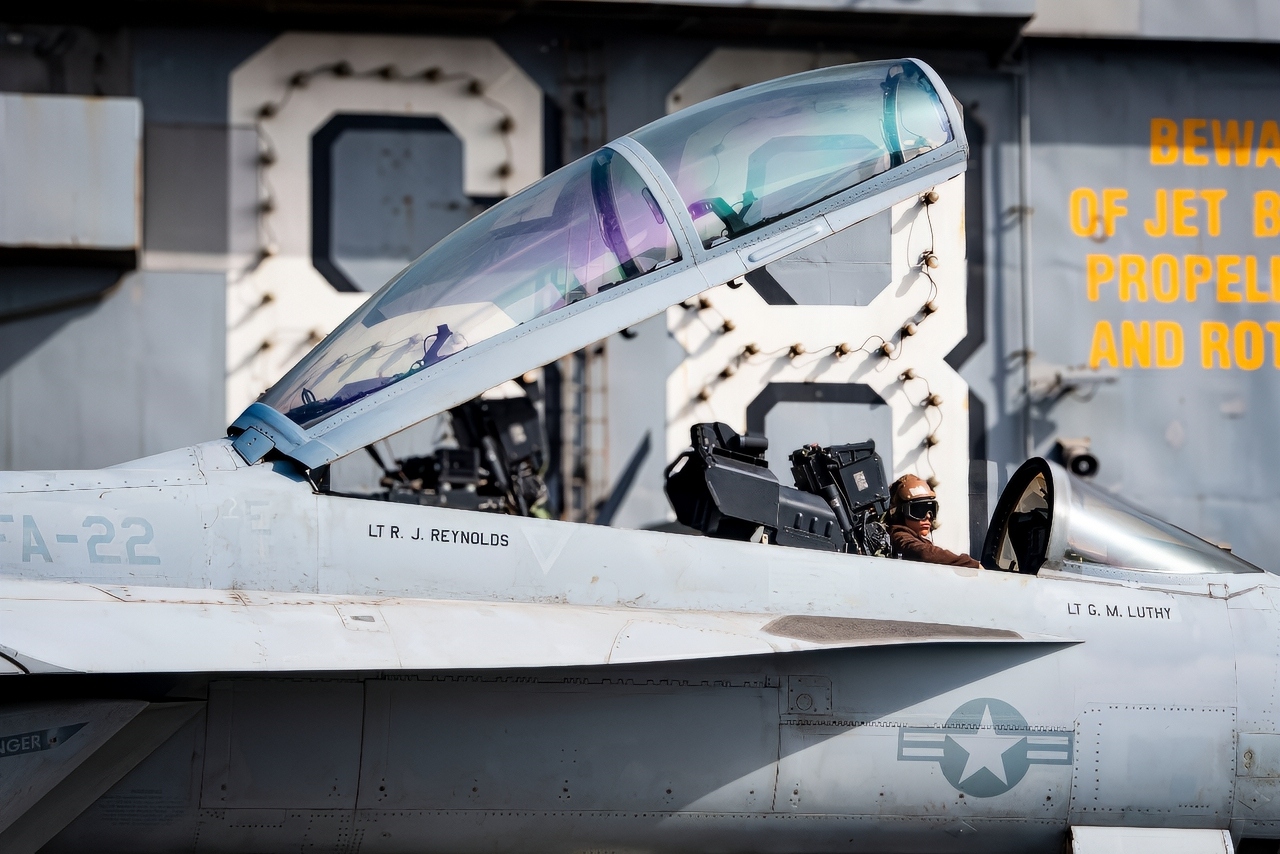
U.S. CENTRAL COMMAND AREA OF RESPONSIBILITY (July 22, 2025) An F/A-18F Super Hornet, attached to Strike Fighter Squadron (VFA) 22, taxis across the flight deck of the Nimitz-class aircraft carrier USS Nimitz (CVN 68) in the U.S. Central Command area of responsibility. (Official U.S. Navy photo)
And by blatantly ignoring the Memorandum of Understanding and continuing to attack neutral shipping in the Strait, further negotiation at the present time would only result in more stalling by the regime.
But now, the question is: What are President Trump’s options?
Continued Diplomatic Talks
Ongoing indirect talks aimed at securing lasting peace and addressing nuclear restrictions have thus far achieved nothing.
The administration has doubled down on pressure strategies like economic strangulation and long-term support for Iranian dissidents.
However, Washington’s economic pressure campaign is designed to corner Iran strategically, exploiting the vulnerabilities of an already strained economy suffering under sanctions.
The economic sanctions and blockades can only go so far.
The expectation in Washington is that sustained pressure will lead to internal strife in Iran, potentially triggering renewed protests or political fractures, especially given the country’s current leadership uncertainties and structural weaknesses. But this has not materialized.
The citizens won’t rise up against the regime without weapons, and the regime currently has all of them.
Continued Limited Military Action
Military commanders have presented strike plans targeting Iranian infrastructure and ballistic missile sites. Other options range from seizing Iranian islands in the Strait of Hormuz to Special Forces operations to extract highly enriched uranium.
The bottom line is air superiority, even air supremacy, as the US currently has over the skies of Iran, does not equate to ground control. Air campaigns can severely degrade military assets, weapons and equipment manufacturing, and economic targets, limiting a country’s ability to wage war.
But a look at history, and the last one that the United States clearly won, World War II, despite a devastating air campaign against Germany, the will to resist lasted until the very end of the war, when Allied troops established ground control.

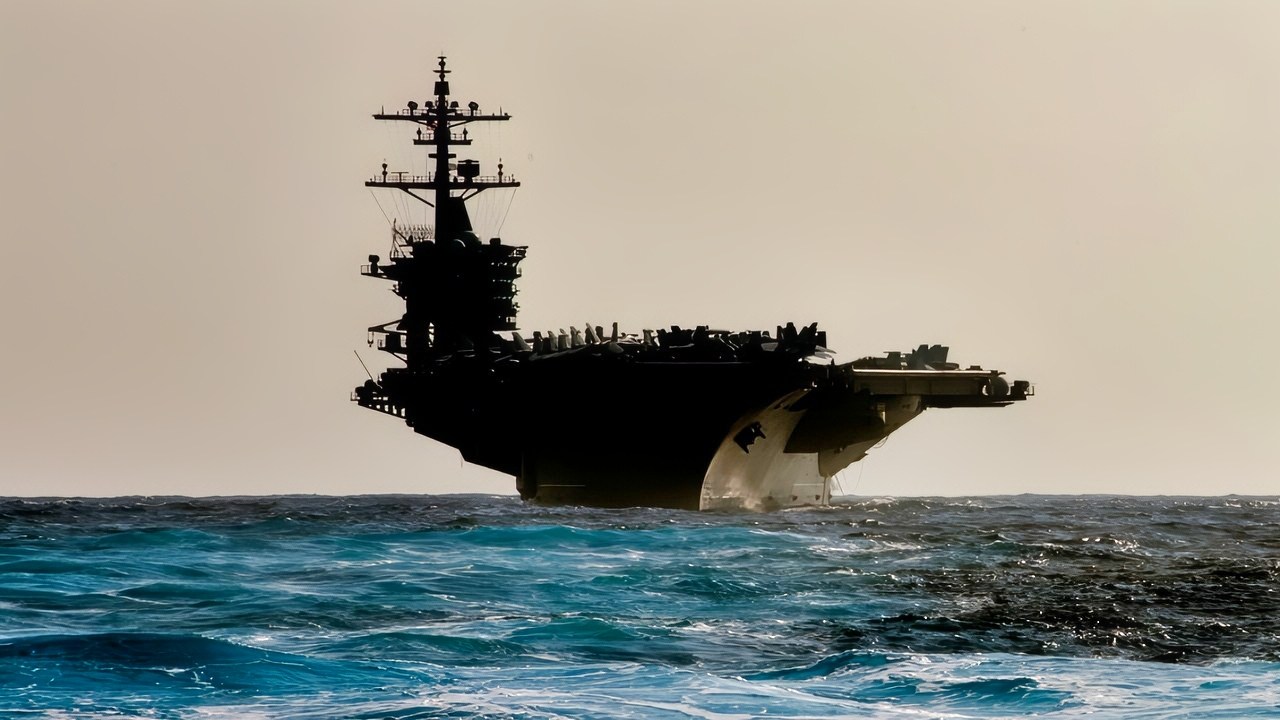
(Oct. 17, 2017) The aircraft carrier USS Nimitz (CVN 68) transits the Arabian Gulf, Oct 17, 2017. Nimitz is deployed in the U.S. 5th Fleet area of operations in support of Operation Inherent Resolve. While in this region, the ship and strike group are conducting maritime security operations to reassure allies and partners, preserve freedom of navigation, and maintain the free flow of commerce. (U.S. Navy photo by Mass Communication Specialist Seaman David Claypool/Released)
President Trump has been quite clear that he didn’t want to attack civilian infrastructure, oil and gas infrastructure, bridges, power plants, and major road junctions so as to allow the Iranian people to thrive once the regime is removed from power.
But those half-measures, while laudable from a humanitarian standpoint, will not win any conflict, nor destroy the regime’s will to resist. The air campaign is targeting the drone and missile manufacturing and launch sites, which is fine…to an extent, but doesn’t address the key issue that the US has ignored and should have been paying attention to in Ukraine.
The Ukrainians aren’t hammering Russian infrastructure with their Air Force; they’ve adopted the cheap drone initiative that Russia started and the Ukrainians have perfected.
Swarms of 300 to 400 drones systematically hunt enemy positions to provide fire preparation, allowing Ukrainian infantry and support teams to safely advance kilometer by kilometer.
These units specifically target logistical highways to deprive front-line Russian soldiers of fuel, ammunition, and food. And, given their sheer numbers (they aren’t that hard to shoot down) and the low cost of the different models, they are extremely effective.
The close-in attritional fight that doesn’t cost millions, but only thousands to conduct. Breaking Defense, in a compelling piece recently, called it the “war of disruption.”
While Air Forces and airpower are significant factors in achieving battlefield dominance, those battles are won by troops on the ground; the Army and Marines, just as in WWII, had to fight their way to victory. Even the use of the atomic bombs, which hastened the end for Japan, could not have been dropped until Marines and Army troops took islands to get the aircraft close enough.
Why Not Use JSOC To Target Senior IRGC Leadership?
The US has had a Joint Special Operations Command (JSOC) task force standing by for the past several months in the event that the United States wanted to insert Special Operations forces to recover the enriched uranium from underground nuclear facilities deep inside of Iran.
Jack Murphy and Sean Naylor wrote that some officials believed the mission could cost the lives of an entire JSOC squadron of 60 to 90 operators.
However, targeted JSOC strikes against Islamic Revolutionary Guard Corps (IRGC) leadership could disrupt command chains and cause short-term paralysis. However, defeating the IRGC overall would be difficult due to its decentralized “mosaic” war doctrine and heavily entrenched political power.
And it would put American boots on the ground, which the administration has been trying to avoid.
Exploit Iran’s Dual-Military Structure, By Courting The Artesh
Up to now, there have been no attempts (at least reported on) to court senior members of Iran’s military, known as the Artesh.
The Artesh (Islamic Republic of Iran Army) is the conventional armed forces of Iran, distinct and separate from the ideologically driven Islamic Revolutionary Guard Corps (IRGC).
Predating the 1979 revolution, their primary purpose is the territorial defense of Iran’s borders, airspace, and coastlines. However, in recent years, the regime has installed several senior commanders in the Artesh who are loyal to it and has suppressed potential dissent within the ranks.
While the IRGC is tasked with protecting the clerical establishment (similar to a praetorian guard) and handling overseas operations with its proxies, the Artesh consists of standard, non-political military branches—the Ground Forces, Navy, Air Force, and Air Defense Command.
With an estimated 420,000 active personnel, the Artesh is structured for conventional, large-scale warfare and operates most of Iran’s heavy military hardware, such as tanks and helicopters. But 47 years of rule would make their rise against the IRGC very difficult.
It would seem like the president’s option moving forward is to ramp up strikes again, reinstitute the naval blockade, and try to crush the Iranian economy. And that may entail making difficult decisions as to civilian infrastructure targets.
About the Author: Steve Balestrieri
Steve Balestrieri is a National Security Columnist. He served as a US Army Special Forces NCO and Warrant Officer. In addition to writing on defense, he covers the NFL for PatsFans.com and is a member of the Pro Football Writers of America (PFWA). His work was regularly featured in many military publications.


