

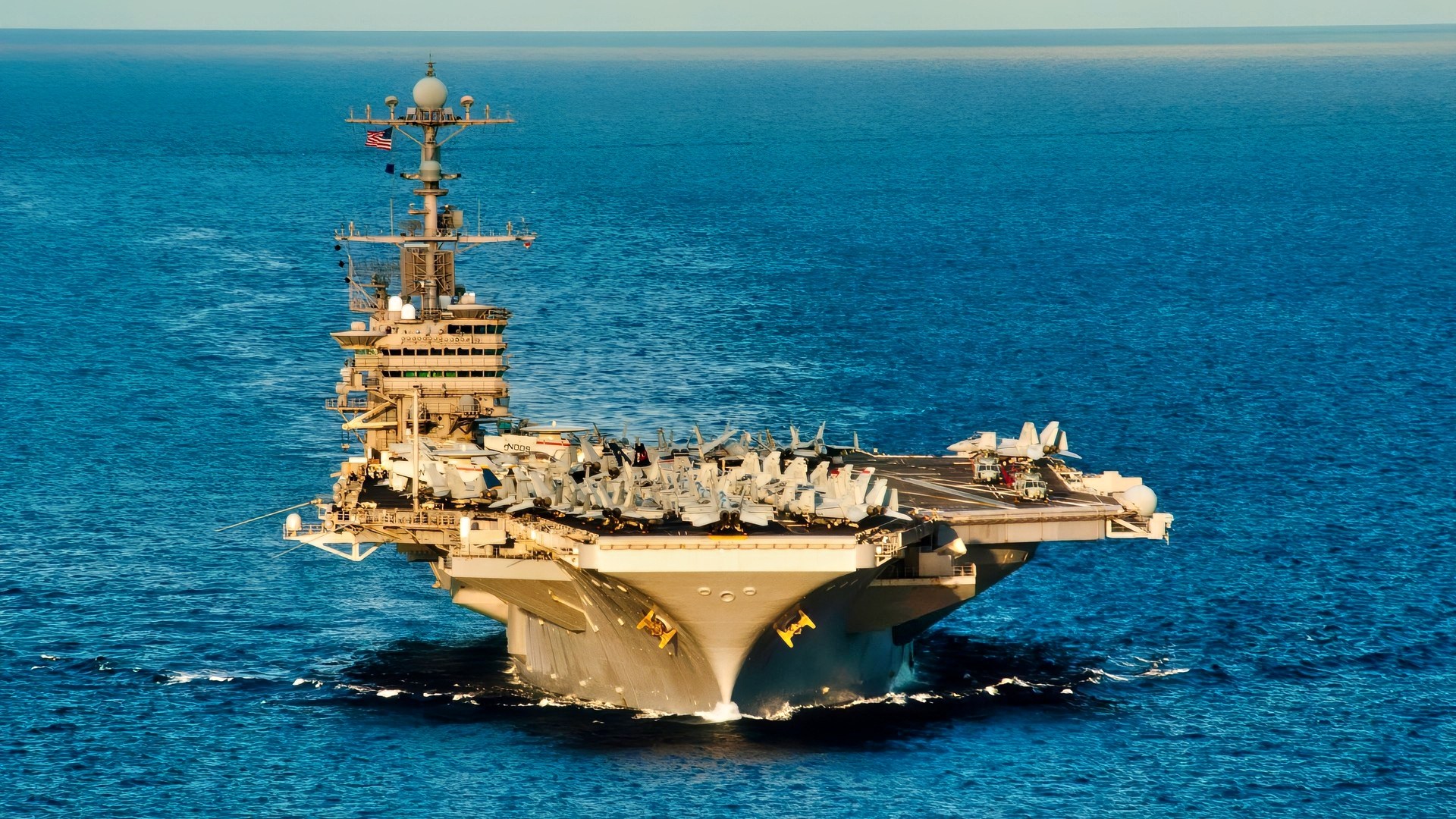
President Donald Trump delivered bad news for those who hoped for a lasting peace in the Middle East. He said on July 8 that the ceasefire was finished and that there would be additional air strikes against Iran.
Trump answered questions on the sidelines of the NATO summit in Turkey and said, “I think it’s over.” The Americans struck military targets in Iran overnight on July 7.
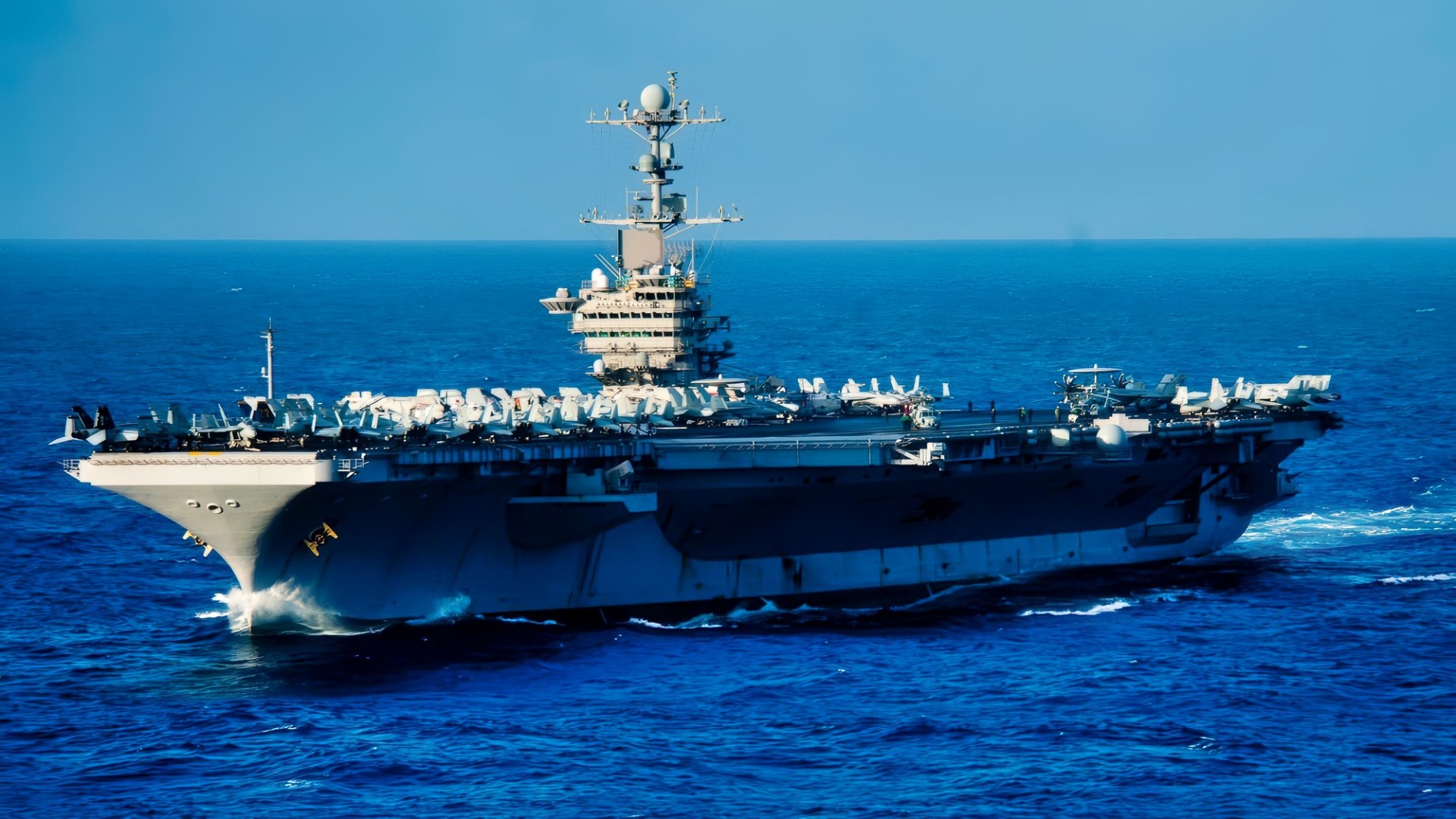
USS John C. Stennis Carrier. Image Credit: Creative Commons.

The aircraft carrier USS Gerald R. Ford (CVN 78) completes the first scheduled explosive event of Full Ship Shock Trials while underway in the Atlantic Ocean, June 18, 2021. The U.S. Navy conducts shock trials of new ship designs using live explosives to confirm that our warships can continue to meet demanding mission requirements under harsh conditions they might encounter in battle. (U.S. Navy photo by Mass Communication Specialist 3rd Class Riley B. McDowell)
“I don’t want to deal with them anymore … as far as I’m concerned, it’s over,” he said. Trump admitted that the United States will still attempt negotiations, but that the effort has mostly been a “waste of time.”
Hit Them Hard Again
He also declared that the strikes would continue. Trump said that the United States will “very probably” attack Iran “hard again tonight.”
“I’ll give him a little warning. We’re going to hit them hard tonight, but we’ll see how it all works out,” Trump said.
Secretary of Defense Pete Hegseth also promised that air raids would continue against Iran. “Tonight, if we need to, on your order, Mr. President, we will hit even more and even deeper” into Iran, Hegseth declared.
Sanctions and the Blockade Are On Again
Events seem to be cascading with the war on again. The United States is liable to reimpose financial sanctions and create another blockade against Iran to keep the country from exporting oil.
“We may put it back, the blockade, and it’ll only be a blockade for Iran,” Trump said.
What Sparked the Latest Hostilities?
This all started over the last 48 hours after Iran attacked three commercial oil tankers.
No one was wounded in the strikes against the ships, but it placed more pressure on the United States to react militarily. Trump decided to have his Department of Defense respond.
U.S. Central Command said the air strikes involved more than 80 targets. The Americans went after air defense batteries, radar installations, and command and control facilities.
“The U.S. strikes are in response to Iranian attacks on three commercial vessels that were transiting the Strait of Hormuz.
Iran’s demonstrated aggression was unwarranted, dangerous, and a clear violation of the ceasefire,” Central Command said.
Crude Oil Price Surges
The price of West Texas Intermediate crude rose 7 percent to $75.46 as of 11:30 am ET on Wednesday.
Iran Is Not Giving Up
Iran is liable to answer for the U.S. strikes and could go after commercial vessels in the Strait of Hormuz. This would also drive oil prices higher.
The Iranians may also deploy more sea mines to the Strait of Hormuz and close the strategic waterway.
The strait is a critical aspect of the negotiations. Iran wants to control it as its own sovereign territory and charge tolls on ships transiting it. More commercial ships had been crossing the strait before.
“Data tracking company Kpler said in an X post on Monday that traffic in the Strait of Hormuz over the weekend showed ‘resilience’ with a total of 108 verified crossings. There were 43 crossings on July 3, 34 on July 4, and 31 on July 5,” according to Al Jazeera.
Strait of Hormuz Traffic Freezes
Look for those crossing numbers to decrease, and for traffic to slow to a standstill. Trump may not like that allies at the NATO summit are liable to be affected by the resulting spike in oil prices.
Iran Is Ready to Fight Again
Meanwhile, talks to end the war are on hold. It is unclear what the Trump diplomatic team will seek to achieve in the coming days.
Iran is likely gearing up for war again. The country has been much more belligerent due to the ongoing funeral of former Supreme Leader Ali Khamenei.
The country’s reaction has steeled its resolve against the United States.
It is difficult for the United States to find peaceful options as it navigates a path forward. Should it continue air strikes? Or should it try to pursue more talks?
Trump Needs to Communicate Better
Trump may need to address the country and explain his war aims to the American public in more detail.
The president has declared that the war is over repeatedly in the last 30 days. Now the Memorandum of Understanding that was so difficult to negotiate is dead.
U.S. allies in the region are also frustrated. Qatar and other partners are likely to believe that their efforts to mediate talks have been fruitless. The latest strikes are showing that diplomacy has failed.
Is ‘Armed Diplomacy’ Failing?
Trump could keep the military attacks coming for the rest of the week and then attempt a new “armed diplomacy” strategy in which his threats turn to more violent action if negotiations do not go his way.
Iran wants to control the strait and impose its tolls on ships that pass.
This is a red line for the United States, but Americans may find that allowing Iran to charge a transit fee is a realistic outcome once a final peace deal is achieved.
However, the United States will claim that it is only seeking freedom of navigation in the strait and that international commerce is being threatened.
How Iran Is Playing Its Hand
Iran seems to have the upper hand. The country’s leadership can close the strait again, and if it can survive the air strikes, it can keep transit numbers down.
This seems to be the strategy. And time is on Tehran’s side.
It can play this dangerous game indefinitely. Trump is liable to become more impatient as he sees the outcome of his aggressive words. Iran can claim it is just acting in its own self-interest.
This Is a Quagmire
The Americans are finding that the war against Iran has turned into a quagmire that is consuming all of Trump’s attention.
He believed that a comprehensive deal that would remove Iran’s ability to pursue a nuclear weapon would by now have been achievable.
Iran may be weakened militarily, but it still has the power over the strait and can play the long game in the region, while the United States seems to be reeling every time there is violence in the strait.
Trump and his national security team will be huddling in the coming days, and hawks and doves in the administration will be arguing their various viewpoints.
Look for more military strikes over the next 48 hours as the United States seeks to keep Iran’s ability to close the strait to a minimum.
The American blockade of Iranian oil shipments will start up again. Talks will be put on the back burner, and oil prices will continue to rise.
The ceasefire is over, and it appears the two countries are still at war.
This is not what Trump had in mind when he declared victory numerous times, only to have his hopes dashed by Iranian defiance.
The Iranians still have fire in their bellies, so don’t expect an end to the hostilities on a permanent basis anytime soon.
About the Author: Brent M. Eastwood, PhD
Brent M. Eastwood, PhD, author of now over 3,500 articles on defense issues, Brent M. Eastwood, PhD, is the author of Don’t Turn Your Back On the World: A Conservative Foreign Policy and Humans, Machines, and Data: Future Trends in Warfare, plus two other books. Brent was the founder and CEO of a tech firm that predicted world events using artificial intelligence. He served as a legislative fellow for US Senator Tim Scott and advised the senator on defense and foreign policy issues. He has taught at American University, George Washington University, and George Mason University. Brent is a former US Army Infantry officer. He can be followed on X @BMEastwood.


