

Speaking to CNBC on Tuesday, July 7, Finnish President Alexander Stubb said that he believed Ukraine had already won the war against Russia.
Speaking as the NATO summit in Ankara, Turkey, began, Stubb warned that the fight still isn’t over and that Kyiv urgently needs more air defenses from its allies.
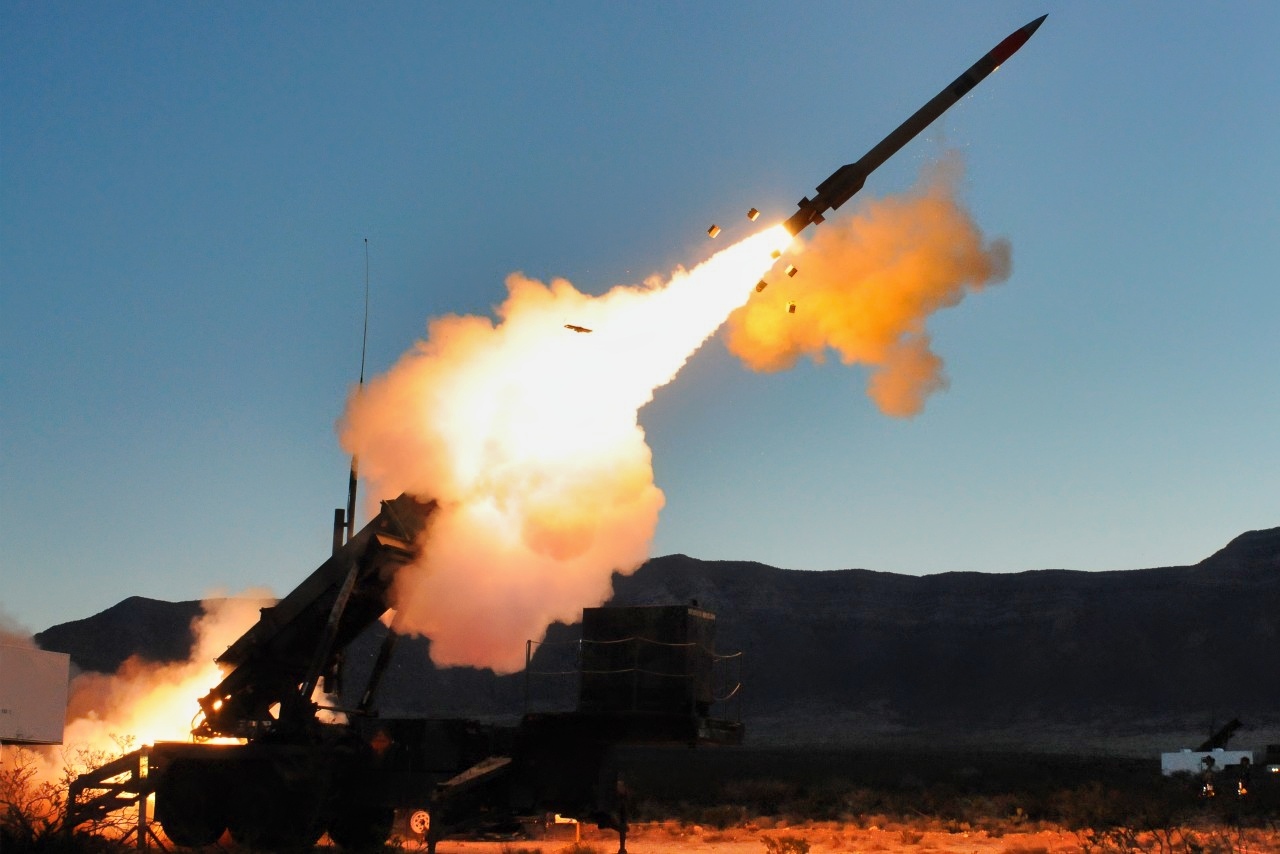
The PAC-3 MSE is a highly sought-after air defense munition due to its advanced capabilities and versatility. As a next-generation interceptor, it offers improved range, speed, and maneuverability, making it an effective counter to a wide range of threats, including tactical ballistic missiles, cruise missiles, and aircraft. (Official U.S. Army photo)
What Stubb Said
While Stubb didn’t argue that the war was over and Russia had surrendered, or even that Russia is on the verge of surrendering, he described how Ukraine has proven its ability to defend its territory and independence even in the face of a much larger army.
“Look at things from a Moscow perspective: In the past four years, during the active war, they have advanced 60 kilometers.
In World War II, they went from Moscow to Berlin- that’s 1,400 kilometers. You have to ask yourself: ‘Who has won, who has lost?’ I say Ukraine has won,” Stubb said.
“My message is that yes, Europe needs to ramp up, but you know what, Ukraine needs NATO, but NATO needs Ukraine as much as the other way around,” he continued.
Ukraine Still Needs Help
Ukraine may have proven it is capable of withstanding pressure, but it has only achieved it with the support of its allies in the West – and now, Ukraine is running short of critical air defense systems and interceptors that could hand Russia a last-minute victory.
Kyiv has been warning its Western allies for well over a year that its greatest vulnerability is not a shortage of manpower or determination, but rather a shortage of modern air defense systems and the missiles needed to keep them operating.
President Volodymyr Zelenskyy has repeatedly appealed for more Patriot batteries, SAMP/T systems, NASAMS launchers, and the missiles that power them.
He has argued that every delay gives Russia another opportunity to target Ukrainian cities with ballistic missiles that few systems in the world are capable of intercepting.
Those appeals grew more urgent in recent weeks as Russia increased the scale and frequency of its bombardment campaign.
Moscow is now regularly combining hundreds of drones with cruise and ballistic missiles in an effort to overwhelm Ukrainian defenses and force defenders to choose which threats to engage. That strategy is working, too.
Speaking alongside NATO Secretary General Mark Rutte in Ankara on Monday, July 7, Zelenskyy again placed air defense at the top of his priorities.
“We know which of our friends – not only the Americans, by the way – have these capabilities. We desperately need them; this is an urgent necessity. I think you have all seen these Russian attacks,” Zelenskyy said.
The Ukrainian president said that obtaining new air defenses is essential for protecting both civilians and its forces.
“Of course, we see Russia’s weakness, we feel it – but it is still not enough. We need more pressure, more anti-ballistic missiles, and more sanctions against Russia,” he also said.
Ukraine Is Vulnerable
Ukraine’s vulnerability was on display only days before the NATO summit when Russia launched one of the largest missile and drone attacks of the year against Kyiv.
Ukrainian air defenses successfully destroyed the vast majority of incoming drones and cruise missiles, but every single ballistic missile hit its intended target because Ukraine lacked sufficient PAC-3 interceptor missiles to stop them.
The barrage killed more than 20 people and injured dozens of others.
That’s precisely the capability gap that Stubb and other NATO leaders agree must now be closed.
Stubb said as much in his comments this week, noting that Ukraine still needs significant support to survive the rest of Russia’s aggression.
“We shouldn’t be all smiles about it, because Zelenskyy needs air defense, and that’s where we need to help Ukraine as much as possible,” he said.
Trump Approves Patriot License for Ukraine
This week, U.S. President Donald Trump sought to mitigate the problem without committing such a large number of Patriot interceptors to Ukraine that it would degrade American readiness for a potential future conflict.
Trump announced that he has agreed to give Ukraine a license to manufacture its own Patriot interceptor missile – something that Kyiv has been requesting for months.
Until now, the United States had only a handful of trusted partners capable of building Patriot interceptors and relied on exports from existing manufacturing lines that have struggled to keep pace with demand.
That all changed when, on Wednesday, July 8, Trump said that Ukraine was welcome to join the ecosystem.
“We’re going to give you a license to make Patriots,” he said. “This way, you can’t complain that we’re not giving them enough.”
Trump added that the system is “very complex” but expressed confidence that Ukraine would be able to build it after receiving technical assistance from the United States.
For now, the war continues – but as Stubb noted this week, if Ukraine keeps up this pace of destroying Russian energy infrastructure while defending itself against Russian ballistic missile strikes, Kyiv could be on its way to victory.
About the Author: Jack Buckby
Jack Buckby is a British researcher and analyst specializing in defense and national security, based in New York. His work focuses on military capability, procurement, and strategic competition, producing and editing analysis for policy and defense audiences. He brings extensive editorial experience, with a career output spanning over 1,000 articles at 19FortyFive and National Security Journal, and has previously authored books and papers on extremism and deradicalization.


