

Ukraine’s President Volodymyr Zelenskyy has once again capitalized on his attendance at a NATO summit by signing defense cooperation agreements in what is being called the “Drone Deal format” with Estonia and the Netherlands. At the same time, Ukraine has also moved forward with parallel negotiations for similar agreements with Canada and Finland, which are expected to be concluded in the coming weeks.
The Estonia and Netherlands deal was signed during a meeting between Zelensky and Estonian Prime Minister Kristen Michal on the sidelines of the NATO summit in Ankara, Turkey, on Tuesday, 7 July. Zelensky also signed a very similar agreement with Dutch Prime Minister Rob Jetten.
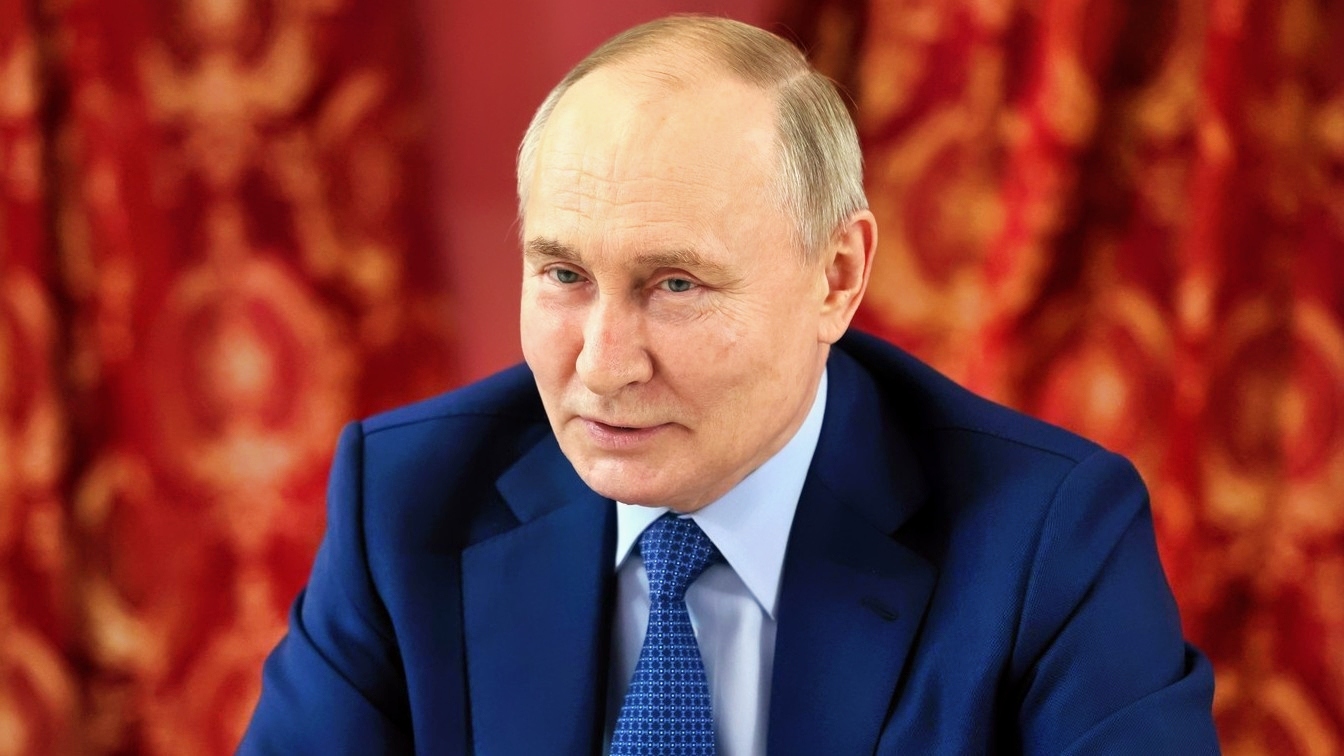
Putin in March of 2024. Image Credit Russian Federation Government
The Ukrainian president described this venture as a “full-fledged” cooperative program that would involve joint drone production, technology development, and differing formats for arms sales to third countries.
“There will be even more opportunities for joint production and technology development, and most importantly, for systematic exchange of expertise and arms exports,” Zelensky said. He also stated that, in a parallel set of discussions, the leaders have agreed that Europe needs to develop its own anti-ballistic missile systems, similar to the US-made Patriot PAC-3.
Zelenskiy also thanked the Netherlands for its assistance, which he stated had helped protect “thousands upon thousands” of Ukrainian lives from Russian strikes, and Estonia for its “military, humanitarian, and diplomatic support toward [Ukraine being granted] EU and NATO membership”.
Canada and Additional Drone Deals
Zelensky also met off-line with Canadian Prime Minister Mark Carney and Finnish President Alexander Stubb to discuss the time frame and negotiated terms of their Drone Deal agreements. Canada also announced a $900 million medium-term military package for Ukraine during the same NATO summit in Ankara. This package includes vehicles, munitions, and continuing support for Ukraine’s air defense systems.

A Dutch soldier shoots from a machine gun during Exercise Scorpion Strike, held by NATO forces in Lithuania on Feb. 21, 2018.
Dutch forces, along with those of six other NATO Allies, make up the enhanced Forward Presence battlegroup in Lithuania. Together with battlegroups in Poland, Latvia and Estonia, they demonstrate NATO’s commitment to collective defence. Image Credit: NATO Flickr.
Zelensky described the drone agreement as involving g not just drone production, but also a broader system of capabilities and system performance that has been validated during the war.
“At the meeting with Mark, we also discussed the current diplomatic situation,” Zelensky said. The Ukrainian President also added that the two “shared ideas on how to bring peace closer and create genuine interest in Russia for negotiations.”
Canada also invited Ukraine to become a founding member state of a new bank for defense, security, and resilience. The bank will serve as an institution for attracting capital, developing defense-industrial potential, and advancing technologies proven in real combat conditions.
Finland: Russia’s Northern Neighbor
“As always, there are many details and coordination between us,” Zelensky said after his meeting with Finland’s Stubb. The two presidents also discussed their bilateral Drone Deal, which included proposed dates for signing the agreement.
According to Zelensky, their discussions ranged from Ukraine’s air defense needs to coordination on joint diplomatic and defense initiatives. Stubb also provided Zelenskiy with details of his communications with other countries on their support for ending the war.
Both leaders also agreed to continue working closely together to secure the outcomes of the war that are the goals of both Ukraine and Europe.
Zelensky’s diplomatic push with Estonia, the Netherlands, Canada and Finland took place on the sidelines of the NATO summit and outside the event’s central spotlight.
But the assessment of the diplomatic community is that the Ukrainian president is in a markedly stronger position than he was a year ago, according to reporting that originated with Bloomberg.
Putin’s Biggest Problem: Ukraine Can Hit the Oil and Gas Refineries
If there is any factor responsible for enhancing Ukraine’s position above all others, it is that, as Zelenskiy told the assembled leaders during the NATO summit, “There is no major Russian oil refinery left that has not been struck by Ukraine.”
These intensified strikes on Russian oil refineries and logistics are seen as turning the tide for Ukraine among the NATO member states and partners, as well as in the struggle against Russia’s military.
About the Author: Reuben F. Johnson
Reuben F. Johnson has thirty-six years of experience analyzing and reporting on foreign weapons systems, defense technologies, and international arms export policy. Johnson is the Director of Research at the Casimir Pulaski Foundation. He is also a survivor of the Russian invasion of Ukraine in February 2022. He worked for years in the American defense industry as a foreign technology analyst and later as a consultant for the U.S. Department of Defense, the Departments of the Navy and Air Force, and the governments of the United Kingdom and Australia. In 2022-2023, he won two awards in a row for his defense reporting. He holds a bachelor’s degree from DePauw University and a master’s degree from Miami University in Ohio, specializing in Soviet and Russian studies. He lives in Warsaw.


