

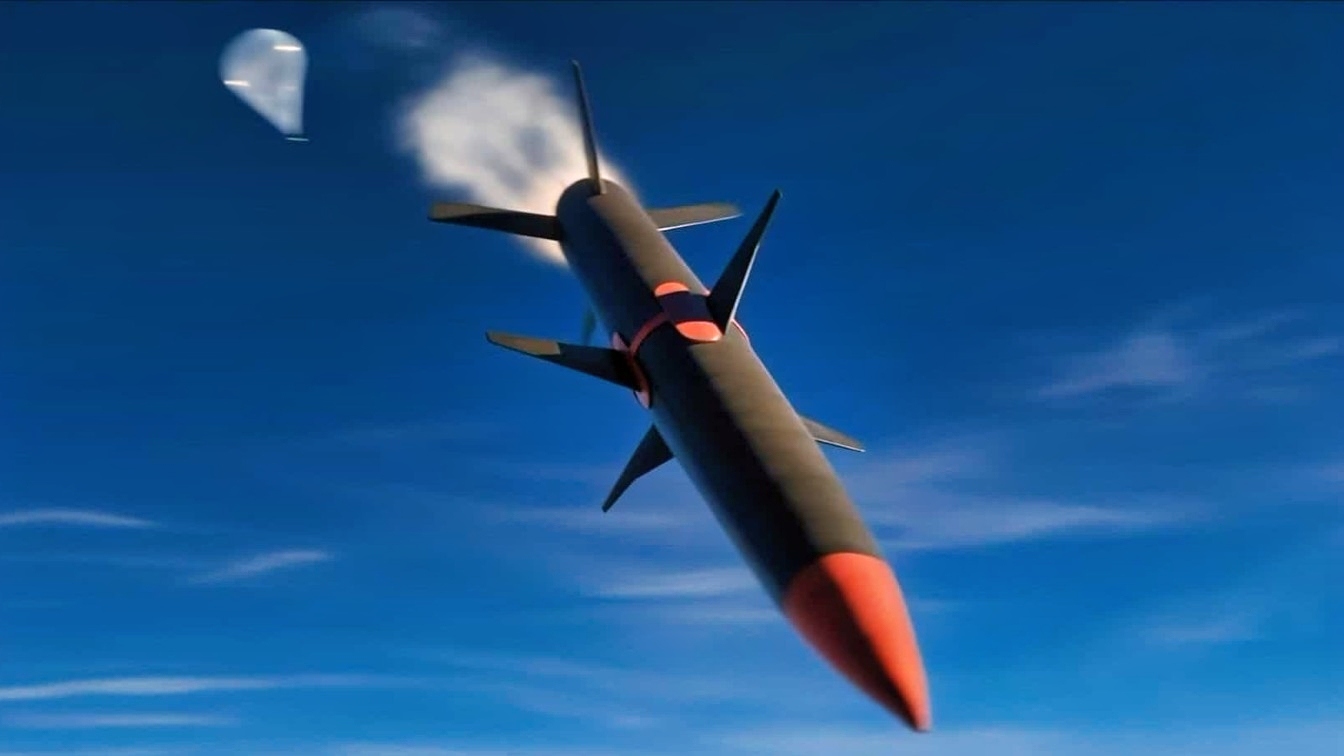
Ukraine’s domestically designed and built missile industry has seen an incredible amount of transformation since Russia’s full-scale invasion in February 2022. Prior to the war, Kyiv had an experienced but underfunded missile sector thanks in large part to its Soviet-era design bureaus, expertise that the country has since leveraged. While some rather ambitious projects did exist, such as the Neptune anti-ship missile and the Hrim-2 ballistic missile, production was slow, available funding was limited, and other, often political, projects took priority.
But the war fundamentally changed everything. With limited stocks of legacy Soviet-era weapons and with some lack of certainty over access to advanced Western alternatives, Ukraine shifted gears and made long-range strike capabilities — from home-grown projects — a top priority.
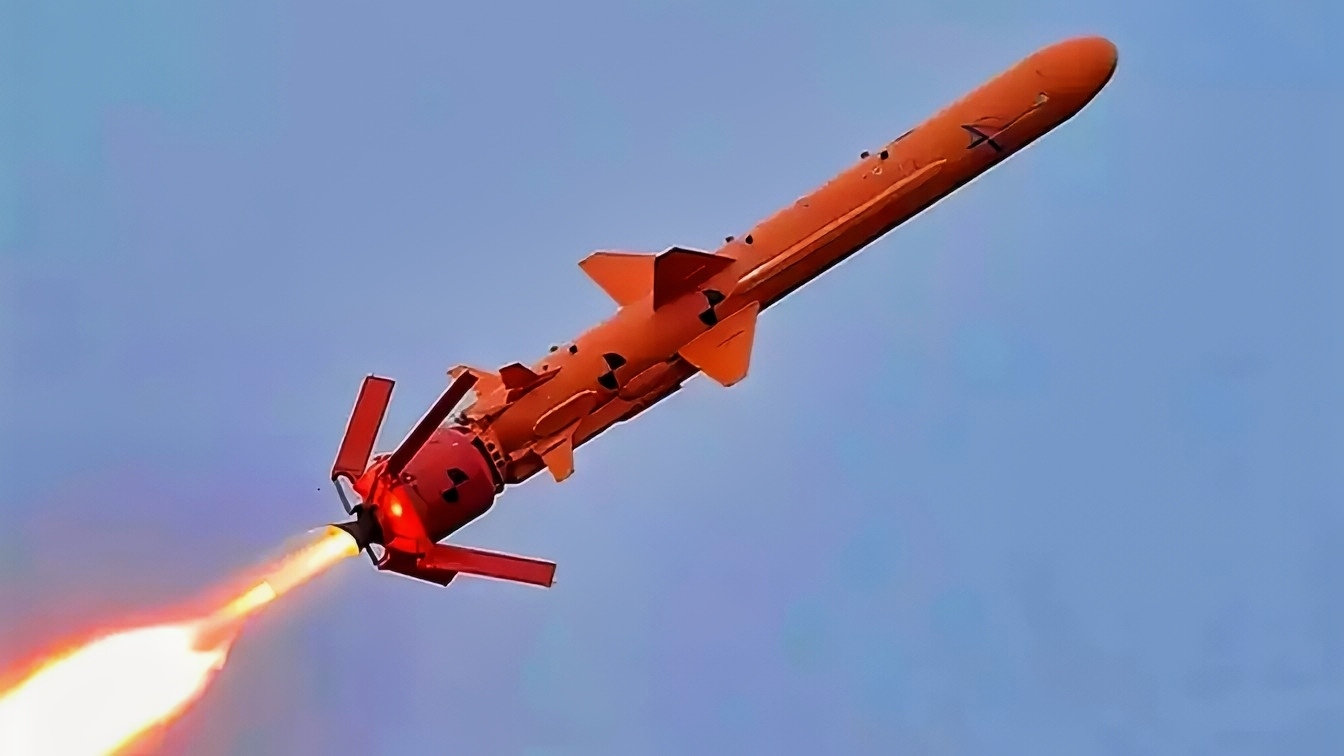
Ukraine Cruise Missile Ministry of Defense Photo
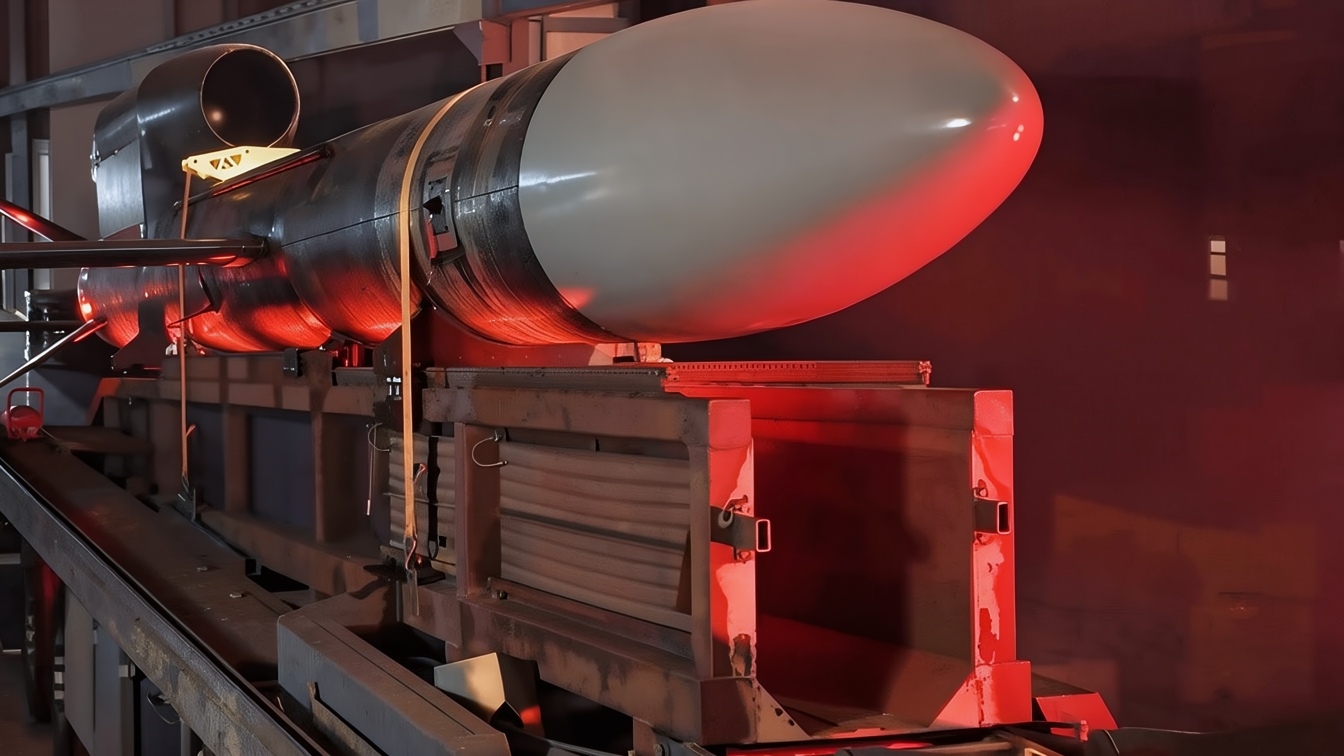
Ukraine Cruise Missile 2026. Image Credit: Creative Commons.
Public and Private Initiatives
The resultant effort has followed two tracks. One pillar of Ukraine’s burgeoning defense industry is Ukrainian state-owned firms that aim to modernize older programs, such as the Neptune missile system. That program began as an anti-ship weapon and morphed into a land-attack option.
Another pillar of the Ukrainian effort is the network of private companies that produce relatively inexpensive one-way attack drones and more complex cruise missiles.
But the distinction between the two is sometimes opaque, and some of Ukraine’s long-range attack drones are a kind of hybrid weapon that resembles aircraft but carries large warheads over hundreds or even thousands of kilometers and at just a small fraction of the cost of traditional cruise missiles.
From Drones to Long-range Strike Weapons
One of the first stages of Ukraine’s cruise missile odyssey was modified reconnaissance drones and improvised attack aircraft. These systems proved that some targets, even deep within Russia, could be hit, despite relatively modest payload capacity.
But as the war has progressed, Ukrainian manufacturers have produced purpose-built long-range strike platforms that offer greater range, improved navigation and larger warheads while remaining much more affordable than conventional cruise missiles. The cumulative effect has been to expand the type of targets that can be hit within Russia from smaller targets relatively close to the border to include oil refineries and transportation infrastructure, ammunition plants and depots, aircraft factories and air bases to vital military nodes deep within Russia — and, importantly a list that today includes the two main cities in Russia, the capital Moscow and St. Petersburg, Russia’s second city.
The FP-5 Flamingo
Though one of Ukraine’s newer weapons, the FP-5 Flamingo has garnered considerable attention both thanks to its name and because of its capabilities and role between conventional cruise missiles and strike drones.
Developed by Fire Point, a Ukrainian firm, the Flamingo is described by the company as a long-range cruise missile rather than as a one-way attack drone. According to the firm, the Flamingo can reach targets up to 5,000 kilometers (3,100 miles) away while carrying a large warhead weighing over a ton. Reuters reports that Ukraine wants to bring the missile into large-scale production as part of Kyiv’s effort to wean its armed forces off foreign supplies and ensure its own sovereignty independent of the whims of foreign leaders and politics.
Unlike many of Ukraine’s inexpensive strike drones, the Flamingo uses a turbofan engine. Some open-source reporting suggests that these engines could be refurbished Soviet-era Al-25 series engines sourced from existing inventories — some of which may have originated outside of Ukraine rather than being newly manufactured. The strategy of reusing and repurposing existing engine stocks allows Ukraine to field the Flamingo missile more quickly and by skirting the problem of standing up a new engine production base, though in the longer term, Ukraine may find that available engine stocks are difficult to source and perhaps less reliable and less high-performing.
The Flamingo missile’s body is believed to make extensive use of composite materials, potentially reducing both its weight and its radar signature. The missile’s guidance is believed to rely on both inertial and satellite navigation systems, though very little is publicly known about its avionics and electronic countermeasures.
Flamingo Combat Performance
Thanks in part to the Flamingo’s age and the wartime secrecy surrounding it, the missile’s combat record is relatively limited compared to Ukraine’s older, more established long-range drones.
Open-source analyses have identified only a small number of confirmed operational uses of the Flamingo since the missile was first publicly disclosed. These have included attacks on military and infrastructure targets in Russian-occupied Crimea, but inside Russia itself as well. Available imagery has shown that some missiles have reached their targets, but the overall success rate appears to be much lower than the manufacturer’s claims.
That does not necessarily mean, however, that the Flamingo missile has been a failure. New weapon systems often require extensive operational refinement before full confidence is placed in them. Even some mature and combat-tested cruise missile programs, like the American Tomahawk missile, occasionally fail to reach their intended target accurately. Ukraine must also contend with production during wartime conditions on its own soil, greatly complicating development and testing.
About the Author: Caleb Larson
Caleb Larson is an American multiformat journalist based in Berlin, Germany. His work covers the intersection of conflict and society, focusing on American foreign policy and European security. He has reported from Germany, Russia, and the United States. Most recently, he covered the war in Ukraine, reporting extensively on the war’s shifting battle lines from Donbas and writing on the war’s civilian and humanitarian toll. Previously, he worked as a Defense Reporter for POLITICO Europe. You can follow his latest work on X.


D3F1ANT
July 10, 2026 at 11:41 am
Every other day we read that Putin “has a problem”, or “is finished”, or that Russia is “LOST”! But the war drags on and on and on…