

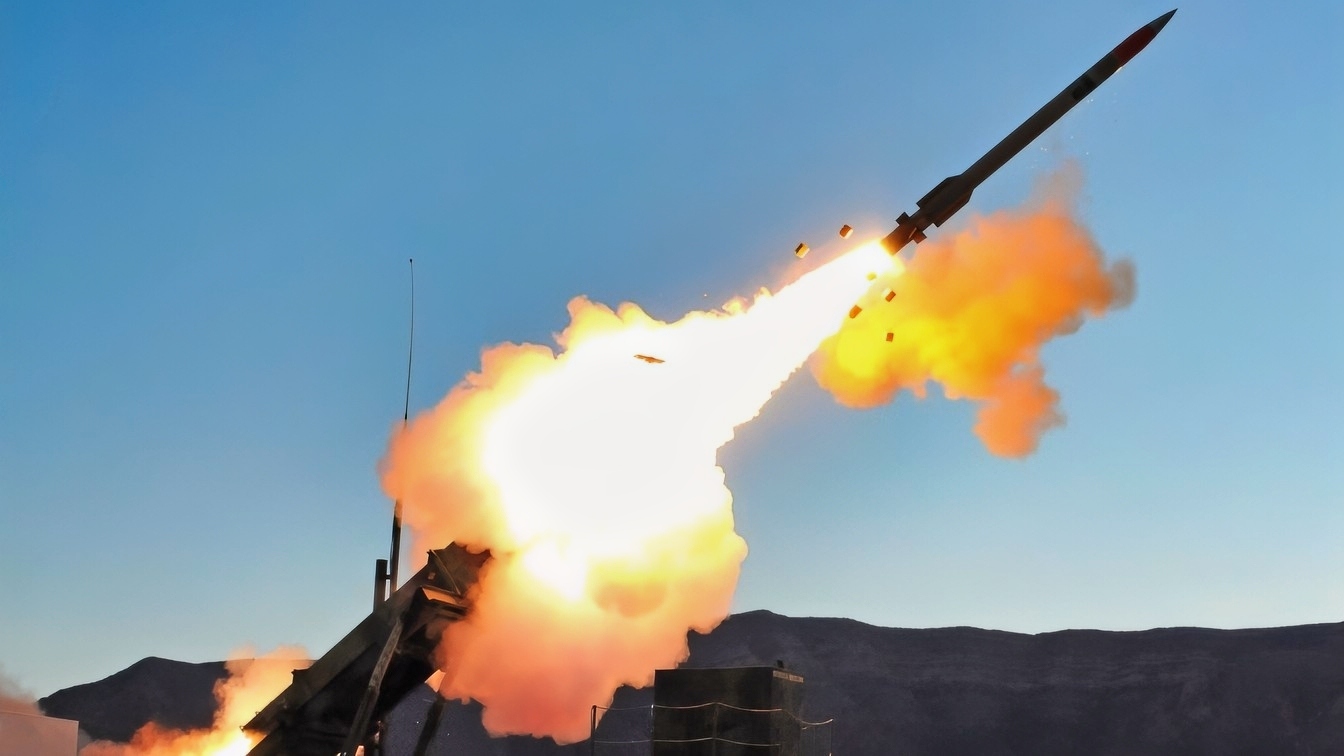
On 5-6 July, Russia launched what has been described as “one of the worst attacks” on the city of Kyiv since the war began. Moscow launched a combined total of 419 drones and missiles overnight, with Ukraine’s Air Defense Forces (PPO) intercepting only 363 of them.
But among those that got through these defenses were 23 Russian ballistic missiles and six anti-ship missiles that had been repurposed to attack land-based targets. The Ukrainian PPO failed to intercept any of these ballistic and high-speed weapons.
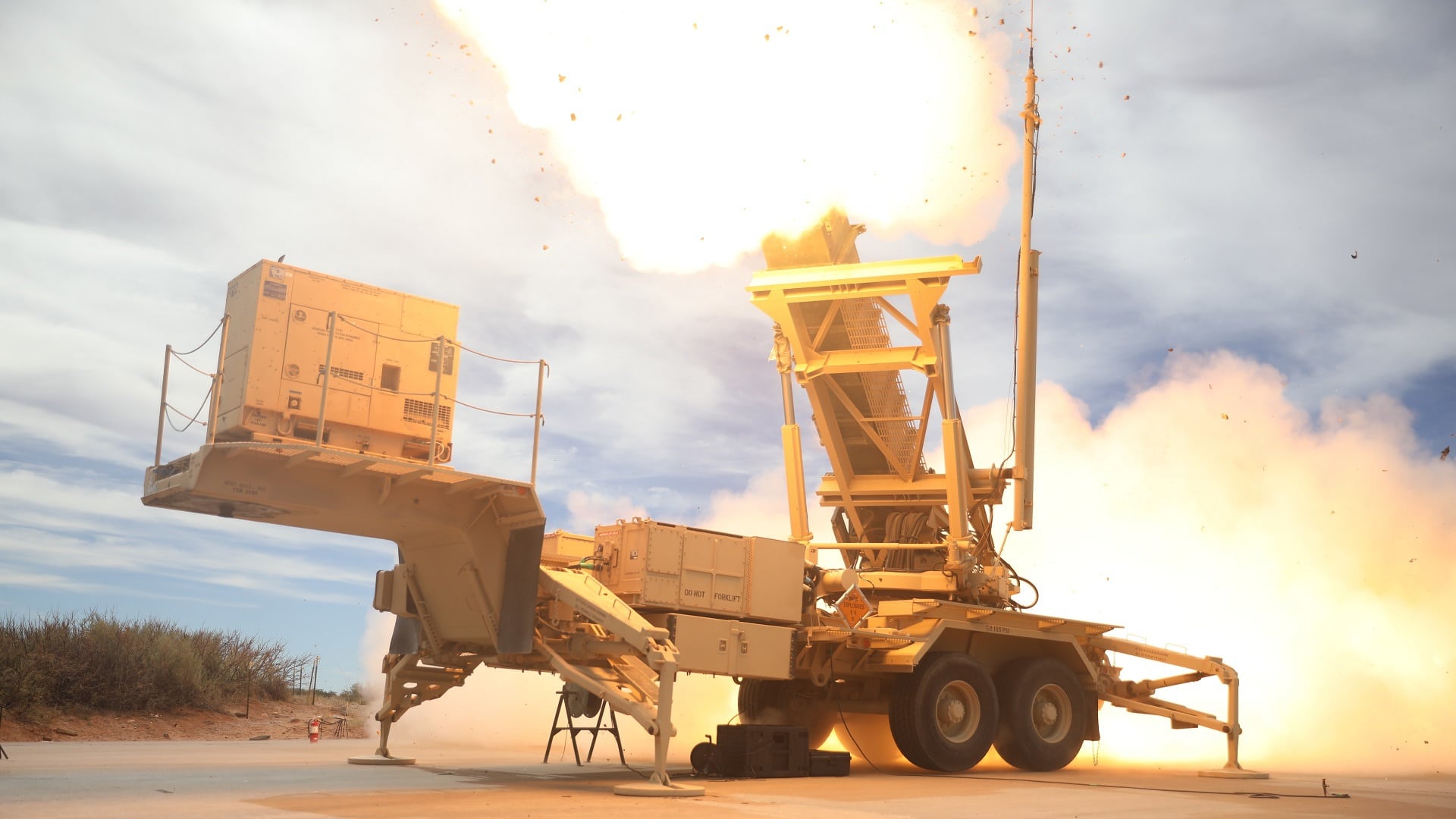
Patriot Missile. Image Credit: Creative Commons.

Exercise Artemis Strike is a German-led tactical live fire exercise with live Patriot and Stinger missiles at the NATO Missile Firing Installation in Chania, Greece from Oct. 31-Nov. 09. Over 200 U.S. soldiers and approximately 650 German airmen will be participating in the realistic training within a combined construct, exercise the rigors associated with force projection and educate operators on their air missile defense systems. The 10th Army Air Missile Defense Command will deploy, operate and fire live missiles within a tactical scenario, under Supreme Headquarters Allied Powers Europe operational readiness evaluation criteria.
In a previous attack, Russian missiles hit not only residential sites and commercial buildings, but also a Red Cross warehouse with 320,000 units of humanitarian relief items and equipment, and a book depository with 800,000 Ukrainian-language volumes. The latter is being called an act of cultural genocide by attempting to wipe out the usage of the Ukrainian language.
The Ukraine PPO’s performance has been nothing short of stellar, and there is no indication that its competence has deteriorated. The problem is simple: Ukraine is running out of the CRI and PAC-3 MSE interceptor missiles, the only defensive weapons capable of intercepting these ballistic missiles.
Patriot Missiles: Trump’s Promise Easier Said Than Done
During a meeting with Ukrainian President Volodymyr Zelenskyy on the sidelines of the 7-8 July NATO summit in Ankara, Turkey, US President Donald Trump announced that Washington would grant Ukraine a production license to build Patriot missile interceptors.
This is a major policy shift of a kind that for years has been relegated to the realm of the impossible by both the US Government and defense industry officials.
Not long after Ukraine first received Patriot batteries and began using them to defend its cities and military sites, National Security Journal asked a former US defense industry executive who had worked on the Patriot program when he thought Ukraine might be able to build components of the system.
“Most likely never,” he replied. “The US [Foreign Military Sales] system is just fundamentally incapable of granting access to the technology of this kind of system to a place like Ukraine.”
This is now what Trump has promised to his Ukrainian counterpart, but in the same sideline meeting with Zelenskiy, he himself stated that he was making the promise without any previous discussion with the companies that design and manufacture the missile.
He stated that Lockheed Martin, the manufacturer of the MSE, which is the most capable Patriot missile system, had not yet been informed of his commitment, but said he was “sure they’ll be thrilled.”
The Patriot Missile Promise Won’t Be Easy to Grant to Ukraine
But experts on the system who spoke to US media were careful to point out that Trump’s offer of this license for Ukraine to produce Patriot missiles would likely require years before it came to fruition and would do very little to alleviate the current dearth of interceptor missiles that has left Ukraine defenseless in the face of these Russian attacks.
“The problem is that these things aren’t like flipping on a light switch,” said Bradley Bowman, who is a specialist at the Washington, DC-based Foundation for Defense of Democracies. The organization is a nonprofit, nonpartisan research institute for foreign policy and national security.
“You can devote the money necessary, but that’s not going to manifest itself and increase production capacity for a significant period of time,” he explained to ABC News. “Unfortunately, time is, in many cases, the thing you don’t have,” he explained.
Currently, only two nations have been granted a license to manufacture missiles for the Patriot system – Japan and Germany, with Japan being the first of the two to be granted that permission and access to the technology to do so.
When he announced this week his decision that Ukraine would be permitted to make these missiles, Trump stated “that way, you won’t be able to complain that we aren’t giving you enough. Make them yourselves.”
The American President also added that he envisioned Ukraine mastering production relatively quickly, “once we explain how to do it.”
About the Author: Reuben F. Johnson
Reuben F. Johnson has thirty-six years of experience analyzing and reporting on foreign weapons systems, defense technologies, and international arms export policy. Johnson is the Director of Research at the Casimir Pulaski Foundation. He is also a survivor of the Russian invasion of Ukraine in February 2022. He worked for years in the American defense industry as a foreign technology analyst and later as a consultant for the U.S. Department of Defense, the Departments of the Navy and Air Force, and the governments of the United Kingdom and Australia. In 2022-2023, he won two awards in a row for his defense reporting. He holds a bachelor’s degree from DePauw University and a master’s degree from Miami University in Ohio, specializing in Soviet and Russian studies. He lives in Warsaw.


