

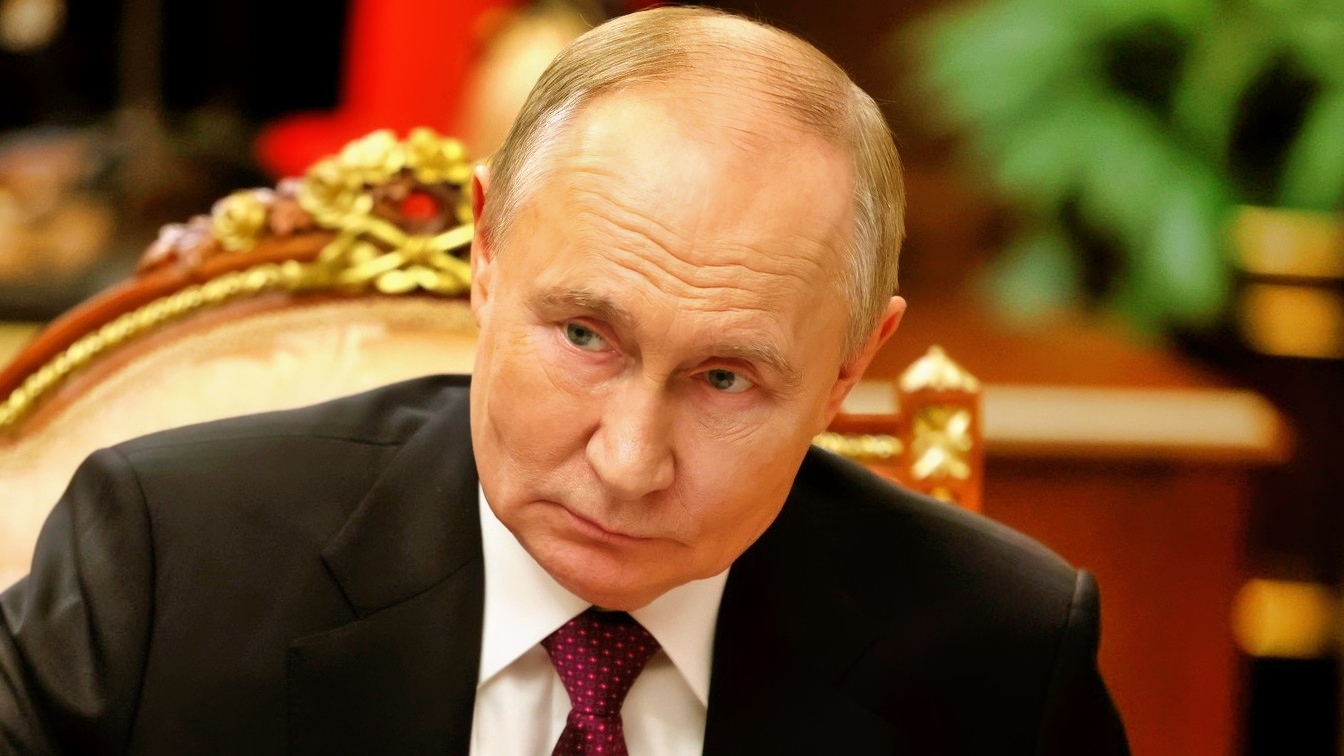
At an emergency meeting this week with his ministers and several governors, Russian President Vladimir Putin downplayed an escalating program of Ukrainian drone strikes.
These attacks are reaching progressively deeper into the country, but the former KGB Lt. Col. believes the massive volcanic explosions at Russian refineries and the skies full of black smoke have minimal impact on the situation within the country.
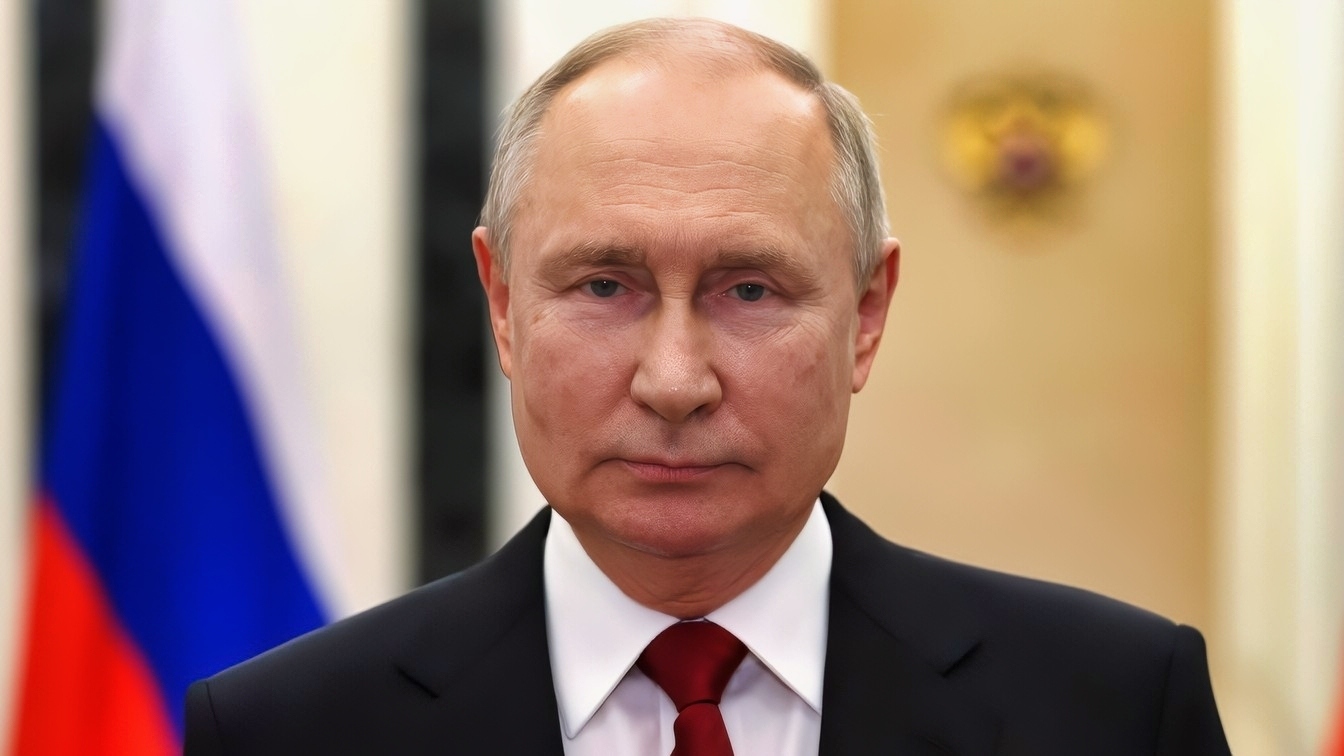
Putin on June 24 2023 Russian Federation Photo
According to Putin, the consequences of these attacks, which created fuel shortages everywhere and with miles and miles of automobiles queuing up trying to purchase petrol, are all part of what is largely a psychological operation against Russia.
“It’s evident that the enemy is trying to damage the economy, but its main goal is to create an atmosphere of tension in society.
We all understand that it is an unachievable task,” he said. “The resilience of the Russian energy system is very high, one of the highest in the world.”
This is a consistent theme of Putin.
Ukraine is trying to destabilize Russia by creating these disruptions and inconveniences.
But under his inspired and courageous leadership, these troublesome circumstances are all manageable and temporary. They can be overcome, and “everything is going according to plan.”

A 35th Fighter Squadron F-16 Fighting Falcon flies near the Korean peninsula during a dogfighting training scenario during exercise Ulchi Freedom Shield 25 at Kunsan Air Base, Republic of Korea, Aug. 20, 2025. UFS25 is a combined, joint, all-domain military training exercise that integrates ground, air, naval, space, cyber and information elements, enhancing readiness through realistic combat simulations. (U.S. Air Force photo by Senior Airman Landon Gunsauls)
Incompetent Management
One of Putin’s biggest critics, the Russian opposition politician-in-exile Mikhail Khodorkovsky, is also the man who used to run Yukos, at the time one of Russia’s largest oil companies.
The one-time oligarch became known as the man who defied Putin, which ended up with him losing his oil company and spending a decade in the gulag.
Khodorkovsky’s position at present is that petrol shortages are real, but they are exacerbated beyond what they should be by incompetent managers and government administrators.
“The loss of [refining] capacity is significant, but it is not yet critical,” he has been quoted as saying recently.
He states that the Russian oil companies and the state still have significant fuel reserves at their disposal. If those reserves were released to the market, they could help smooth out disruptions to daily petrol supplies.
He also points out that there is a plethora of what are sometimes called “teapot refineries” – small facilities that produce lower-grade petrol. These could be used to pick up the slack left by the attacks on the major refineries.
But if the petrol sector is not in as bad a shape as many now say, there is no hiding the fact that the regime Putin has ruled over for a quarter of century is incapable of keeping the country on a steady course in a time of crisis.
“The damage that has been caused until now is the result of a management crisis, not of a gasoline crisis,” Khodorkovsky said. “It has been demonstrated to the Russian society that Putin’s system of governance doesn’t work, and this is very unpleasant to Putin politically.”
If Ukraine Brings the Hammer Down – Watch Out
But in his estimation, there may be a next step in the conflict that could prove to be fatal to Putin’s ability to remain in power.
Thus far, the attacks on Russian oil with long-range drones have caused damage across the industry, but they have not decimated these refineries and oil export terminals. Eventually, the damage can be repaired.
But in the meantime, the Russian population seems to sense that a major change is coming.
According to reporting at the end of June in Russia, the number of average persons conducting web searches asking, “When will the SVO [Special Military Operation – Russia’s official term for its war against Ukraine] end?” had reached an all-time high.
That phrase was searched more than 137,000 times from 22 to 28 June on Russia’s largest search engine, Yandex.ru.
These are indications that an increasing number of people see the state as an entity that cannot last – that Putin’s rule cannot last. This they know. What they do not know is what comes next.
Meanwhile, a watershed moment may come when the Ukraine Fire Point ballistic missile design for the FP-9 is finally validated and accepted into inventory.
This is the kind of weapon that could inflict real destruction and bring Russia’s oil industry – and Putin’s regime – to its knees, says Khodorkovsky. “If 500 kg warheads start hitting refineries, then the situation will change radically.”
This “next shoe to fall” could be just weeks away, say those familiar with its design – answering the question of “when will the SVO end?”
About the Author: Reuben F. Johnson
Reuben F. Johnson has thirty-six years of experience analyzing and reporting on foreign weapons systems, defense technologies, and international arms export policy. Johnson is the Director of Research at the Casimir Pulaski Foundation. He is also a survivor of the Russian invasion of Ukraine in February 2022. He worked for years in the American defense industry as a foreign technology analyst and later as a consultant for the U.S. Department of Defense, the Departments of the Navy and Air Force, and the governments of the United Kingdom and Australia. In 2022-2023, he won two awards in a row for his defense reporting. He holds a bachelor’s degree from DePauw University and a master’s degree from Miami University in Ohio, with a specialization in Soviet and Russian studies. He lives in Warsaw.


