

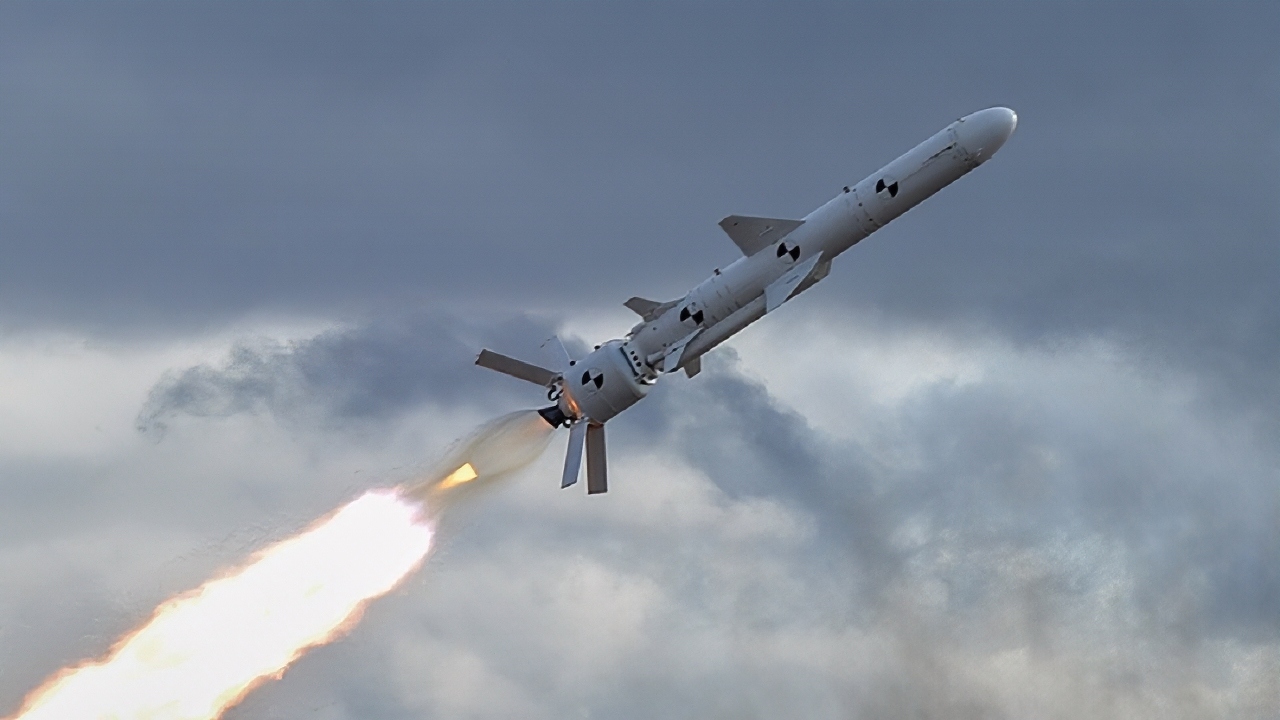
Ukraine Seeking 300 Patriot Interceptor Missiles to Survive Winter: Ukrainian President Volodymyr Zelenskyy has welcomed an agreement with the country’s NATO and other allied partners to participate in the design and production of a European-developed anti-ballistic missile defensive shield. The proposed system would be an alternative to the US-made Patriot system.
However, development of any such system – or even the already agreed participation of Ukraine in the Aster-30 program – will take years to become active hardware in Ukraine’s inventory. In the meantime, Zelenskiy continues telling the US and others that Kyiv will still require US-made interceptors for its Patriot batteries to survive the coming winter of 2026-2027.

Tu-160M Bombers from Russia. Image Credit: Creative Commons.
Each year, as the winter months approach, Russia begins to intensify its drone and missile attacks on Ukraine’s power grids. The intent is to shut down the heating and water systems in the major cities – leaving people to shiver in the dark.
“One of the main ways to strengthen our collective position should be a winter package of air defense missiles,” Zelenskiy posted on his X account. “We have calculated that this package should include 100 Patriot missiles per month, 300 missiles for the winter.”
“We also need to protect lives here and now. We have reliable European systems—SAMP/T, IRIS-T, and NASAMS. And, of course, the most important systems today for protecting lives from Russian ballistic missiles remain the Patriots. We need missiles for air defense—this is a daily necessity, and I ask you to focus on this support,” Zelensky emphasized in his posting.
Ukraine, Defense Technology and Lead Times
At this month’s NATO summit in Ankara, Turkey, U.S. President Donald Trump promised Ukraine a license that would permit it to build its own Patriot missiles. To date, the denigrating criticism of Ukraine’s ability to master the use of advanced Western military technology by some allies has consistently been disproven – as their successful use of the Patriot to date has shown.
Ukraine’s military and its defense-industrial firms have also astounded the world with their ability to innovate and to muster homegrown weapons production. But in the case of the Patriot PAC-3 Missile Segment Enhancement (MSE) interceptor, proven competence with advanced defense technology does not carry the day on its own.

Su-57 Felon Fighter from Russia
Not only is the MSE’s configuration extremely complex, but despite more than four years of war, the addition of new Patriot customer nations (besides Ukraine), and a growing demand for this missile, the rate of production of this interceptor has remained pegged at an inadequate 500 per year. In April of this year, the Pentagon contracted with Lockheed Martin, the MSE’s prime manufacturer, to scale up production to as many as 1,500 per year by 2030, but it will take years for that production rate to spool up.
One of the most limiting items is that the production rate depends heavily on the timely delivery of major components by subcontractors. The missile’s C-band radar-homing seeker, for example, is made not by LM but by Boeing. Short-term surges in this and other major components are problematic in the US defense industry’s supply chain networks, some of which have not yet fully recovered from the 2020 pandemic.
In the end, the time between now and the day the first Ukraine-built MSE missile rolls off a production line is determined more by the ability to receive these component deliveries on time than by Ukrainian industry’s fluency with this technology. Production of an MSE in Ukraine is also far enough away that, for the foreseeable future, the nation will have to depend on the delivery of missiles manufactured elsewhere.
Home-Grown Air Defense
Zelenskiy also mentioned the Freyja air defense project, which is a home-grown Ukrainian design. The development plan is to have these missiles ready to test within the next 12 months.
Each interceptor missile for this system is estimated to cost around US $700,000 per shot. This is a bargain by comparison with $3.8 million per missile for the MSE, and each of these missiles can require up to two years between the initial order and delivery to a customer.
Ukraine is developing the Freya not only for its own purposes, but also with an eye towards the export market. There is now and will continue to be a global shortage of expensive anti-ballistic missile interceptors. But the partners developing the Freya project state that it will not be a replacement for the more expensive MSE or Aster 30 designs, but rather a system that will enhance and supplement these existing European and NATO missile shields.
About the Author: Reuben F. Johnson
Reuben F. Johnson has thirty-six years of experience analyzing and reporting on foreign weapons systems, defense technologies, and international arms export policy. Johnson is the Director of Research at the Casimir Pulaski Foundation. He is also a survivor of the Russian invasion of Ukraine in February 2022. He worked for years in the American defense industry as a foreign technology analyst and later as a consultant for the U.S. Department of Defense, the Departments of the Navy and Air Force, and the governments of the United Kingdom and Australia. In 2022-2023, he won two awards in a row for his defense reporting. He holds a bachelor’s degree from DePauw University and a master’s degree from Miami University in Ohio, specializing in Soviet and Russian studies. He lives in Warsaw.


