


Russia and Ukraine have now been at war for almost four and a half years. And as pointed out this week in a New York Times op-ed, the state of play in the war has changed quite a lot, as have the weapons being used.
The op-ed, with the headline “The Ukraine-Russia War Reaches a New Phase,” was written by Serge Schmemann, the Times’ former Moscow bureau chief who won a Pulitzer Prize in the early 1990s for his coverage of the German reunification.
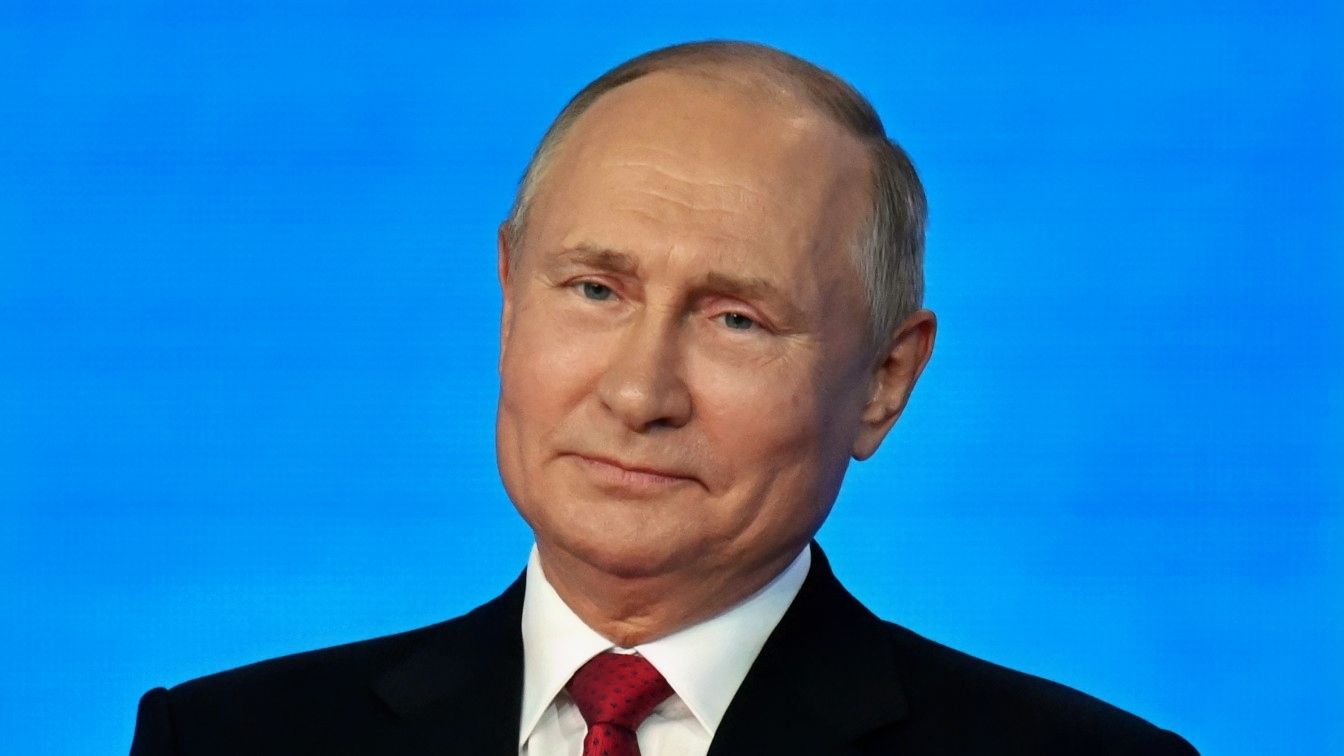
Putin in August 2021 Russian Federation Photo
Schmemann notes that the war was originally fought on the ground, with tanks, artillery shells, and other types of weapons.
That ground war, as noted by Shemann, is “at a stalemate. Russia is still clawing away at Ukrainian territory, but at a snail’s pace and at an extraordinary cost.”
But now, the war has shifted into more of a “battle in the sky,” as the author quotes Ukrainian President Volodymyr Zelensky, which the op-ed describes as “a grinding duel of attrition, destruction and death, intended to erode the enemy’s ability and will to carry on.”
War of Attrition
As seen in the news this week, with successful drone strikes that have caused Russia to pause shipping in the Sea of Azov, Ukraine has had some success with this.
“Russia is pummeling Ukraine with salvo after deadly salvo of drones, cruise missiles and ballistic missiles; Ukraine is using ever more sophisticated and longer-range drones to drive Russia’s fleet away from Ukraine in the Black Sea, starve Russian-occupied Crimea and, most effectively, strike oil facilities and military installations deep inside Russia,” Schmemann writes.
“Long lines for gas in Moscow and black smoke billowing from a refinery in distant Omsk, and images of victims being pulled out of demolished apartment blocks in Kyiv tell the rest of the story.”
President Zelenskyy addressed this in a recent Financial Times interview.
“If you stop the enemy on the battlefield, if you stop the war on land, and if you deny him dominance at sea … then the next battlefield becomes the sky,” the president said. “And frankly, in that contest it matters far less whose territory is larger.”
A Need for Patriots
Last week, at the NATO meeting in Turkey, President Donald Trump promised the ability to produce “Patriots” for Ukraine, although he wasn’t clear on whether he meant missiles or ancillary materials.
“President Trump and I have reached an important deal on licenses to produce Patriot systems. Our teams are now working to implement this truly historic political agreement.
We worked toward this for a very long time,” Zelenskyy said on social media Tuesday. “But we always stress one thing – the more diverse our defense is, the harder it will be for our enemies to undermine security in Europe. That is why we need to move faster on Patriots, SAMP/T, IRIS-T, NASAMS, and, of course, our FREYJA project.”
In a later post, the Ukrainian president said that Ukraine needs 300 Patriot missiles for the winter, including 100 per month.
“One of the main ways to strengthen our overall position should be a winter package of air defense missiles.
If we have enough protection for the winter, Russia will have far less reason to drag the war into the winter,” he said. “We have calculated that this package should include 100 Patriot missiles per month – 300 missiles for the winter. Please consider this.”
In the Times op-ed, Schmemann stresses the importance of that weapon.
Missiles and Robots
“Interceptors, and specifically Patriots, have replaced artillery shells as the indispensable weapon for Ukraine in what may well be the endgame of this war.
That was at least part of the thinking behind Mr. Zelensky’s government reshuffle announced on Sunday; the “most important” matter for the new government to address, he said, was the procurement and production of Patriot missiles,” he writes.
In a separate Times article on Tuesday, the paper reported that a “robot army” is changing ground warfare in the conflict.
“Battalions of ground robots — tracked and wheeled machines that deliver supplies, haul ammunition, evacuate the wounded, lay mines and, increasingly, hold land — now conduct thousands of missions every month.
That has made them an indispensable tool for Ukrainian infantrymen who spend monthslong rotations in buried bunkers hiding from flying drones,” the report said.
About the Author: Steven Silver
Stephen Silver is an award-winning journalist, essayist, and film critic, and contributor to the Philadelphia Inquirer, the Jewish Telegraphic Agency, Broad Street Review, and Splice Today. Stephen, the co-founder of the Philadelphia Film Critics Circle, lives in suburban Philadelphia with his wife and two sons. For over a decade, Stephen has authored thousands of articles that focus on politics, national security, technology, and the economy. Follow him on X (formerly Twitter) at @StephenSilver and subscribe to his Substack newsletter.


