

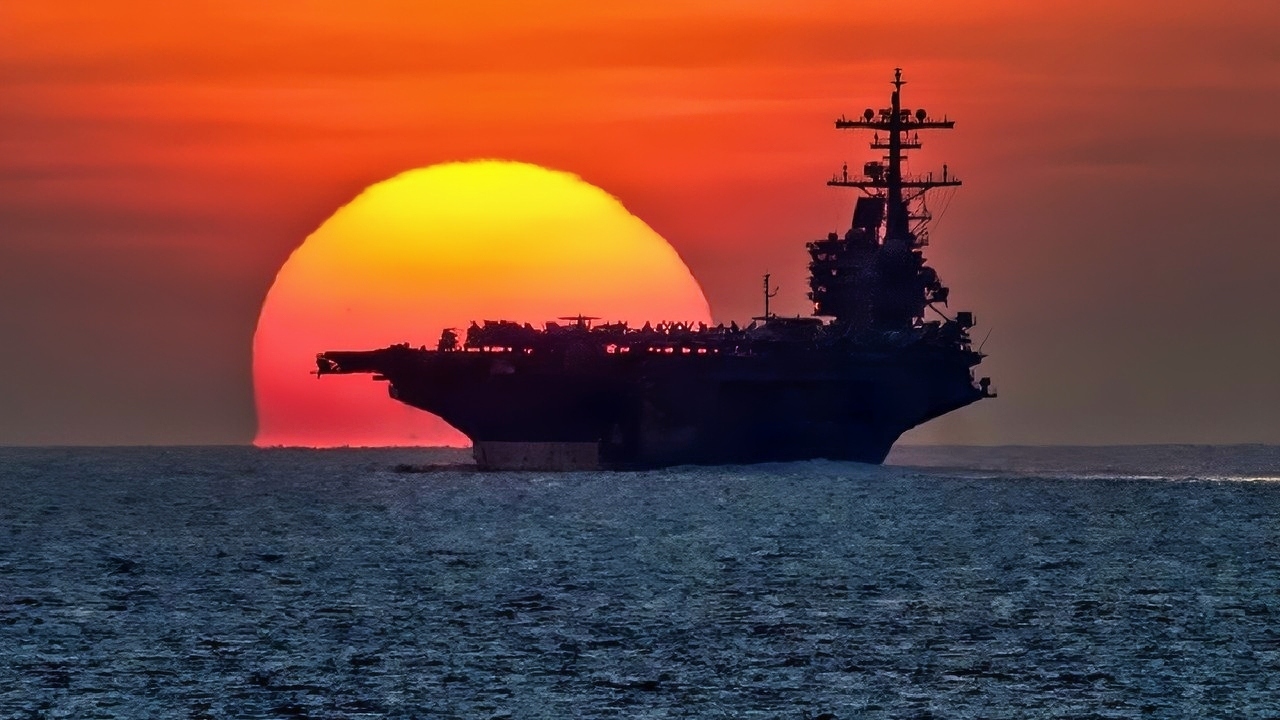
The U.S. and Iran continue to trade blows as they fight for control of the Strait of Hormuz.
Earlier on Tuesday, the U.S. carried out another round of strikes against IRGC military targets, with Iran responding by striking more tankers in the Strait.
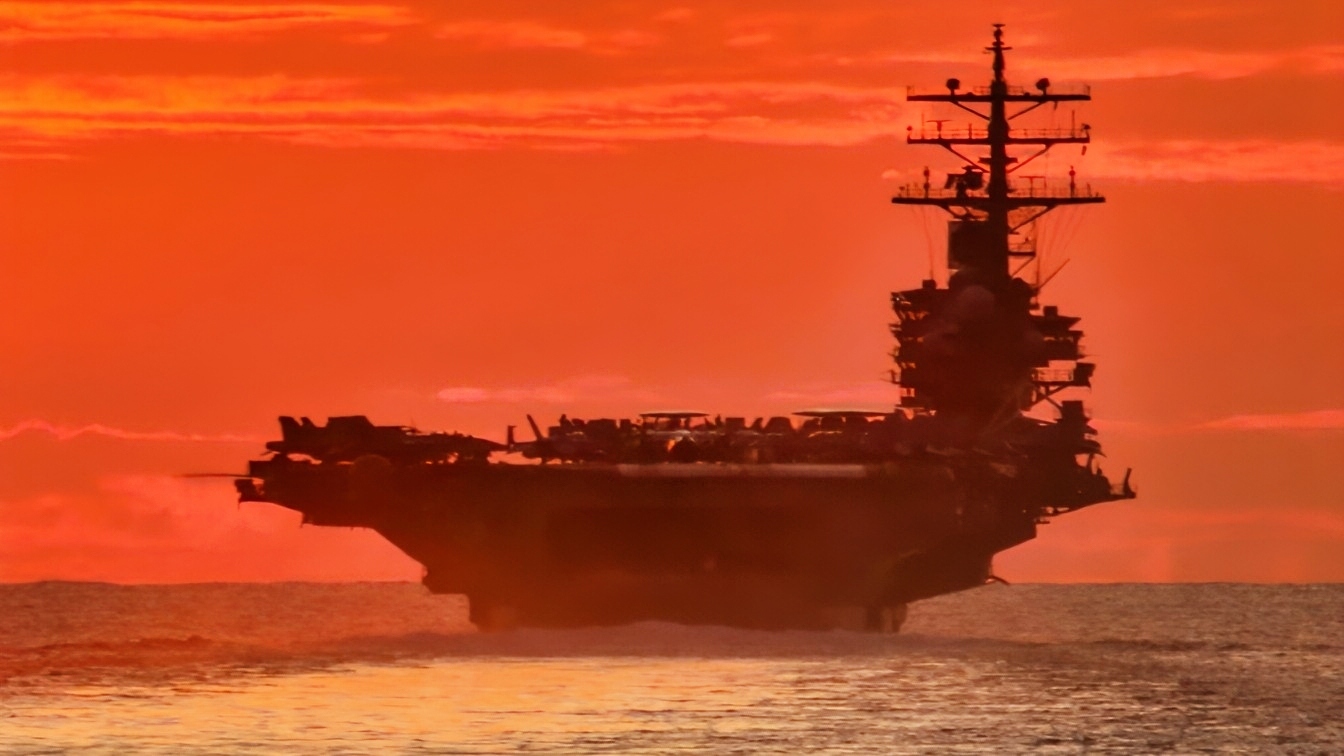
STRAIT OF MALACCA (June 18, 2021) As seen from the Ticonderoga-class guided-missile cruiser USS Shiloh (CG 67), the Navy’s only forward-deployed aircraft carrier USS Ronald Reagan (CVN 76) transits the Strait of Malacca with the Arleigh Burke-class guided missile destroyer USS Halsey (DDG 97). The ships are part of Task Force 70/Carrier Strike Group 5, conducting underway operations in support of a free and open Indo-Pacific. (U.S. Navy Photo by Mass Communication Specialist 1st Class Rawad Madanat)
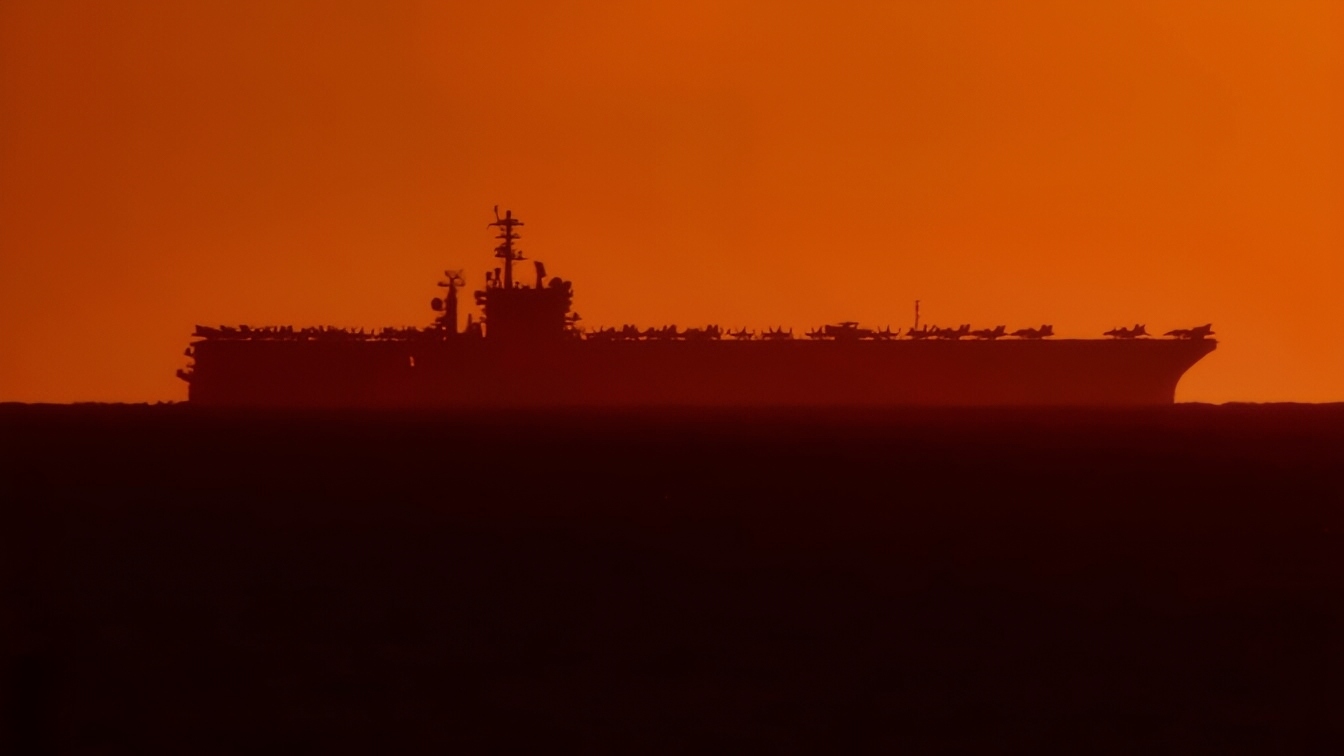
Indian Ocean (January 6th, 2021) The aircraft carrier USS Nimitz (CVN 68) steams in the Indian Ocean, Jan. 6. Nimitz is the flagship of the Nimitz Carrier Strike Group and is deployed to the U.S. 5th Fleet area of operations to ensure maritime stability and security in the Central Region, connecting the Mediterranean and Pacific through the Western Indian Ocean and three critical chokepoints to the free flow of global commerce. (U.S. Navy photo by Mass Communication Specialist Seaman Drace Wilson)
Despite President Trump’s attempts to secure the valuable waterway, the Strait of Hormuz remains at Iran’s mercy.
Diplomacy is still being pursued by the two through neutral mediators such as Qatar.
However, since the Memorandum of Understanding (MOU) has been terminated, the chances of a diplomatic resolution are growing slimmer by the day.
The Violence Continues
For the third consecutive night, the U.S. carried out heavy strikes against Iran.
The targets of the latest round of strikes, according to the U.S. Military, were IRGC positions and infrastructure that pose a threat to commercial shipping in the Strait of Hormuz.
“U.S. forces successfully struck military targets across Iran, including Bushehr, Chah Bahar, Jask, Konarak, Abu Musa, and Bandar Abbas to further degrade Iran’s ability to attack commercial shipping,” U.S. Central Command (CENTCOM) wrote in an official post on social media.
Footage released by the military shows successful hits on radar systems, command posts, and other vehicles used by Iran.
In response, Iran launched multiple strikes of its own, once again targeting U.S. military installations across Bahrain and Kuwait.
Due to the U.S.’s strict OPSEC rules, it is unknown how much damage these strikes have caused. Aside from a few videos showing plumes of smoke from far away, it is difficult to tell whether these attacks even hit their targets.
Iran also targeted three tankers that were attempting to transit the Strait. According to Iran, these vessels had “ignored repeated warnings” from the IRGC and attempted to transit with their transponders turned off.
Two of the tankers belonged to the United Arab Emirates, which condemned the attack and threatened to retaliate if such attacks continue.
Fear Rising in the Middle East
The chaos in the Middle East has instilled a sense of unease and ambiguity in the region that is starting to affect the market once again.
The European Union Aviation Safety Agency issued a warning to airliners against operating in the Middle East, particularly in the airspace of Bahrain, Kuwait, Qatar, and the United Arab Emirates, as well as over the Gulf of Oman.
The agency stated that “unpredictable military developments, combined with the possible use of missiles, drones, combat aircraft and air-defense systems, create a high risk to civil flights.”
Other organizations, such as the United Kingdom Maritime Trade Operations (UKMTO), issued warnings to maritime traders, advising them to use extreme caution when traveling near the Strait of Hormuz as violence continues to escalate.
As Iran continues to enforce its blockade of the Strait of Hormuz, oil prices have once again spiked amid uncertainty about how long the vital waterway will remain closed.
Brent Crude is currently trading at $84.28 per gallon, with economists expecting prices to continue rising. The price curve has begun to flatten slightly as the U.S. takes every measure in its power to prevent the market from spiraling out of control.
At the beginning of July, as transit through Hormuz was starting to pick up, oil prices fell to their lowest level since the start of the Iran war, with Brent Crude priced at only $71 per barrel.
Now, however, Prices are spiking once again, further exacerbated by repeated Iranian attacks against civilian tankers.
Since the initial outbreak of the war, oil companies have begun exploring alternatives to the Strait of Hormuz, but it will take considerable time for oil transit to return to prewar levels.
All Quiet on the Diplomatic Front
The diplomatic front seems to have reached a standstill. Both sides are still conducting indirect talks through mediators in Pakistan, Qatar, and Oman, but no tangible results have been reached yet.
Despite this, both sides at least remain open to discussion. A spokesperson from the Iranian Foreign Ministry stated that “The role of the mediators is to continue their efforts to prevent an escalation of tension.”
However, the spokesperson stressed that Iran will continue to use military means to protect the country’s interests. “Wherever necessary, we will use military means to defend our interests, and wherever circumstances require, wherever the country’s interests dictate, we will use the tool of diplomacy,” the spokesperson said.
The main issue right now is control over the Strait of Hormuz. The Foreign Ministry of Oman stated recently that it was doing everything in its power to facilitate an agreement between the two parties to restore freedom of navigation through the Strait.
“Oman continues its transparent and neutral cooperation with all parties to restore freedom of navigation in the Strait, in full compliance with international law,” the ministry stated on social media.
The U.S., for its part, claims to control the Strait, as President Trump announced his intention to restore the U.S. blockade over the Strait after rescinding his initial 20% toll.
About the Author: Isaac Seitz
Isaac Seitz, a Defense Columnist, graduated from Patrick Henry College’s Strategic Intelligence and National Security program. He has also studied Russian at Middlebury Language Schools and has worked as an intelligence Analyst in the private sector.


