

Russia Seeks New Grain Export Routes: In a statement issued on Tuesday, the Russian Ministry of Agriculture said that it is exploring alternative routes for grain shipments from the Sea of Azov following Ukrainian strikes. The news follows yet more drone and missile strikes that Kyiv claims hit more than 11 Russian vessels overnight into Tuesday, July 14. According to the statement, Russia is now preparing to use “alternative shipping routes” for vessels in the Sea of Azov, and much of the cargo may be rerouted via land.
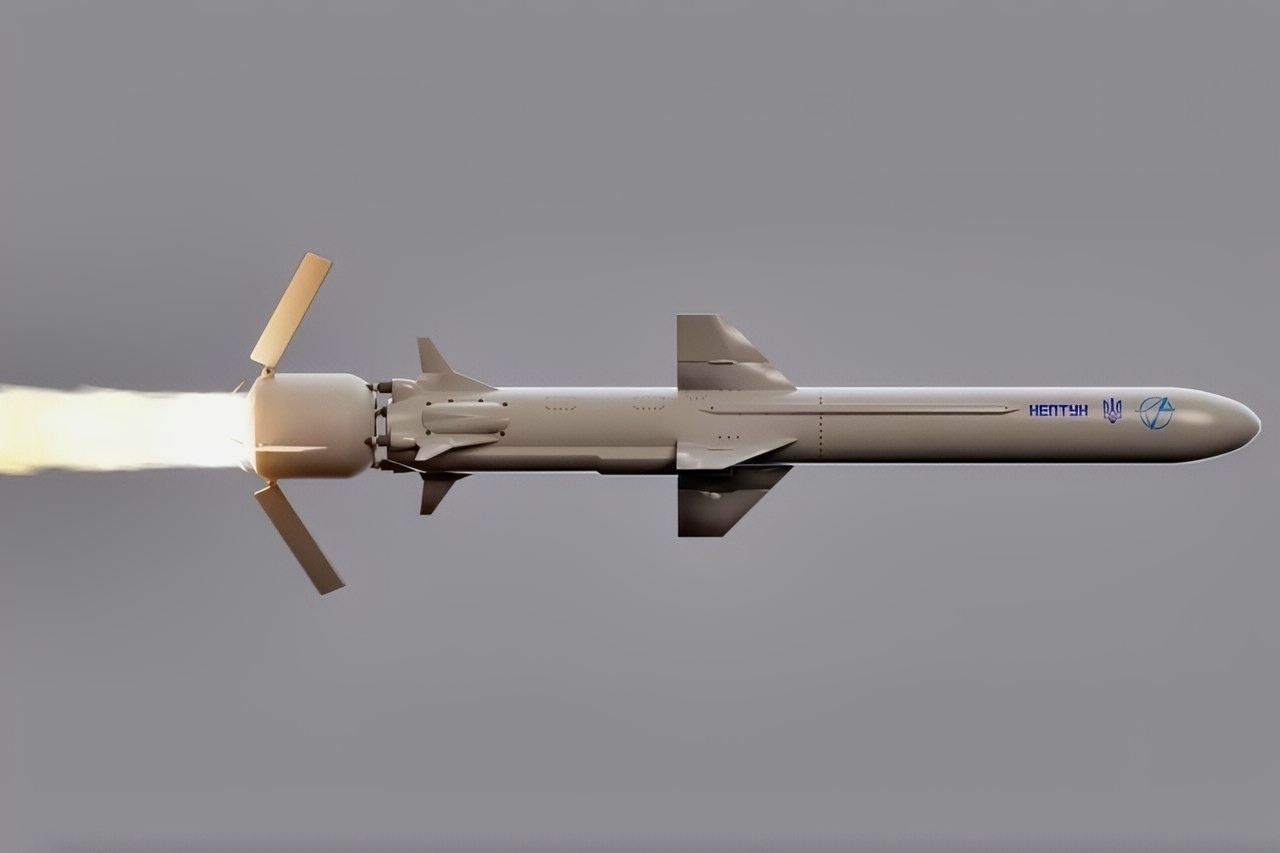
Neptune Missile. Image Credit: Government of Ukraine.
What the Ministry Said: Ukraine War Update
The Russian Ministry of Agriculture sought to reassure domestic producers and foreign buyers that grain exports will continue despite disruptions in the Sea of Azov, insisting that the ongoing strike campaign will not derail the country’s grain export industry.
“Given Russia’s significant capacity for transshipping agricultural cargo in various regions, supply logistics will be redirected, if necessary,” the ministry said.
It added that Russia was already working with other government agencies and the private sector to establish alternative transport routes and insisted that the disruption would neither impact domestic food supplies nor export commitments. The ministry also specified that cargo would be diverted through other ports and land routes.
The statement came after industry sources revealed that traffic through the Kerch Strait and the Don-Azov shipping canal had been heavily disrupted following a series of Ukrainian attacks on vessels operating in the Sea of Azov. The strikes have generated significant concern and hesitation among private shipping operators.
Ukraine’s strikes are a big problem for Russia, with around one-quarter of the country’s grain exports usually passing through the region. Private industry and government agencies may soon be able to establish alternative routes, but given the pace at which Ukraine keeps striking critical Russian infrastructure, it may simply be a matter of time before those routes are compromised as well.

T-90 Tank from Ukraine War. Image Credit: Creative Commons.
Ukraine Expands Its Maritime Strike Campaign
The latest overnight strikes in the region are not the first. Ukrainian forces have spent weeks attempting to disrupt Russian logistics in the Sea of Azov with increasingly devastating missile and drone strikes.
Robert Brovdi, commander of Ukraine’s Unmanned Systems Forces, said that drones struck more than 11 Russian vessels overnight into Tuesday. Among those struck were five tankers, five dry cargo ships, and one tugboat. Brovdi said that the latest operation now brings the total number of Russian vessels hit in the last nine days to 116.
Explaining the strategy behind Ukraine’s hugely successful long-range strike campaign, Brovdi also said the objective is not necessarily to sink every ship, but to disable what he called the “feeder fleet” of small and medium-sized tankers that usually transport oil from Russian terminals to the Sea of Azov and the Volga-Don Canal before being loaded into larger tankers.
“The paralysis of Russia’s feeder fleet (‘courier’ small and medium 140-meter flat-bottomed tankers with a deadweight of 7,000 tonnes), as a significant component of Russia’s shadow fleet, essentially makes it impossible to export ‘black gold’ from port oil transshipment bases… via the Volga-Don Canal and the Sea of Azov to large tankers that cannot reach the oil terminal or port due to their draft and are forced to be loaded from the capacities of those courier tankers at roadsteads in the Black Sea, taking on board the volume of 12-15 of such vessels scurrying through the water,” Brovdi said in a statement.
What Zelenskyy Said
In a statement published on X, Ukrainian President Volodymyr Zelenskyy described how mid-range strikes continue to deliver results alongside the ongoing long-range strike campaign.
“In Gelendzhik, a patrol ship and a shadow fleet tanker were hit – effective work by the Ukrainian Navy, approximately 430 kilometers from the front line. Successful strikes were also carried out against three shadow fleet tankers in the Sea of Azov,” he said.
Zelenskyy once again referred to the campaign as part of a “long-range sanctions” operation designed to raise the cost of sustaining the war for Russia.
Russia Calls Campaign “Terrorism”
Russia is responding to Ukraine’s maritime campaign by describing the attacks as a form of “terrorism.” Foreign Minister Sergei Lavrov accused Kyiv of carrying out acts of terrorism rather than legitimate military operations, despite Russian forces frequently conducting similar attacks against Ukraine.
“But here, it benefits neither them nor anyone else – the goal is simply to cause damage and intimidate. It is terrorism, pure and simple,” Lavrov said.
Ukraine has rejected the accusation, with one military source telling Reuters that strikes are only launched against military targets and other infrastructure and assets that help Russia to sustain the war. According to the source, Ukrainian forces “strike only military targets or targets that contribute to strengthening Russia’s combat capability.” The source also said that civilian cargo vessels are “not among them.”
The attacks demonstrate that Ukrainian strikes are now moving well beyond military and oil infrastructure and are targeting every aspect of the Russian economy that supports the war.
About the Author: Jack Bucbky
Jack Buckby is a British researcher and analyst specializing in defense and national security, based in New York. His work focuses on military capability, procurement, and strategic competition, producing and editing analysis for policy and defense audiences. He brings extensive editorial experience, with a career output spanning over 1,000 articles at 19FortyFive and National Security Journal, and has previously authored books and papers on extremism and deradicalization.


