
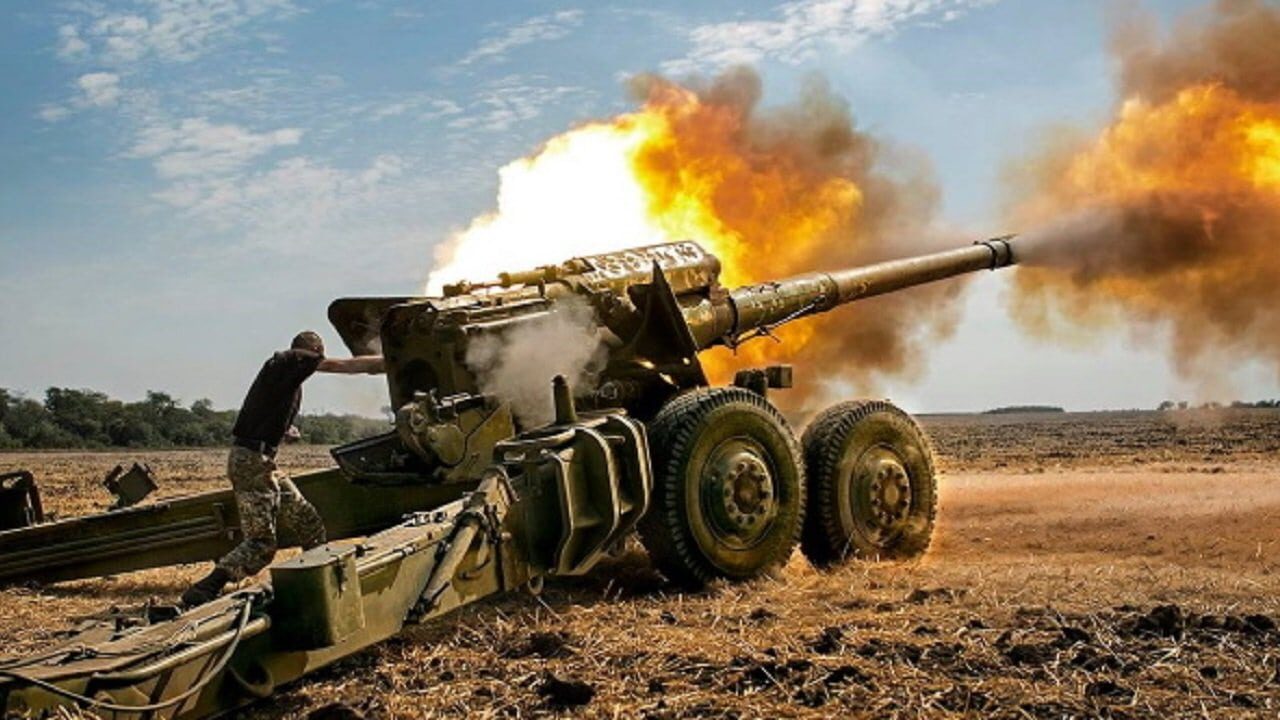
As Russia ramps up its ballistic missile strikes against Kyiv and other Ukrainian cities, Ukrainian Defense Minister Myhailo Fedorov has sought to explain just how rapidly a missile strike can reach the nation’s capital.
Writing in a Facebook post on July 14, Fedorov described the reality of Russian strikes and noted that a rocket can reach Kyiv in as little as two minutes, leaving air defenses little room for failure.
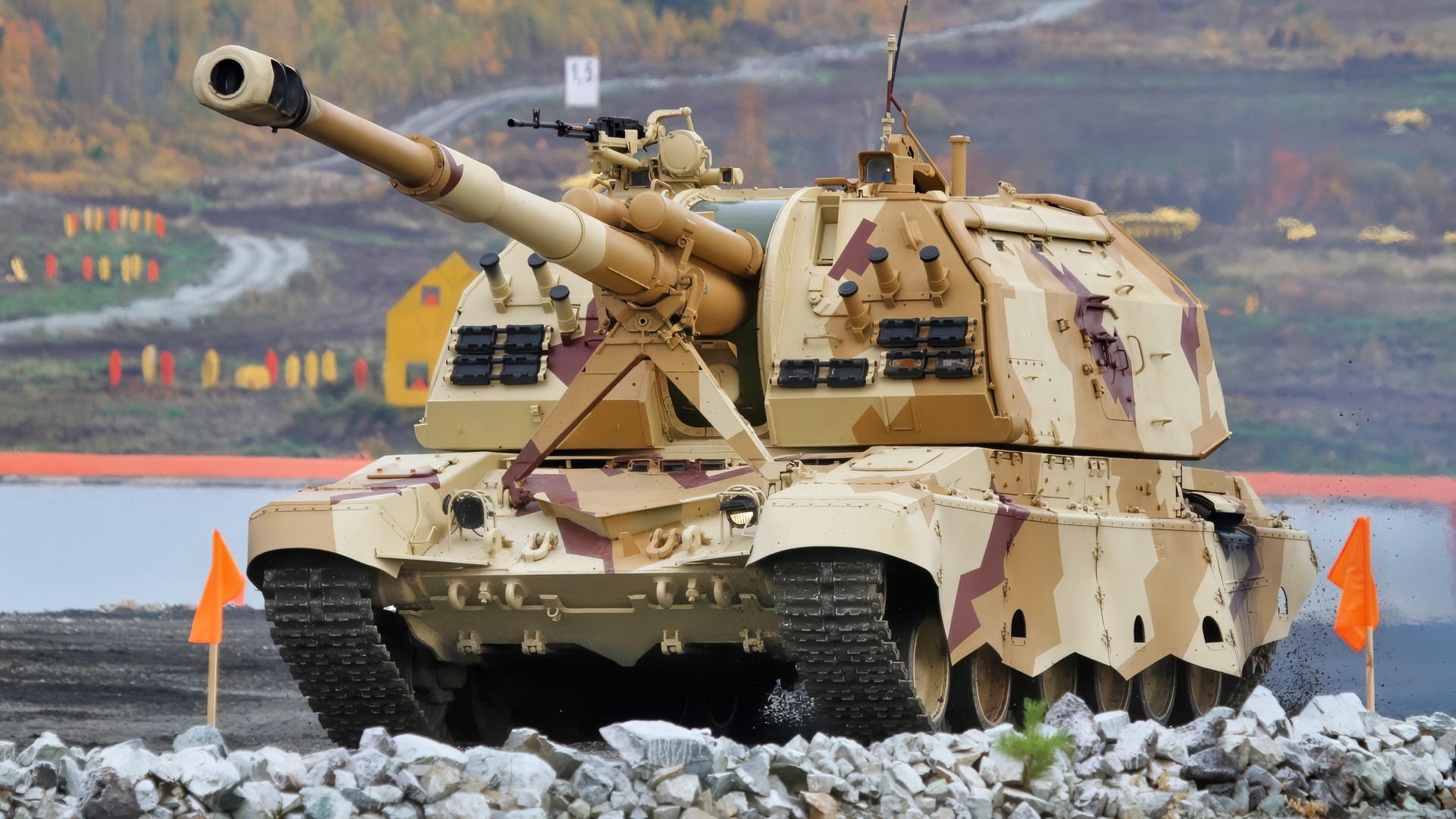
Russian Artillery. Image Credit: Creative Commons.
What Fedorov Said
In the post, Fedorov described how rocket interceptions are identified in part by monitoring satellite launch sites, adding that allies also provide information about planned strikes.
“All information about launches or preparations for the launch comes to us from partners. None of us knows or should know how they get this information, but you don’t have to be too smart to realize that the primary source of information is satellite launch point monitoring and launch fact capture system,” he said.
Fedorov added that the rocket can reach Kyiv in “2-4 minutes,” leaving very little time to prepare and defend. He said that any failure in the system can be disastrous, with delays in receiving information potentially proving deadly.
“The rocket reaches Kyiv in 2-4 minutes, so the time is very limited. Any failure in the system will result in delays in receiving information.
No system can be perfect, so malfunctions happen and the alarm can be delayed,” he continued.
The Ukrainian official also described cases in which the alarm is triggered, but there is no missile: satellites capture activity from the launchers, yet no projectile reaches the assumed target.
The commentary comes as Ukraine faces an ongoing barrage of Russian ballistic missiles, cruise missiles, and drones targeted at its capital city and other major urban population centers.

Marines with Bravo Company, 4th Tanks Battalion, fire the M1A1 Abrams tank during a live-fire exercise as part of Exercise Arrow 18 in Pohjankangas Training Area near Kankaanpaa, Finland, May 15, 2018. Exercise Arrow is an annual Finnish multi-national exercise with the purpose of training with mechanized infantry, artillery, and mortar field training skills in a live-fire exercise. This is the first year the Marine Corps is participating in this exercise and the first time the M1A1 Abrams tanks have been in Finland. (U.S. Marine Corps photo by Staff Sgt. Marcin Platek/Released)
Moscow is responding to Ukraine’s ongoing 40-day, long-range strike campaign that is designed to raise the cost of Russia sustaining the war.
In recent weeks, Russian forces have proven to be more willing to expend ballistic missiles and other high-value weapons in the pursuit of inflicting damage on Kyiv in the hopes of Ukraine’s long-range strike campaign winding down early.
Russian forces are also deliberately forcing Kyiv to expend what’s left of its dwindling supply of Patriot interceptors and taking full advantage of that vulnerability until such time as more interceptors are delivered.
Europe Looks to Strengthen Ukraine’s Defenses
Fedorov’s comments also came after Ukrainian President Volodymyr Zelenskyy announced a new European initiative to assist the country’s air defense efforts as Russia ramps up its attacks.
Speaking during Bastille Day celebrations in Paris, Zelenskyy unveiled the Integrated Anti-Ballistic Missile Coalition – an initiative driven by Ukraine, France, Germany, Denmark, Britain, Italy, the Netherlands, Norway, Spain, and Sweden.
The coalition has pledged to jointly develop a new generation of affordable, mass-produced anti-ballistic missile interceptors that will not only be capable of protecting Ukraine as soon as they’re ready, but also of protecting European countries looking to strengthen their own missile defenses.
In a joint statement, the coalition expressed its collective belief that “Europe requires a global solution of integrated missile defense architecture to deter and defeat future missile threats – developed through collective effort, technological openness, and trusted industrial cooperation.”
The announcement said the measures will run in tandem with existing ballistic missile defense programs, including several sovereign European solutions already underway.
“By bringing together our defense industrial base, our research, and our operational experience, we aim to build a shared antiballistic missile capacity for Europe and support relevant contributory activities. We do this not against any people, but in defense of our own,” the statement continues.
Zelenskyy Needs More Interceptors
The announcement comes as Europe grows fearful of Russia’s increasing use of ballistic missiles against Ukrainian cities and what that could mean for the future.
While American Patriot systems are the only combat-proven Western interceptors currently capable of reliably intercepting ballistic missiles, they are expensive and available in limited numbers.
Ukraine continues to warn that its stockpile is running dangerously low, and with the United States unable to provide a sufficient supply, an agreement was reached this month for Ukraine to be granted permission to manufacture them domestically.
But in the meantime, Zelenskyy is still warning that Ukraine needs roughly 300 Patriot interceptors urgently to protect the country through the winter.
The recently announced coalition, as well as the new license to build Patriots, is a long-term solution for Ukraine – not short-term.
It means that Kyiv will still rely on military support from its allies for as long as the war lasts – and if the war does indeed last several more years, the hope is that the new coalition will be producing weapons that can assist in Ukraine’s defense, and indeed that Patriot missiles may begin rolling off the production lines.
But with the pace at which missile and drone strikes are escalating, it’s hard to envision the war reaching that stage – sooner or later, one side will need to conclude that enough damage has been done. And at present, it’s truly hard to tell which side will make the first concession.
About the Author: Jack Buckby
Jack Buckby is a British researcher and analyst specializing in defense and national security, based in New York. His work focuses on military capability, procurement, and strategic competition, producing and editing analysis for policy and defense audiences. He brings extensive editorial experience, with a career output spanning over 1,000 articles at 19FortyFive and National Security Journal, and has previously authored books and papers on extremism and deradicalization.


