

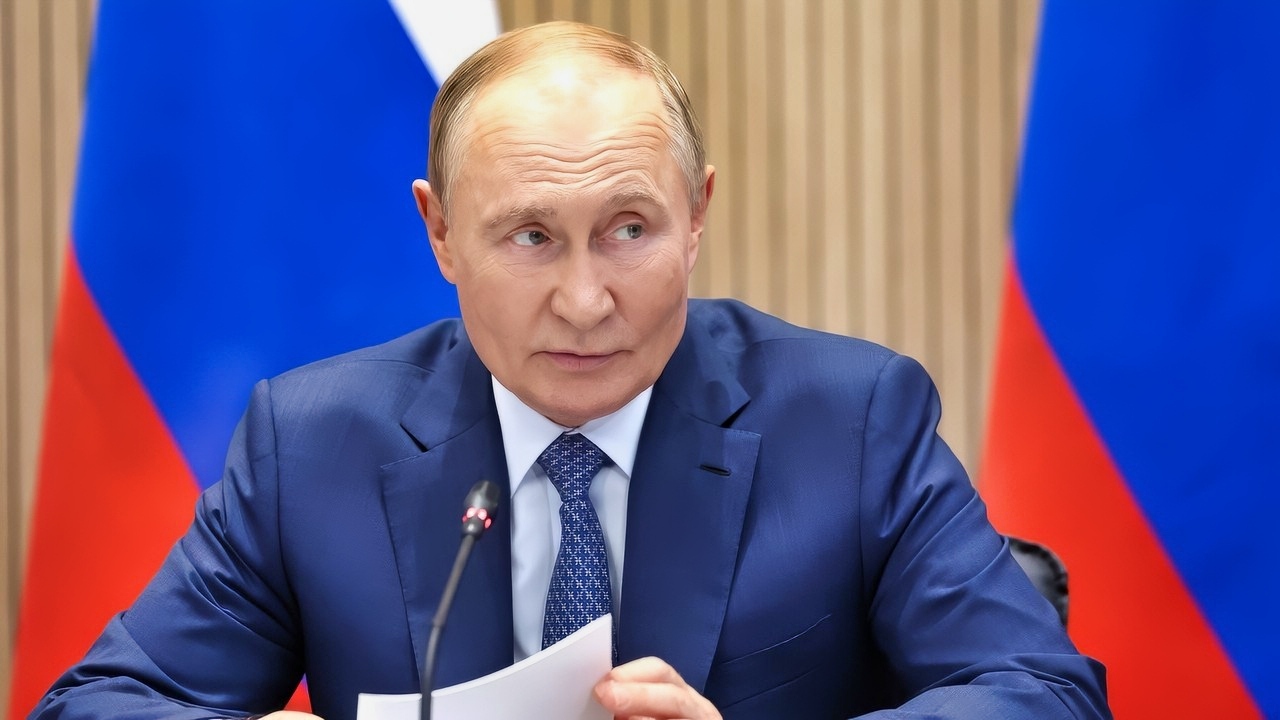
As of late, the Russian military has not been known for exhibiting either creativity or efficiency in making war on its Ukrainian neighbors.
Crude and murderous mass human-wave type “meat assaults” in which 80 percent or more of those sent in a rush against Ukrainian positions are killed are the most common tactic employed.
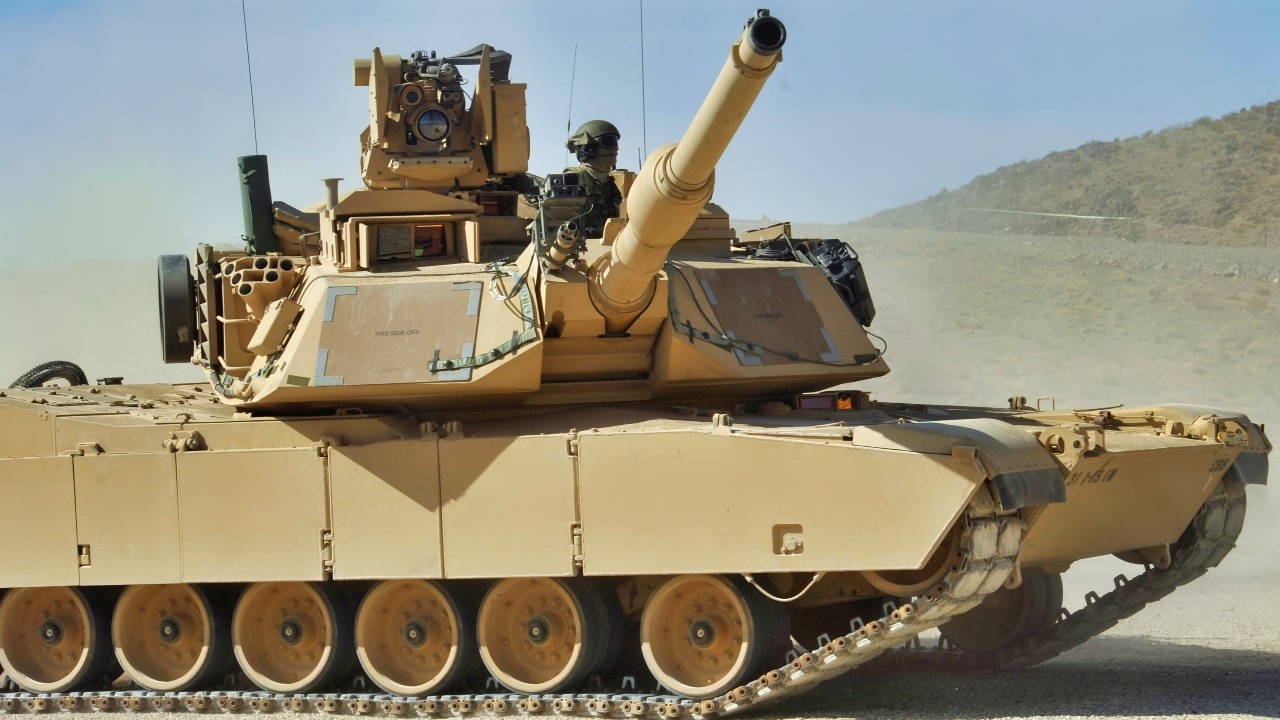
Australia is sending 49 of its retired M1A1 Abrams tanks to Ukraine, a move that bolsters Kyiv’s armored firepower but raises significant questions about survivability on the modern battlefield. While the donation is a welcome gesture, US officials have reportedly expressed private frustration, warning that Ukraine struggles to sustain the complex tanks and highlighting their vulnerability to cheap, top-attack FPV drones. The war in Ukraine has become a “drone war,” where even advanced main battle tanks are at constant risk. The effectiveness of these donated Abrams will ultimately depend on Ukraine’s ability to counter this pervasive threat.
However, when it comes to the commission of war crimes, Moscow’s military wins first place in devising newly created means of violating the Geneva Convention.
According to a report by the UN Monitoring Mission in Ukraine, the Russian military has carried out an increasing number of executions of Ukrainian POWs since the February 2022 invasion.
The Ukrainian government states that those executed are in the “hundreds” and that those responsible are not improvising in the field. This practice appears to be a deliberate state policy ordered from Moscow.
Officials in Kyiv say the exact number of those killed remains unknown.
However, a Ukrainian intelligence official told Agence France-Presse that they have tracked “more than 900 military personnel” killed in “more than 340” incidents since 2022.

T-84 Tank from Ukraine War. Image Credit: Creative Commons.
Speaking to the French news agency on condition of anonymity, the intelligence sources added that these cases might represent only 25-40 percent of such cases.
Under the Geneva Conventions, soldiers are considered POWs and are therefore afforded protective status from the moment they have issued a clear surrender.
Verified Executions
The UN report from late June 2026 cites 129 verified executions of Ukrainian prisoners of war. Moreover, the report points to the alarming development beginning last year of what it calls a “marked increase” in these cases of POWs being executed.
Separately, Andriy Atamantchuk from the Ukrainian Prosecutor General’s Office has stated that his office has opened 116 investigations into the killings of 306 Ukrainian servicemen since 2022.
“This stems from a Russian policy that has effectively encouraged and enabled such crimes, with commanders then issuing orders to that effect,” he said.
Predictably, these accusations have been rejected by Moscow, and Agence France-Presse has also reported that Russian authorities did not respond to its request for comment.
A cursory examination of news reports on the subject reveals that this Russian practice is well-documented as having begun in the first year of the war – only a few months after Moscow’s February 2022 invasion of Ukraine.
In a communications intercept that Ukraine’s SBU intelligence service released in 2022, two Russian officers are heard discussing sending Ukrainian POWs into minefields to clear explosives in Mariupol and other recently captured settlements.
In the audio recording, two men with Russian accents outline a plan to use captured Ukrainian soldiers for de-mining work in a recording reportedly intercepted by the SBU.
The intelligence service claimed the men were Russian intelligence officers from the military’s Main Intelligence Directorate (GRU).
One of the GRU officers is heard telling the other that he is ready to send “Ukrainian guys” to him from a detention facility in Russia-occupied Melitopol. There they will “help out in the city of Mariupol to de-mine it in a natural way” or dig trenches.
“We need to find a way to use them somehow so that they can serve the motherland,” he says in the recording.
Increase in the Past Two Years
Ukrainian investigators have noticed that the rise in prisoner executions began in 2024.
Sets of videos and photos that show some of the killings end up being circulated by war bloggers and Telegram accounts.
These materials are now being collated and will be used as primary evidence for Ukraine’s investigations into what will end up being war crimes prosecutions against Russian military figures.
In a report from the London Daily Telegraph in October 2024, one video that was posted showed a shirtless man kneeling in a grave while being pushed around by a figure wearing a Russian military uniform with Wagner Private Military Company (ChVK) insignia.
A knife is pointed at the man’s throat, and he is forced to say: “Thank you, Uncle Zhenya Prigozhin, for raising such guys.” Prigozhin was the head of the infamous Wagner Group and died in a plane crash in 2023 under circumstances that strongly implicate Russian President Vladimir Putin in the aircraft having been sabotaged.
A second clip appears to show the same man still shirtless and in army-green shorts, but now somewhere in a field.
The person filming declares that this man is “sentenced to death” in the name of the Russian Federation, before two others open fire on him.
The fortunes of war running decidedly against Russia apparently caused the practice of killing Ukrainian POWs to increase markedly beginning two years ago.
Of the 93 prisoner executions recorded since the beginning of the war up to the Autumn of 2024, 80 percent occurred in that year.
This, according to Yuriy Belousov, head of the War Crimes Department in the Prosecutor-General’s office, was stated during a local Ukrainian TV interview that same year.
About the Author: Reuben F. Johnson
Reuben F. Johnson has thirty-six years of experience analyzing and reporting on foreign weapons systems, defense technologies, and international arms export policy. Johnson is the Director of Research at the Casimir Pulaski Foundation. He is also a survivor of the Russian invasion of Ukraine in February 2022. He worked for years in the American defense industry as a foreign technology analyst and later as a consultant for the U.S. Department of Defense, the Departments of the Navy and Air Force, and the governments of the United Kingdom and Australia. In 2022-2023, he won two awards in a row for his defense reporting. He holds a bachelor’s degree from DePauw University and a master’s degree from Miami University in Ohio, with a specialization in Soviet and Russian studies. He lives in Warsaw.


