

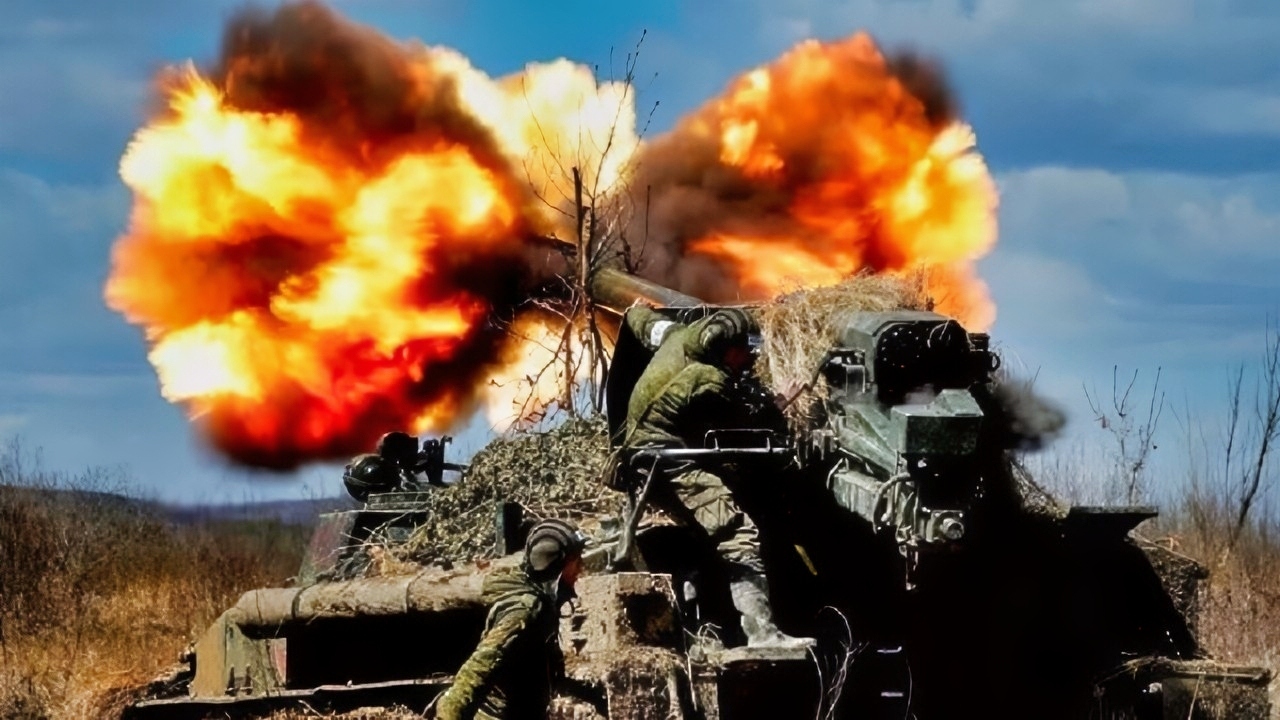
Russia and Ukraine have been at war for more than four years, and throughout that time, there has been the threat that Russia could expand its attacks westward, into NATO countries.
Should they do that, under NATO’s Article 5, an attack on one member state would be considered an attack on all.
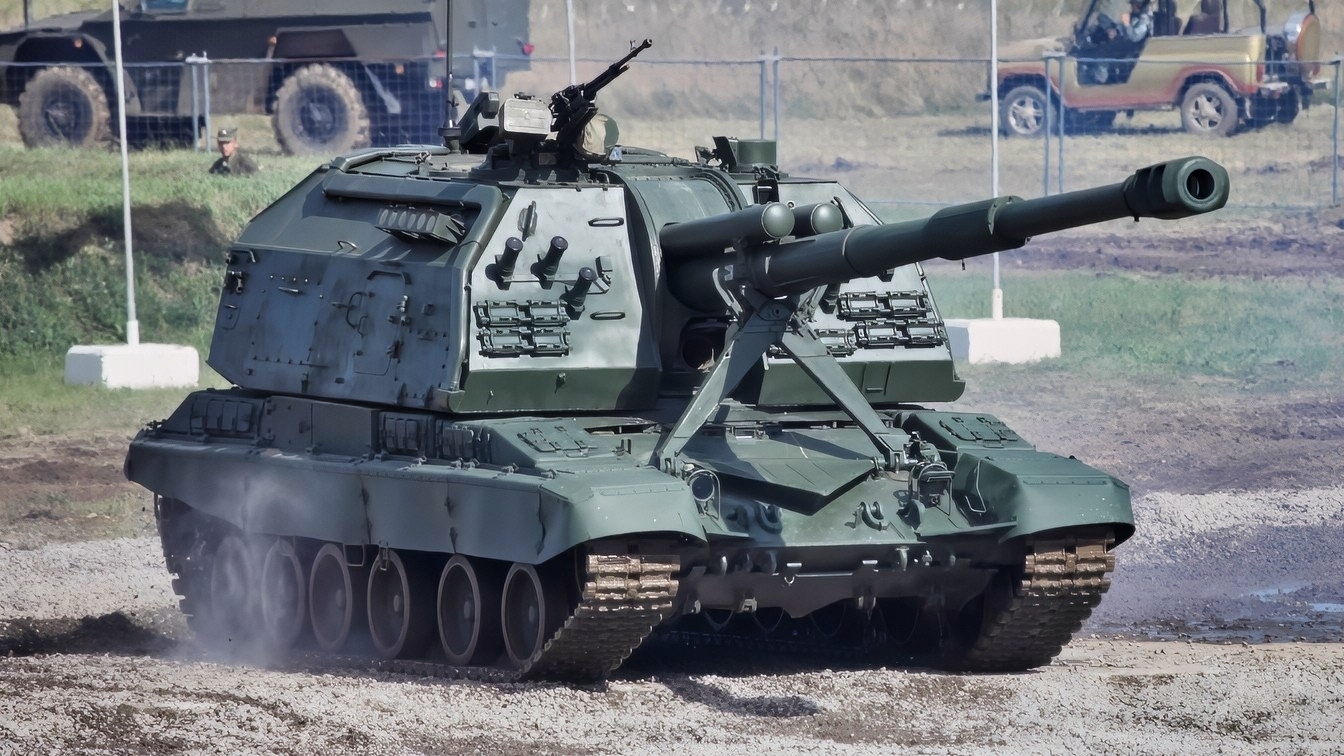
MSTA-S Russian Artillery. Image Credit: Creative Commons.

MSTA-S Russian Army. Image Credit: Creative Commons.
Now, the president of Lithuania has said that there are fears that Russia could be preparing to attack critical infrastructure in NATO nations, including the Baltic nations or Poland.
President Gitanas Nausėda said this week that “I cannot deny that we have such information and that it concerns limited kinetic operations likely targeting critical infrastructure,” according to an AP story, which cited the BNS news agency.
Another leader of a Baltic nation, Latvian President Edgars Rinkēvičs, also warned this week that Russia could be preparing to attack infrastructure on NATO’s Eastern flank.
“Even without a total Ukrainian victory, Russia may indirectly test Article 5 and response mechanisms at the Alliance and European Union levels,” Rinkēvičs said. “The next few months, or even the next 12 months, will be crucial for Baltic security.”
The AP story also said that Poland intercepted Russian aircraft over the Baltic Sea that were “conducting surveillance of Poland’s air defense systems.”
The View From Moscow
Meanwhile, Russia has denied the notion that it is planning any such attacks on infrastructure in the Baltics.
“It’s a fresh batch of bugaboos intended to continue the brainwashing and prepare the population for further militarization,” Kremlin spokesman Dmitry Peskov said, per the AP. “To do this, they need to create an enemy image on the other side, our side in this case… And use it as a pretext to continue moving NATO military infrastructure in all its forms into the Baltic states.”
A Lithuanian Surge
Meanwhile, the Chosun Daily reported, citing Lithuanian Public Broadcasting (LRT), that Lithuania has seen a “youth surge” in military enlistment.
Lithuania’s military, the report said, “ received over 8,100 enlistment applications this year.” This included 4,400 people who chose voluntary enlistment and 3,700 more who “applied for priority enlistment after the conscription list was announced.”
“There has been a growing awareness among youth about the importance of national security and their role in the defense system,” a military command official said, according to the Lithuanian media report.
Lithuania has a population of about 2.8 million and borders both Russia and Belarus, Russia’s ally. Lithuania, which was among the first former Soviet Republicans to break off in 1990, formally joined NATO in 2004.
That nation initiated conscription after Russia invaded Crimea in 2014.
“Before the outbreak of the Ukraine war in 2022, voluntary enlistment averaged around 2,000 people per year,” The Chosun reported. “However, in the first half of this year, more young people expressed willingness to enlist than the conscription plan required.
Neighboring Latvia also reported that 1,560 people—the largest number ever—applied for mandatory service recruitment earlier this year.”
Meanwhile, UA.news reported this week that Lithuania and Latvia are planning to conduct joint military exercises.
The exercises, the report said, “are planned to take place at the Selonia training ground in Latvia as part of efforts to deepen defense cooperation among the Baltic states.”
“I see great potential in strengthening cooperation between our armed forces, organizing joint exercises, and enhancing our readiness for joint action,” Nausėda, Lithuania’s president, told the press following a bilateral meeting between the leaders in Vilnius. “President Rinkēvičs and I agreed to hold joint exercises at the Selonia training ground in Latvia,” he added.
“The Mouse That Roars”
In an essay for GIS reports, Stefan Hedlund wrote this week that Lithuania is better prepared to deal with Russia than most other countries.
“Foreign military support matters, but Ukraine’s most important lesson is that such support becomes decisive only when a country first demonstrates its own resolve to defend itself,” Hedlund writes.
“Without the determination of the Ukrainian government and the widespread backing of its population, outside assistance would not have been enough to withstand Russia’s invasion.
This is where Lithuania stands out, setting an example in both resisting Russian pressure and supporting Ukraine.”
About the Author: Stephen Silver
Stephen Silver is an award-winning journalist, essayist, and film critic, and a contributor to the Philadelphia Inquirer, the Jewish Telegraphic Agency, Broad Street Review, and Splice Today. Stephen, the co-founder of the Philadelphia Film Critics Circle, lives in suburban Philadelphia with his wife and two sons. For over a decade, Stephen has authored thousands of articles that focus on politics, national security, technology, and the economy. Follow him on X (formerly Twitter) at @StephenSilver and subscribe to his Substack newsletter.


