
As Ukraine prepares to bolster its air defenses with new deliveries of interceptors from its Western allies, Russia launched its latest barrage of missiles and drones at Ukraine overnight into Saturday, July 11. Reports describe how a missile strike in Odesa killed two people and wounded another, while a drone strike also injured seven when it struck a civilian building.
Russian forces launched a combination of drone swarms and ballistic missiles across the nation’s capital city, Kyiv, causing major damage for yet another night. The strike comes after Ukrainian President Volodymyr Zelenskyy warned that a lack of interceptors compatible with its American and Western-supplied air defense systems means that Russian ballistic missile strikes keep causing significant damage.

President Donald J. Trump welcomes Russian President Vladimir Putin to Joint Base Elmendorf-Richardson, Anchorage, Alaska, August 15, 2025 (DoD photo by Benjamin Applebaum)
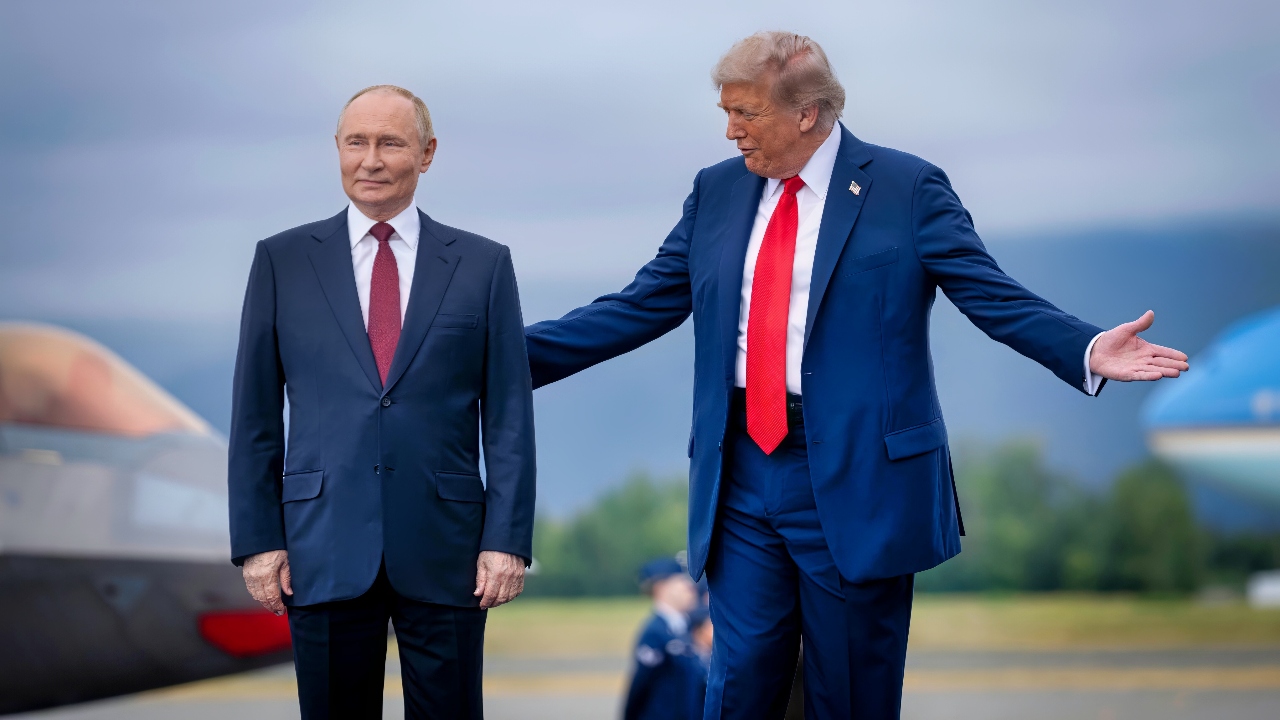
President Donald J. Trump welcomes Russian President Vladimir Putin to Joint Base Elmendorf-Richardson, Anchorage, Alaska, August 15, 2025 (DoD photo by Benjamin Applebaum)
What Happened Overnight in Ukraine War
According to President Zelenskyy, Russian forces fired 12 missiles and 121 drones at Ukrainian targets. The projectiles included Shahed-style attack drones and decoys that were designed to overwhelm Ukrainian air defenses while ballistic missiles penetrated those defenses. Ukrainian forces said that they intercepted 111 drones and two missiles in total.
Kyiv endured one of the heaviest attacks of the week so far. Falling debris and direct strikes damaged residential buildings across multiple districts, igniting fires and forcing emergency crews to work through the night. According to Kyiv Mayor Vitali Klitschko, at least 11 people were injured across the city, and public infrastructure was severely damaged.
In a statement on X, President Zelenskyy described the scale of the damage and called on NATO allies to commit to expediting the delivery of new air defense support packages.
“Eleven people, including a child, have been injured in Kyiv during last night’s Russian attack. Civilian infrastructure was hit even before the air raid alert was issued. Emergency crews are working at the sites of the strikes – apartment buildings, offices, and a theological seminary were damaged in the capital. Recovery efforts are also ongoing in the Odesa, Sumy, Kharkiv, and Chernihiv regions,” Zelenskyy said.
“We expect our partners to deliver on their promises regarding support packages agreed at the NATO Summit to help protect our people. We must move as swiftly as possible on licensing agreements for Patriots and the joint European anti-ballistic defense project. Currently, the top priority for all our institutions is to make this happen,” he also said.
Odesa Hit
The deadliest strike of the night occurred in the port city of Odesa, which sits on the Black Sea. A Russian missile reportedly killed two civilians and wounded another. According to local authorities, the strike hit civilian infrastructure and caused no damage to a military facility despite Russian claims.
Oleh Kiper, the head of the Odesa Regional Military Administration, confirmed the strikes in a Telegram statement.
“As a result of the missile strike on Odesa, according to preliminary data, unfortunately, two people were killed. Another person was injured: A 24-year-old man sustained shrapnel wounds,” Kiper said.
Further east, Kharkiv was also hit by Russian drones, with local authorities confirming seven injuries after a drone hit a civilian building.
Allies Accelerate Air Defense Support
The strike came immediately after some of Ukraine’s top allies announced plans to bolster the country’s strained air defenses. Speaking after the NATO summit in Ankara this week, President Zelenskyy announced that Kyiv had reached an agreement with the United States to begin licensing the manufacturing of Patriot interceptors in Ukraine. Zelenskyy said that work would now begin “as soon as possible.” The news means that Ukraine will eventually no longer need to wait on its allies to deliver interceptors, and that its forces will one day be able to use as many as Ukraine’s domestic manufacturing infrastructure can produce.
Zelenskyy also announced that Washington had reassured Kyiv that additional Patriot interceptors were being prepared for delivery in the near future, marking a significantly different approach by the White House than even just a year ago. With Ukraine causing significant damage to Russia’s economy and energy infrastructure, the Trump administration appears to be more willing now to support Ukraine than it has been since the president returned to office.
The NATO summit in Ankara also resulted in fresh commitments from some of Kyiv’s other partners. NATO members collectively pledged $80 billion in additional military support for Ukraine, while several allies also confirmed that more air defense systems and interceptor missiles would form part of upcoming assistance packages.
NATO Secretary General Mark Rutte said that the new commitments would be “equitable, predictable and sustainable,” and confirmed that European allies, along with Canada, were now providing the majority of Ukraine’s military support. NATO also confirmed that deliveries under the Prioritized Ukraine Requirements List (PURL) are being accelerated, and additional Patriot interceptors are on their way to the country.
For Kyiv, it’s good news: with Russian strikes accelerating in both frequency and severity, Ukraine needs to defend itself quickly. And once Kyiv has the ability to produce Patriot interceptors at scale, Russia’s escalation will need to involve more than just ballistic missiles.
About the Author: Jack Buckby
Jack Buckby is a British researcher and analyst specializing in defense and national security, based in New York. His work focuses on military capability, procurement, and strategic competition, producing and editing analysis for policy and defense audiences. He brings extensive editorial experience, with a career output spanning over 1,000 articles at 19FortyFive and National Security Journal, and has previously authored books and papers on extremism and deradicalization.


