

With hostilities ramping up again in the Middle East, there have been a number of attacks in recent weeks on desalination plants in the region.
As reported by the New York Times this week, the growing war “has put desalination plants under renewed threat across the Persian Gulf region, where tens of millions of people rely on such facilities for drinking water.”

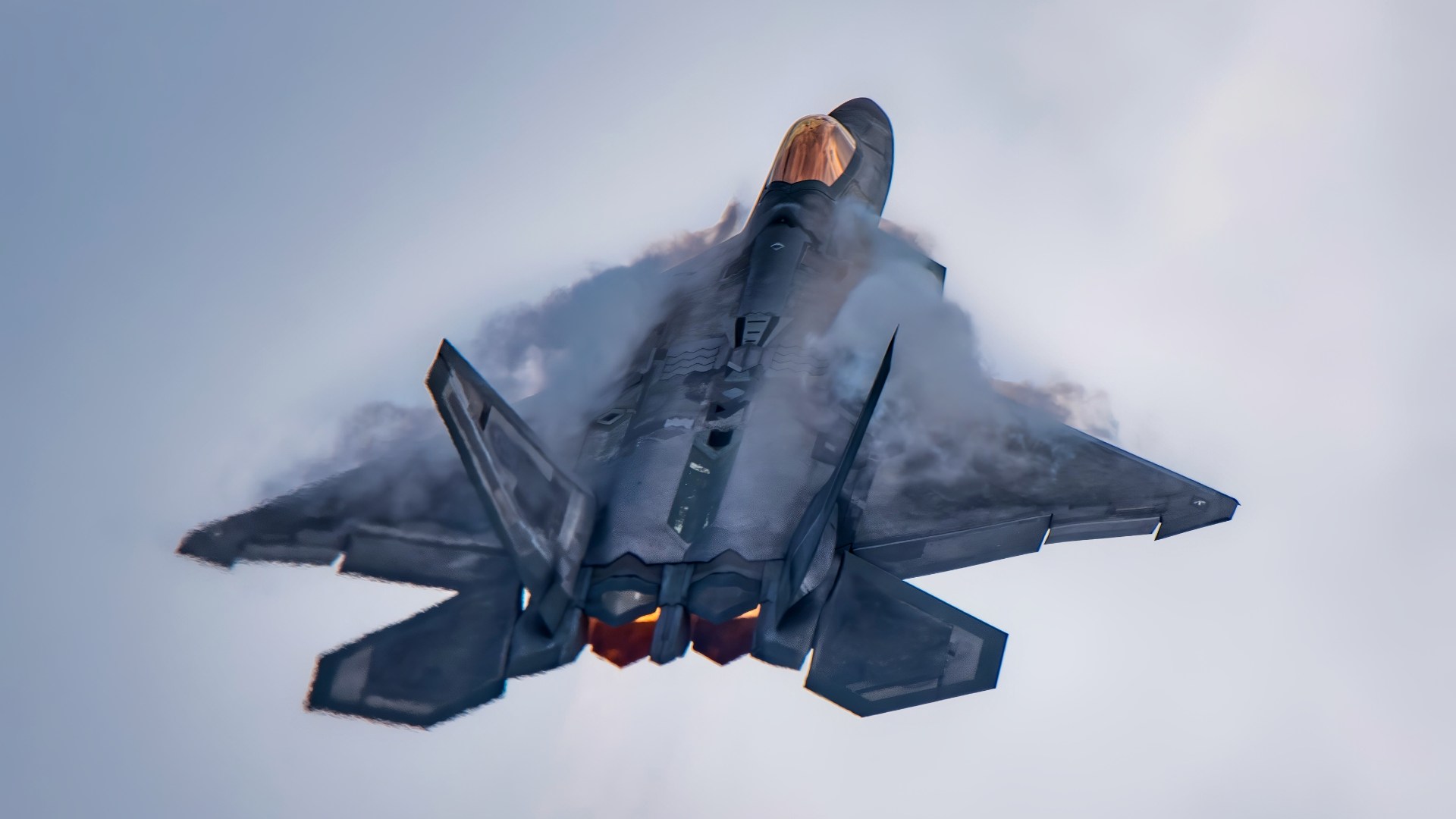
F-22 Raptor at USAF Museum. Image Credit: National Security Journal.

U.S. Air Force Capt. Nick “Laz” Le Tourneau, F-22 Raptor Aerial Demonstration Team commander, conducts a solo practice flight at Joint Base Langley-Eustis, Virginia DATE. This training session ensured that the demonstration pilot remains proficient in performing complex maneuvers that emphasize stealth and tactical superiority. (U.S. Air Force photo by Senior Airman Adisen Smith)

U.S. Air Force Maj. Josh Gunderson, F-22 Demo Team commander, enters into the Raptor Slide during the Millville Airshow, Sept. 3, 2021, at Millville Army Airfield, Millville, New Jersey. During the Raptor Slide the aircraft actually slides down and backwards under control before Gunderson adjusts the aircrafts position and powers out of the maneuver. (U.S. Air Force photo by Staff Sgt. Don Hudson)
Most recently, Iran struck one such facility in Kuwait, leading to fires that have affected operations there and threatened the drinking water supplies there. There were earlier strikes on such plants in Bahrain, while Iran has also accused the United States of striking a desalination plant on Qeshm Island during the original phase of the war back in March.
Why Desalination is Important
Desalination is an especially important and necessary technology in the Middle East. In Kuwait, per the Times, desalination plants produce about 90 percent of the drinking water, a number that is also very high in countries like Saudi Arabia and Oman.
“Infrastructure that civilians rely on for survival is not generally considered a legitimate military target, and striking it could be considered a war crime,” the Times reported. “But the attacks on water resources are especially concerning in the Gulf region: Most nations there lack widespread access to fresh water and rely heavily on hundreds of desalination plants, complex operations where repairs can be difficult and time-consuming.”
An Iranian regional governor claimed earlier this month that a U.S. strike on a desalination plant in Southeastern Iran left 10,000 people without water.
That attack “completely disrupted the supply of drinking water to 20 villages with a population of about 10,000 people,” Iranian news agency Tasnim reported the CEO of the Hormozgan Water and Wastewater Company had said.
Iran is less dependent on such technologies, although the country has sometimes faced water shortages in recent years, per The Times.
The U.S. and Israel have both denied directly targeting Iran’s water infrastructure.
The United Nations has criticized the attacks on such civilian infrastructure.
“As in any conflict, the protection of civilians and civilian objects is critical,” Stéphane Dujarric, a spokesman for the United Nations secretary-general, said in a briefing this week, as cited by the Times.
“Vital infrastructure on which civilians rely for survival, including hospitals and water supplies, must be spared.”
Risks to Water Supply
A Bloomberg News analysis published this week looked at why nations in the Middle East have embraced water desalination.
“The Iran war has highlighted a fundamental vulnerability of the oil-rich nations in the Persian Gulf: their reliance on desalination plants for water,” the Bloomberg report said.
“Gulf nations lack sufficient freshwater to sustain growing populations, industry and food production. To get around this problem, governments expend some of the region’s abundant energy reserves to convert seawater into drinking water.”
A Problem for the Climate
Time magazine, meanwhile, looked at what the continuing Mideast war could do to worsen the climate crisis.
“Fears of a reignited conflict are rising, even as the true cost of war is only beginning to be tallied. Alongside the thousands of deaths, the destruction of infrastructure, and the global economic costs, the war is exacerbating existing climate vulnerabilities and exposing the people of the region to an increasingly dangerous and nearly uninhabitable reality,” Time’s Sarah Yerkes and Alejandro Martin Rodriguez wrote.
That part of the world, the Time authors argue, is fairly vulnerable to climate change as it is.
“A combination of conflict and climate change has most acutely affected Iran and the broader Middle East and North Africa,” the authors say, even before the strikes on desalination plants in Iran and Bahrain.
“Water is rationed, temperatures are breaking records, and droughts have been increasingly severe. Temperatures in the region are expected to rise by twice the global average during the 21st century. Syria, Libya, and Yemen have already endured civil wars and protracted humanitarian crises. Climate change and conflict share a complex, multidimensional relationship, each capable of exacerbating the other.”
The report goes on to describe the desalination plant attacks “not merely tactics of war, but the brutal intersection of the logic of war and the logic of climate vulnerability.”
About the Author: Stephen Silver
Stephen Silver is an award-winning journalist, essayist, and film critic, and contributor to the Philadelphia Inquirer, the Jewish Telegraphic Agency, Broad Street Review, and Splice Today. The co-founder of the Philadelphia Film Critics Circle, Stephen lives in suburban Philadelphia with his wife and two sons. For over a decade, Stephen has authored thousands of articles that focus on politics, national security, technology, and the economy. Follow him on X (formerly Twitter) at @StephenSilver, and subscribe to his Substack newsletter.


