

Is This the “Worst-Case Scenario” For Hormuz? The Strait of Hormuz should, according to U.S. President Donald Trump, be open. With U.S. forces now holding Iran accountable, launching devastating strikes against coastal batteries and infrastructure, making it difficult to disrupt shipping as it has in recent weeks, international shipping companies should, in theory, be taking advantage of those efforts. But as one analyst put it this week, the Strait of Hormuz may now have returned to the shipping industry’s “worst-case scenario,” with traffic falling again to its lowest level in weeks as vessels stop outside the waterway, turn back, or avoid carrying major cargoes over fears of being intercepted.
What’s Happening?

Littoral Combat Ship. Image Credit: Creative Commons.
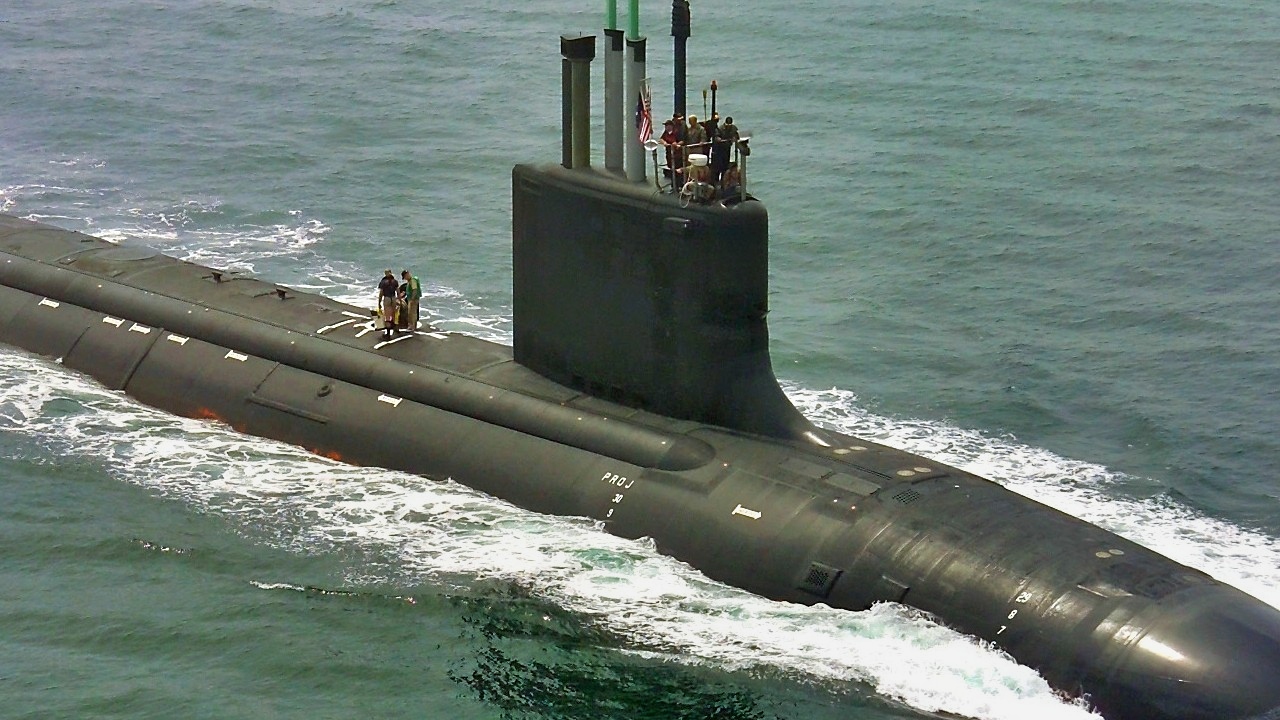
Groton, Conn. (July 30, 2004) – The nation’s newest and most advanced nuclear-powered attack submarine and the lead ship of its class, PCU Virginia (SSN 774) returns to the General Dynamics Electric Boat shipyard following the successful completion of its first voyage in open seas called “alpha” sea trials. Virginia is the Navy’s only major combatant ready to join the fleet that was designed with the post-Cold War security environment in mind and embodies the war fighting and operational capabilities required to dominate the littorals while maintaining undersea dominance in the open ocean. Virginia and the rest of the ships of its class are designed specifically to incorporate emergent technologies that will provide new capabilities to meet new threats. Virginia will be delivered to the U.S. Navy this fall. U.S. Navy photo by General Dynamics Electric Boat (RELEASED)
Dimitris Maniatis, CEO of Greek maritime risk-management company Marisks, said during a Lloyd’s List Intelligence briefing on Thursday, July 16, that the collapse of the U.S.-Iran memorandum of understanding (MOU) had reversed the limited recovery that was seen after the agreement was reached in June.
“Vessels that were trapped inside the Persian Gulf for a very long time, belonging to owners that were extremely risk averse, managed to exit, and everybody was very joyful about that,” Maniatis said.
“With the recent events, everything has changed. We’ve gone back to the worst-case scenario. Nobody is willing to move.”
The tracking data proves it. Only three commodity-carrying vessels look to have crossed the Strait on Thursday, the lowest daily total since May. What’s more, no very large crude carriers or liquefied natural gas tankers passed through for a second consecutive day.
Why Ships Don’t Want to Sail
During the same briefing, Maniatis also sought to explain why shipping companies are hesitant to transit the strait at present. He described how crews are unwilling to make the voyage regardless of any assurances or incentives being made to them, and said it was not necessarily a matter of shipping becoming more expensive.
“All this resonates with crews, and right now they’re just not very happy to go through, no matter what is promised to them,” he said. “It’s not about money anymore, it’s not about any other higher calling, it’s purely about the fear that is governing the decision-making right now.”
The fear, it seems, reflects the conditions that crews face – and assurances now mean less because they have previously been made, only for Iranian forces to launch one-way naval drones at commercial ships transiting through what they thought were safe shipping lanes. And while ships face potential strikes, U.S. forces are also boarding, redirecting, and disabling vessels that are suspected of violating Washington’s reimposed blockade on Iranian ports.
In other words, it’s a hostile environment for ships.
And this situation creates a particular problem for shipowners, too. A company may be willing to accept higher insurance costs or contractual risk, but the vessel still needs a captain and a crew – and if those who directly operate the ship are not prepared to enter a waterway where they may be attacked or boarded by military personnel, then the insurance rates don’t mean a thing.
The worst-case scenario, then, doesn’t need Iran to physically mine or seal every part of the Strait of Hormuz. It turns out it doesn’t even need to be threatening to mine the Strait of Hormuz. In fact, all it requires is enough uncertainty, enough failed deals, and sufficient risk of being boarded, even by the Americans, to shut down a technically open strait.
What the Vessel Traffic Data Shows
Traffic figures released this Friday show that the number of ships moving through the strait is now alarmingly low. Kpler data cited by CBS News recorded eight overall transits through Hormuz on Thursday, down from 15 on Wednesday and the lowest total in three weeks. A narrower Reuters analysis counted only three commodity vessels crossing that day, the lowest number since May. The different totals reflect the categories being counted rather than a contradiction: the larger figure covers confirmed vessel movements more broadly, while the Reuters count focuses on commodity-carrying ships.
And more significant than the raw total of ships passing was the absence of ships responsible for moving the largest oil cargoes. No very large crude carrier, or VLCC, and no LNG tanker crossed on Wednesday or Thursday. A single VLCC can carry as much as two million barrels of oil, and two such vessels were tracked near the area without entering the Strait.
This Needs To Be Fixed
There is still time to avoid a full-scale energy crisis, but at this point it’s hard to see how it will end even if Iran agrees to another MOU-style deal – and the window for preventing a crisis is narrowing. International Energy Agency Executive Director Faith Birol warned this week that if normal oil flows through the Strait of Hormuz do not return to normal within “the next few weeks,” the world should begin to worry about energy security. He warned that the factors helping keep prices under control, including emergency stockpiles and higher U.S. production, can’t “last forever.”
It means this week’s shipping disruption is extremely alarming, with the U.S. doing everything it can at this stage to open a strait that no one wants to pass through.
About the Author: Jack Buckby
Jack Buckby is a British researcher and analyst specializing in defense and national security, based in New York. His work focuses on military capability, procurement, and strategic competition, producing and editing analysis for policy and defense audiences. He brings extensive editorial experience, with a career output spanning over 1,000 articles at 19FortyFive and National Security Journal, and has previously authored books and papers on extremism and deradicalization.


Dr. Hujjathullah M.H.B. Sahib
July 18, 2026 at 5:14 am
So the basic facts are very clear now. The Strait is not heavily mined, the high insurance is not the hindrance BUT emotionally overwhelmed and justifiably highly fearful crews are the stumbling blocks now for operationalizing smooth freight traffic. But can’t this be overcome especially in an age when AI-ed automated crewing and piloting is touted as poised to fast supplant human crews of even VLCCs ? Capitalists famed for holding humanity hostage to their runaway greed are suddenly being rendered impotent by reluctant employees facing allegedly “AI-engineered” retrenchment in their near future !