

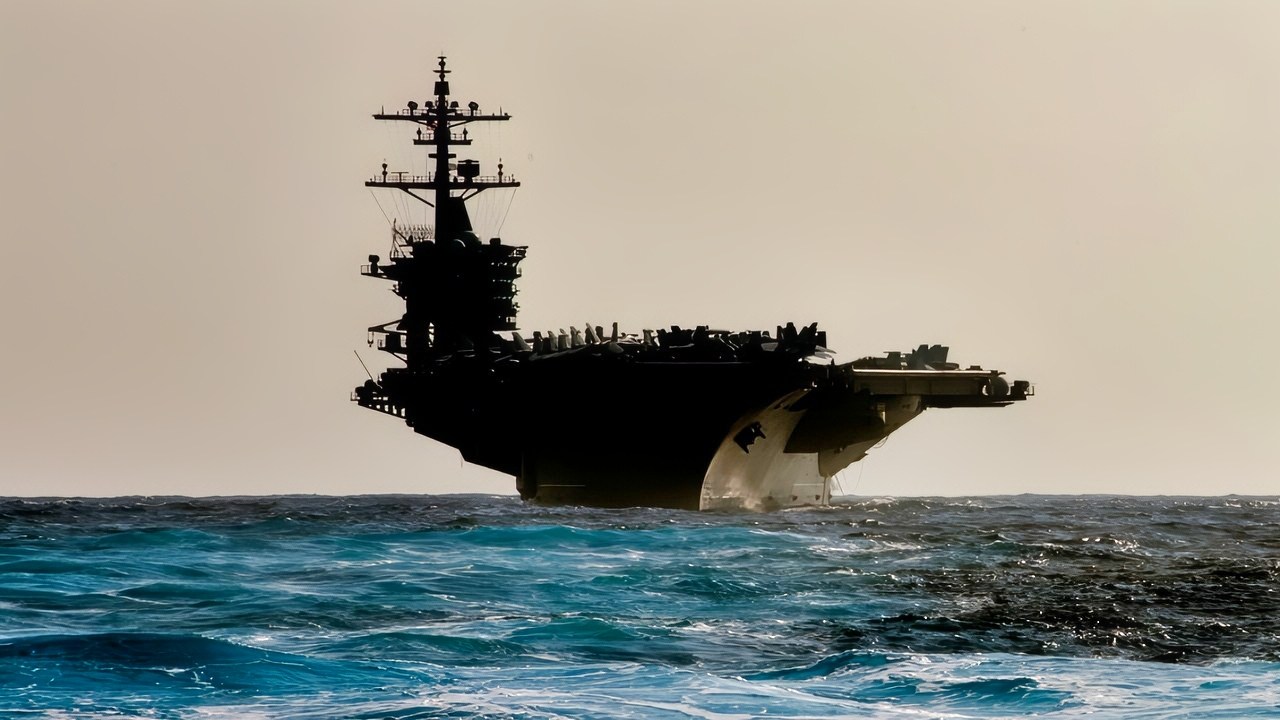
The military campaign between the United States and the Islamic Republic of Iran has entered a terrifying new phase, in which the Strait of Hormuz (SoH) is now the primary theater of conflict.
Whereas at the start of the war, Washington was concerned over the potential threat that an Iranian nuclear weapons capability posed, as well as the desire to overthrow the Islamic Republic and replace it with something friendlier to US and Israeli interests, everything now appears to center on whether the Americans can restore the 140 ships per day traffic that once defined the SoH before the war.
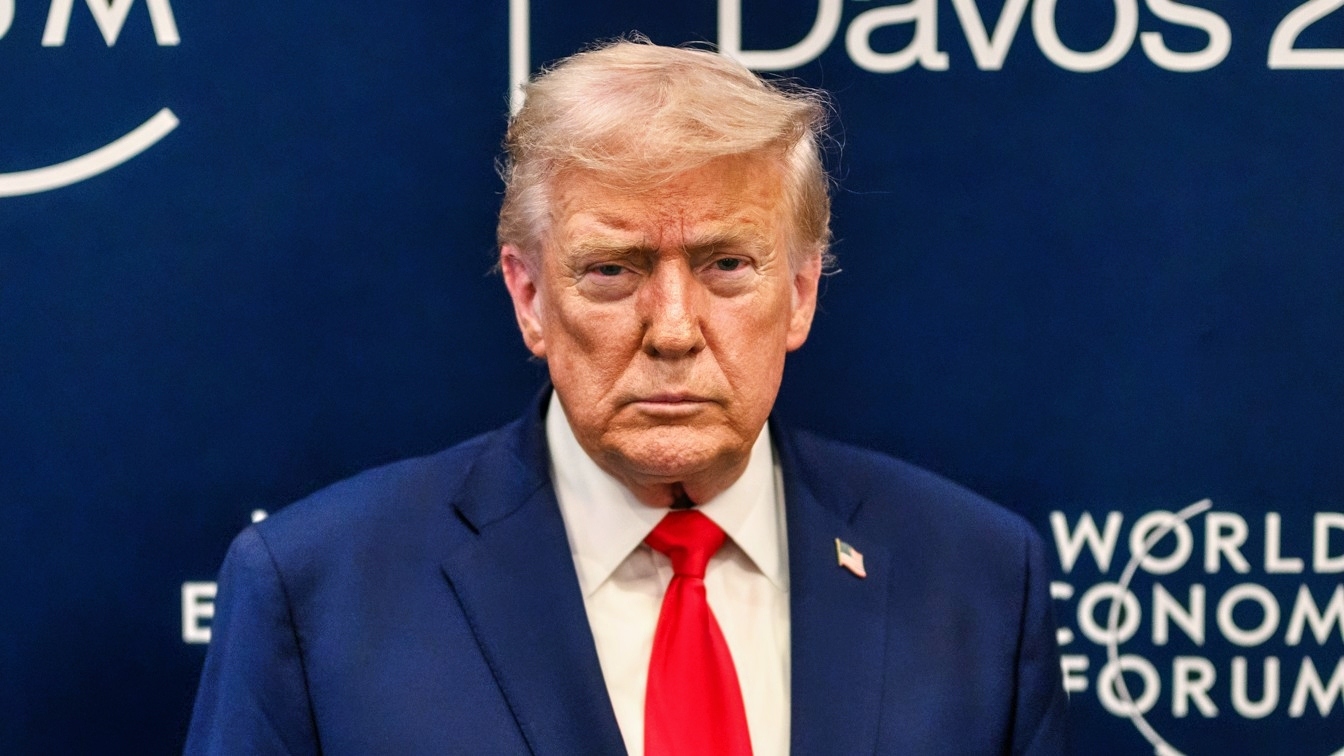
President Donald Trump exits the stage after delivering remarks at the World Economic Forum in Davos, Switzerland on Wednesday, January 21, 2026, at the Davos Congress Center. (Official White House Photo by Daniel Torok)
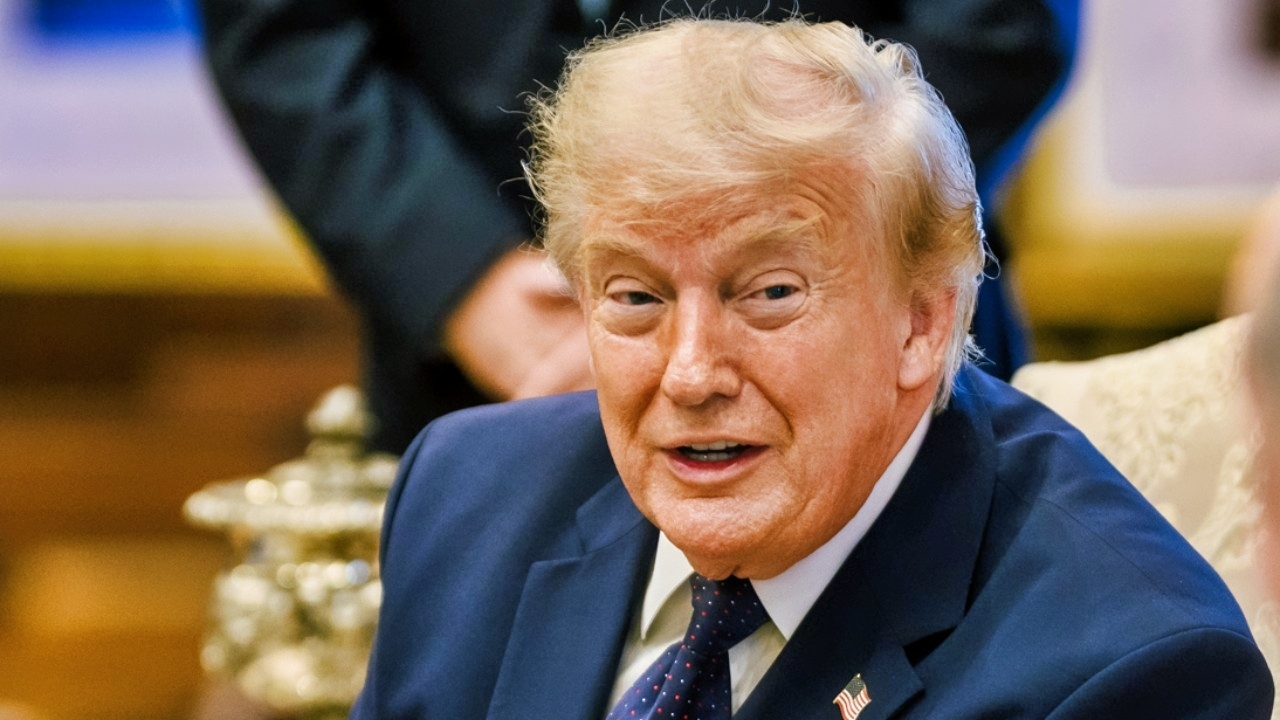
President Donald J. Trump participates in a restricted bilateral meeting with President Recep Tayyip Erdogan of Turkey, Tuesday, July 7, 2026, at the Bestepe Presidential Compound in Ankara, Turkey. (Official White House Photo by Daniel Torok)
This ongoing struggle underscores the enduring challenge and the importance of the conflict for global stability.
Recent events highlight how both Washington and Tehran have shifted their focus from traditional geopolitical issues to controlling the geographic zone of the Strait of Hormuz.
Indeed, the latest escalation between the US and Iran came after another round of American airstrikes targeting Iranian military facilities (and a fresh attack on commercial shipping inside the SoH).
British maritime authorities, according to the Associated Press, said a tanker transiting the waterway was struck by an unidentified projectile, forcing its crew to abandon ship in lifeboats.
Iran subsequently claimed that two tankers caught fire after allegedly using an unauthorized transit route.
The maritime attacks occurred alongside the tenth round of American airstrikes against Iranian targets since the current phase of the conflict resumed.
US officials announced strikes against additional Iranian military infrastructure after previous Iranian attacks killed American service members stationed in the region.
The War Shifted to Maritime Pressure
The current campaign is quite different from the opening weeks of the conflict. Earlier operations concentrated on degrading Iranian military infrastructure through airpower.
Today, both sides appear focused on the SoH to impose economic costs on each other.
Yet, this strategy likely favors Iran–at least in the short term–since the Americans and their allies are so heavily dependent on energy, agriculture, and other critical materials that must pass uninterrupted through the SoH unless the economy starts reacting negatively to the shortages resulting from the kind of closure we’re experiencing right now.
Iran won’t budge over the claim that they control at least part of the SoH, considering they share a large coastline with it.
And they’ve repeatedly demonstrated that control with constant attacks. Iran insists the SoH will remain closed so long as US military operations against Tehran continue–and the Americans will continue those operations until they achieve their strategic objectives (which apparently include reopening the SoH).
Shipping Is Collapsing Globally
Despite the repeated American strikes, commercial traffic through the SoH continues contracting. Recent shipping data indicate that only a smattering of commercial vessels still dare to use the SoH.
Reuters highlights that only four commodity vessels make the risky passage, with no Very Large Crude Carriers (VLCCs) or LNG tankers entering the waterway.
Shipping insurers refuse to insure ships under these conditions.
When they do insure the ships, those shipping insurers charge ghastly prices that are transferred onto the consumer of those products, spiking the cost of everything (since everything relies on shipping).
In other words, military strikes by the US have done little to restore confidence among commercial shippers, ensuring economic decline in the rest of the world.
All this, as the Houthis in Yemen claim they are closing the alternative routes to the SoH, the Strait of Bab el-Mandeb and the Red Sea.
Strategic Reality
Strategic Reality: the latest developments illustrate a broader reality. Diplomacy is no longer an option. Escalation is our lot.
While American airpower remains a significant threat to the regime in Iran, it has failed to achieve the overarching objectives of forcing either a change in the Iranian regime’s behavior, a reopening of the SoH, or an end to that regime itself.
This persistent escalation underscores the unlikelihood of a peaceful resolution in the near term.
Tehran retains sufficient capabilities with which to threaten the US and its partners–and those capabilities are clearly having an outsized impact, especially on the global economy, which will reevaluate and hurt the US war effort over time.
At the same time, though, Iran’s maritime attacks in the SoH have not stopped the US war effort as intended.
As long as neither side wants to change their approach or shift their objectives in the war, the SoH is likely to remain the focus of the war.
The continued reduction in shipping through the SoH, with now the possibility of a Houthi blockade of the Red Sea, along with repeated strikes on shipping, means that the confrontation is transmogrifying into a prolonged struggle over control of global energy transportation rather than a conventional air campaign alone.
It also means that there is no end in sight.
About the Author: Brandon J. Weichert
Brandon J. Weichert is the National Security Editor. He also manages The Weichert Brief on Substack. Weichert also hosts “National Security Talk” on Rumble. He is the author of four bestselling national security books, the most recent of which is A Disaster of Our Own Making: How the West Lost Ukraine (Encounter Books). Follow him via Twitter/X @WeTheBrandon.


Hujjathullah M.H. Babu Sahib
July 21, 2026 at 3:03 pm
The end is not in sight but rather it is in extended sight. If both sides are changing the goalpost,then clearly there is no hope of even a mid-term conclusion and by this I don’t just mean the U.S. election mid-term. Happily, the Iranians are not guilty of changing their own goalpost but have stuck to their strategic grounds relatively firmly. The Iranian F.M. Mr. Araghchi is also very clear about any future ceasefire moves which now will be pegged to demonstrable Iranian upperhand, at least in the SoH arena. Paradoxically, there could be a boon to Trump and company’s constant goalpost shifting : from a) no more high enrichment, regional terrorism and proxy support to b) political decapitation, to c) attempted regime change, to d) naval blockade, to e) neutralising military assets, right down to f) going at crippling even civil-life-linked infrastructure. Once this shifting tango by Trump settles squarely at the Hormuz arena, an end may come to view. So, SoH shall it be !