


Houthis Warn Shipping Companies To Avoid Saudi Arabia: The Houthi rebels on Monday declared a naval blockade against Saudi Arabia, in an attempt to pressure the United States in its war with Iran and raise the threat to global energy supplies and trade beyond the Gulf.
The Houthis sent an email to shipping companies that they shouldn’t load or discharge cargo at Saudi Arabian ports because that activity may result in being targeted “in any location” by Iran’s proxy force.
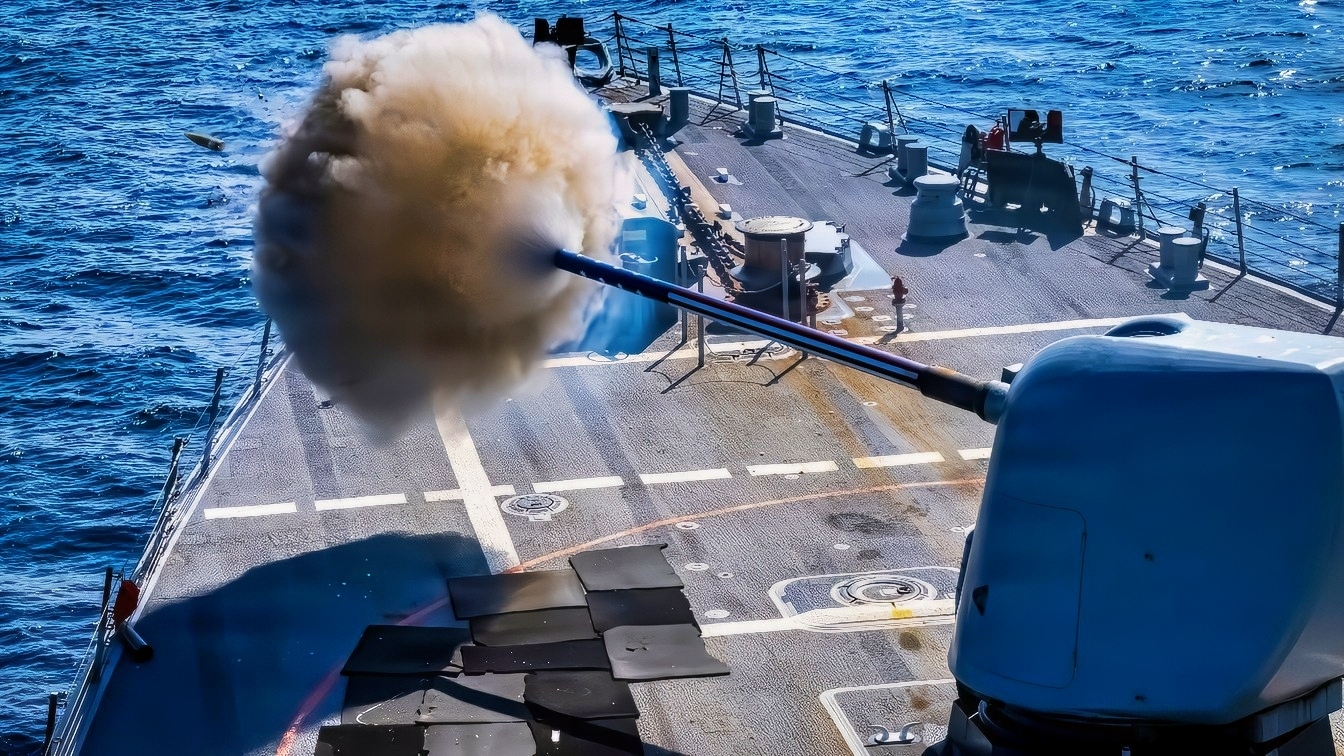
PACIFIC OCEAN (April 27, 2026) U.S. Navy Arleigh Burke-Class guided-missile destroyer USS John Paul Jones (DDG) 53, fires its Mk.45 5-inch deck cannon during a live fire exercise, April 27, 2026. John Paul Jones, part of the Theodore Roosevelt Carrier Strike Group, is underway in the U.S. 3rd Fleet area of operation conducting advanced training to bolster strike group readiness and capability. (U.S. Navy photo by Mass Communications Specialist 2nd Class Ryan Holloway)
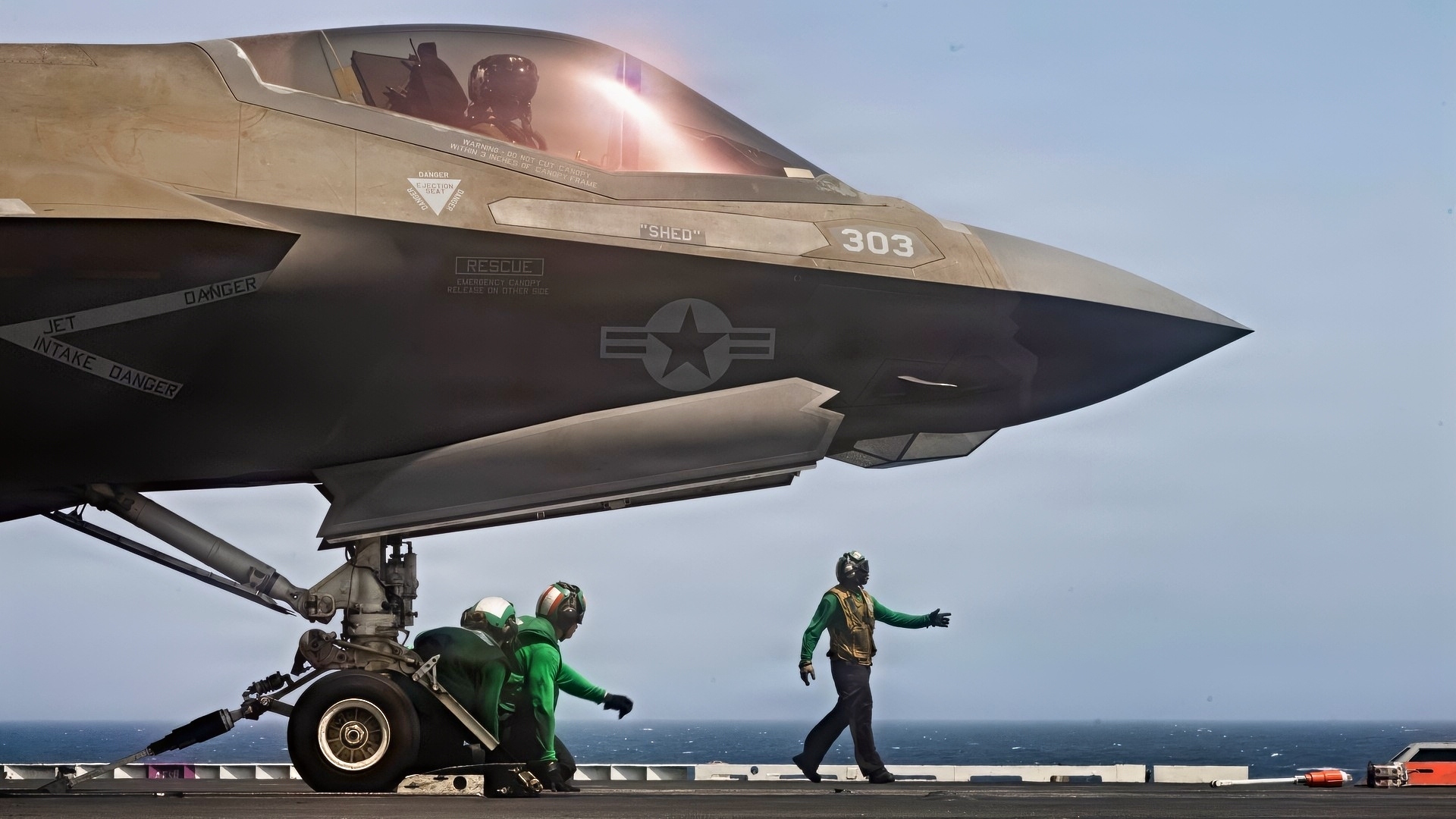
U.S. Sailors prepare an F-35C Lightning II, attached to Marine Fighter Attack Squadron (VMFA) 314, to launch from the flight deck of Nimitz-class aircraft carrier USS Abraham Lincoln (CVN 72), June 1, 2026. Abraham Lincoln is deployed to the U.S. 5th Fleet area of operations to support maritime security and stability in the Middle East. (U.S. Navy photo)
In wording that sounded very familiar, the email stated, “Vessels are banned from loading or discharging cargo at or from any Saudi ports.
“We strongly recommend that your company exercise due diligence and the utmost care in all its dealings,” according to the email, which was sent on July 20.
“An Eye For An Eye”
The Yemeni rebel group, an Iranian proxy militia, didn’t provide any details, only that it declared a “maritime embargo against the criminal Saudi enemy, based on the equation of ‘an eye for an eye,’ effective immediately,” according to Reuters.
The Houthis control the area next to the Bab al-Mandeb Strait, located on the Red Sea’s southern end. The Saudis have diverted 70 percent of their oil from the Gulf to the Red Sea, due to the issues with the Strait of Hormuz.
Saudi crude oil loadings through the Bab Al Mandeb Strait have already dropped 36 percent in two weeks, according to Kpler data.
“We are seeing a bit of a drop in Bab Al Mandeb. It’s (more than) 1.2 million barrels a day now, from the Middle East and Asia side toward the Red Sea,” said Homayoun Falakshahi, Kpler’s crude analysis team chief.
The closure of the Bab al-Mandeb Strait would cut the global oil supply by a further 7 percent adding to the 10 percent reduction of oil from the Persian Gulf since the conflict began. This would also prevent the majority of Saudi oil from being shipped out of the region.
Saudi Coalition Vows To Protect Its Shipping With Force
The New York Times reported that Houthi spokesman Yahya Saree said in a televised address the blockade was in response to a “continued Saudi siege” on Yemen, and that militants were ready to meet any Saudi retaliation with “a total and harsh escalation.”
The Saudi foreign ministry said in a statement that the kingdom “will take all necessary measures to protect its vessels in accordance with international law.”
Turki al-Malki, a spokesman for the Saudi-led coalition opposing the Houthis in Yemen, said in a statement that “All Houthi threats against transiting vessels will be dealt with swiftly and firmly, as such threats are a blatant violation of international law and fall under acts of maritime piracy.”
UN spokesman Stephane Dujarric said the organization is concerned over the “maritime embargo” declared in Yemen.
“It’s obviously another chokepoint. We’re already seeing the impact of the near-closure of the Strait of Hormuz and what impact that is having on the global economy,” he said.
Saudi Pipeline To Divert Oil From Hormuz Now At Risk
The Saudis have used their East-West Pipeline to the Red Sea to bypass shipping oil through the Strait of Hormuz, where tankers have been attacked by Iran for using the southern route along the Omani coast, rather than negotiating with the IRGC and Iran’s newly created Persian Gulf Strait Authority.
The Saudis have been sending millions of barrels of crude oil a day through the 1,200-kilometer-long pipeline. Now, about 2.5 million barrels of oil per day could be at risk, Texas-based Rystad Energy wrote Monday.
“The Strait of Hormuz remains almost at a standstill, and Saudi Arabia’s Red Sea export route, which has been carrying the bulk of Gulf crude to market, is now directly in the line of fire,” Rystad wrote.
Jorge Leon, senior vice president and head of geopolitical analysis at Rystad Energy, said, “Rystad Energy vessel-tracking data indicates that approximately 2.5 million barrels per day of these volumes are currently moving south through Bab el-Mandeb, leaving a critical alternative export route directly exposed to potential Houthi action.”
Saudi/Houthi 2022 Truce May Be Over
Saudi Arabia leads a coalition against the Houthis and imposed an air and sea blockade on Yemen in 2015.
Yemen’s civil war began in 2014 when the Houthi rebels seized the capital, Sanaa, and much of northern Yemen and forced the government into exile. A truce was reached in 2022.
However, when a flight of Houthi leaders was returning from Iran, where they attended the funeral of Supreme Leader Ayatollah Ali Khamenei, the Saudis fired missiles at the Sanaa airport. The aircraft was forced to land at another airport.
The Houthis then launched missiles and drones at Saudi Arabia’s Abha International Airport, according to some reporting that is breaking.
About the Author: Steve Balestrieri
Steve Balestrieri is a National Security Columnist. He served as a US Army Special Forces NCO and Warrant Officer. In addition to writing on defense, he covers the NFL for PatsFans.com and is a member of the Pro Football Writers of America (PFWA). His work was regularly featured in many military publications.


