
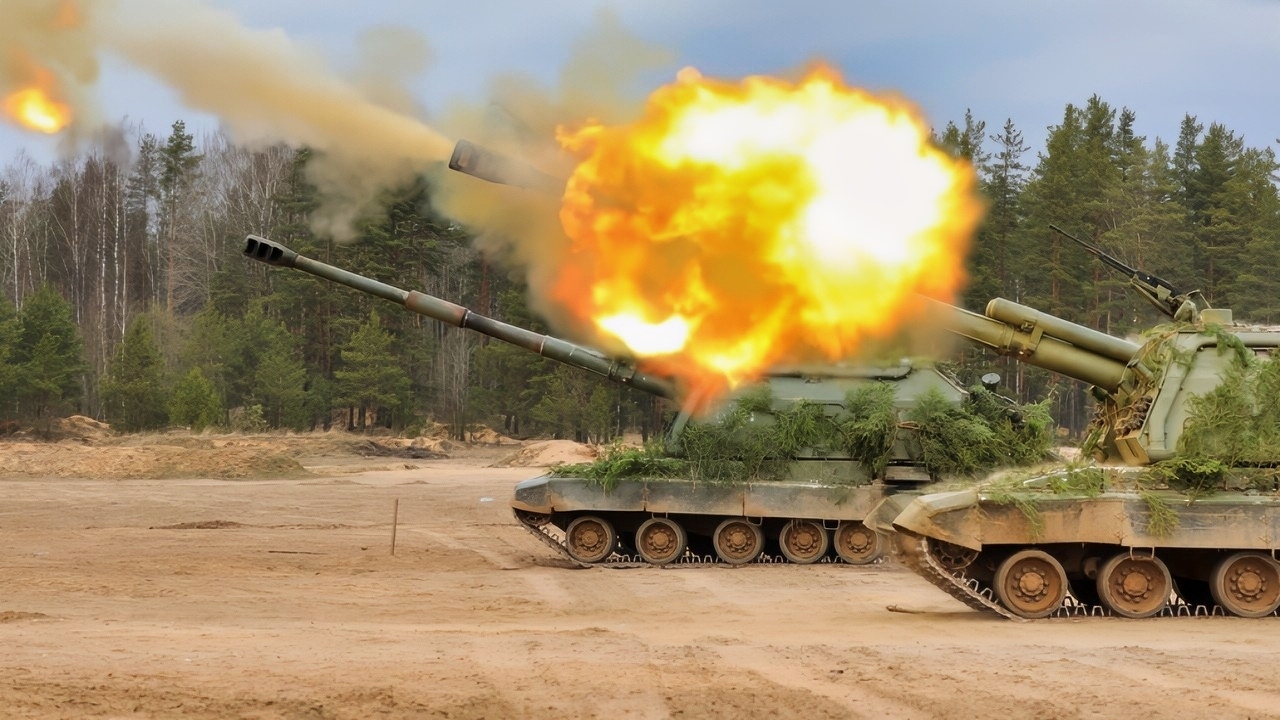
Russia and Ukraine continued to trade deadly attacks well beyond the front line on Thursday, July 23, with strikes killing at least eight people.
Russian strikes reportedly killed four people in Ukraine. A Russian attack also hit a food business in Pavlohrad, an industrial city in Dnipropetrovsk Oblast, killing three people and injuring at least 20 others. According to Oleksandr Hanzham, the head of the Dnipropetrovsk Regional Military Administration, the strike also caused a fire.
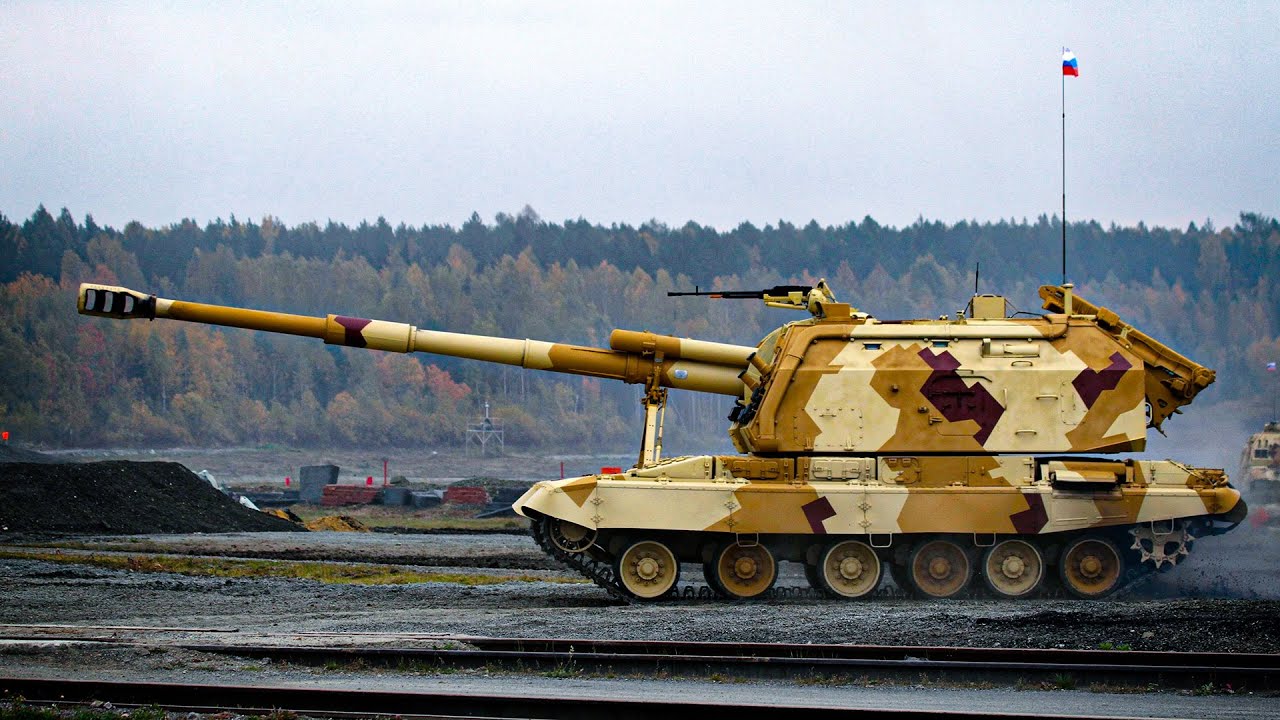
MSTA Russian Artillery Creative Commons Image
Ukrainian public broadcaster Suspilne also reported that a 57-year-old man was killed by Russian mortar fire while standing in his own backyard in Sumy Oblast.
Ukrainian attacks also killed four people in Russia and occupied Crimea.
According to Voronezh Oblast Governor Alexander Gusev, a three-year-old boy died after a drone crashed into his family’s home and started a fire.
The boy’s parents were injured but survived the strike. Another man was also killed after a drone struck a vehicle in Belgorod Oblast, and a further two deaths and four injuries were also reported in Crimea.
The shocking new deaths come as the two sides begin to focus more on long-range strikes aimed at critical infrastructure in each country’s biggest cities, and as Russian gains on the front line slow significantly.
Ukraine Downs Hundreds of Russian Drones
Russia’s Ministry of Defense said that its air defenses intercepted 223 Ukrainian drones overnight, making it one of the largest reported Ukrainian drone attacks in recent weeks. The ministry said that drones were destroyed across multiple regions.
Civilian sites were also among those affected, with Voronezh Oblast Governor Alexander Gusev describing how falling drone debris, caused by interceptions, struck residential areas and commercial property in the regional capital.
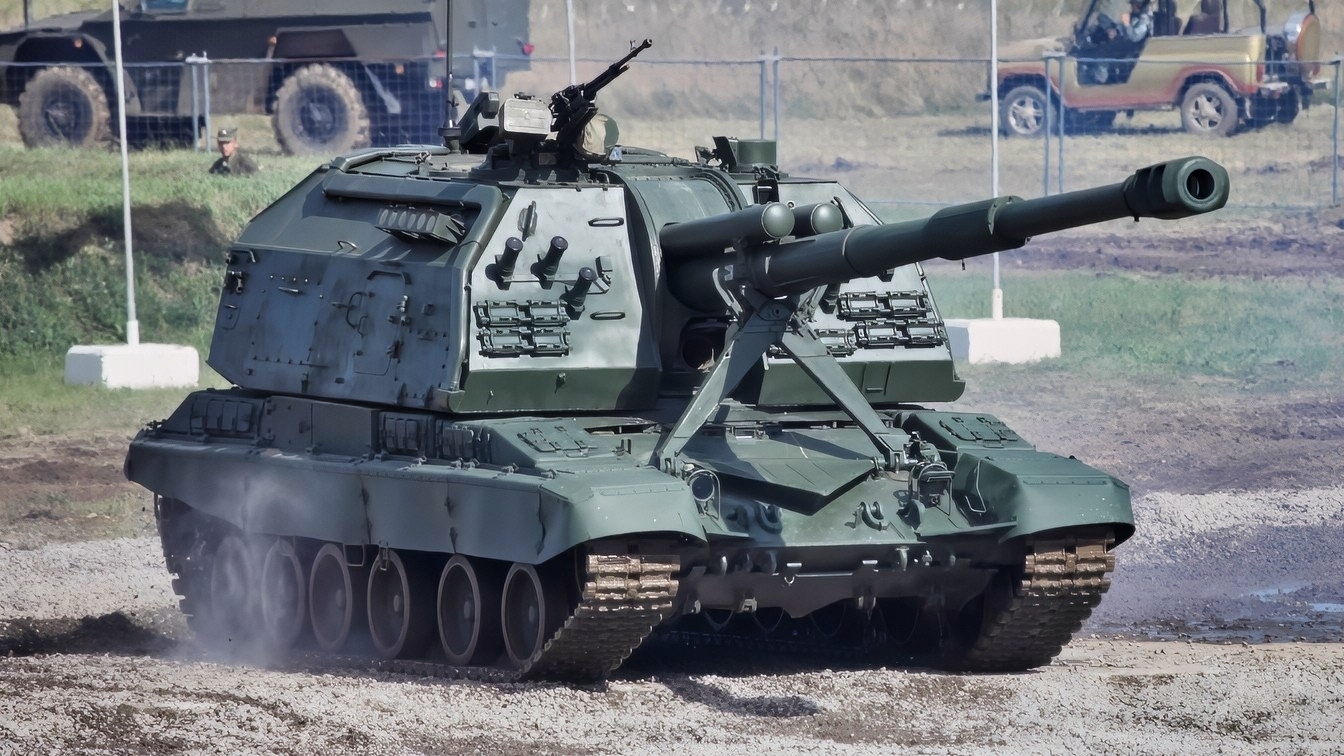
MSTA-S Russian Artillery. Image Credit: Creative Commons.
He also said that debris caused a fire at a private home, killing a three-year-old child. A 19-year-old man was also injured.
Additional damage was also reported at another warehouse belonging to Wildberries, Russia’s largest online retailer.
Why Wildberries?
Strikes against Wildberries began on July 18, when drones struck the company’s logistics facilities in Kotovsk, Tambov Oblast, and Elektrostal, Moscow Oblast, killing eight workers and severely disrupting operations.
Since those initial strikes, Ukrainian drones have hit additional Wildberries facilities within the Moscow region, as well as Krasnodar Krai and Stavropol Krai – and now, overnight into Thursday, an additional warehouse in Voronezh Oblast.
Ukrainian President Volodymyr Zelenskyy has defended the strikes, stating that the warehouses are not merely commercial facilities but logistics hubs supporting Russia’s military supply chain.
In his evening address on July 22, Zelenskyy announced that Ukrainian forces had struck “logistics hubs involved in supplying the Russian army with drone components, navigation equipment and other gear.” Having previously claimed that the company was helping distribute drone parts, Zelenskyy said that it was only fair to bring the war back home to Russia.

MSTA-S Russian Army. Image Credit: Creative Commons.
The Kremlin denies the allegations, however, with Kremlin spokesman Dmitry Peskov stating that the attacks have caused significant losses for Wildberries and the thousands of small businesses that use it as its marketplace.
He also rejected Ukrainian claims that the company supplies the Russian military. Speaking on Tuesday, Peskov said that it is “not the case” that Wildberries has any connection to the military, and claimed that Kyiv is deliberately striking civilian targets.
Russia Expands Long-Range Campaign
Thursday’s casualties also come after one of Russia’s largest ballistic missile attacks of the war. Overnight into Sunday, July 19, Russia launched 41 missiles and 125 attack and decoy drones against Ukraine. The missiles included 25 Iskander-M or S-400 ballistic missiles, 10 Zircon hypersonic missiles, and three Onyx cruise missiles.
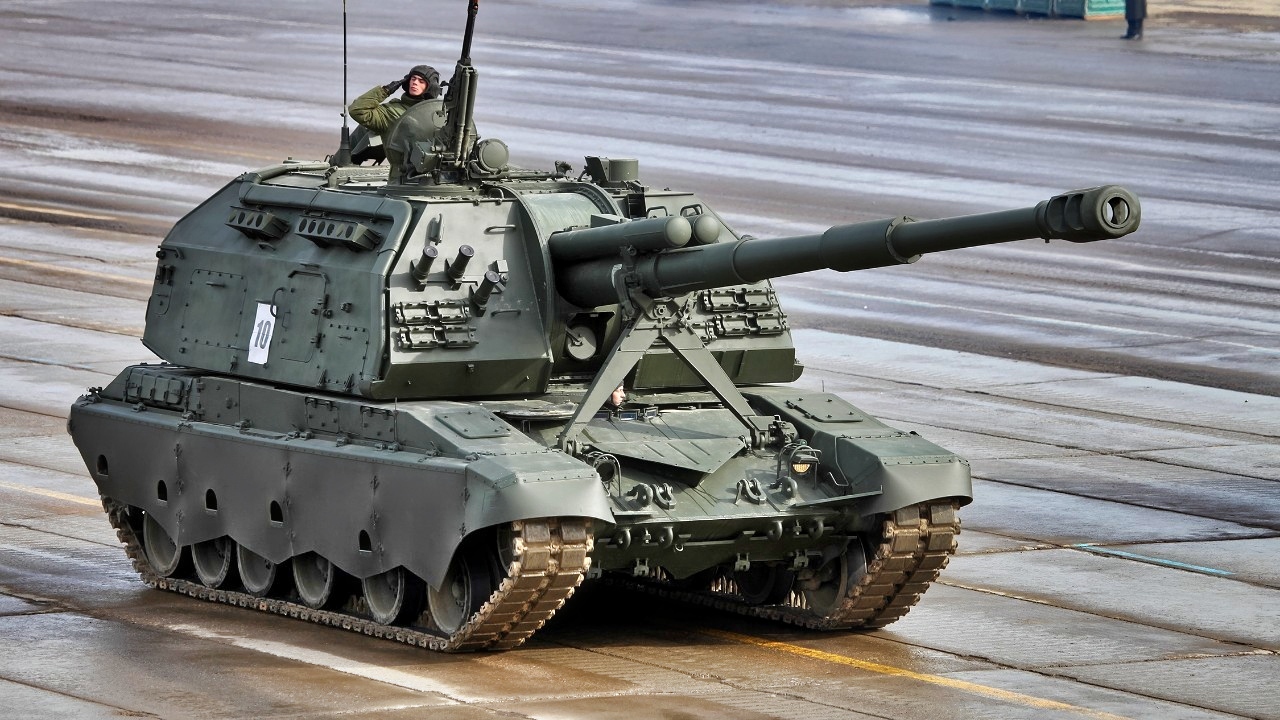
Msta-S Russian Army. Image Credit: Creative Commons.
Another three Kh-59 and Kh-69 guided missiles were also reportedly used.
According to Ukraine, 18 missiles were intercepted alongside 108 drones. At least seven people were killed in attacks on Kyiv, Kharkiv, and Zaporizhzhia, while 16 people were also injured in the Ukrainian capital.
The frequency of Russian ballistic missile attacks is growing, and it is doing so at just the right time: Ukrainian President Volodymyr Zelenskyy has repeatedly called on his allies to speed up the delivery of Patriot interceptors to help prevent ballistic missile attacks, and Moscow is well aware of the present shortage.
Russia Targets Ukraine’s Exports
Russia’s latest attacks are also diversifying, not just becoming more intense.
On Wednesday, July 22, Russia’s Ministry of Defense claimed it struck the ports of Odesa and Chornomorsk, targeting loading facilities and cargo vessels that it said were transporting supplies for the Ukrainian military.
The claims could not be independently verified, but the attacks reportedly came as commercial shipowners express concern about sending vessels to Ukraine’s Black Sea ports because of the growing risk of being attacked.
President Zelenskyy has warned that Moscow is deliberately attempting to cut off one of Ukraine’s most important economic lifelines, and Agriculture Minister Taras Vysotskyi also said alternative rail and Danube export routes could only partially replace the Black Sea’s shipping capacity.
About the Author: Jack Buckby
Jack Buckby is a British researcher and analyst specializing in defense and national security, based in New York. His work focuses on military capability, procurement, and strategic competition, producing and editing analysis for policy and defense audiences. He brings extensive editorial experience, with a career output spanning over 1,000 articles at 19FortyFive and National Security Journal, and has previously authored books and papers on extremism and deradicalization.


