


Will Saudi Arabia Learn Any Lesson from its Houthi Appeasement?: On July 22, 2026, Yemeni Houthis hit two Saudi tankers after declaring a blockade on Saudi ports. The Houthi move appears coordinated with the Islamic Revolutionary Guard Corps to plug the major hole in Iran’s efforts to stop the flow of Persian Gulf oil. Saudi Arabia’s East-West pipeline to the Red Sea Port of Yanbu can divert about seven million barrels per day of Saudi crude, which, while lower than Saudi Arabia’s potential export, gives Riyadh and broader markets a way to sidestep Iranian pressure. Importantly, Yanbu also allows crude to bypass the Bab el-Mandeb, at least for tanker traffic heading to Europe, though the Asian market depends more on Saudi oil and so Saudi Arabia cannot fully bypass the Bab el-Mandeb.
In reality, Saudi authorities likely believed they had a free pass. After all, despite public posturing against the Houthis, Riyadh has, after Iran and the Sultanate of Oman, become their biggest supporters. The chief difference between Tehran and Riyadh is that while Iranian authorities embrace the Houthis out of ideological and sectarian sympathy, Saudi officials do so out of a cynical belief that they can co-opt and appease them.
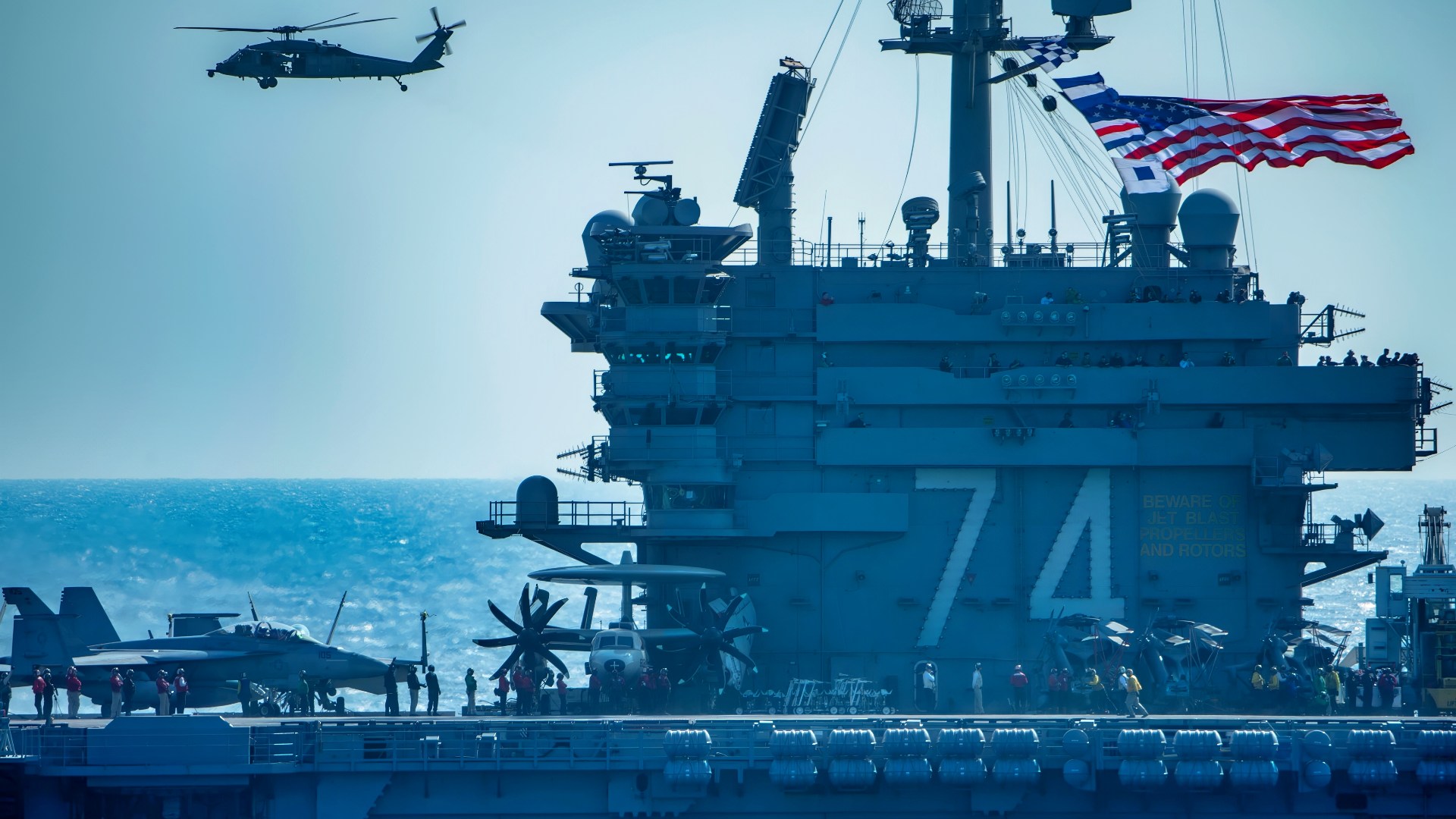
ARABIAN SEA (Dec. 14, 2018) The Nimitz-class aircraft carrier USS John C. Stennis transits the Arabian sea with the Essex Amphibious Ready Group (ARG) and 13th Marine Expeditionary Unit (MEU). The John C. Stennis Carrier Strike Group, Essex ARG, and 13th MEU are conducting integrated operations in the Arabian Sea to ensure stability in the Central Region, connecting the Mediterranean and the Pacific through the western Indian Ocean and three strategic choke points. (U.S. Navy photo by Mass Communication Specialist 3rd Class Tyler Diffie)
Saudi Arabia Has a Houthi Problem
It is easy to understand Saudi frustration. The Houthis initially posed as great a danger to Saudi Arabia as they did to Yemen.
While Houthi drone attacks on Israel make headlines, the Houthis launched more than a thousand drone and ballistic missile attacks on Saudi Arabia; not only did the United States barely make any mention, but when the Saudis intervened to counter the Houthis, Obama administration progressives took the Houthi side criticizing the imprecision of Saudi bombing and demanding an end to U.S. intelligence sharing with the Kingdom.
On its face, this made no sense: To deny intelligence in support of Saudi strikes on the Houthis would never force Riyadh to stop countering what it believed to be an existential threat but rather was equivalent to blindfolding a sniper as punishment for missing.
Plan B
Absent consistent and meaningful support, Saudi Arabia went to Plan B: Buying off the Houthis.
Airstrikes on the Houthis stopped, and Saudi forces inside Yemen pulled back. On March 29, 2022, Saudi authorities announced a broad ceasefire in Yemen to facilitate peace talks. Shortly after, the Saudis created the Presidential Leadership Council to unite the various Yemeni factions that opposed the Houthis into a singular government.
The Presidential Leadership Council, however, was not as anti-Houthi as the international community pretended. While Aidarous Zubaydi’s Southern Transitional Council and Tareq Saleh’s National Resistance governed territory and so focused more on the provision of services, the other members of the council became known to Yemenis as the Majlis al-Fanadiq [Council of Hotels] since most lived abroad on the public and international dime in Egypt, Jordan, or Saudi Arabia.
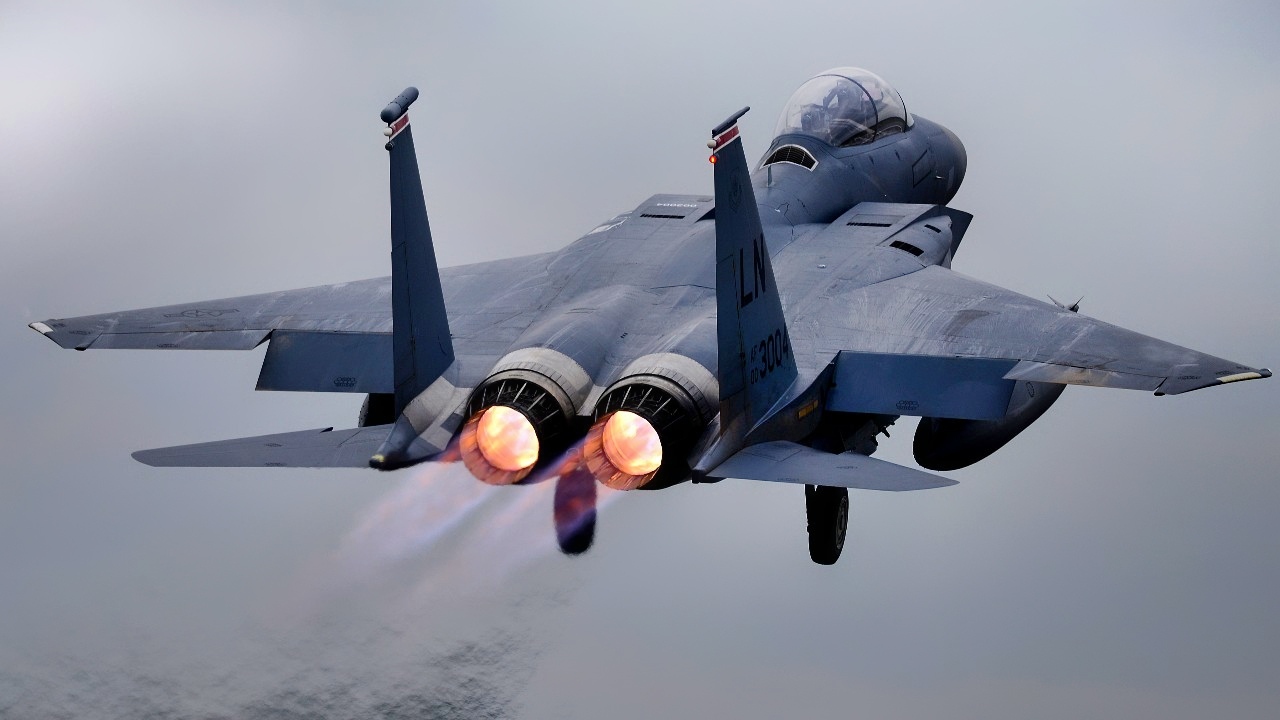
An F-15E Strike Eagle assigned to the 494th Fighter Squadron takes off for a training sortie at Royal Air Force Lakenheath, England, Oct. 26, 2018. The 494th trains regularly to ensure RAF Lakenheath brings unique air combat capabilities to the fight. (U.S. Air Force photo/ Tech. Sgt. Matthew Plew)
Saudi-backed groups including Yemen’s Muslim Brotherhood faction Islah collaborated with the Houthis against Zubaydi and Saleh. So long as the Houthis did not touch Saudi Arabia and Saudi proxies, then Saudi Arabia would stop seeking the Houthis’ destruction. In Yemen at least, Saudi Crown Prince Muhammad Bin Salman prioritized his rivalry with Abu Dhabi over the real threat coming from the Houthis and their Iranian backers. This culminated in Saudi airstrikes in December 2025 and January 2026 to force Zubaydi and his backers to flee, putting Muslim Brotherhood clients in their place. While Saudi authorities described this as a blow against southern Yemeni separatism, the empowerment of Saudi proxies was a green light for Iranian weaponry smuggling to the Houthis.
The Appeasement Problem
Appeasing extremists and terror sponsors seldom brings peace.
The Qataris allegedly offered to coordinate production cut-offs with Iran, though Doha denies offering Tehran a $12 billion bribe to avoid Iranian strikes on the Gulf Arab state.
Such denials are necessary because Qatari bribery is so believable to Gulf Arabs. Nevertheless, despite Qatar’s cooperative ties with Tehran, Iran’s Islamic Revolutionary Guard Corps or its proxies have struck Qatari infrastructure and financial interests. On April 1, 2026, an Iranian cruise missile struck a Qatari tanker in Qatari waters and, on July 6, the Revolutionary Guards struck a Qatari liquefied natural gas tanker off the coast of Oman.
The Sultanate of Oman, too, repeatedly indulged Iran, sought to legitimize the Houthis, and turned a blind eye toward Houthi smuggling through its territory, and yet, Iran has repeatedly launched attacks on Omani ports and industrial trade zones.
Lessons Learned
The Saudis are now learning a similar lesson. Muhammad Bin Salman’s efforts to appease Iran and especially the Houthis were always foolish and never could bring security to Saudi Arabia. It would be wrong to say Saudi authorities got what they deserve, as no one deserves being the victim of terrorism. But Bin Salman’s willingness to prioritize his feud with the United Arab Emirates over a growing threat from the Houthis now threatens Saudi interests and security in the Red Sea.
Time to Take on the Houthis
With Red Sea security now under threat, it is time the Saudis stop indulging the Houthis. The Southern Forces in Yemen were the most effective fighting force against the Houthis, until the Saudis turned on them. Likewise, the Saudis must end their indulgence of General Abdel Fattah al-Burhan in Sudan so long as he also works with and empowers the Houthis.
Finally, if Saudi Arabia wants to maintain security in the Red Sea and cease the Houthi stranglehold over the Bab el-Mandeb, it should start working with Somaliland. If Muhammad Bin Salman chooses to pursue proxy wars with the United Arab Emirates and spread online poison regarding Israel’s recognition of Somaliland over Saudi Arabia’s own security, then Saudi Arabia will lose, a victim of its own short-sightedness.
About the Author: Dr. Michael Rubin
Michael Rubin is director of policy analysis at the Middle East Forum and a distinguished fellow at India’s Usanas Foundation. A former Pentagon official, Dr. Rubin was a senior fellow at the American Enterprise Institute for more than two decades. He has lived in post-revolution Iran, Yemen, and both pre- and postwar Iraq. The opinions expressed are the author’s own.


