

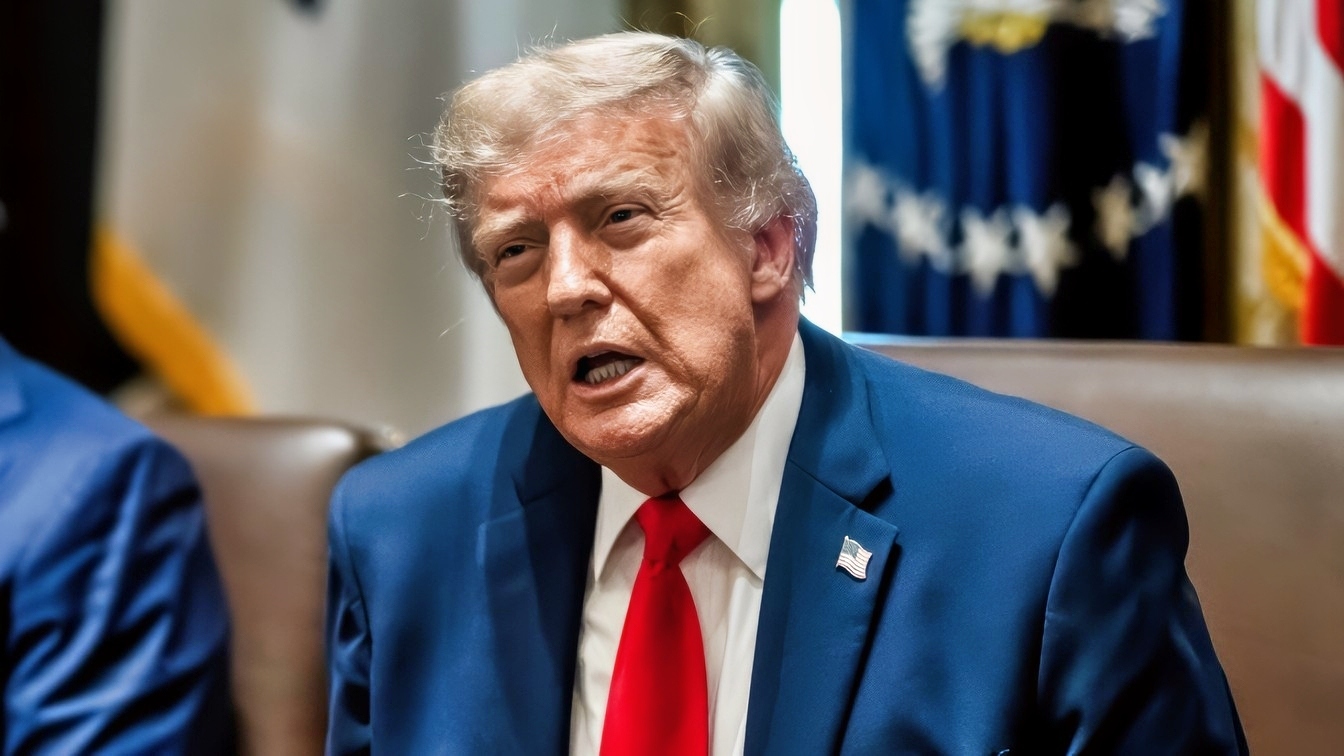
The United States appears poised to resume large-scale combat operations against Iran, strikes that the American president said would be significantly larger than the opening salvoes of Operation Epic Fury, which opened the war in Iran.
Speaking to Axios, President Donald Trump did not put a timeline on when the next phase of fighting could unfold, but he was emphatic about the scale of the potential future course of the war. “I am considering a massive attack. Bigger than ever before,” the president said. “I am close to making a decision. We are all set for it.”
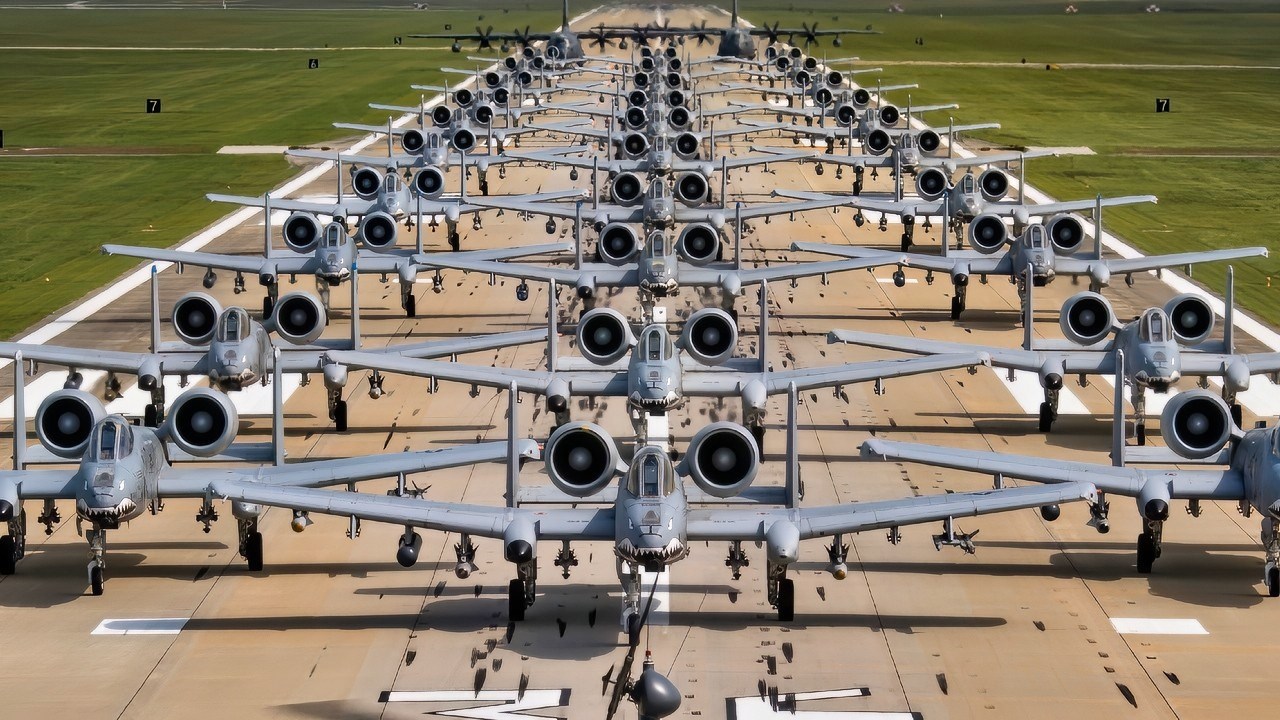
A-10 Warthog Elephant Walk. Image Credit: Creative Commons.
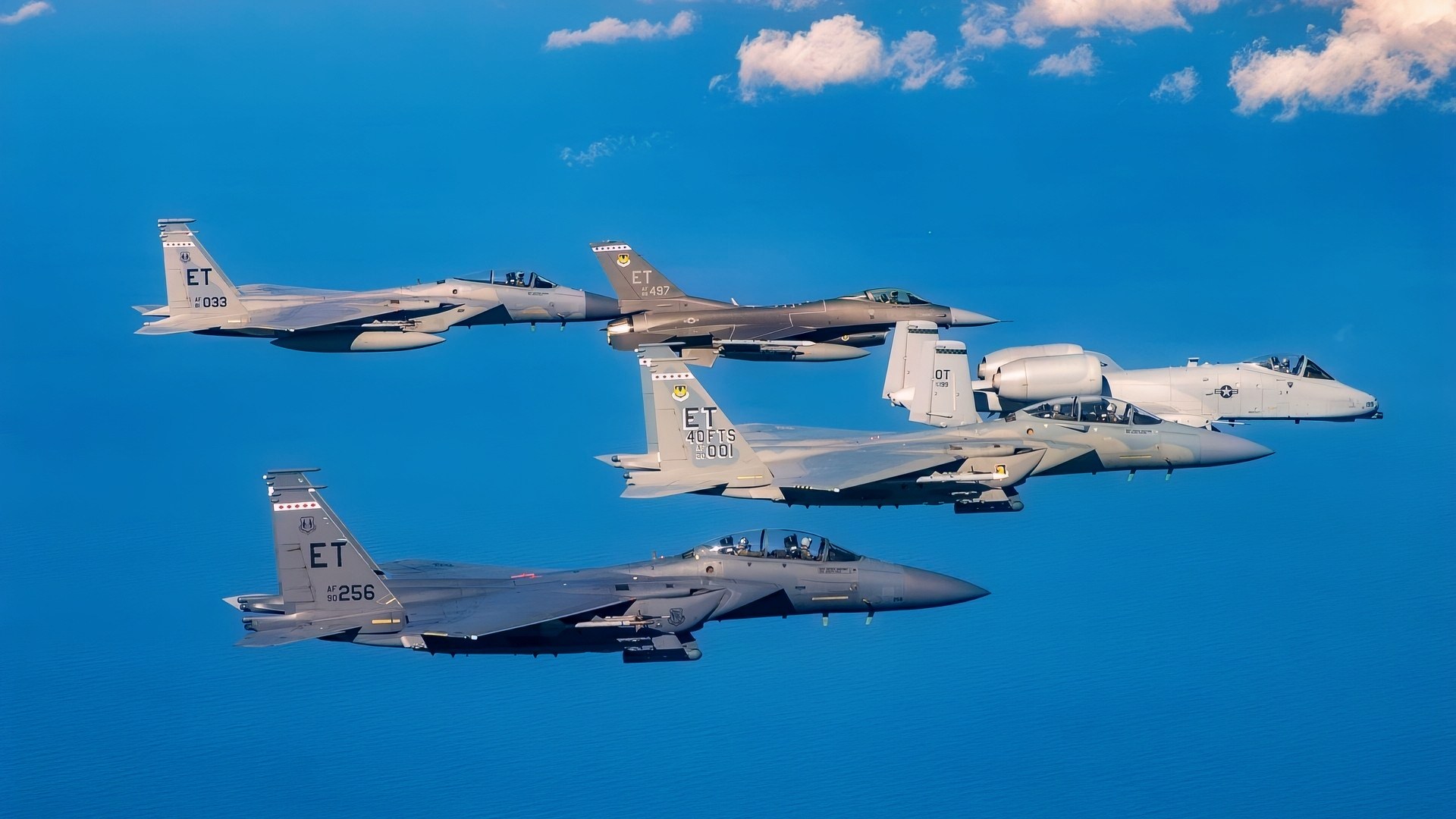
A formation of 4th generation fighter jets from the 40th Flight Test Squadron flies near Eglin Air Force Base, Fla, Jan. 31, 2022. The 40th FLTS executes developmental flight tests for fourth generation fighter aircraft to include the A-10, F-15 and F-16. (U.S. Air Force photo by Tech. Sgt. John Raven)
A Return to Fighting Looms
A return to large-scale fighting would be unpopular, particularly as the United States approaches midterm election season. But the administration is already feeling pressure thanks to a sharp increase in prices at the pump. The Houthis, a Shia terror group backed by Iran but based in Yemen, recently declared they would blockade the Bab al-Mandeb Strait, a narrow waterway that connects the Red Sea and the Gulf of Aden. It has become an important conduit for Saudi oil, and bypasses the Strait of Hormuz entirely.
Millions of barrels of Saudi oil per day have been pumped to Saudi Arabia’s Red Sea port at Yanbu thanks to the East-West pipeline, which bisects the center of the country. But the Houthis recently claimed responsibility for strikes on a pair of Saudi oil tankers in the Red Sea, giving teeth to their blockade threats.
Although the Houthis have mostly stayed out of the war in Iran, their recent moves to join are a boon to their patron, Tehran. Recent reporting from Reuters revealed that just days before the Houthi blockade declaration, Iran flew an Iranian delegation made up of “Islamic Revolutionary Guard Corps (IRGC) commanders, military advisers and missile- and drone-related equipment.” Somewhere between 10 and 21 Iranian advisers are believed to have made the journey.
Anger in the White House
An unofficial truce of sorts has been in place between the Houthis and Saudi Arabia for several years. But the recent attacks by the Houthis on the Saudi ships have all but shredded that tentative peace — and the American president is apparently less than pleased.
Posting to Truth Social after the Houthis struck the pair of Saudi tankers, the president was clear in his opinion of the situation. “A year ago the United States of America attacked, very powerfully, the Houthis, for their interference with commerce and trade, by shooting at ships. Since that time, and during our conflict with Iran, they have acted very responsibly. Unfortunately, now they are starting up again, shooting at two Saudi Arabian ships last night,” the president emphasized.
“Please let this TRUTH serve to represent that if they do this again,” the president also said, “the U.S. will hold Iran responsible, in that the Houthis are a Surrogate and/or Proxy of Iran, and major military punishment will be inflicted upon Iran and, of course, the Houthis, themselves, who I am very disappointed with in that they have, until now, acted very professionally and smart.”
A War Widening on Several Fronts
In the Persian Gulf, the United States Navy’s mission is to blockade Iran’s ports there, in effect stoppering the outflow of Iranian energy to the wider world. The current administration has been quick to assure maritime shipping insurance companies as well as cargo firms that passage is safe. It has been a hard sell, however. And with potentially a second naval front in the Red Sea opening, the U.S. Navy may find itself stretched somewhat thin.
The Fighting Continues
In a social media post on X, formerly known as Twitter, United States Central Command expanded on details from the recent strikes in Iran, which has entered its second week since the memorandum of understanding was ripped to shreds by this more recent round of fighting.
“CENTCOM targeted Iranian military command centers, drone storage facilities, communication networks, coastal surveillance sites, and maritime capabilities to further diminish the threat Iran poses to civilian mariners and commercial vessels transiting the Strait of Hormuz,” Central Command wrote.
“The international waterway remains open for transit despite recent attacks from Iran’s Islamic Revolutionary Guard Corps. Commercial vessels continue to freely navigate the strait with U.S. military support,” Central Command said, adding that “more than 50,000 U.S. service members are currently operating across the Middle East.”
About the Author: Caleb Larson
Caleb Larson is an American multiformat journalist based in Berlin, Germany. His work covers the intersection of conflict and society, focusing on American foreign policy and European security. He has reported from Germany, Russia, and the United States. Most recently, he covered the war in Ukraine, reporting extensively on the war’s shifting battle lines from Donbas and writing on the war’s civilian and humanitarian toll. Previously, he worked as a Defense Reporter for POLITICO Europe. You can follow his latest work on X.


