


Three tankers loaded with Saudi crude for China and India turned around in the Red Sea on Tuesday and headed north toward Suez rather than sail past the Yemeni coast.
Nobody fired at them. One was the Xin Long Yang, a very large crude carrier holding about two million barrels, which had left Yanbu a day earlier, stopped short of the Yemeni border, and reversed. The Rodos and the Amazon made the same call.
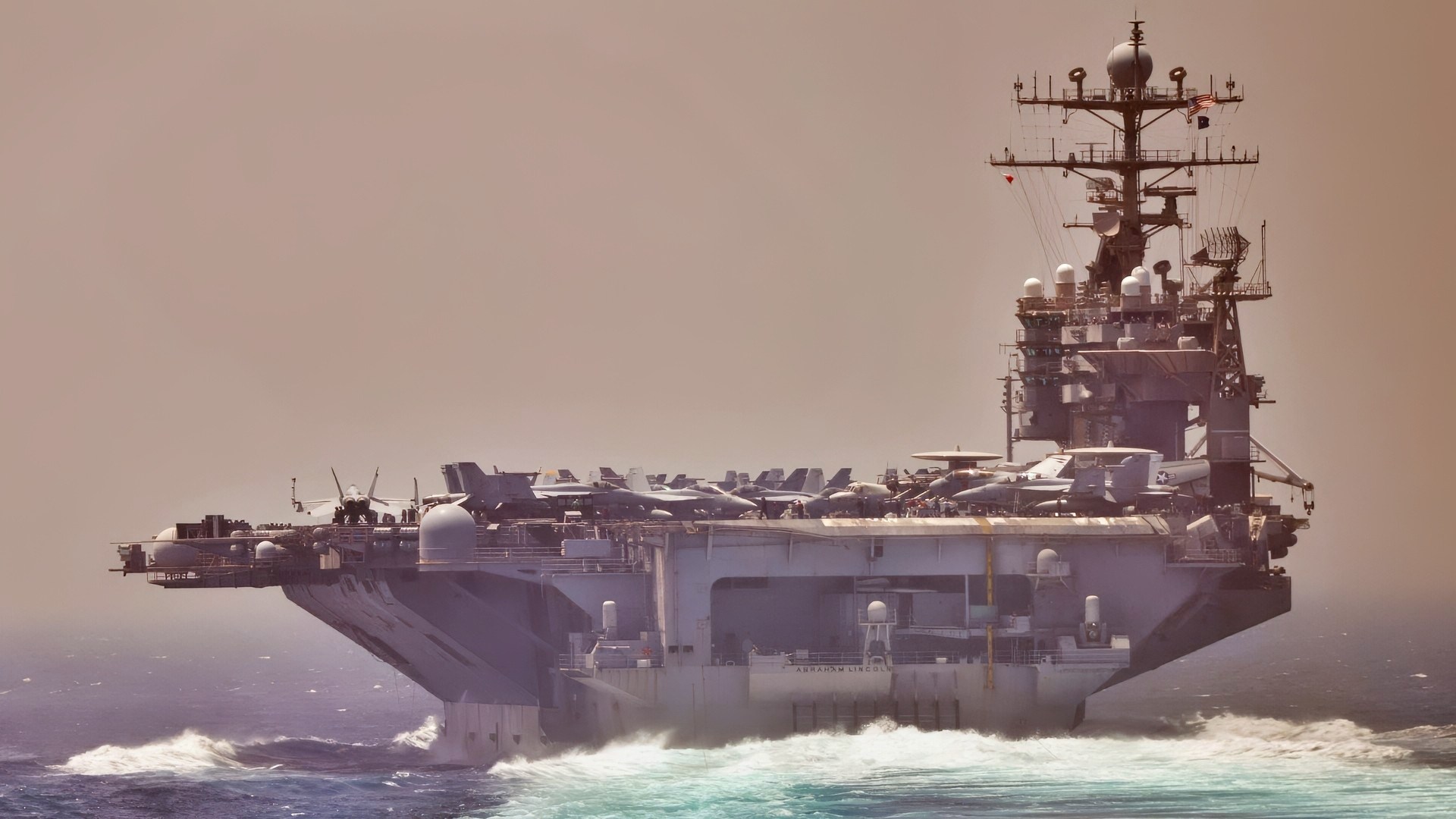
STRAIT OF HORMUZ (May 1, 2012) The aircraft carrier USS Abraham Lincoln (CVN 72), left, and the guided-missile cruiser USS Cape St. George (CG 71) transit the Strait of Hormuz. Abraham Lincoln and Cape St. George are deployed to the U.S. 5th Fleet area of responsibility conducting maritime security operations, theater security cooperation efforts and support missions as part of Operation Enduring Freedom. (U.S. Navy photo by Mass Communication Specialist 3rd Class Alex R. Forster/Released)
What happened to those ships is the most revealing development in Saudi energy security since Hormuz closed in February, and it happened without a shot.
The obvious question is whether American firepower can pry both waterways back open with magazines drawn down hard since February.
It is the wrong place to start. The magazines are the easier of the two problems, and the harder one has less to do with Yemen than with what Saudi Arabia built to escape Iran in the first place.
The Bypass and Its Blind Spot
Petroline carries crude from the Eastern Province to Yanbu on the Red Sea. It was built during the Iran-Iraq war for the contingency that arrived on February 28, when American and Israeli strikes killed Ali Khamenei and Tehran shut the Strait of Hormuz.
By late March, Aramco had the line running at seven million barrels a day, a record for a system whose historical capacity was five.
Two million of that can feed west coast refineries. The rest is available for export, though terminal and tanker constraints mean fewer actually load.
That is a real achievement, and one reason crude prices have stayed short of catastrophic.
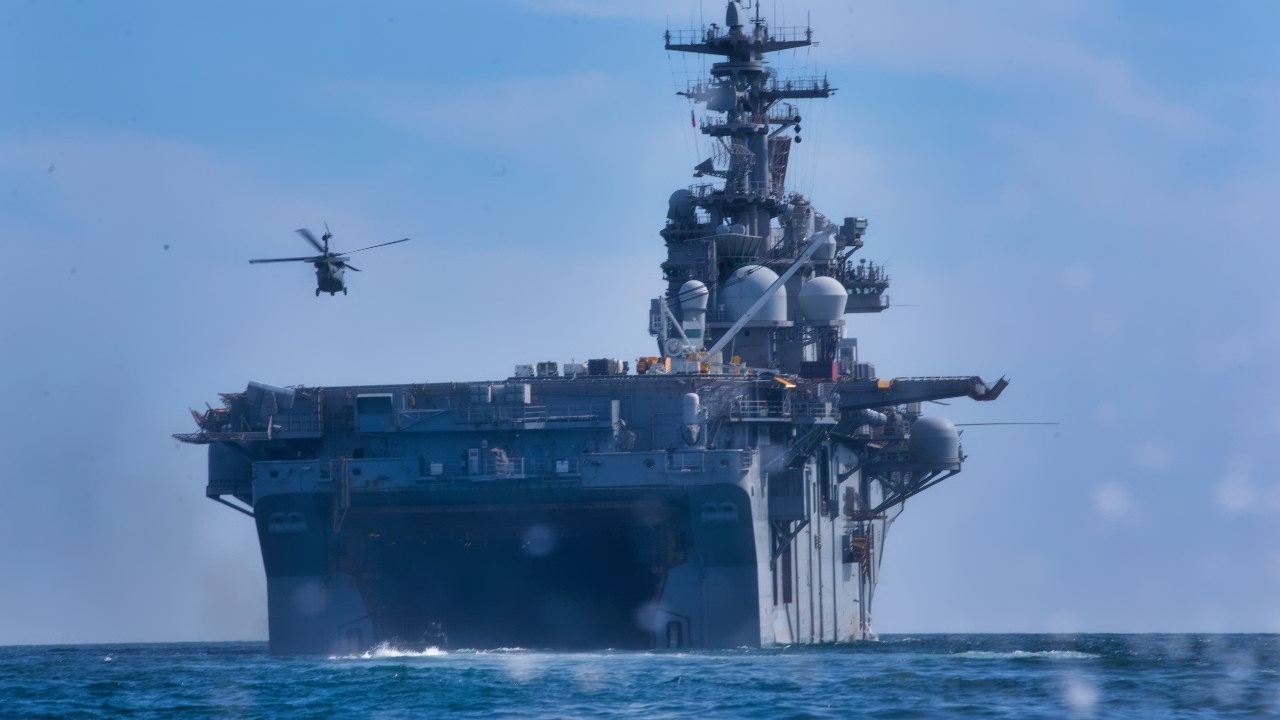
U.S. Marines with Bravo Company, 2d Assault Amphibious Battalion, 2d Marine Division approach the USS Wasp (LHD 1) in assault amphibious vehicles off of Onslow Beach during a three-day ship-to-shore exercise on Camp Lejeune, N.C., June 27, 2020. During the exercise, the Marines conducted amphibious maneuvers and dynamic ship-to-shore operations with the USS Wasp (LHD 1). (U.S. Marine Corps photo by Lance Cpl. Jacqueline Parsons)
It is also insurance written against a threat that has since changed shape.
Saudi Arabia has moved over 4.5 million barrels a day of crude and fuel out of Yanbu since April, and Kpler data put roughly 70 percent of it on ships bound for Asia.
Cargo for European buyers turns north through Suez and avoids the southern chokepoint.
Cargo for China, India, Japan, and South Korea goes the other way, hugging a coastline held by a movement that spent 2023 and 2024 showing what it can do to merchant shipping.
Most of what the bypass carries is bound for Asia, and the leg to Asia is the part it cannot protect.
Suez remains available and economically punishing. Reaching an Asian refinery without passing Yemen means the canal, the Mediterranean, then around the Cape of Good Hope, which adds weeks.
A fully laden VLCC cannot transit Suez without lightering first.
This is why the three U-turns say more than they appear to. The ships did not go home.
They committed to a routing that costs a month, which tells you what their operators concluded about the odds of a safe southern passage.
The Houthis, then, do not need to close Bab el-Mandeb, and probably cannot. Clarksons said as much on Tuesday, noting that a real blockade would take resources the group does not have.
Monday’s declaration was never a description of capability. It was a message aimed at underwriters, and it landed within a day, with war risk assessments for Saudi ports repriced before anything was fired.
The Insurers Get a Vote
Buried in the way Washington talks about freedom of navigation is a category error this episode drags into the open. A navy asks whether it can escort a ship through a waterway.
A shipowner asks a different set of questions, involving underwriters, charterers, crew unions, and whether the vessel gets marked for future attention because of where it once loaded.
The Houthi email to shipping companies warned that vessels calling at Saudi ports might be targeted “in any location,” which turns a chokepoint problem into a permanent liability attached to the hull.
You can escort a tanker out of the Red Sea. You cannot escort it for the rest of its working life.
Washington is not without tools.
It can underwrite war-risk cover, share intelligence, and keep escorts on station, and has done all three before. What it cannot do is convince a Chinese charterer that the escorts will still be there in three years.
What the Last Campaign Bought
Asked about the Houthi threat in the Oval Office on Tuesday, Trump gave an answer closer to a boast than a commitment: “If something like that happens, we’ll take care of it. We’ve done that with the Houthis before.”
We have done it before, and the ledger deserves reading. That campaign ran 52 days, involved more than 1,100 strikes, cost over a billion dollars, and took two carrier strike groups.
A month in, the Houthis were still downing American drones and firing on U.S. warships.
The deal Trump announced in May and called a capitulation was narrower: the Houthis agreed to stop attacking American ships.
When the Magic Seas and the Eternity C went down that July, nothing had been breached, because the arrangement had never covered them.
Set that against what the inventory must now cover. Officials tell Reuters that many of the systems a Yemen campaign would require are already committed against Iran, where the United States is also blockading Iranian ports.
One put it flatly: “We’re pretty busy already.” Warships have stayed on station past normal rotation, first in the Caribbean, now here.
A destroyer shifted south is one fewer near the approaches to Hormuz, and cells emptied off Yemen get reloaded somewhere other than where they are needed.
Two Straits, One Problem
Hormuz has not gone quiet. Iran spent the spring turning the strait into something like a toll operation, with vetting, clearances and routing instructions issued to vessels seeking passage.
The June arrangement came apart in July after Tehran struck three commercial ships, and transit has not recovered.
What Iran cannot close by itself it can make expensive, and it now has a partner doing the same work at the other end of the peninsula.
Riyadh and Washington planned around these two waterways as separate files. Petroline exists because the Saudis thought about Hormuz seriously and early.
Nobody thought as carefully about what happens when the alternative route runs past an Iran-aligned movement holding the other exit.
Tehran and the Houthis now treat the pair as a single system, and the weaker party makes that connection at almost no cost while the stronger would have to spend enormous resources to sever it.
Riyadh is reportedly weighing an expansion of Petroline by another two million barrels a day, possibly opening it to other Gulf producers, which would move still more oil toward a terminal whose problem was never the pipeline.
Which leaves the alliance question nobody in Washington seems eager to raise.
The barrels at risk south of Yanbu are Asian barrels.
Chinese, Indian, Japanese, and South Korean refiners hold the largest commercial stake in that corridor staying usable, while the military burden of keeping it that way would almost certainly fall principally on the United States.
Saudi Arabia, for its part, has not requested American help.
Both facts point to the same uncomfortable arrangement, in which Washington is likely to be expected to underwrite a shipping lane whose principal beneficiaries include a peer competitor.
The test is not whether the Navy can walk a convoy through Bab el-Mandeb next month. It is what an underwriter quotes on the Yanbu-to-Ningbo run after the carriers rotate out, and whether anyone in Beijing or New Delhi is willing to pay for an answer they like better.
About the Author: Dr. Andrew Latham
Andrew Latham is a professor of international relations and political theory at Macalester College in Saint Paul, MN. You can follow him on X: @aakatham.


steven l
July 22, 2026 at 9:50 pm
A matter of time before the Houthis see the consequences.