


Iran Warns the War Will Spread Across the Region if U.S. Strikes Resume: Iran’s army says the conflict will widen geographically if the United States resumes airstrikes after a two-night pause. Army spokesman Mohammad Akraminia said Washington should expect a broader response if it returns to military operations, according to an AFP report carried by The Times of Israel.
Akraminia said the confrontation had already expanded from the Persian Gulf to Bab el-Mandeb and described U.S. bases in Jordan and Gulf states as part of Iran’s current operational reach. The warning came before Israeli Prime Minister Benjamin Netanyahu’s planned visit to Washington, where Iran is expected to be a central subject.
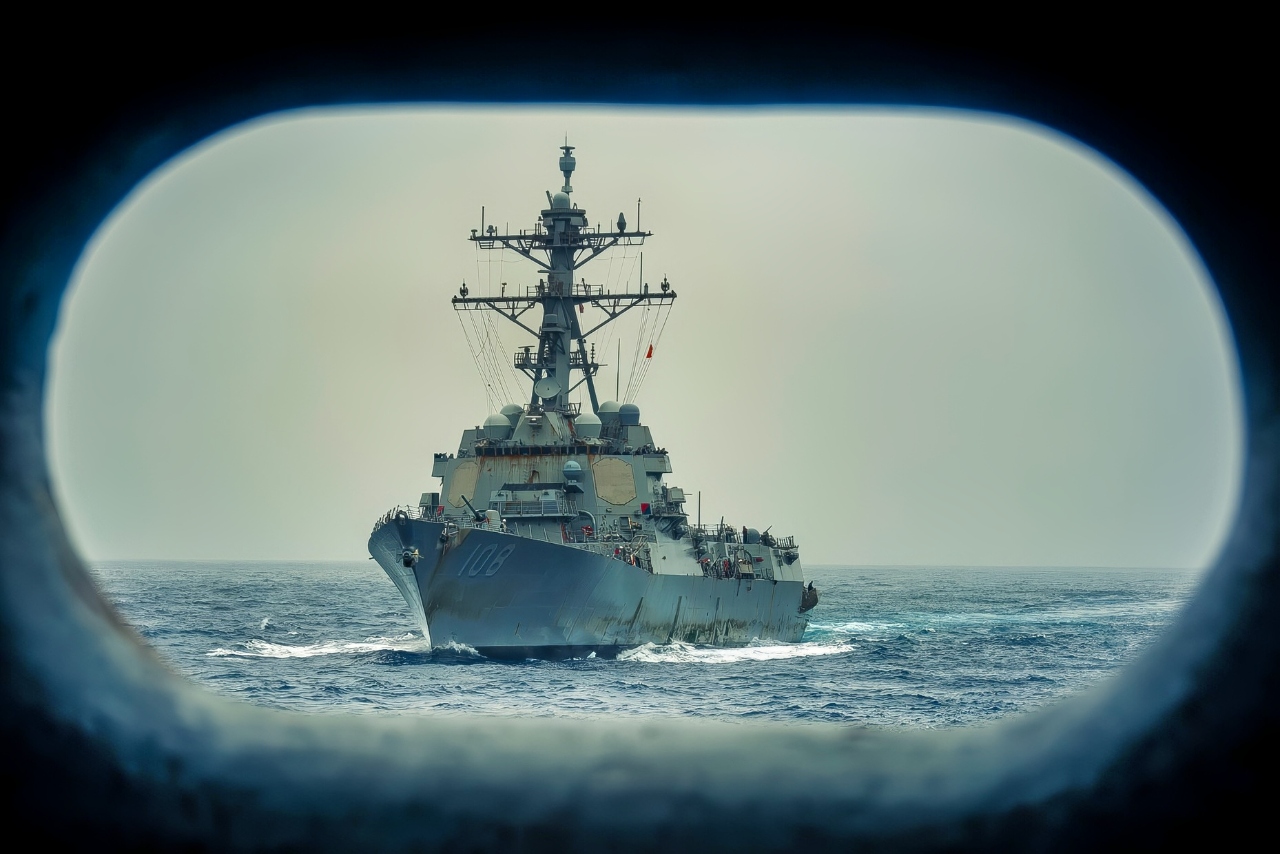
(August 1, 2025) The Arleigh Burke-class guided-missile destroyer USS Wayne E. Meyer (DDG 108) approaches the Nimitz-class aircraft carrier USS Nimitz (CVN 68) for a replenishment-at-sea in the U.S. Central Command area of responsibility. (Official U.S. Navy photo)
The United States paused attacks after 13 consecutive nights of strikes. U.S. Ambassador to the United Nations Mike Waltz said President Donald Trump was giving negotiations “a little bit of room,” according to Reuters.
Iran says it has also suspended retaliatory attacks on U.S. interests and neighboring states while the American pause holds. Its army described the halt as conditional. The Associated Press reported progress in technical talks between Iran and Oman over commercial passage through the Strait of Hormuz, although no permanent arrangement has been announced.
Iran Is Defining the Next Escalation Map
The Iranian statement is a deterrent warning rather than a detailed operations order. It tells Washington that another round of bombing may bring attacks beyond Iran’s immediate coastline. Previous retaliation reached American-linked sites in Bahrain, Kuwait and Jordan, creating a regional base-defense problem rather than a conflict confined to Iranian territory.
The Red Sea has already become part of that pressure. Yemen’s Houthis attacked Saudi oil infrastructure and threatened shipping near Bab el-Mandeb while Saudi-backed forces struck Houthi positions. Reuters documented the weekend expansion, which also included Iran’s accusation that Ukraine struck an Iranian vessel in the Caspian Sea.
Iran can also keep pressure on Hormuz through mines, drones, mobile missiles and small maritime units. That approach has created commercial uncertainty without requiring a complete closure. American airpower can damage launchers and radars, but it cannot remove the geography that gives Tehran leverage.
Netanyahu’s Washington Visit Is the Next Pressure Point
Netanyahu is expected to argue that the pause should not allow Iran to rebuild military and nuclear infrastructure. Trump must decide whether to preserve the diplomatic opening or authorize another round of strikes. U.S. officials previously described recent attacks as preparation for potentially larger military steps.
Another attack could weaken Iranian capabilities and still leave the central political dispute unresolved. Washington wants open, nondiscriminatory shipping through Hormuz. Tehran wants formal recognition of its role in administering the waterway and relief from the U.S. blockade. The available American exit options all require a concession, a larger military commitment, or continued economic disruption.
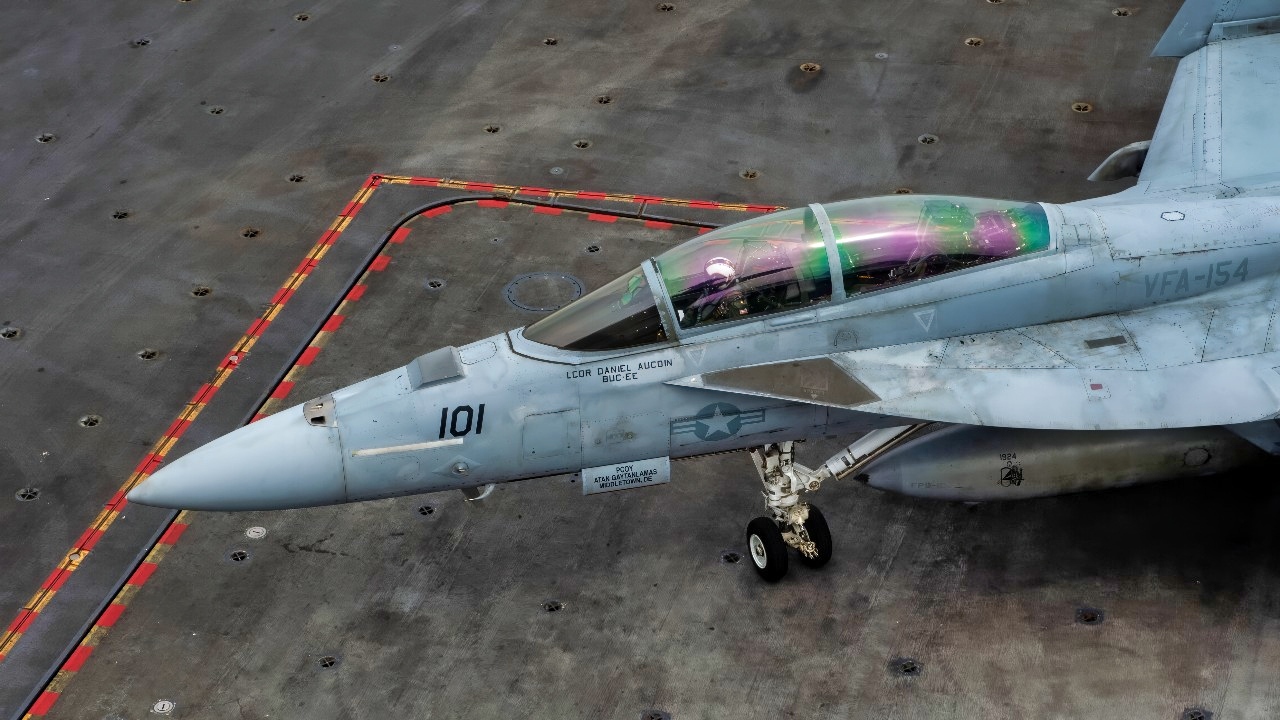
(July 24, 2025) – A U.S. Navy F/A-18F Super Hornet, assigned to the “Black Knights” of Strike Fighter Squadron (VFA) 154, transits the flight deck of Nimitz-class aircraft carrier USS Theodore Roosevelt (CVN 71), July 24, 2025. Theodore Roosevelt, flagship of Carrier Strike Group (CSG) 9, is underway conducting exercises to bolster strike group readiness and capability in the U.S. 3rd Fleet area of operations. (U.S. Navy photo by Mass Communication Specialist Seaman Maddix Almeyda)
The Pause Is Conditional, Not a Peace Agreement
The U.S. naval blockade remains active even while airstrikes are suspended. CENTCOM formally resumed blockade enforcement on July 14, and American forces continue monitoring traffic to and from Iranian ports.
Iran’s public position is now close to an attack-for-attack arrangement: if U.S. strikes remain paused, Tehran says its retaliation will remain paused. That formula can create temporary quiet without resolving the nuclear issue, Hormuz rules or the blockade. It also leaves Trump without a clean way to convert the pause into an ending.
The next move is likely to come after Netanyahu’s meeting with Trump and Omani mediation. If Washington keeps its aircraft on the ground, the technical talks have room to continue.
If the bombing restarts, Iran seems to have already identified the bases, shipping routes and regional partners it may use to widen the response.
About the Author: Harry J. Kazianis
Harry J. Kazianis (@Grecianformula) was the former Senior Director of National Security Affairs at the Center for the National Interest (CFTNI), a foreign policy think tank founded by Richard Nixon based in Washington, DC. Harry has over a decade of experience in think tanks and national security publishing. His ideas have been published in the NY Times, The Washington Post, The Wall Street Journal, CNN, and many other outlets worldwide. He has held positions at CSIS, the Heritage Foundation, the University of Nottingham, and several other institutions related to national security research and studies. He is the former Executive Editor of the National Interest and the Diplomat. He holds a Master’s degree focusing on international affairs from Harvard University.


