


Ukraine Has A New Deep-Strike Priority Targets List, Says Zelensky: Ukraine has now “updated the list of priority targets” to be attacked by long-range strikes against Russia. Ukrainian President Volodymyr Zelenskiy made the announcement after a 26 July meeting with his military leaders.
This news comes after a week of consecutive – almost daily – attacks by Ukraine on warehouses and logistics hubs owned by Wildberries, an analog to the US-founded Amazon.com. The company is Russia’s largest online retailer with over 18 million regular customers and one million sellers. It owns 52 percent of the Russian E-commerce market.
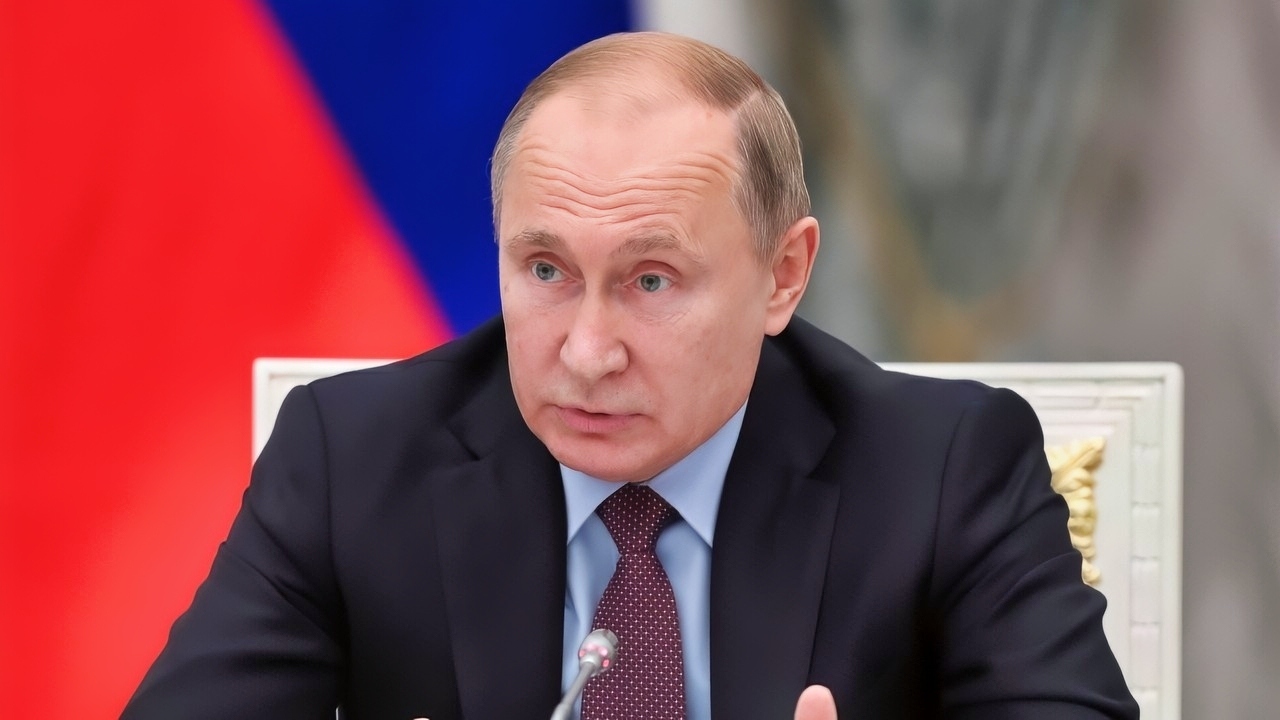
Putin Meeting with Duma 2018 Creative Commons Photo
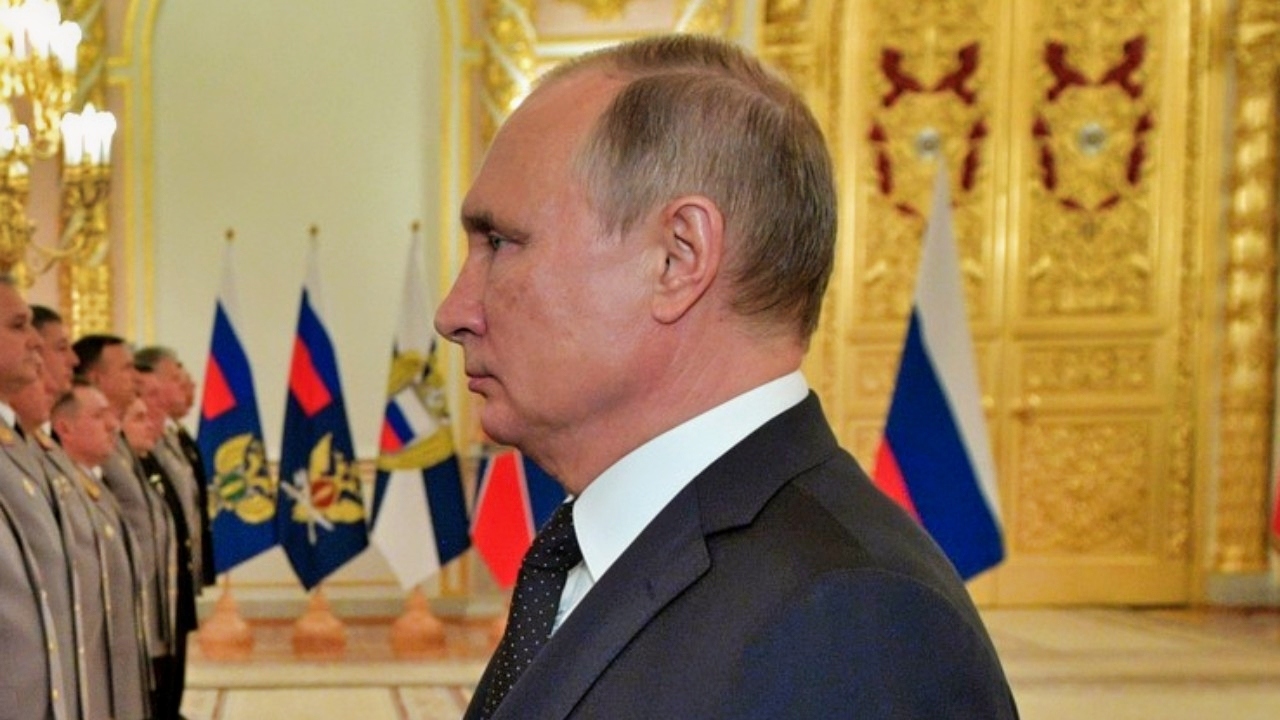
Putin with Military in 2018 Creative Commons Image
The directed campaign against the Wildberries facilities is a decidedly new development in Ukraine’s drone campaign. Up to this point, the main targets of the Ukrainian drone forces had been Russian oil refineries and other major facilities in the oil extraction and transport industry, high-value military installations, and energy infrastructure.
The attacks on Wildberries have had a three-fold effect. One is that it has raised the ire of the average Russian citizen. Already highly agitated over the fuel shortages that have created endless queues at petrol stations in dozens of regions of Russia, now people in many cities and towns that were heavily dependent on Wildberries for items used in their daily lives will have to look for other retailers in areas where they may not even exist.
Robert Brovdi, the commander of Ukraine’s drone force, said the strikes were aimed at destroying the “illusion of a comfortable, well-fed peacetime life enjoyed by the obedient biomass of an aggressor country”.
Military-Use Items
The second reason for hitting the online giant’s warehouses is that they were being used by Russia’s military to supply soldiers with much of their combat equipment like body armor, helmets, boots, and night-vision gear.
But the warehouses also supplied Russia’s drone production centers and weapons industry with radios, navigation systems and electric motors. Microchips contained in electronic products housed in these massive buildings – chips that Russia cannot purchase due to sanctions – can be removed and harvested for use in Moscow’s drone or missile factories.
Zelensky’s meeting with the top military leadership on 26 July was focused on Ukraine’s “long-range sanctions” against Russia. These are attacks deep within Russia and occupied territories in which domestically-produced Ukrainian weapons are used and not US or European strike systems.
With advances in drone technology, Ukraine is now able to hit targets at distances of over 1,800 miles, Zelensky said. Drone programs being developed now are working to extend operating capabilities even further – specifically to more than three times this range.
“The strategic depth that has long been a Russian advantage is now becoming a particular problem for the political and military leadership of Russia, as the majority of Russian air defense systems are concentrated around Moscow, government residences, the Crimean Bridge, and St. Petersburg,” Zelensky said. Stripping air defense units to move their hardware to guard the palaces of Putin and his other former-KGB cronies has left numerous militarily significant sites undefended.
Moscow has concentrated what there is left of air defense systems that are still available for discretionary use on a number of high-value targets. But even when these sites have been provided with what should be adequate air defense assets, Ukrainian drones have still managed to penetrate them.
Meanwhile, other key and strategically significant facilities scattered across Russia’s vast territory are left vulnerable to Kyiv’s longer-reaching weapons.
“We have already demonstrated that Ukrainian drones can reach targets in the Ural region, Siberia, and other areas far from Moscow,” Zelenskiy said.
According to the president, since the beginning of the year Ukraine has already carried out over a thousand combat missions as part of this deep-strike strategy. This statement follows months of reports of increasingly successful strikes on Russian oil assets, weapons factories, shadow fleet vessels, and logistics hubs – all in the first half of 2026.
And High-Ranking Kremlin Officials
Zelensky also highlighted again that the ultimate goal of these attacks on Russia is to pressure the Kremlin to return to the negotiating table.
“Today, we agreed to continue our operations and updated the list of priority targets — in accordance with their real impact on Russia and its ability to continue and prolong this war,” Zelensky said.
“The main goal is to further pressure Russia into diplomacy by disrupting the production of weapons components, causing oil and other economic losses, and bringing this war back to a ‘familiar ground.’
But in the end, the third reason for wiping out the Wildberries site is also the most important. That is, pressure is being put on people in Putin’s inner circle. As it turns out, the one-time owner of the company, Tatiana Kim, now holds almost no assets of the company. It is instead now almost entirely owned by the Head of the Presidential Administration, Anton Vaino, and one of his deputies, Aleksei Gromov.
These two receive almost all the profits of the company, which is now slowly being ground down to nothing. So, one of the biggest gravy trains in the history of high-ranking Russian officials using their position to put money in their own pockets is therefore about to come to an end.
It is that pressure on the Kremlin that makes the most difference in the end. “The loyalty of the people close to Putin – as with any other dictator – will start to fall off sharply once the price of that loyalty is felt in their own pocketbooks,” said a long-time Russia political-military affairs analyst in Moscow who spoke with National Security Journal. “Squeeze the Wildberries long and hard enough – burn down enough of these warehouses – and these are the kind of people who start trying to make this war come to an end,” he said.
About the Author: Reuben F. Johnson
Reuben F. Johnson has thirty-six years of experience analyzing and reporting on foreign weapons systems, defense technologies, and international arms export policy. Johnson is the Director of Research at the Casimir Pulaski Foundation. He is also a survivor of the Russian invasion of Ukraine in February 2022. He worked for years in the American defense industry as a foreign technology analyst and later as a consultant for the U.S. Department of Defense, the Departments of the Navy and Air Force, and the governments of the United Kingdom and Australia. In 2022-2023, he won two awards in a row for his defense reporting. He holds a bachelor’s degree from DePauw University and a master’s degree from Miami University in Ohio, specializing in Soviet and Russian studies. He lives in Warsaw.


