

Hundreds of Ukrainian Drones Target Moscow in One of the Largest Raids of the War – Multiple targets inside Western Russia have fallen victim to the most recent powerful Ukrainian drone swarm attack. This attack, utilizing hundreds of unmanned systems launched from Ukraine, disrupted civilian air traffic, damaged critical infrastructure, and showcased how far the Ukrainians were willing to go in their war with Russia.
Russian officials said the assault lasted roughly 10 hours.

President Donald J. Trump and President Zelenskyy in the Oval Office. White House Photo.

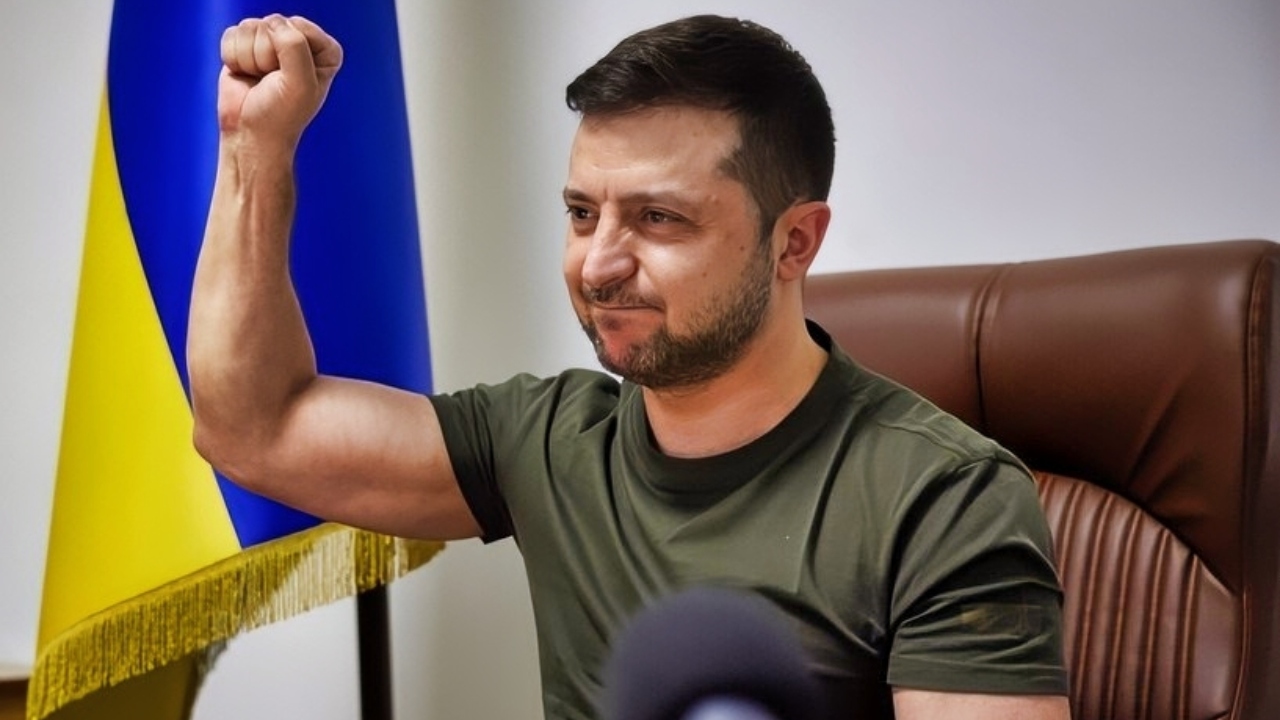
Ukraine President Zelensky 2026 Creative Commons Photo
Moscow Mayor Sergei Sobyanin claimed that more than 390 Ukrainian drones were launched toward the Moscow region during that period, with Russian air defenses intercepting 81 as they approached the capital. Russia’s Defense Ministry later reported a lower nationwide figure, saying 356 drones had been shot down across more than a dozen regions, highlighting the way in which the two sides continue shaping the information space in the war.
Moscow Itself Was Hit
While Moscow itself avoided major damage, it was again targeted–highlighting how nowhere is safe in this war. Several communities in the surrounding Moscow region did experience the effects of the attacks, though.
Russia’s aviation authority imposed flight restrictions at Vnukovo, Domodedovo, and Zhkovsky airports during the height of the raid before gradually restoring operations later Tuesday morning (once officials determined the threat had passed).
Setting Industry On Fire
Fires broke out at multiple key industrial and logistics facilities in the Moscow region.
Indeed, these logistics and industrial centers appear to be of great interest to the Ukrainians, as Ukrainian drone operators repeatedly target such places.
A blaze had erupted at a tire recycling facility in Chekhov after falling debris from drones ignited the site.
Meanwhile, the Kyiv Post, a Ukrainian publication, claims that a warehouse in Koledino caught fire during the attacks. The warehouse is located near a major Wildberries distribution center, though the online retailer said its own logistics operations continued normally despite the nearby incident.
Videos circulating on Russian social media showed smoke rising from several locations around the Moscow region as emergency services responded to the fires.
Part of Ukraine’s Long-Range Campaign
Since last year, Kyiv has increasingly employed domestically produced drones to target military facilities, logistics hubs, and infrastructure, reflecting Ukraine’s strategic effort to weaken Russia’s frontline operations and resilience.
Russian authorities accuse the Ukrainians of waging a campaign of terror against the Russian people.
Growing Reach
The scale of the overnight operation highlights Ukraine’s growing capacity and willingness to strike deep within Russia using long-range drones, signaling an escalation that demands close attention from policymakers and analysts.
Moscow understands that the Ukrainians are attempting to elevate the costs of war and put those costs squarely on the Russian civilian population, believing that the Russians will lose their will to continue fighting.
However, it must be stressed that there is no real indication that the Russian Armed Forces are at all buckling in the face of these devastating attacks on Russian civilian infrastructure.
The operation last night conducted against Russia by Ukrainian drone swarms shows how significant unmanned systems have become in modern warfare–and how no country can truly defend against these tiny terrors in the night sky.
About the Author: Brandon J. Weichert
Brandon J. Weichert is Senior National Security Editor. He also manages The Weichert Brief on Substack. Weichert also hosts “National Security Talk” on Rumble. He is the author of four bestselling national security books, the most recent of which is A Disaster of Our Own Making: How the West Lost Ukraine (Encounter Books). Follow him via Twitter/X @WeTheBrandon.


