
Oman Proposes New Governance for Strait of Hormuz; Iran Says No: Oman has presented Iran with a new proposal backed by Gulf nations that would reshape how commercial vessels transit the Strait of Hormuz. The deal appears to be a compromise designed to reduce tensions following months of conflict while avoiding one of the biggest sticking points in negotiations between Washington and Tehran.
The proposal, which was reportedly presented to Iranian officials this week, would establish a regional framework for managing the strait under which it could make voluntary contributions toward navigation and search-and-rescue operations. The idea would mean that Tehran could receive payment for providing specific services for vessels transiting the strait, but it would also allow U.S. President Donald Trump to keep his promise that passage through the strait would be “permanently toll-free.”
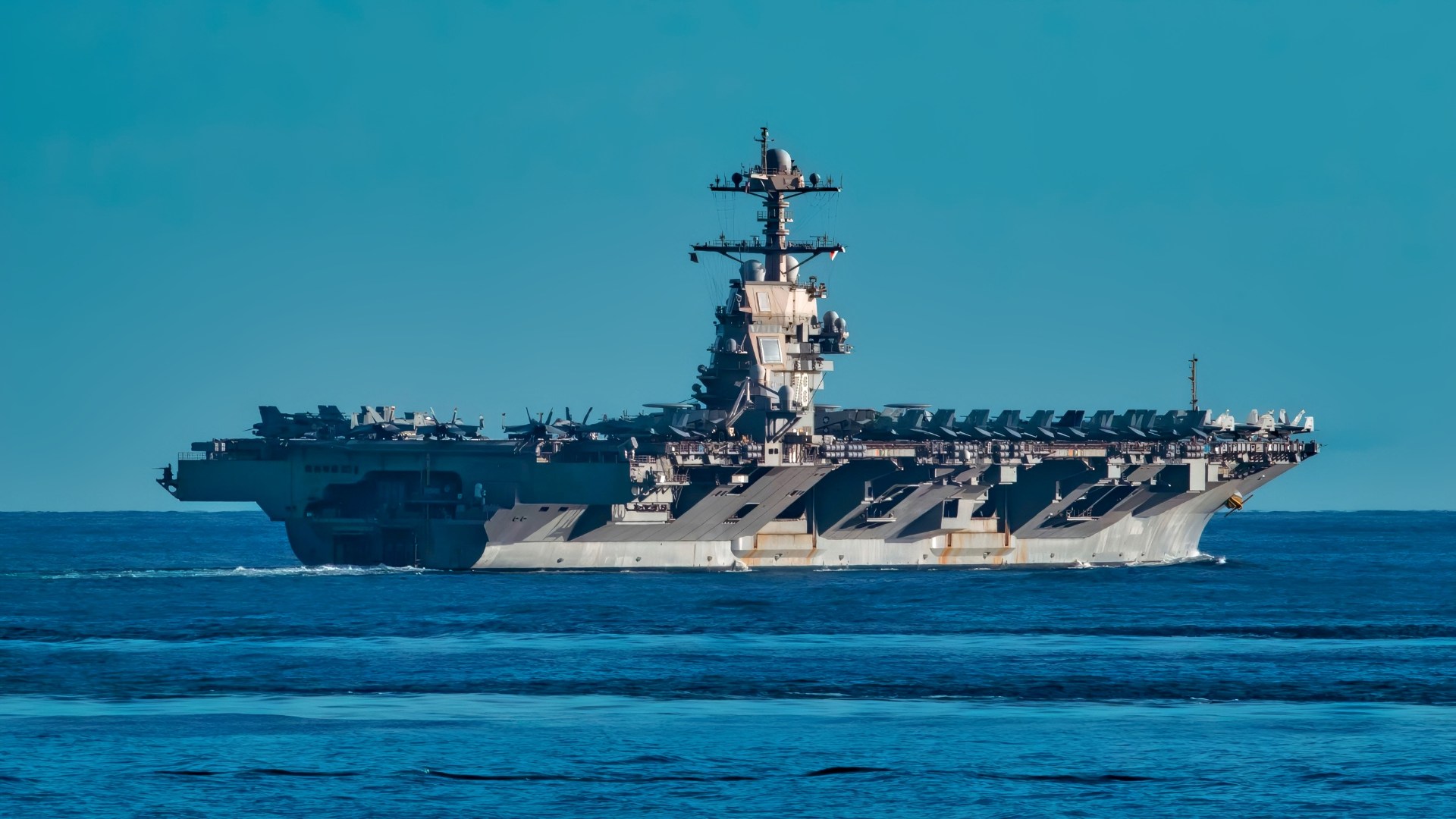
The Arleigh Burke-class guided-missile destroyer USS Winston S. Churchill (DDG 81) sails alongside the world’s largest aircraft carrier the USS Gerald R. Ford (CVN 78), Sep. 24, 2025. Winston S. Churchill, as part of Carrier Strike Group 12, is on a scheduled deployment in the U.S. 6th Fleet area of operation to support the warfighting effectiveness, lethality and readiness of U.S. Naval Forces, Europe-Africa, and defend U.S. Allied and partner interest in the region. (U.S. Navy photo by Mass Communication Specialist Seaman Hector Rodriguez)
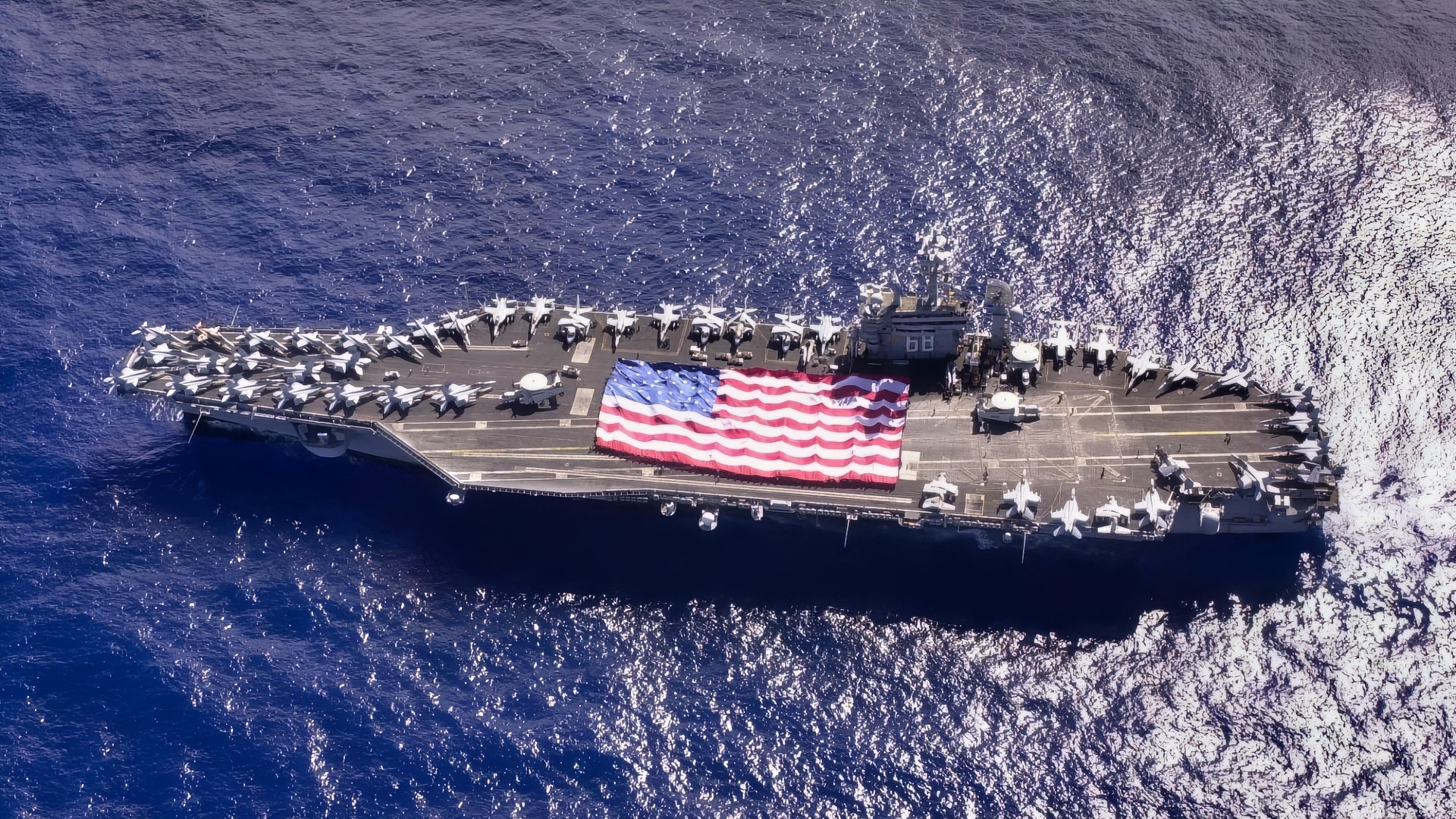
Pacific Ocean (Nov. 3, 2003) — USS Nimitz (CVN 68) crewmembers participate in a flag unfurling rehearsal with the help of family and friends on the ship’s flight deck during a Tiger Cruise. The Nimitz Carrier Strike Group and embarked Carrier Air Wing Eleven (CVW-11) are en route to San Diego, Calif., following an eight-month deployment to the Arabian Gulf in support of Operation Iraqi Freedom. U.S. Navy photo by Photographer’s Mate 3rd Class Elizabeth Thompson. (RELEASED)
Reports of the initiative come only days after the United States concluded a 13-night bombing campaign against Iran and warned that strikes would continue if diplomacy fails. Comments from the Iranian Deputy Foreign Minister on Tuesday, however, have cast doubt on the viability of Oman’s plans.
Oman’s Compromise
Citing a Gulf source and a Western diplomat briefed on the negotiations, Reuters reported on Tuesday, July 28, that Oman has presented Iran with a proposal that was discussed as Gulf Cooperation Council foreign ministers held an emergency video conference.
The proposal would allow ships using the strategic waterway to make voluntary financial contributions toward navigation and safety services rather than paying mandatory transit fees.
The Western diplomat who spoke to Reuters compared the proposed system to a voluntary carbon tax for flights, whereby anyone purchasing a flight ticket can choose to pay an additional fee to offset their emissions.
Washington and Tehran Still Disagree
Despite promising signs that Gulf nations are working to break the deadlock between Tehran and Washington, the two sides remain far apart on critical issues. President Trump said this week that Washington is engaged in “good talks” with Tehran but repeated that the United States was still prepared to launch further military operations if the negotiations fail.
Speaking during an interview before meeting Israeli Prime Minister Benjamin Netanyahu at the White House, Trump renewed his threat to strike Iran’s heavily fortified Pickaxe Mountain nuclear facility if an agreement is not reached.
“We took out their nuclear sites, and we’ll have to take out Pickaxe if we don’t make a deal. If we don’t make a deal, we’ll take it out very easily,” Trump said.
Iran continues to reject Trump’s characterization of the negotiations, too, insisting that it has not sought new talks with Washington. Tehran also continues to oppose Washington’s vision for the Strait of Hormuz, with Deputy Foreign Minister Kazem Gharibabadi arguing that Iran should jointly manage shipping through the waterway with Oman rather than simply returning to the pre-war setup.
Iran Still Wants More
Speaking to Iranian state television on Tuesday, Gharibabadi cast doubt on Oman’s most recent proposals, describing how the regime had rejected an Omani proposal to divide responsibility for the shipping lanes equally between the two countries, arguing that the arrangement would not adequately address Iran’s security concerns following the recent U.S. and Israeli strikes on the country.
Gharibabadi instead proposed a new, temporary arrangement under which one direction of commercial traffic would pass entirely through Iran’s territorial waters. Under the proposal, part of the opposite shipping lane would also be routed through Iranian waters. The Iranian official also warned that if Muscat rejected the proposal, the Strait of Hormuz would remain closed. He also said that Iran has never formally recognized the southern route established along Oman’s coast.
A major point of contention remains that the Traffic Separation Scheme (TSS), used for commercial shipping operations before the outbreak of the war, was unsatisfactory because the central pathway was mostly within Omani waters.
“This is for national security and not bullying because when the TSS was for 60 years in Omani waters, we didn’t say anything,” Gharibabadi said.
Shipping Traffic Remains Stalled
While all sides struggle to reach an agreement over the Strait of Hormuz, commercial shipping in the region remains severely disrupted. The recent pause in fighting has not resulted in a significant uptick in movement, with ship-tracking data from Kpler showing that only six commodity-carrying vessels transited the waterway on Monday, including an Iranian-linked Suezmax tanker and a very large crude carrier (VLCC) operating with its transponder switched off.
That slowdown is also being compounded by ongoing disruption farther south in the Bab el-Mandeb Strait, where Houthi strikes and threats against Saudi-linked commercial shipping have forced many operators to reroute or delay voyages.
Continued disruption in the region is now risking a major global oil supply crisis that cannot logistically be averted without movement being restored in the straits.
About the Author: Jack Buckby
Jack Buckby is a British researcher and analyst specializing in defense and national security, based in New York. His work focuses on military capability, procurement, and strategic competition, producing and editing analysis for policy and defense audiences. He brings extensive editorial experience, with a career output spanning over 1,000 articles at 19FortyFive and National Security Journal, and has previously authored books and papers on extremism and deradicalization.


