
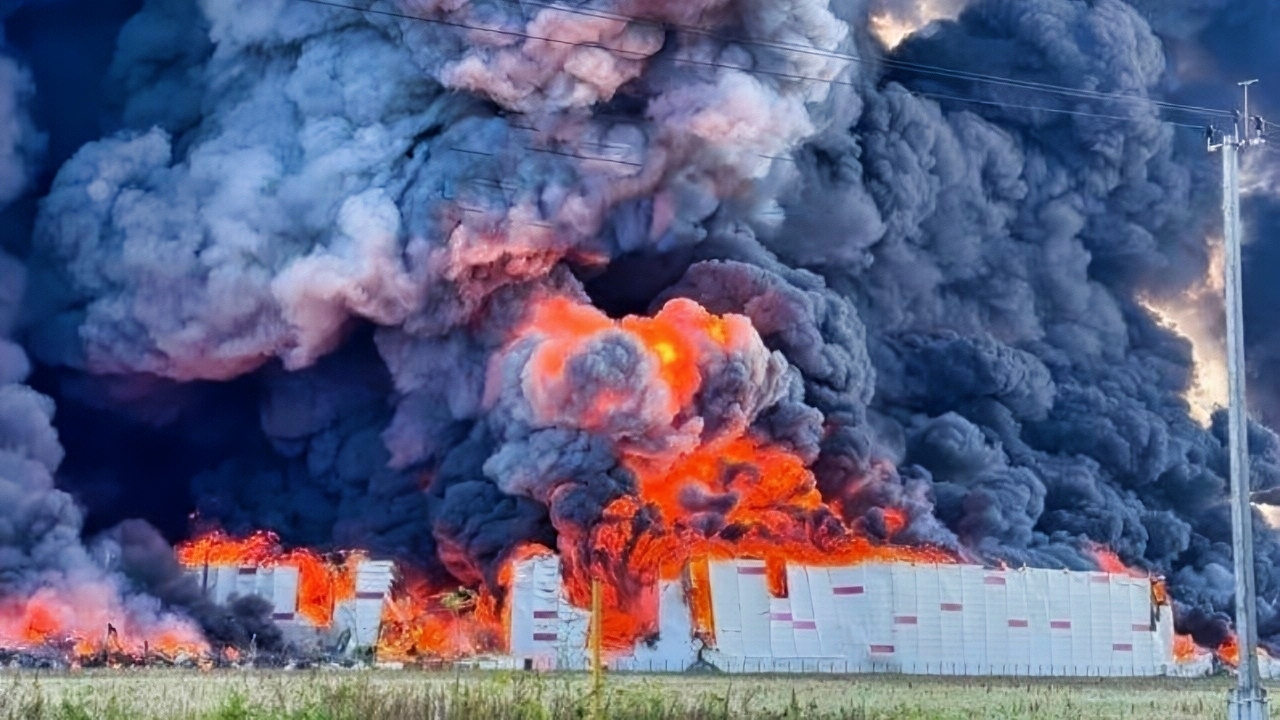
Russia’s Amazon Is Under Immense Pressure: Ukraine’s long-range strike campaign has now gone well beyond Russia’s biggest and most critical oil refineries and is now targeting other pillars of the country’s national economy. Today, Ukrainian long-range drones and missiles are targeting logistics facilities belonging to Wildberries, Russia’s largest online marketplace, disrupting a business that processes more than 20 million orders every day and supports hundreds of thousands of sellers and merchants.
The attacks have forced Wildberries to begin reorganizing its logistics network and have even prompted discussions in Moscow over providing government support to keep the business running after major strikes have taken out a significant chunk of the company’s distribution and storage capacity. But why is Ukraine targeting Russia’s version of Amazon, and what has the damage been so far?
Putin in 2021 Creative Commons Photo
Putin Back in 2018 Creative Commons Image
Meet Russia’s Answer to Amazon
Wildberries was founded in 2004 by former English teacher Tatyana Kim, who launched the company from her apartment in Moscow while on maternity leave. The company began as an online clothing retailer and has since grown into Russia’s largest e-commerce platform, often compared to Amazon in terms of the scale of its operations.
Today, Wildberries sells everything from books and electronics to household goods, pharmaceuticals, and airline tickets. The company does everything and has expanded beyond Russia into Armenia, Kazakhstan, Belarus, and beyond. Kim’s fortune has grown to more than $8 billion, making her one of the wealthiest entrepreneurs in Russia — and indeed the world.
The company’s logistics network is as important as its storefront, operating more than 200 logistics centers and over 87,000 pickup locations. Customers in almost every part of Russia can receive deliveries within days, meaning the company is relied on by regular citizens across the country. Ukraine’s strikes, therefore, are disrupting everyday life for millions of people – and the impact could soon get worse.
More Than A Retailer
Ukraine is targeting Wildberries for two reasons. First, Kyiv alleges that the company’s logistics network has been used to distribute components for Russian drones and other military hardware used in the war in Ukraine. Second, the company’s logistics network is part of the backbone of Russia’s modern economy, and even minor disruptions in this network can cascade into broader problems, ensuring the country feels the effects of the war started by President Vladimir Putin.
Wildberries occupies a position in the Russian economy that few companies can match. The platform is understood to handle more than half of all online orders placed in Russia, accounting for around 30% of the country’s online retail sales by value.
The company also says that more than one million merchants now sell through the marketplace, ranging from multinational brands to sole traders operating from their own homes. The wider Wildberries ecosystem is also understood to support more than four million jobs.
The role Wildberries plays in the Russian economy has grown even further since the full-scale invasion of Ukraine. As Western retailers withdrew from the Russian market amid sanctions, Wildberries became one of the primary channels through which Russian consumers purchased replacement goods sourced from China, Turkey, the United Arab Emirates, or elsewhere.
In 2025, Russia’s e-commerce sector generated approximately 11.5 trillion rubles in sales, accounting for around one-fifth of the country’s total retail revenue. Wildberries, therefore, is a prime target for Ukraine, as it seeks to inflict as much economic pain as possible—and with accusations that the company’s logistics network has been used for military purposes, Kyiv has a legitimate reason to launch strikes.
The Damage Is Already Extensive
On July 18, Ukrainian drones struck Wildberries facilities in Kotovsk, in the Tambov region, and Elektrostal, east of Moscow. Seven workers were reportedly killed in the Kotovsk strike, while another person later died from injuries sustained during the Elektrostal strike. The attacks also wounded dozens more, and left the Elektrostal distribution hub burning for three more days before the fire was finally extinguished.
Further attacks on Wildberries facilities followed in Krasnodar, Stavropol, Ryazan, St. Petersburg, the Leningrad region, Crimea, Penza, Sarapul, Volgograd, and Tatarstan. By July 31, at least 16 Wildberries sites had reportedly been hit by Ukrainian drones and missiles. The damage is now estimated to represent as much as 12% of the company’s total warehouse space, with merchandise losses reaching as much as $3 billion.
Ukraine’s War Of Economic Pressure
While Ukrainian President Volodymyr Zelenskyy has said that the first warehouses struck were used to supply sanctioned components for Russian drones and navigation equipment, the strikes have exacted much higher costs by destroying privately owned inventory and disrupting deliveries, forcing merchants to seek compensation and thereby putting additional pressure on Russian banks and the government.
Zelenskyy is raising the costs of sustaining the war in Russia in many ways, and as Wildberries now seeks to defend its sites, Russia may be forced to deploy yet more air defense systems around critical logistics networks even as its forces attempt to make gains on the front lines and regional authorities seek to defend critical infrastructure from long-range attacks.
About the Author: Jack Buckby
Jack Buckby is a British researcher and analyst specializing in defense and national security, based in New York. His work focuses on military capability, procurement, and strategic competition, producing and editing analysis for policy and defense audiences. He brings extensive editorial experience, with a career output spanning over 1,000 articles at 19FortyFive and National Security Journal, and has previously authored books and papers on extremism and deradicalization.


