

Late on Saturday night, President Donald Trump took to Truth Social and, despite claiming that the U.S. was “locked and loaded” and ready to attack Iran, there was instead an agreement to end the entire war.
In the message, later shared by the White House’s social media accounts, Trump stated that he had been asked, both by Iran and other Middle Eastern countries, to hold off, because the “perimeters of a deal” had been agreed to.

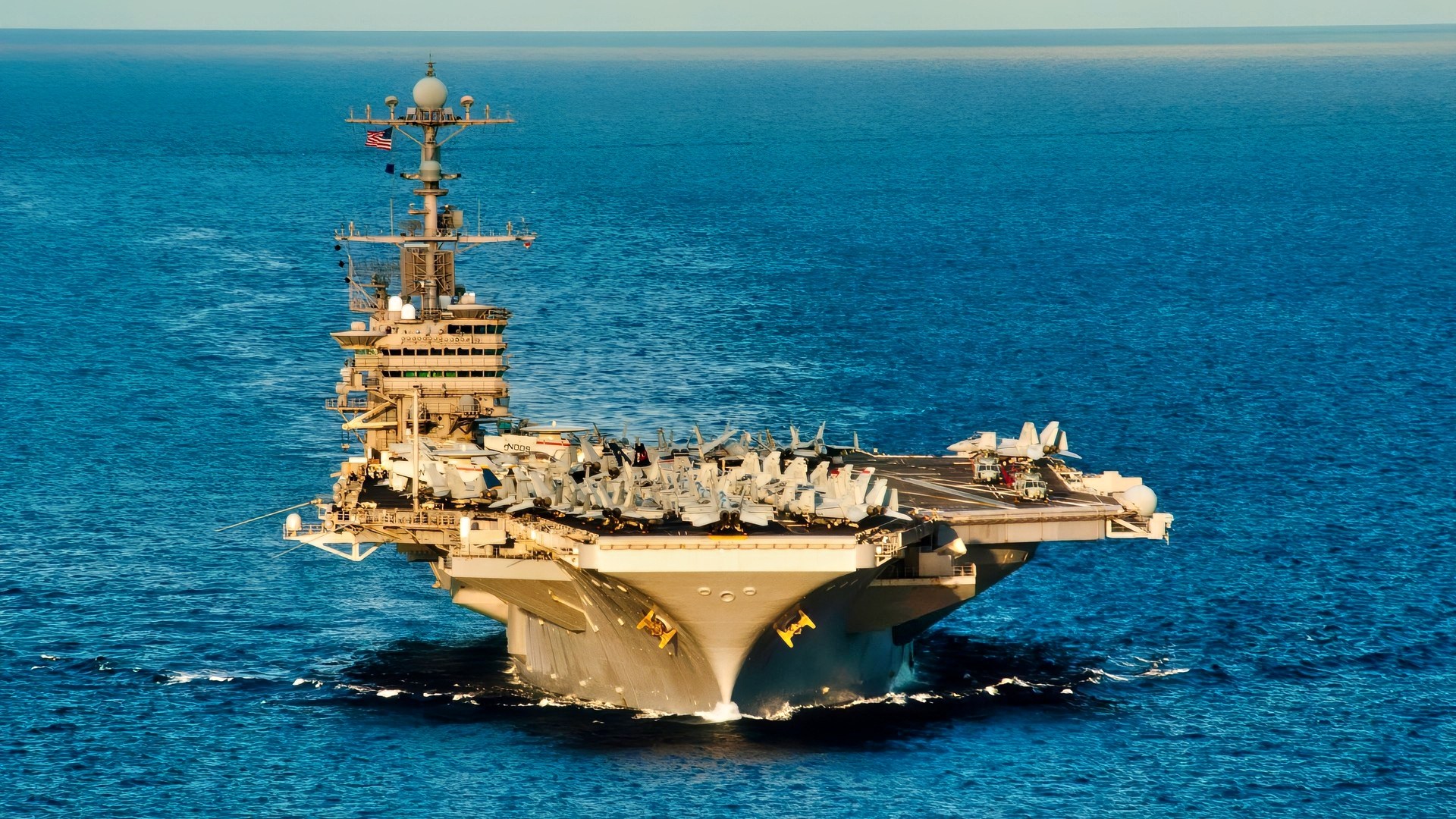
The French Marine Nationale aircraft carrier FS Charles De Gaulle (R91), and the aircraft carrier USS John C. Stennis (CVN 74) are underway in formation in the Red Sea, April 15, 2019. The John C. Stennis Carrier Strike Group is deployed to the U.S. 5th Fleet area of operations in support of naval operations to ensure maritime stability and security in the Central Region, connecting the Mediterranean and the Pacific through the western Indian Ocean and three strategic choke points. (U.S. Navy photo by Mass Communication Specialist Seaman Joshua L. Leonard)
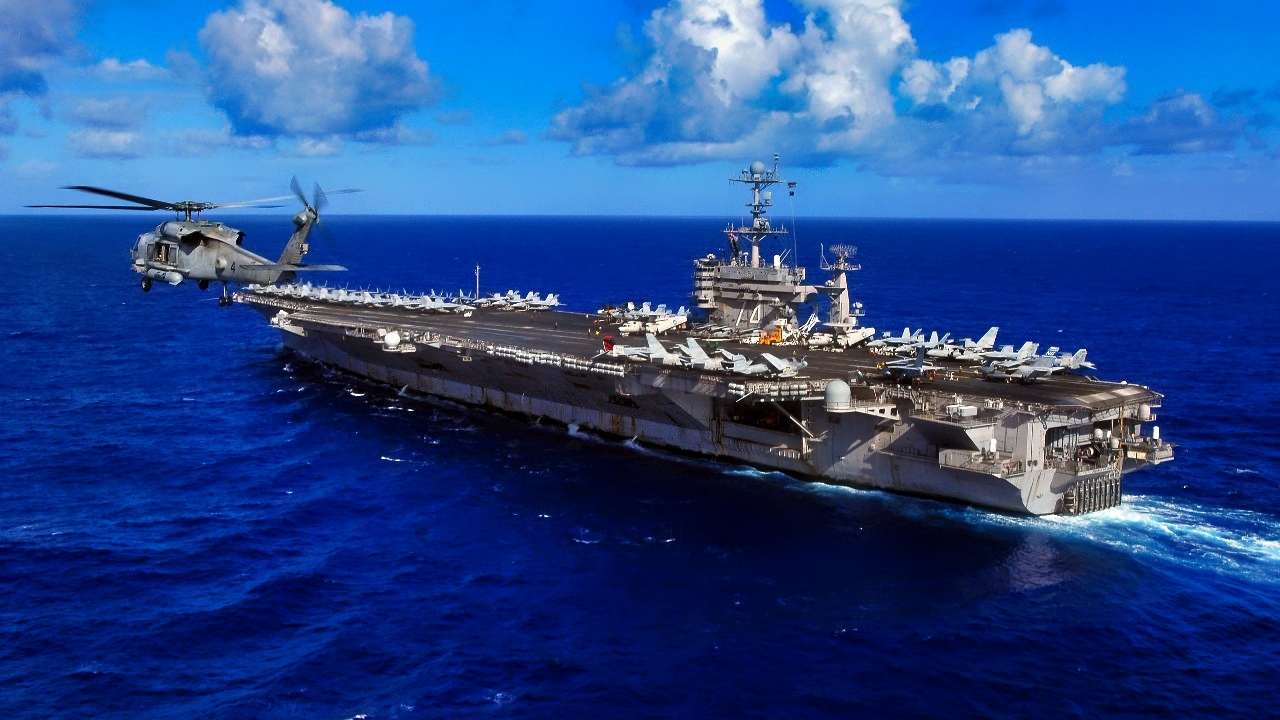
An HH-60H Seahawk, from the “Eightballers” of Helicopter Anti-Submarine Squadron (HS) 8, flies past Nimitz-class aircraft carrier USS John C. Stennis (CVN 74) during flight operations. Stennis is on a scheduled deployment to promote peace, regional cooperation and stability.
And that purported deal includes the opening of the Strait of Hormuz, as well as an end to “Iran’s nuclear threat.” And Trump added that Israel was part of that commitment.
Trump also used the word “perimeters” when he likely meant to say “parameters.”
The question is, is the president telling the truth? Are there really “parameters” (or perimeters) of a deal in place to end the war and open the Strait, both goals that have proved elusive to Trump for the last several months?
It would not be the first time during the Iran conflict that Trump announced a diplomatic breakthrough that turned out to be anything but.
Iran’s Denial
Trump, in the Truth Social post, threatened that the strike that was called off would have been the largest since World War II, implicitly directed at energy infrastructure, and possibly attacking places and in ways not previously struck so far in the war.
After backing down from that strike, Trump also claimed that talks would begin on Monday afternoon. But Iran’s government has not only denied that a deal to end the war is anywhere close, but that direct talks with the U.S. are set to take place at all.
According to CBS News, Iran has denied any plans to hold direct talks with the U.S., although it has confirmed it is holding talks with the Gulf state of Oman to establish a temporary route through the Strait of Hormuz.
The New York Times quoted Esmaeil Baghaei, the Iranian foreign ministry spokesman, as stating that a wider peace deal was “not in the offing for now.” The spokesman said that the talks with Oman are exclusively about a possible new route, and that “the matters relating to Iran and the United States” would be left for “later stages” of the talks.
The Times story added that Qatar is once again prepared to mediate talks, with help from Saudi Arabia and the United Arab Emirates.
It seems highly unlikely that anything resembling a real agreement is in place for Iran to fully open the Strait of Hormuz, much less to put an end to its nuclear ambitions.
“The World’s Achilles’ Heel”
A separate New York Times analysis, published on Monday, stated that the most recent developments show that Iran has realized it has the upper hand in the situation and, by exercising control over the Strait of Hormuz, has discovered “the world’s Achilles heel.”
Amir al-Mousawi, a former Iranian diplomat who has recently met with Iran’s negotiators, told the Times that a series of messages were exchanged over the weekend between the U.S. and Iran through Pakistani and Qatari officials.
Per that account, Trump had threatened to attack power plants and other civilian infrastructure in Iran if the Iranians didn’t agree to return to talks.
Iran refused, al-Mousawi told the newspaper, unless the U.S. agreed to return to the “memorandum of understanding” that brought the war to a temporary halt in mid-June before its collapse.
“We have no problem with war at all, and we are ready for the big confrontation,” al-Mousawi told the Times was Iran’s response.
Sasan Karimi, an Iranian academic and former government official, told the Times that Iran has “spotted a pattern” in how Trump negotiates: He often threatens to “pressurize the situation,” to force greater concessions from the Iranians, but that strategy has proven less effective over time, as the Iranian side has seen through it.
That Times analysis also noted that while Trump’s claims of a return to full talks are overstated, Saudi Crown Prince Mohammed bin Salman and other Mideast allies have been pressuring Trump of late to resume negotiations.
About the Author: Stephen Silver
Stephen Silver is an award-winning journalist, essayist, and film critic, and contributor to the Philadelphia Inquirer, the Jewish Telegraphic Agency, Broad Street Review, and Splice Today. The co-founder of the Philadelphia Film Critics Circle, Stephen lives in suburban Philadelphia with his wife and two sons. For over a decade, Stephen has authored thousands of articles that focus on politics, national security, technology, and the economy. Follow him on X (formerly Twitter) at @StephenSilver, and subscribe to his Substack newsletter.


