

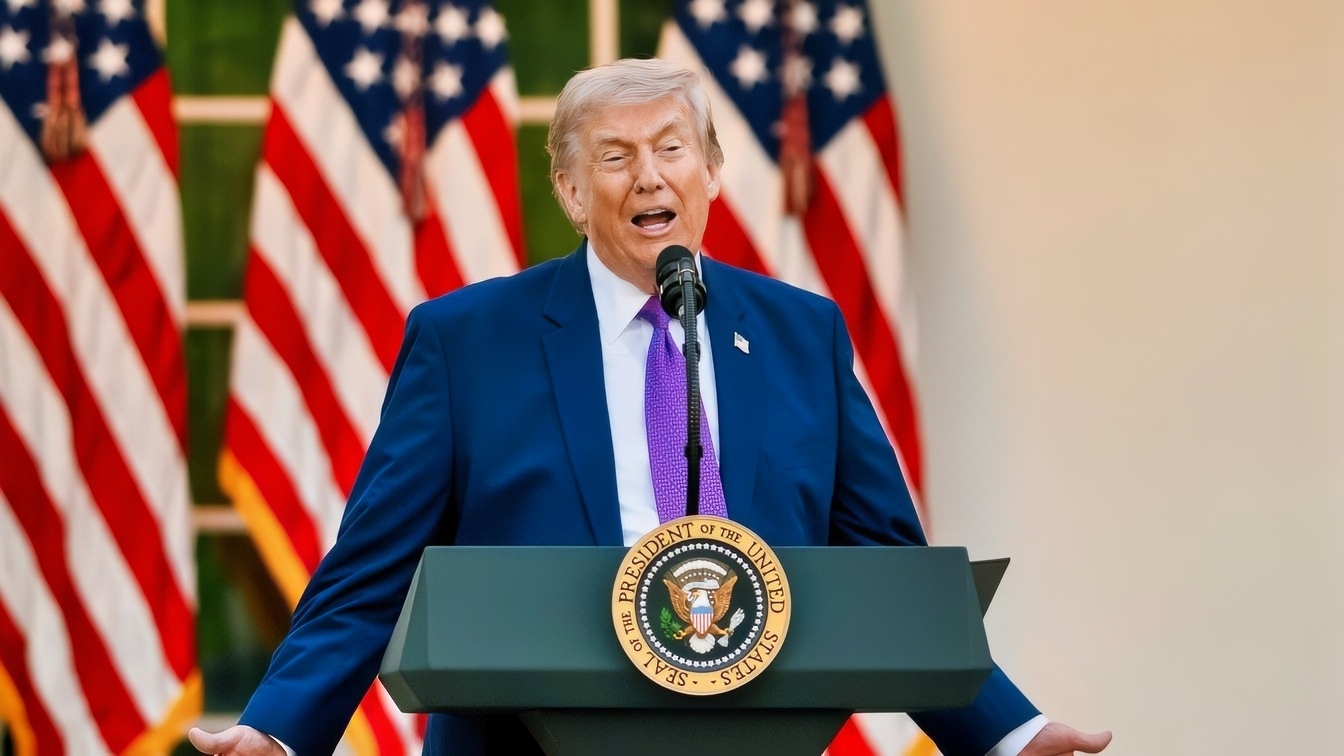
More than a week ago, President Donald Trump, after several days of threatening a major attack on Iran, instead announced that a deal was close to reopening the Strait of Hormuz and bringing the months-long war to a close.
What followed was several days of reports that Iran and Oman had reached a framework and were close to a final deal for a new control structure for the Strait, in which Iran would control incoming traffic, Oman would control outgoing traffic, and each would have their own lane.
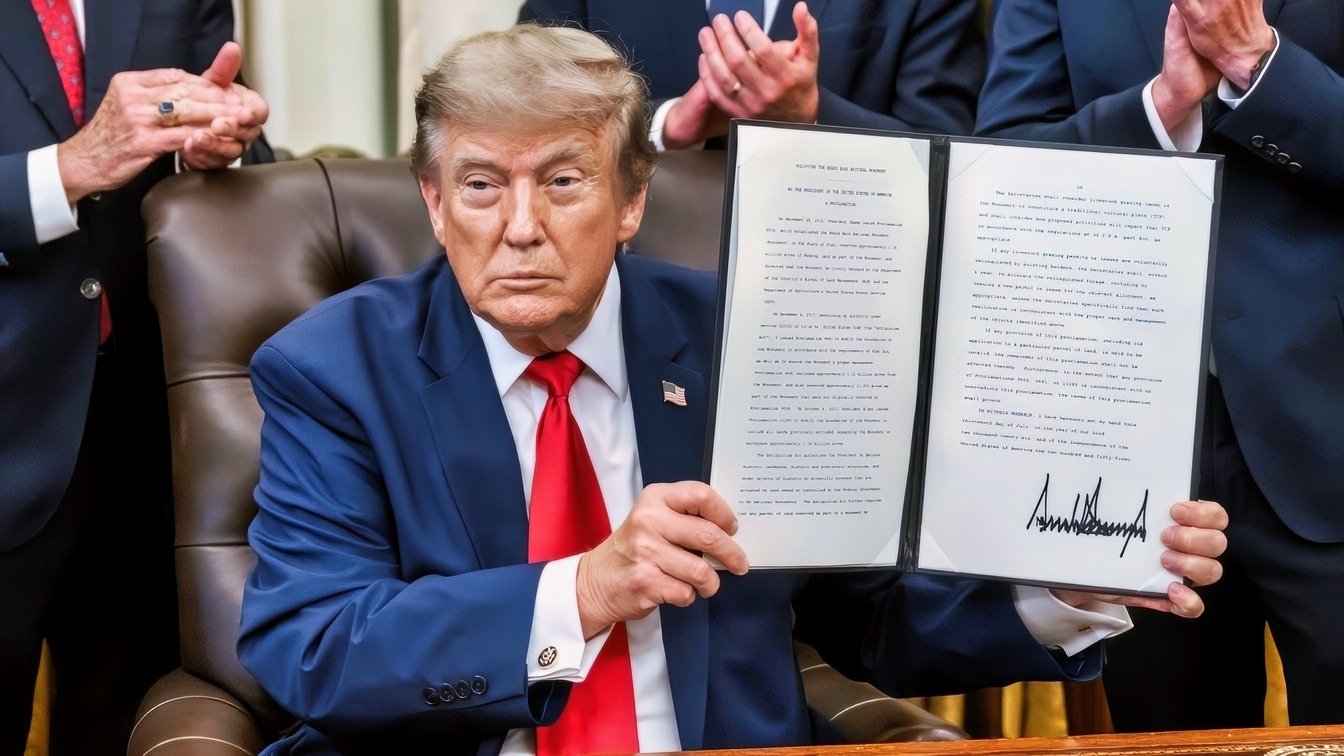
President Donald J. Trump signs executive orders alongside Utah Governor Spencer Cox and members of the Utah congressional delegation in the Oval Office, Monday, July 13, 2026. (Official White House Photo by Molly Riley)
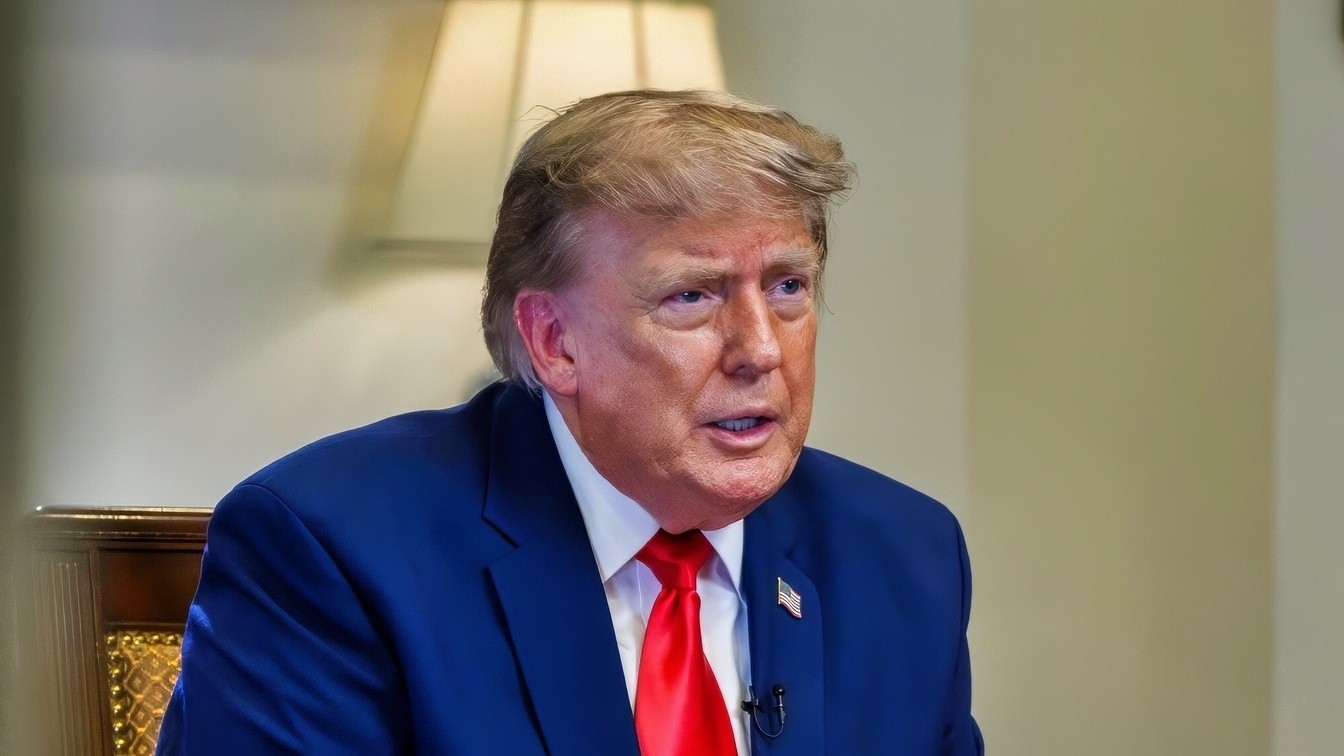
President Donald J. Trump participates in an interview with Trey Yingst, foreign correspondent for Fox New, in the Roosevelt Room of the White House, Tuesday, July 14, 2026. (Official White House Photo by Joyce Boghosian)
By Monday, Iran was clarifying that, should this agreement be reached, it would not constitute a full “reopening” of the Strait, that a full reopening of the Strait of Hormuz was a separate topic for separate talks, and that such a reopening would not happen until the U.S. agreed to a new list of demands.
Per the head of Iran’s Supreme National Security Council, Mohammad Bagher Zolghadr, as cited by Axios, these included lifting the Naval blockade, pulling all military forces from the region of Iran, ending military action against Iran’s allies, and “[N]ever threaten nor insult Iran in any language.” Iran has also called for war reparations, a lifting of sanctions, and a release of frozen funds.
Axios noted that these had all previously been demands by Iran in nuclear negotiations, but are now being put on the table as conditions for reopening the Strait of Hormuz.
However, the Financial Times reported Monday that Mohammad Bagher Zolghadr had stepped down from his position and has been replaced as head of the Supreme National Security Council by Mohsen Rezaei. Rezaei is described by FT as “another veteran commander of the powerful Revolutionary Guards,” and an adviser to Supreme Leader Ayatollah Mojtaba Khamenei. Zolghadr will now serve as a political adviser to the supreme leader.
It’s unclear, according to the FT, what that change will mean for Iran’s posture in the talks, as both Zolghadr and Rezaei are considered “hardliners.” However, it does appear that a change in strategy is being discussed on the American side.
In a new interview over the weekend, President Trump indicated that the U.S. strategy has been adjusted.
“We Are Low-Keying It”
In an interview with Axios’ Barak Ravid on Sunday, Trump indicated that he plans to apply economic pressure to Iran, rather than threatening another new military offensive.
“We are low-keying it,” Iran told Axios in what was described as a brief interview. “We are only semi-negotiating with them. We are just watching Iran with its huge inflation and the fact they have no money.”
He also, Axios said, did not “express any anger or frustration” about Iran not yet finalizing the deal with Oman. The two sides were reportedly close to a deal last Wednesday, with an announcement reported possible as soon as that day, but five days later there has still been no final agreement.
“It will work out. It always works out. It’s like a chess game,” Trump told the outlet.
Axios reported that U.S. officials believe there are “growing disagreements inside the Iranian regime” over how to proceed, with Iranian President Masoud Pezeshkian reportedly worried about the economic conditions and pushing for a deal, while the commander of the Islamic Revolutionary Guard Corps, Ahmad Vahidi, is opposed to any such concessions.
At any rate, it’s unclear if economic pressure alone will work, especially since it’s not as though the U.S. hasn’t been applying it all along, in addition to military pressure, without obtaining any major capitulation from the Iranians.
The Oil Question
Trump went on to tell Axios that Iran has no money to pay its soldiers, while at the same time, U.S. consumers are feeling less pressure, with oil now at $75 a barrel.
However, as of Monday morning, the day after Trump’s interview, Brent crude oil had reached nearly $85 a barrel.
Per GasBuddy’s weekly report, the average gas price in the U.S. dropped 10.7 cents in the last week, to $3.94 per gallon, although that price is still up 9.5 cents from a month prior, and it would likely be presumptuous to say that Americans are no longer concerned about high gas prices.
And Patrick De Haan, head of petroleum analysis for GasBuddy, warned that the relief may not last, as “Iran is pushing back against a reopening of the Strait of Hormuz, and oil prices edged modestly higher in Sunday night trading.”
About the Author: Stephen Siver
Stephen Silver is an award-winning journalist, essayist, and film critic, and contributor to the Philadelphia Inquirer, the Jewish Telegraphic Agency, Broad Street Review, and Splice Today. The co-founder of the Philadelphia Film Critics Circle, Stephen lives in suburban Philadelphia with his wife and two sons. For over a decade, Stephen has authored thousands of articles that focus on politics, national security, technology, and the economy. Follow him on X (formerly Twitter) at @StephenSilver, and subscribe to his Substack newsletter.


