

President Donald Trump has often scrambled traditional notions of who is and isn’t an ally of the United States.
He’s often been more skeptical of NATO than any other U.S. president since the start of the alliance.

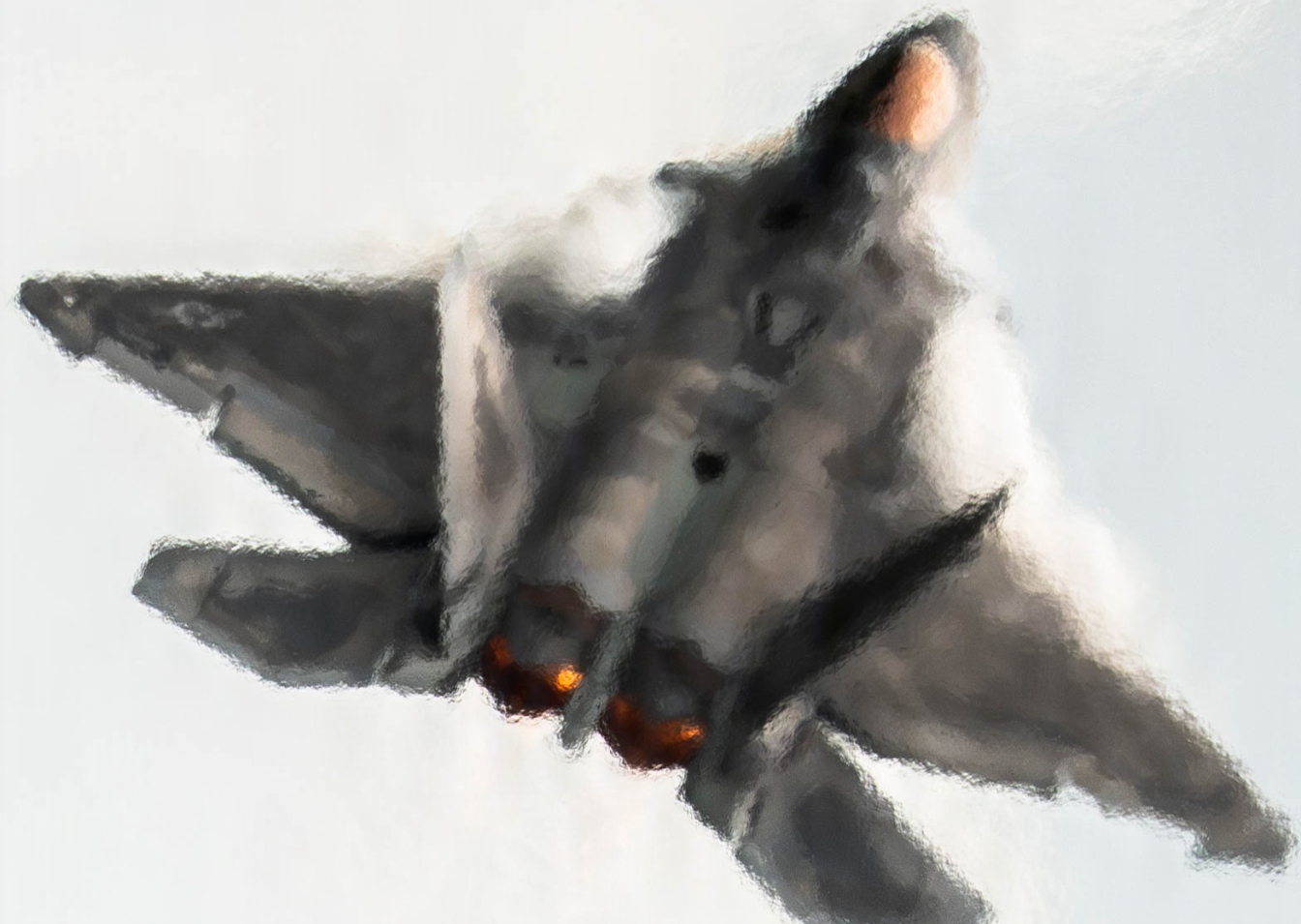
The F-22 Raptor performs a demonstration at the Mather Airshow in Sacramento, California, Sept. 23, 2018. The P-38 is a World War I-era fighter aircraft that was developed for the Army Air Corps. (U.S. Air Force photo by Senior Airman Lauren Parsons/Released)

An Air Force F-22 Raptor executes a supersonic fly by over the flight deck of the aircraft carrier USS John C. Stennis. John C. Stennis is participating in Northern Edge 2009, a joint exercise focusing on detecting and tracking units at sea, in the air and on land.
He has threatened to make Canada the country’s 51st state and once spent months musing about taking over Greenland, a territory of NATO ally Denmark.
Just this week, Trump announced that he was scaling back joint military exercises with South Korea, while touting his “very good relationship” with North Korean dictator Kim Jong-Un.
Trump met with Kim three times during his first term in what was a historic diplomatic opening, though it resulted in no agreements, and Trump’s second term has been quiet on the North Korea front.
And now, Trump has again made threatening noises about a longtime U.S. ally, the Gulf state of Oman.
Bomb Oman?
In recent weeks, Oman and Iran have been in talks about a new governing structure for the Strait of Hormuz, under which Iran would control incoming shipping traffic and Oman would control outgoing.
The U.S. has reportedly been involved to some degree in the talks, in a supervisory capacity, and while the sides have been reported as close to a deal for almost two weeks, no such deal has been announced. Iran has been clear that the talks are not about “opening” the Strait of Hormuz, but that such talks will take place separately.
The Memorandum of Understanding in mid-June, which established a 60-day truce period that is set to expire this week, included a provision stating that “ Iran will conduct dialogue with the Sultanate of Oman, to define the future administration and maritime services in the Strait of Hormuz.”
And now Trump is talking tough about… Oman.
On Monday, Trump was asked about those ongoing talks and what he’ll do next.
“If Oman gets in the way, we’ll bomb the s— out of them,” Trump told Fox News reporter Trey Yingst, as cited by the Washington Post. He also called on Iran to “wave the white flag of surrender.”
Last week, the president threatened to declare the Strait of Hormuz a territory of the United States.
Trump had previously threatened to attack Oman in a cabinet meeting in May. As CNN calculated at the time, Oman was the 15th country Trump had either attacked or threatened to attack throughout his two terms as president, although most of those threats came in the first 16 months of his second term.
And this came despite Trump running while vowing no more new foreign wars — and spending much of his first year back in office campaigning for the Nobel Peace Prize.
It’s important to note, however, that while Trump has indeed attacked seven countries so far in his second term — Iran, Iraq, Nigeria, Somalia, Syria, Venezuela, and Yemen, as of CNN’s May analysis — he has avoided attacking long-standing allies like Canada or Denmark’s territory of Greenland, despite the repeated threats. Therefore, an actual attack on Oman appears unlikely.
Oil Reserves Depleted
The Iran war, its uncertain endgame, and the up-in-the-air status of the Strait of Hormuz have left the United States’ oil reserves in a precarious position, with the U.S. drawing on those reserves throughout the year.
According to The Independent, the Strategic Petroleum Reserve has dropped below 300 barrels, its lowest level since the early 1980s.
CNBC reported another related concern: the drawdown could damage the caverns that hold the oil.
While the Energy Department, the report said, needs at least 70 million barrels to manage the caverns, Biden-era Energy Department official Amos Hochstein disagrees.
“Don’t believe the people out of the government that are saying the SPR can go to 70 million barrels. It’s nonsense,” Hochstein said in a CNBC appearance this week.
“I don’t know anyone who believes we can go below 300,” Hochstein told CNBC’s Brian Sullivan in a separate event. “I know plenty of people who think we can’t get near 300 because physically you will damage the caverns where the oil is stored.”
An Energy Department spokesman, once again, denied that cavern collapse is a concern.
About the Author: Stephen Silver
Stephen Silver is an award-winning journalist, essayist, and film critic, and contributor to the Philadelphia Inquirer, the Jewish Telegraphic Agency, Broad Street Review, and Splice Today. The co-founder of the Philadelphia Film Critics Circle, Stephen lives in suburban Philadelphia with his wife and two sons. For over a decade, Stephen has authored thousands of articles that focus on politics, national security, technology, and the economy. Follow him on X (formerly Twitter) at @StephenSilver, and subscribe to his Substack newsletter.


