
The United States appears to have found a way to move millions of barrels of oil through the Strait of Hormuz despite Iran’s best efforts to control the strategic waterway.
But the latest shipping data shows just how far Washington is from actually restoring normal commercial traffic and saving the global economy.

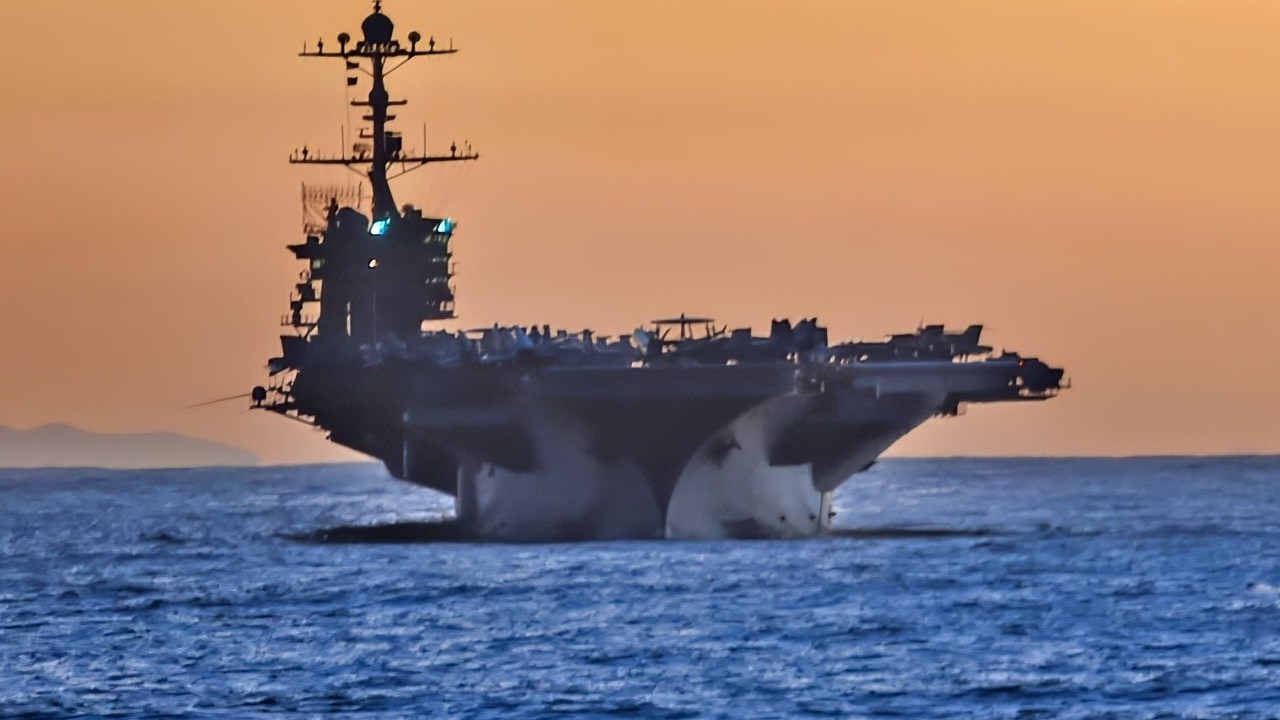
A U.S. Sailor inspects an aircraft catapult launch track on the flight deck of the world’s largest aircraft carrier, Ford-class aircraft carrier USS Gerald R. Ford (CVN 78), while underway in the Caribbean Sea, Nov. 25, 2025. U.S. military forces are deployed to the U.S. Southern Command area of responsibility in support of Operation SOUTHERN SPEAR, Department of War-directed operations, and the president’s priorities to disrupt illicit drug trafficking and protect the homeland. (U.S. Navy photo)

A U.S. Sailor assigned to Strike Fighter Squadron 37 signals to arm ordnance in an F/A-18E Super Hornet aircraft on the flight deck of the world’s largest aircraft carrier, Ford-class aircraft carrier USS Gerald R. Ford (CVN 78), while underway in the Caribbean Sea, Nov. 30, 2025. U.S. military forces are deployed to the U.S. Southern Command area of responsibility in support of Operation SOUTHERN SPEAR, Department of War-directed operations, and the president’s priorities to disrupt illicit drug trafficking and protect the homeland. (U.S. Navy photo)
Only nine commodity vessels were recorded passing through Hormuz on Wednesday, August 19, exactly the same number as the previous day, according to ship-tracking data from Kpler.
Before the war, around 130 to 140 ships typically passed through the strait each day.
And not only is there a long way to go to restore that kind of traffic, but the Trump administration cannot reasonably expect any current measures to last, with the Islamic regime preparing to return to military strikes as soon as it is capable.
U.S. Treasury Secretary Scott Bessent has spent the last several weeks insisting that the Strait of Hormuz is open and more oil is passing through than the media suggests – and this week’s news that a large number of tankers are moving through a protected corridor on the southern side of the strait is a good indication that Bessent is telling the truth.
But the system in its current form may not last.
The System, and How Iran Is Testing It
The new system is already under pressure from Iran, despite its heavily degraded military capabilities.
Iranian attacks on commercial shipping have increased in recent weeks. On August 18, the United Arab Emirates accused Iran of launching two ballistic missiles toward vessels in or near Emirati waters.
Tehran denied responsibility, but the incident came after a series of attacks on tankers near the UAE and inside Omani waters.
Then, another vessel traveling through Omani waters was struck on August 18, while the Liberia-flagged Minoan Dignity was also hit, killing one crew member.
And Iran repeatedly attacks ships passing through Omani waters as part of a pressure campaign to ensure that ships only use routes controlled by Tehran, thereby pressuring shipping companies in the long run to pay tolls to the Islamic regime.
That makes the southern corridor particularly important, but it is still extremely vulnerable – even if Iran’s conventional military capabilities have been degraded to the extent it can no longer reliably and accurately track every ship passing through the strait.
How the Secret Route Works
An Axios report this week detailed the American system that has kept oil moving through the Strait of Hormuz. Citing two U.S. officials, the outlet reported how the system relies partly on making ships harder for Iran to find.
The sources claimed that between 15 and 20 tankers have recently entered and left the Persian Gulf through a protected route every night, carrying close to 10 million barrels of oil per day.
The corridor runs along the southern side of the Strait of Hormuz, near Oman.
A New York Times report also revealed details about the operation, citing maritime analysis and shipping company officials.
Ship operators told the newspaper that they register planned transits through Hormuz with the U.S. military before entering the strait and report any suspected threats or attacks during the journey.
CENTCOM then uses warships, helicopters, and aircraft to provide protection and, when necessary, intercept Iranian drones and missiles. CENTCOM says it has assisted more than 1,000 vessels through the waterway.
Shipping data also indicates the operation is active, although its secretive nature makes it difficult to establish all the facts.
Maritime analyst Michelle Wiese Bockmann told the Times that approximately 4 million barrels of oil per day exited the Gulf via the protected route in June, rising to roughly 5 million barrels per day in July.
She called the corridor “extraordinarily effective,” despite repeated attempted attacks by Iranian drones.
Why the Estimates Vary
Nobody can agree on how much oil is moving through the Strait of Hormuz, partly because tankers travel with American assistance and their Automatic Identification System transponders are switched off.
AIS normally broadcasts a vessel’s identity, position, speed and direction to other ships and shore-based receivers.
Going dark makes the tankers harder for Iran to track, but it also makes them disappear from the commercial databases used to measure Hormuz traffic.
That helps explain the apparent contradiction between Kpler recording only nine commodity vessels transiting the strait on Wednesday and U.S. officials claiming that 15 to 20 tankers move through the corridor every night.
The publicly visible traffic represents only part of what is moving through the strait.
But none of this is a permanent solution, and Iran is still preparing to fight back in new ways, and even if it maintains its current capabilities, the U.S. is still moving only a fraction of the oil required to flow through the strait to keep the global economy afloat.
About the Author: Jack Buckby
Jack Buckby is a British researcher and analyst specializing in defense and national security, based in New York. His work focuses on military capability, procurement, and strategic competition, producing and editing analysis for policy and defense audiences. He brings extensive editorial experience, with a career output spanning over 1,000 articles at 19FortyFive and National Security Journal, and has previously authored books and papers on extremism and deradicalization.


