

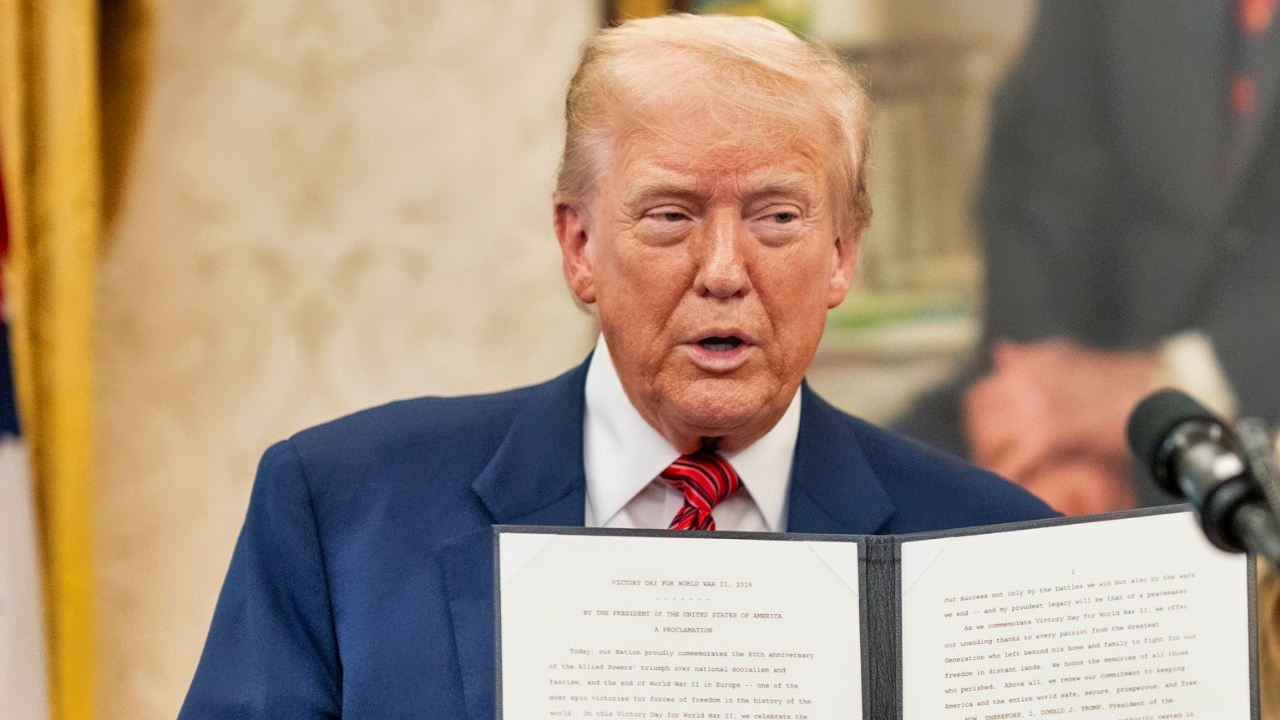
Earlier this week, President Donald Trump threatened to bomb Oman if it got in the way of his plans for the Iran war.
Later, he suddenly announced a scaling down of a planned military exercise with South Korea, citing what he called South Korea’s refusal to involve itself in the Iran war.

President Donald Trump meets with Canadian Prime Minister Mark Carney, Tuesday, May 6, 2025, in the Oval Office. (Official White House Photo by Daniel Torok)
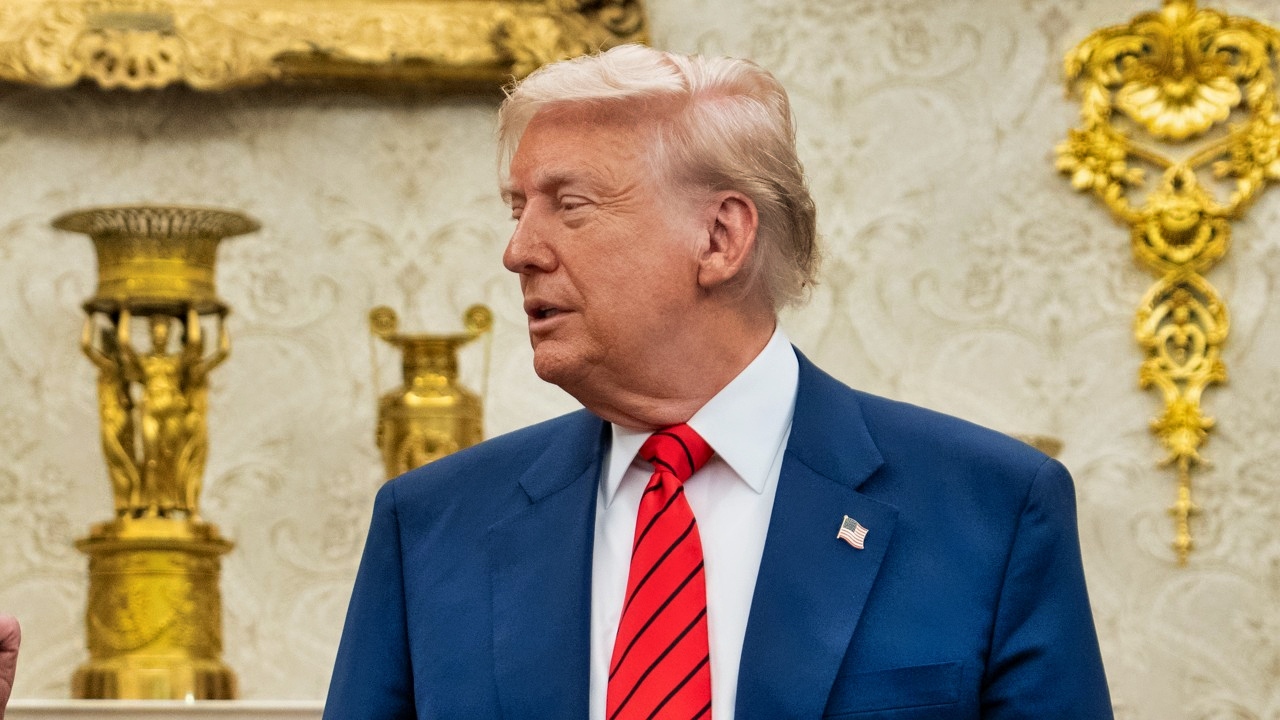
President Donald Trump meets with Canadian Prime Minister Mark Carney, Tuesday, May 6, 2025, in the Oval Office. Vice President JD Vance attends. (Official White House Photo by Emily J. Higgins)
As the Washington Post noted, these actions, along with the president’s recent posting of a map calling the Strait of Hormuz a new United States territory, indicate the president’s clear frustration with the lack of a clear endgame in the Iran war, which has reached something of a stalemate in recent weeks.
There have been no major attacks from either side, but the sides are also not talking. And after the 60-day “Memorandum of Understanding” expired earlier this week, there doesn’t seem to be any path towards a negotiated settlement anytime soon.
Following negotiations between Iran and Oman over the Strait of Hormuz, which were widely reported as “close” earlier this month but have not yet yielded the announcement of a final deal, Trump is said to fear that Oman and possibly other Gulf states could reach a “side deal” to open the Strait, one that cuts out the U.S.
“He’s in a situation that he can’t get out of — and unlike so many other things that Trump has gotten himself into, he cannot get bailed out,” Andrew Leber, a Middle East scholar at the Carnegie Endowment for International Peace, told the Post.
Using a colorful metaphor in speaking to the Post, Alan Eyre, who was one of the diplomats who helped deliver the JCPOA deal in 2015, compared the Trump Administration’s actions to those of a “thrashing mastodon, slowly sinking into a tar pit.”
Eyre also pointed to what he sees as frustration on Trump’s part that he has not been able to get the Strait of Hormuz traffic up to pre-war levels.
Economic D-Day
Trump, Leber, and other experts added that he is clearly frustrated that he hasn’t been able to get the Iranians to back down, whether through military actions, diplomatic pressure, or other measures.
The latest push is an “Economic D-Day,” in which Trump has threatened any other country that helps Iran, in what the president described this week in a Truth Social post as the “MOST CRUSHING ECONOMIC OPERATION EVER TAKEN AGAINST ANY COUNTRY.”
Treasury Secretary Scott Bessent, in a CNBC interview this week, issued further threats, though he also said he believes the new push for economic pressure will make further military action unnecessary.
“Many Levers”
In the Post story, an anonymous Administration official tried to paint a rosier picture of the situation in Iran, saying Iran is “completely broke” and that there “are many levers the president can crank harder in the weeks and months ahead.”
White House spokeswoman Olivia Wales, meanwhile, went on record to declare, with Trumpian hyperbole, that Trump has not only destroyed Iran’s military, but that he was “crushing what’s left of its abysmal economy with the most successful naval blockade in world history.”
How Oman Got Here
Also this week, The Hill looked at how Oman, a longtime U.S. ally, got “caught in Trump’s crosshairs.”
Mona Yacoubian, the director of the Middle East Program at the Center for Strategic and International Studies, told The Hill that he sees Trump’s anger at Oman as “more of a shoot-the-messenger type of a situation,” as Oman is probably not able to meet Iran’s demands on its own.
“I think what we’re seeing, and what we’ve continued to see in a variety of ways, is just the outward expression of deep frustration by the administration that they’re still stuck with this Strait of Hormuz problem and no apparent solution in sight,” Yacoubian told the outlet.
The Hill story also said Iran has insisted on “steep conditions for Washington to meet” before signing off on any deal with Oman, which is likely why no such deal has been finalized.
The U.S. has, Axios reported earlier this week, established a stealth shipping operation to move oil through the Strait of Hormuz on the Oman side, with some success, although oil flow remains at about half of pre-war levels.
About the Author: Stephen Silver
Stephen Silver is an award-winning journalist, essayist, and film critic, and contributor to the Philadelphia Inquirer, the Jewish Telegraphic Agency, Broad Street Review, and Splice Today. The co-founder of the Philadelphia Film Critics Circle, Stephen lives in suburban Philadelphia with his wife and two sons. For over a decade, Stephen has authored thousands of articles that focus on politics, national security, technology, and the economy. Follow him on X (formerly Twitter) at @StephenSilver, and subscribe to his Substack newsletter.


