

Ukraine spent years lobbying for Western tanks and ultimately succeeded in obtaining them, but with the proliferation of cheap attack drones, many of those tanks are now sitting largely unused behind the front lines.
The dynamics of war have changed in just the last handful of years, largely driven by Ukraine’s burgeoning drone industry and asymmetric tactics that have allowed its military to face down a much greater power.
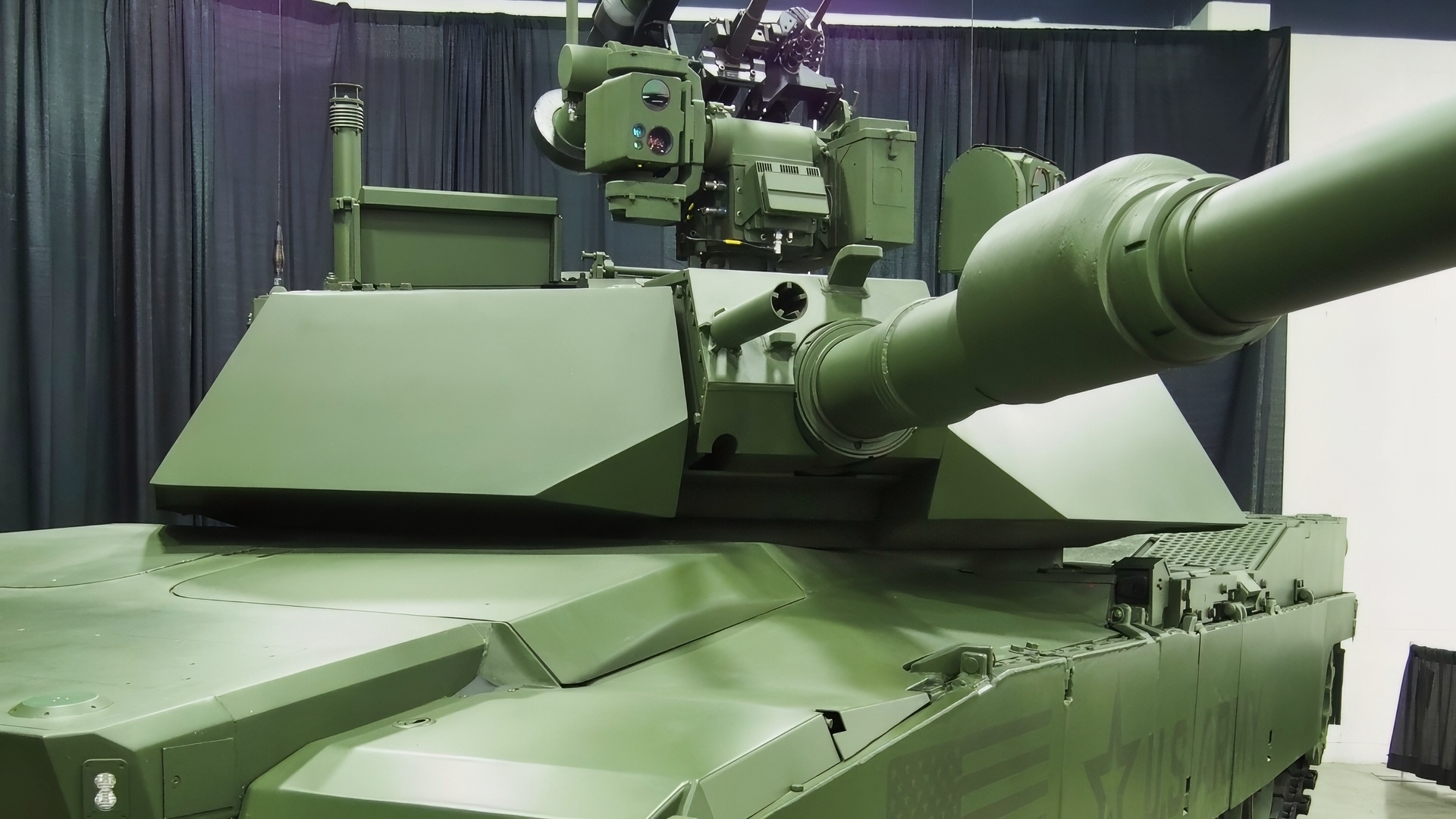
M1E3 Abrams. National Security Journal Photo.
A new report from The New York Times offers a detailed look at how dramatically these dynamics have changed since Britain, Germany, the United States, and other NATO countries began supplying Kyiv with modern Western tanks in 2023.
Some Ukrainian tanks are now rarely taking vehicles into combat at all, while the soldiers originally trained to operate them are learning to fly drones instead.
This development does not mean the tank is completely obsolete, but with Russia also experimenting with new defenses to counter Ukrainian drones and building its own advanced, jet-powered UAVs, Ukraine is showing the world the direction of modern warfare and how to prepare.
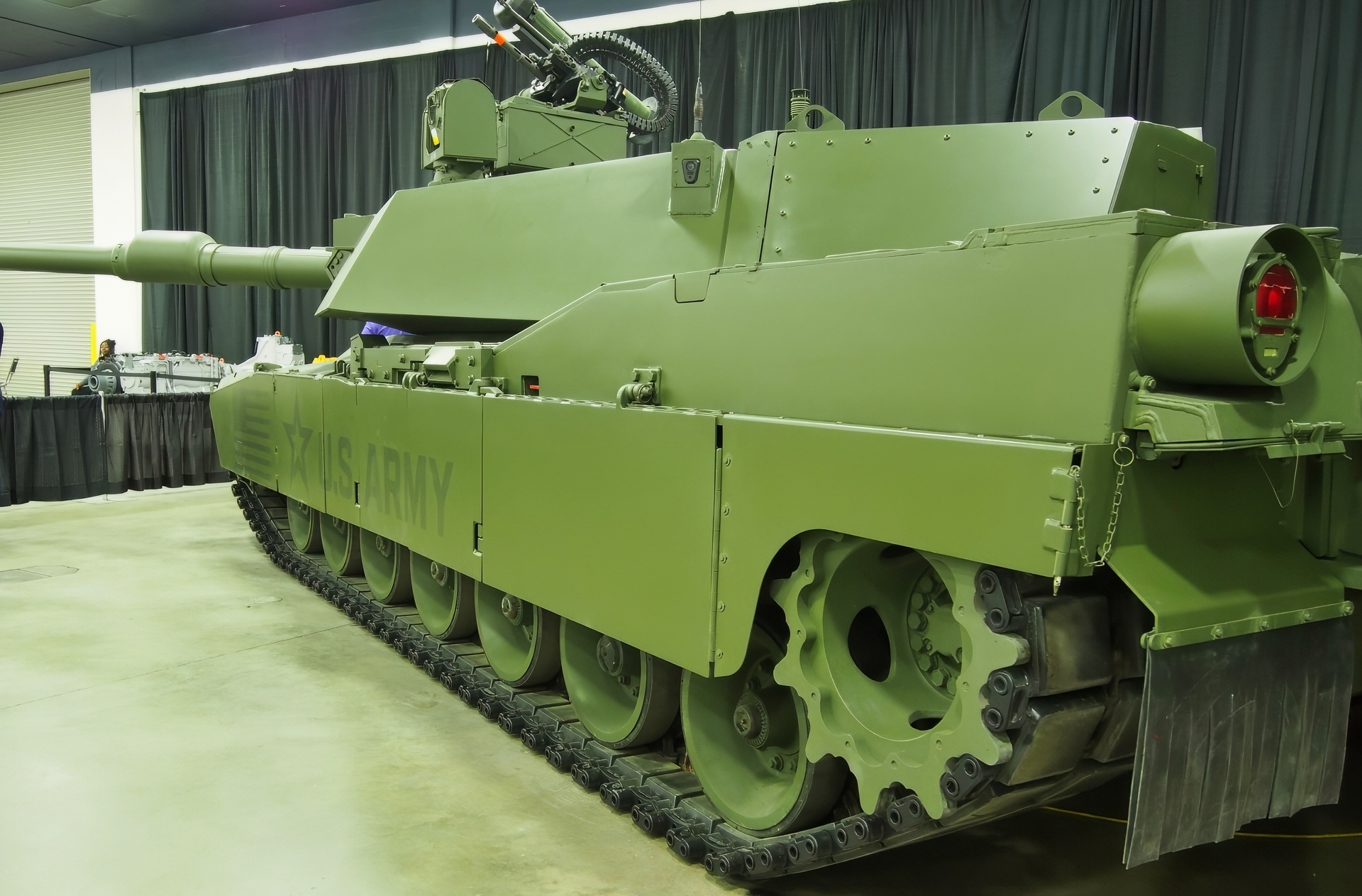
M1E3 Abrams from Detroit Auto Show. National Security Journal Photo.
Ukraine’s Western Tanks Are Sitting Idle
Reporting from Kharkiv, The New York Times found German-made Leopard tanks belonging to Ukraine’s 33rd Separate Mechanized Brigade were being concealed beneath camouflage netting in forests. Crews were reportedly maintaining the vehicles, but they are rarely being ordered into battle.
The brigade was formed in part to operate the Western tanks that Ukraine had urgently requested in response to Russia’s invasion in February 2022, but by the time significant numbers of those tanks had arrived in 2023, the battlefield was already dramatically different, and drones were changing how armies fought.
Cheap first-person-view attack drones, often jerry-rigged to work alongside munitions like grenades, were among the first signs that drones were about to change the way Ukraine would fight back.
Those cheap drones, often commercially available models from brands like DJI, proved to be relatively inexpensive ways to attack armored vehicles and other vulnerable targets from above.
In the early days of the conflict, those drones were used to take advantage of certain tanks’ vulnerabilities, and Ukrainian soldiers would frequently drop explosives into open hatches from modified drones.
And as those tactics proved effective, Ukraine began to build a drone empire that now sees millions manufactured every year.
Tank Crews Become Drone Operators
The Times also found that Ukrainian Leopards have sometimes been used to recover damaged vehicles, essentially turning their sophisticated main battle tanks into heavily armored towing vehicles.
But even those operations are dangerous, with soldiers telling the newspaper that tanks can sometimes venture out in bad weather, when rain, wind, and reduced visibility limit the use of drones.
So in some respects, the tanks are still useful – but they’re still suboptimal in today’s battleground.
And as the dynamics change, soldiers are taking on new roles.
Morpheus, a commander in the 33rd Brigade, told the outlet that roughly half of his battalion has retrained to operate drones.
Other soldiers are also reaching more pessimistic conclusions about their old profession, with one Leopard driver, who previously operated Soviet-designed T-64 tanks, now practicing flying drones when he is not working with his tank.
He did say, however, that he expects armored vehicles will eventually return to the battlefield in a different form – and next time, he says, they will likely be unmanned.
And he’s probably right.
Russia is Trying to Put Tanks Back Into the Fight
Russia is wrestling with the same kind of problems as Ukraine, because while it has its own burgeoning drone industry, its forces face all the same dynamics and problems that Ukraine does.
During a mechanized assault in the Dobropillya direction in late July, Russian forces deployed between seven and nine tanks alongside two other armored fighting vehicles, according to the Institute for the Study of War.
At least one of those tanks was equipped with the Arena-M active protection system, which was modified to intercept incoming FPV drones.
Ukrainian sources said that one Arena-M system successfully intercepted seven FPV drones and forced Ukrainian forces to expend as many as 20 additional drones before it was able to destroy the tank.
This suggests these armored vehicles may be more survivable, but it hardly solves the problem. After all, a system that can be overwhelmed is still vulnerable, and the protection system does nothing to eliminate the other defenses, like mines and artillery, that armored formations must survive alongside the drones.
Future Forces
So, what happens now? Ultimately, the advantage may belong to whichever military can first integrate new unmanned and drone technologies into a more coherent doctrine — rather than merely finding short-term ways to outwit the enemy.
Ukraine and Russia are in many ways conducting an enormous wartime experiment in real time and allowing the rest of the world to watch and learn alongside them.
And whatever lessons are learned here will inform how militaries design future forces.
About the Author: Jack Buckby
Jack Buckby is a British researcher and analyst specializing in defense and national security, based in New York. His work focuses on military capability, procurement, and strategic competition, producing and editing analysis for policy and defense audiences. He brings extensive editorial experience, with a career output spanning over 1,000 articles at 19FortyFive and National Security Journal, and has previously authored books and papers on extremism and deradicalization.


