

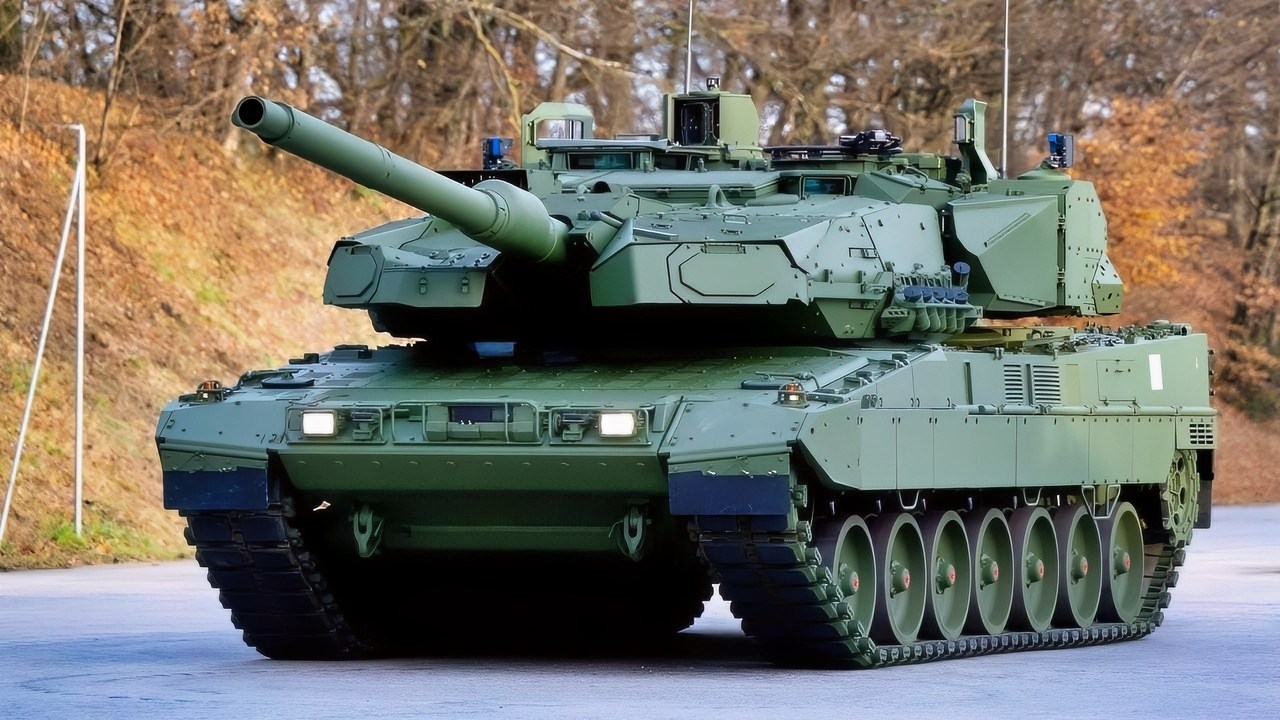
Germany’s Leopard 2 main battle tank was once considered the equal of the American M1 Abrams and Israeli Merkava as one of the best on Earth—deadly, sophisticated, the pride of Teutonic engineering. Then it went to Ukraine, and Russian drones tore the reputation apart, with 38 of them destroyed and Berlin’s own Defense Ministry quietly admitting the tank is being used as little more than mobile artillery.
The Leopard 2: One Powerful Tank Faces the Future
The Leopard 2 is the homegrown main battle tank (MBT) of the Deutsches Heer, the army/land forces component of the Federal Republic of Germany’s Bundeswehr. We now take a deeper dive into the Leopard 2 MBT’s history, strengths, and weaknesses.
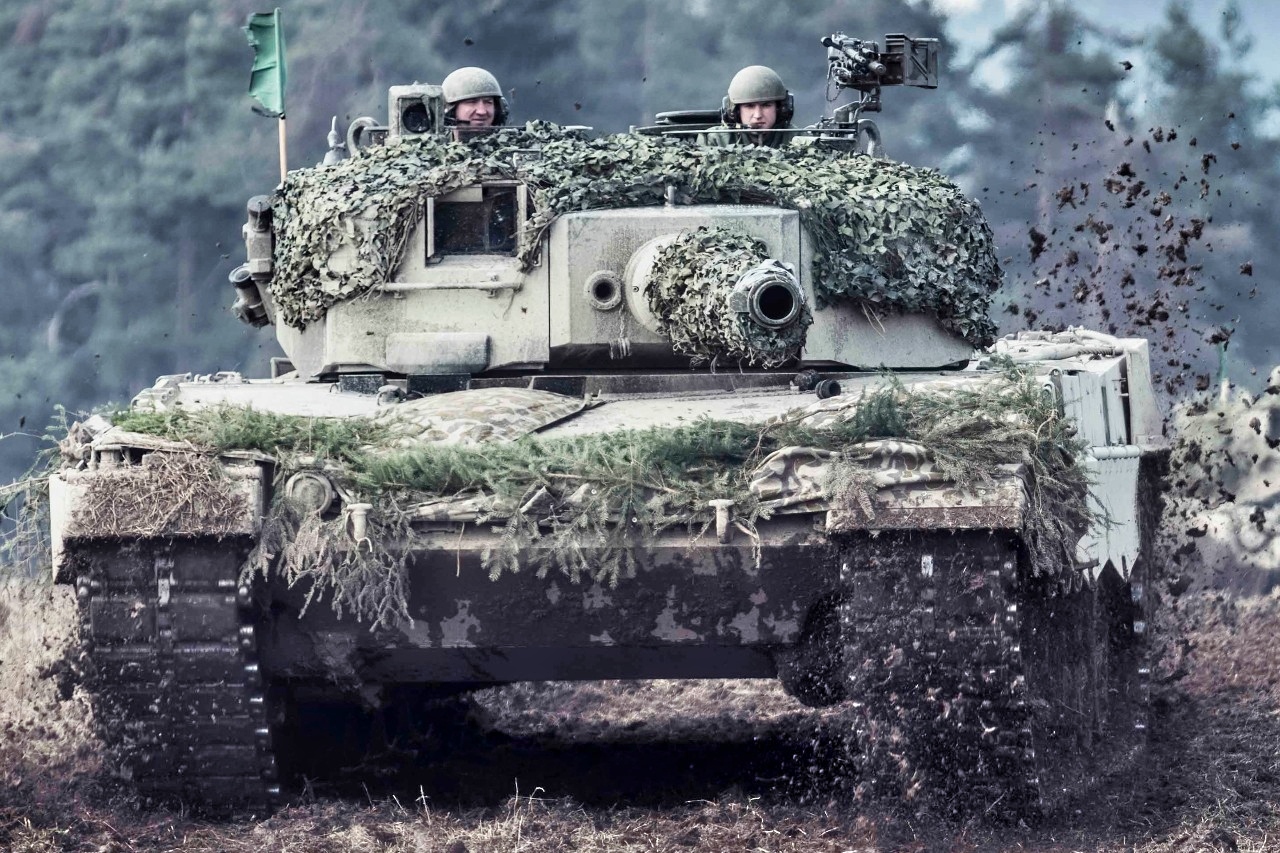
Leopard 2. Image Credit: Creative Commons.
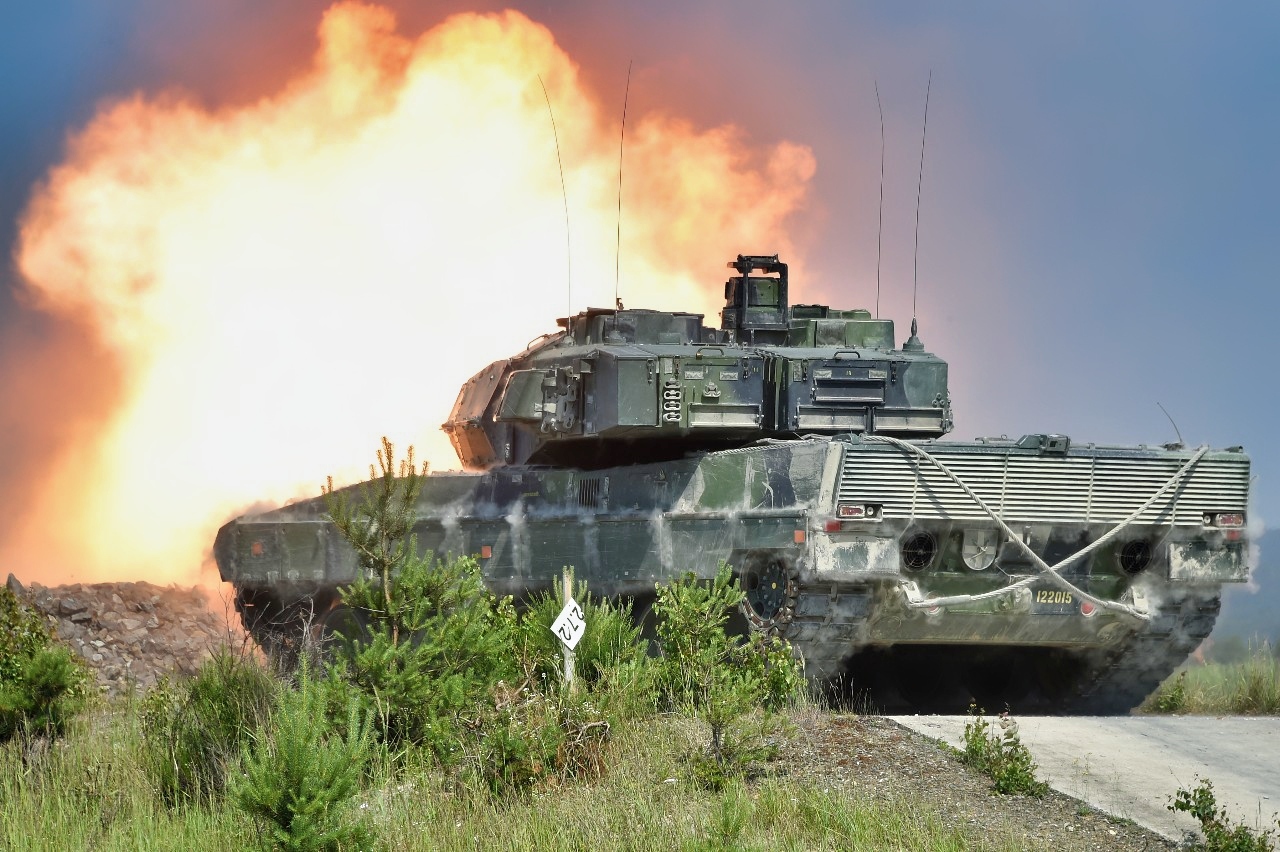
Swedish soldiers with the Wartofta Tank Company, Skaraborg Regiment in a Stridsvagn 122 main battle tank conduct the defensive operations lane during the Strong Europe Tank Challenge, June 7, 2018. U.S. Army Europe and the German Army co-host the third Strong Europe Tank Challenge at Grafenwoehr Training Area, June 3 – 8, 2018. The Strong Europe Tank Challenge is an annual training event designed to give participating nations a dynamic, productive and fun environment in which to foster military partnerships, form Soldier-level relationships, and share tactics, techniques and procedures. (U.S. Army photo by Gertrud Zach)
Leopard 2 MBT Initial History
Named for the deadly predatory cat (Panthera pardus), the Leopard 2 is a third-generation MBT, designed by Krauss-Maffei Wegmann GmbH & Co. KG (KMW), which is now known as KNDS Deutschland GmbH & Co., and builds the tank in tandem with Rheinmetall; the latter firm provides the Leopard’s L44 and L55 120mm smoothbore main gun along with ammunition, fire control systems, and C4I technology for the tank.
Leopard 2 prototypes date back to 1971, and the full-production model began replacing the original 1965-vintage Leopard tank in 1979.
Like many successful MBTs, regardless of country of origin, the Leopard 2 hasn’t remained frozen in time, as there have been more variants than you can shake a stick at.
The latest & greatest iteration is the 66.5-ton Leopard 2A7V, which debuted in September 2021. Among its selling points are improved crew survivability via a new modular armor package, an advanced MTU MB 873 Ka501engine that propels the mechanical war cat to a maximum speed of 44.7 mph (72 km/h), and a superb power-to-weight ratio of roughly 27.2 hp/ton.
Besides winning the hearts and minds of the Bundeswehr brass, the Leopard’s qualities have earned it approximately 21 foreign military sales (FMS) customers spread out across four continents, NATO and non-NATO alike, with Gulf Arab countries such as Qatar and the United Arab Emirates (UAE) falling into the latter category. Even the ever-neutral Swiss have jumped onto the Leopard 2 buyers’ bandwagon.
Operational Performance…and Combat Controversies
Before it ever got “blooded” in real-life battle, the German-made Leopard 2 main battle tank (MBT) was being touted by fans of Teutonic engineering as being on a par with the American-made M1 Abrams and the Israeli-made Merkava as one of the best MBTs in the world.
And given Germany’s prior history of building fearsome tanks during World War II, especially the Wehrmacht’s legendary Tiger tank series(coincidentally also named for a predatory “big cat”), this seemed to justify a high degree of confidence in the Leopard 2.

Israel Merkava Tank. Image Credit: Creative Commons.

Merkava Tank Israel. Image Credit: Creative Commons.
Initially, that confidence appeared to be quite well-placed. In the first decade of the 2000s, Dutch, Danish, and Canadian forces deployed their Leopard 2 tanks in the War in Afghanistan as part of their contribution to the International Security Assistance Force (ISAF), where they performed up to par.
However, in the following decades, Turkish Leopard 2s saw action in Syria, whereupon, in both the literal and figurative sense, chinks started appearing in the armor, as several were destroyed by anti-tank guided missiles (ATGMs) fired by the Islamic State/ISIS/ISIL/Da’esh terrorist group.
The Leopard 2’s reputation took an even more fearsome hit after it was sent to Ukraine to help that beleaguered former Soviet republic fight against Vladimir Putin’s Russian invasion force. 18 of them were sent in 2023—after prolonged national debates and foot-dragging by the outgoing left-wing government of Chancellor Olaf Scholz—whereupon they suffered grievous losses at the hands of Russian drones.
So then, did the Leopard 2 truly flop in Ukraine, or is the story a bit more complicated than that?
Point: The Case Against the Leopard 2
A major source for this perspective is historian Nigel Jones, in an April 14, 2025, hit piece for The Spectator titled “German tanks always flop.” The Leopard 2 is no different.”
Mr. Jones passionately, and he uses a straight from the (proverbial) horse’s mouth source to back up his claims.
To wit: “According to a confidential assessment by Germany’s own defense ministry, and published by the Daily Telegraph, the Leopards have disappointed their Ukrainian army crews, as they are said to be over-complex to operate and vulnerable to aerial attack by Russian drones…So limited are the Leopards’ capabilities in real battle conditions that their range and mobility are restricted. According to the study, they are being used as little more than moderately mobile artillery pieces.”
Additional Point: It’s Not Just theLeopard
Speaking of artillery pieces, a bona fide artillery piece made in Deutschland, the Panzerhaubitze 2000 (PzH 2000) self-propelled gun, suffers from frequent barrel overheating and electronic failures, so much so that its suitability for war is strongly questioned; German army industry execs are keeping their fingers crossed that the new A4 variant of the PzH 2000, unveiled in November 2025, will have greater success
A double-dose of embarrassment for the once-vaunted and feared German arms industry. Mein Gott!
Counterpoint: The Case for theLeopard
The contrarian perspective is provided by Simon Newton of Forces News in an April 15, 2025, article titled “The right tanks in the wrong war: Do Leopards deserve their poor reputation?”
To wit: “The Leopard 2, on the other hand, has proven to be a deadly weapon,**possibly Ukraine’s most effective tank**,despite being vulnerable to a top-down drone strike…The problems seem to be less with the tank itself and more with how it is being deployed and operated.” [emphasis added]
Mr. Newton elaborates upon that latter sentence by noting that the Heer’s hometown tank crews also take three years to learn how to operate a Leopard 2 properly. So, with 20/20 hindsight, it’s not surprising that so many were lost during Ukraine’s unsuccessful counteroffensive in 2023, as the Ukrainian tank crew (1) didn’t have enough of them, (2) didn’t receive sufficient training time before getting, and (3) didn’t use them in the way they were designed.
So then, how exactly was the Leopard 2 designed, built, and intended?
—For one thing, it’s built for fast, high-intensity battles, not the grinding attrition of Ukraine, where the skies are saturated by drones and electronic warfare.
—For another thing, these MBTs are designed to operate with close air support (CAS)…and Ukraine has very little of that, the valiant efforts of its Air Force’s F-16 pilots notwithstanding.
Parting Thoughts
One additional bit of perspective from Mr. Newton that’s a good wrapping-up point for this piece: “German kit is**far from being the worst-performing in Ukraine**. That honor goes to Russia’s Soviet-era turret-tossing tanks with their exploding auto-loaders.”[emphasis added]
To prove that point, Newton cites the tracking website Oryx, which reports that out of the 1,147 tanks Kyiv has lost, 17Leopard1s have been destroyed and 38 Leopard 2s, comprising roughly 20 percent of the reported 250-odd Leopards of all generations supplied by Germany and other countries.
By comparison, Russia has lost 3,903 tanks–around 100 a month–as of the time that the Oryx report was published.
About the Author: Christian D. Orr
Christian D. Orr is a Senior Defense Editor. He is a former Air Force Security Forces officer, Federal law enforcement officer, and private military contractor (with assignments worked in Iraq, the United Arab Emirates, Kosovo, Japan, Germany, and the Pentagon). Chris holds a B.A. in International Relations from the University of Southern California (USC) and an M.A. in Intelligence Studies (with a concentration in Terrorism Studies) from American Military University (AMU). He is also the author of the book “Five Decades of a Fabulous Firearm: Celebrating the 50th Anniversary of the Beretta 92 Pistol Series,” the second edition of which was recently published.


Olrik
May 2, 2026 at 6:50 pm
This is nonsense because every type of MBT and AFV that comes out of hiding in Ukraine has “failed” and is almost immediately destroyed including Abrams, Challenger 2s, Bradleys, LAVs, etc, etc. Swarms of drones descend on them and set fire to vulnerable areas such as engine compartments. Russian tanks are in the same situation. The Russians and Ukrainians have resorted to covering their armoured vehicles with massive metal cages which makes any sort of maneuver warfare almost impossible. What is needed are massive numbers of mobile anti-aircraft/drone systems such as the Gepard embedded in the armoured formations…