

Oil Is Just About Escaping Hormuz – But LNG Isn’t – The United States and its Gulf allies are being forced to find creative new ways to get oil out of the Persian Gulf, but despite U.S. President Donald Trump’s insistence that the Strait of Hormuz is open, shipping remains far below pre-war levels. The series of emergency measures that are keeping crude moving out of the region are extraordinarily expensive, and Iran retains the ability to disrupt traffic again — meaning any victory we see today could end tomorrow.
But for liquefied natural gas, the problem is even more acute. Qatar has largely halted LNG shipments through the strait, and the workarounds that are helping Saudi Arabia, Kuwait and the United Arab Emirates move more oil are far harder to replicate with specialized LNG carriers.
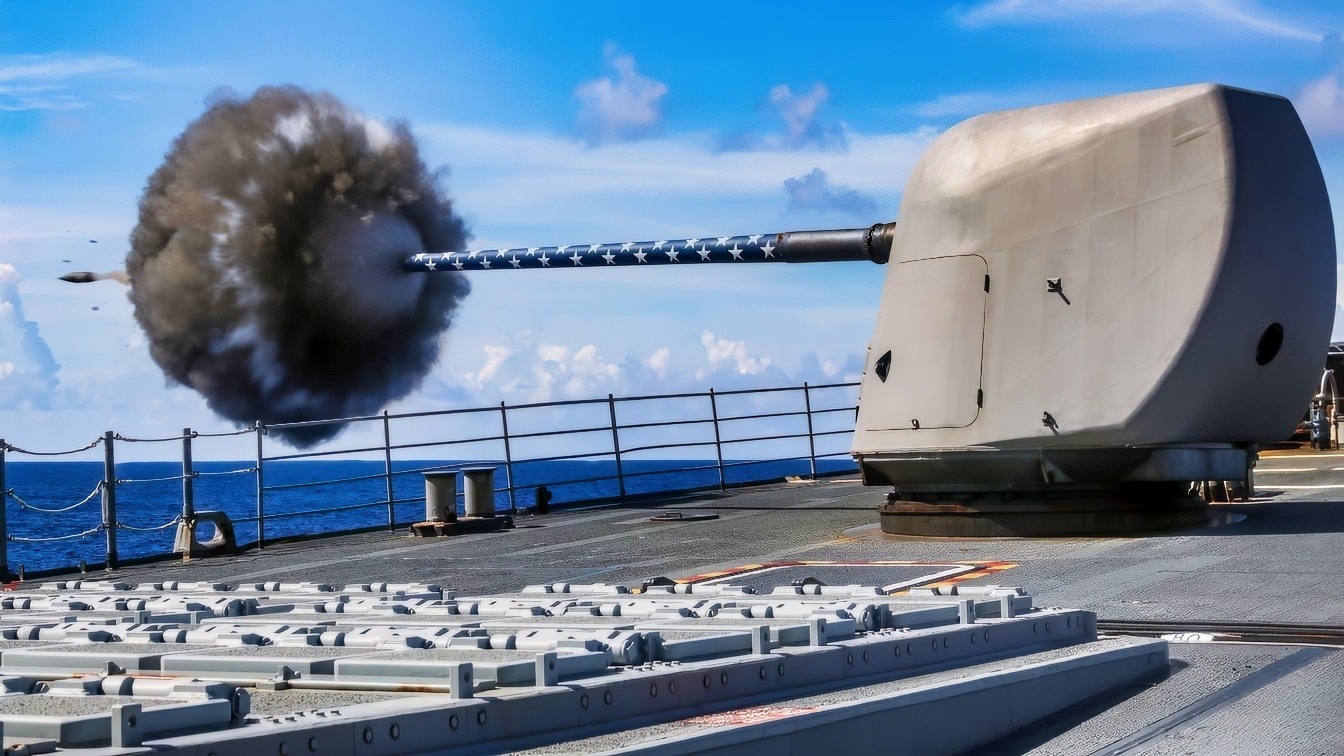
PACIFIC OCEAN (July 29, 2025) The Ticonderoga-class guided-missile cruiser USS Princeton (CG 59) fires its forward Mark 45 5-inch gun during a weapons maintenance shoot, July 29, 2025. The Carl Vinson Carrier Strike Group is underway conducting routine operations in the U.S. 3rd Fleet area of operations. (U.S. Navy photo by Mass Communication Specialist 1st Class Jacob I. Allison)
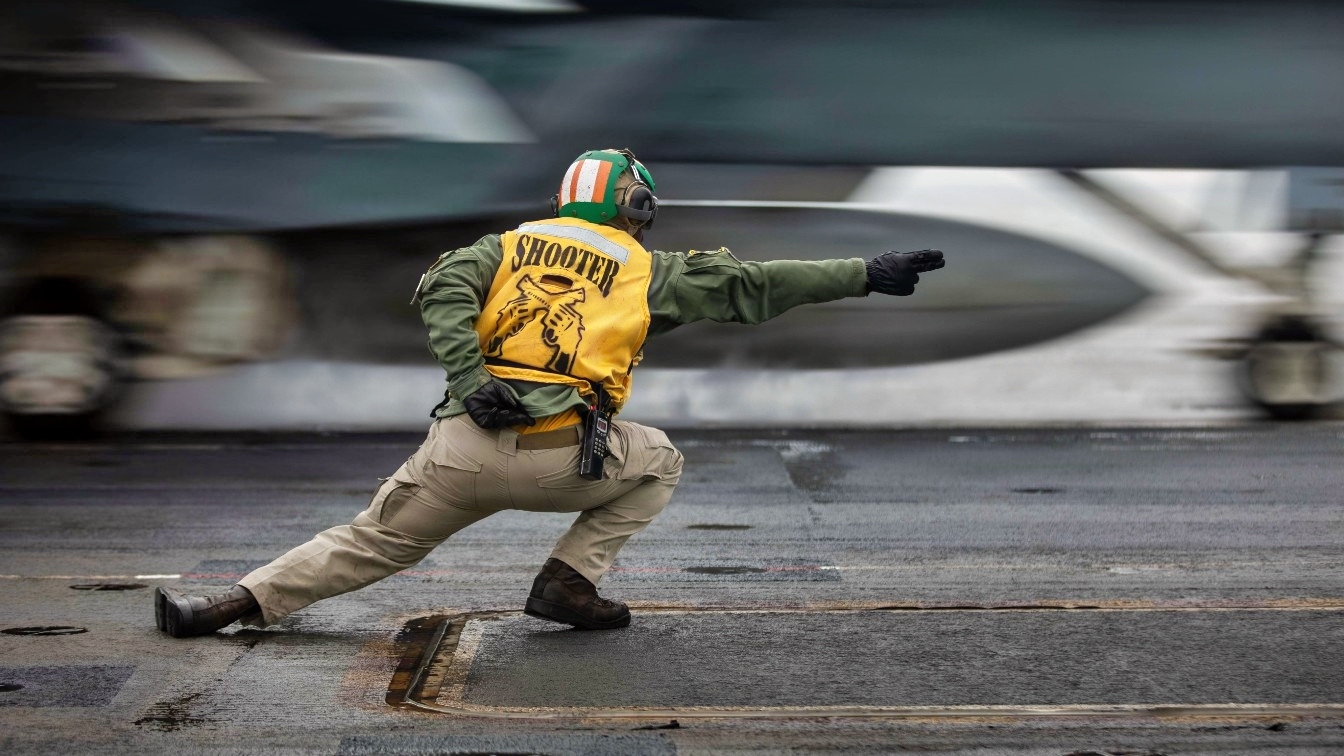
U.S. Navy Lt. Miguel Smith launches an F/A-18E Super Hornet, attached to the “Pukin Dogs” of Strike Fighter Squadron (VFA) 143, from the flight deck of Nimitz-class aircraft carrier USS Dwight D. Eisenhower (CVN 69) May 7, 2026. Eisenhower is underway conducting flight deck certification in the Atlantic Ocean in preparation for future operations. (U.S. Navy photo by Mass Communication Specialist 3rd Class Jamison Sutton)
Oil Is Moving – But Not Enough
Traffic through Hormuz increased by more than 30% last week, according to Lloyd’s List Intelligence data reported by USNI News on Friday. There were 114 transits between August 17 and August 23, including at least 42 westbound movements into the strait, up from 29 the previous week. But those figures still represent only a fraction of normal traffic. Before the war began on February 28, roughly 130 ships were passing through the strait every day. And recent daily figures show just how inconsistent the “recovery” is. Kpler data showed only seven visible commodity vessels crossing Hormuz on Thursday, August 27, falling from 17 the previous day and below the recent 10-day average of 15.
“The industry is still operating under crisis conditions rather than anything approaching a return to normality,” Lloyd’s List Editor-in-Chief Richard Meade said on Thursday.
The Gulf Emergency Oil Network
Oil volumes have recovered more quickly than overall shipping traffic through Hormuz because Gulf producers have found ways to transport large volumes of crude oil with fewer ships.
Saudi Arabia can divert oil through its 746-mile East-West Pipeline, which carries crude from fields in the east of the country to the Red Sea port of Yanbu, allowing it to be loaded onto tankers without entering the Persian Gulf or passing through Hormuz. The UAE has a similar option with the Abu Dhabi Crude Oil Pipeline, which carries oil from fields around Habshan to the port of Fujairah on the Gulf of Oman, on the eastern side of the strait.
But those pipelines still cannot fully replace the massive volumes of crude normally shipped through the Strait of Hormuz.
For crude that still must leave the strait, the industry is opting for a different solution: shuttle tankers. Those ships shuttle oil through the most dangerous stretch of water before loading the cargoes onto tankers operating outside the waterway.
It’s Working, But It’s Expensive
Those strategies are working, but they’re not cheap to sustain.
The price of hiring a very large crude carrier, or VLCC, to transport oil from Saudi Arabia to China reached the equivalent of a record $647,000 per day on Thursday, according to Baltic Exchange data. The price reflects just how difficult it has become to find ships and crews that are willing to operate in the region, under constant threat of missile or drone attacks by Iranian forces. Companies are demanding substantially more money to compensate for the risk of their vessels being attacked or left trapped behind the Strait of Hormuz for months.
The U.S. military is also taking steps to help keep any remaining routes open. On Thursday, U.S. Central Command chief Adm. Brad Cooper said American forces had finished clearing Iranian sea mines from the internationally recognized shipping lanes through Hormuz. Cooper also claimed that the U.S. military has already assisted around 1,500 commercial vessels during the span of the conflict.
We know, then, that the Strait of Hormuz has not returned to normal. Oil is only moving because Gulf producers and shipping companies have constructed an expensive emergency system to bypass the disruption — but the same can’t be said about LNG.
LNG Is Still Trapped
For Qatar’s LNG industry, there are far fewer options. The country has largely halted LNG shipments through Hormuz since two vessels carrying fuel were attacked in July. It is contributing to a global crisis that was entirely expected, with roughly one-fifth of global LNG supplies moving through the waterway before the war.
And unlike crude oil, LNG cannot easily be moved through alternative pipelines or shuttled through the most dangerous sections of the waterway and transferred to other ships. LNG carriers are specialized and expensive vessels, making companies far more reluctant to risk them in waterways where commercial ships are still being attacked.
Qatar is warning customers that disruption is likely to last for months longer, too. State-owned QatarEnergy has extended force majeure, a legal measure allowing it to suspend deliveries when circumstances beyond its control make them impossible, for some LNG shipments into November.
And with far less Qatari gas reaching international markets, LNG prices in Europe and Asia have risen to nearly twice their pre-war levels. And unlike oil, there is no emergency network capable of replacing those huge volumes that typically move through Hormuz. So while Gulf producers have found expensive, temporary ways to get crude oil out of the region, the LNG crisis is nowhere near being solved.
About the Author: Jack Buckby
Jack Buckby is a British researcher and analyst specializing in defense and national security, based in New York. His work focuses on military capability, procurement, and strategic competition, producing and editing analysis for policy and defense audiences. He brings extensive editorial experience, with a career output spanning over 1,000 articles at 19FortyFive and National Security Journal, and has previously authored books and papers on extremism and deradicalization.


