

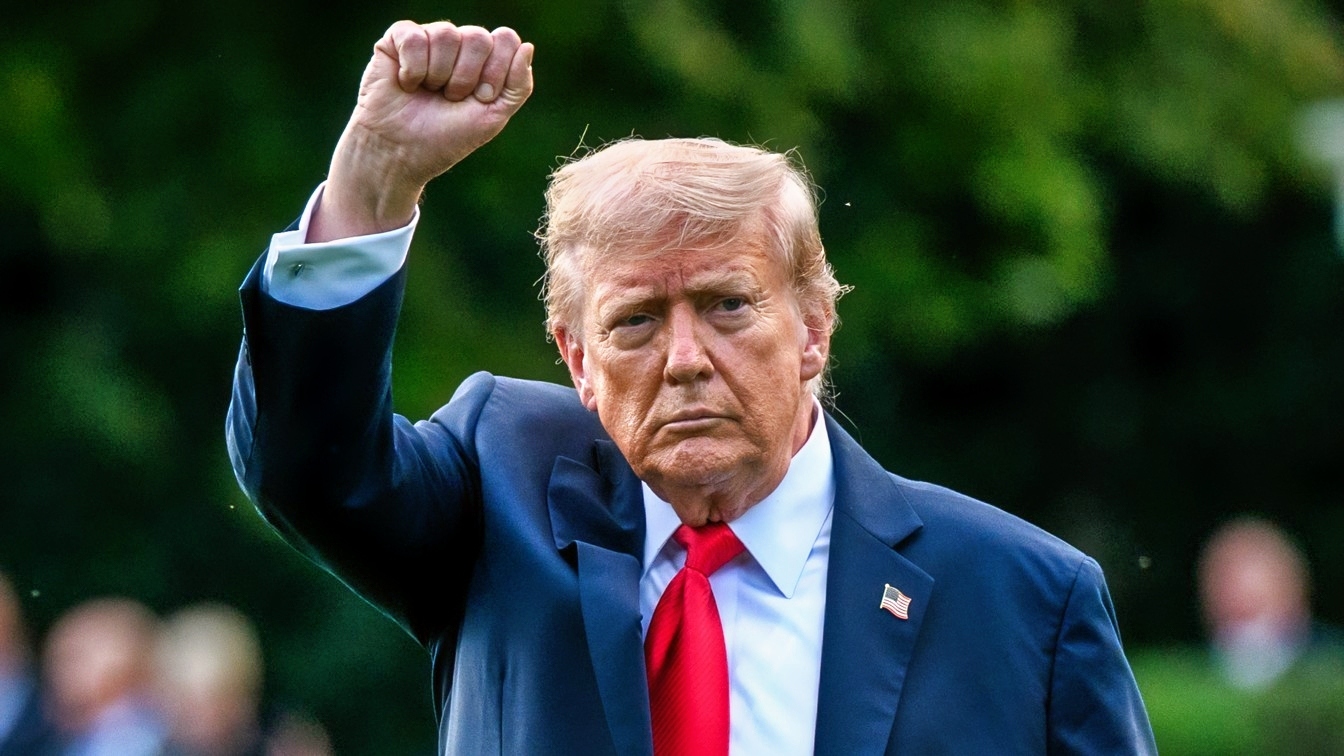
President Donald Trump, earlier this week, posted an AI-generated video to Truth Social, purporting to depict an attack on Kharg Island, Iran’s main oil export hub.
Per The Independent, the Pentagon was put in the unprecedented position of confirming that the video was fake and that the U.S. had not, in fact, attacked that facility, which had not been, in Trump’s words, “blown to smithereens!!!”
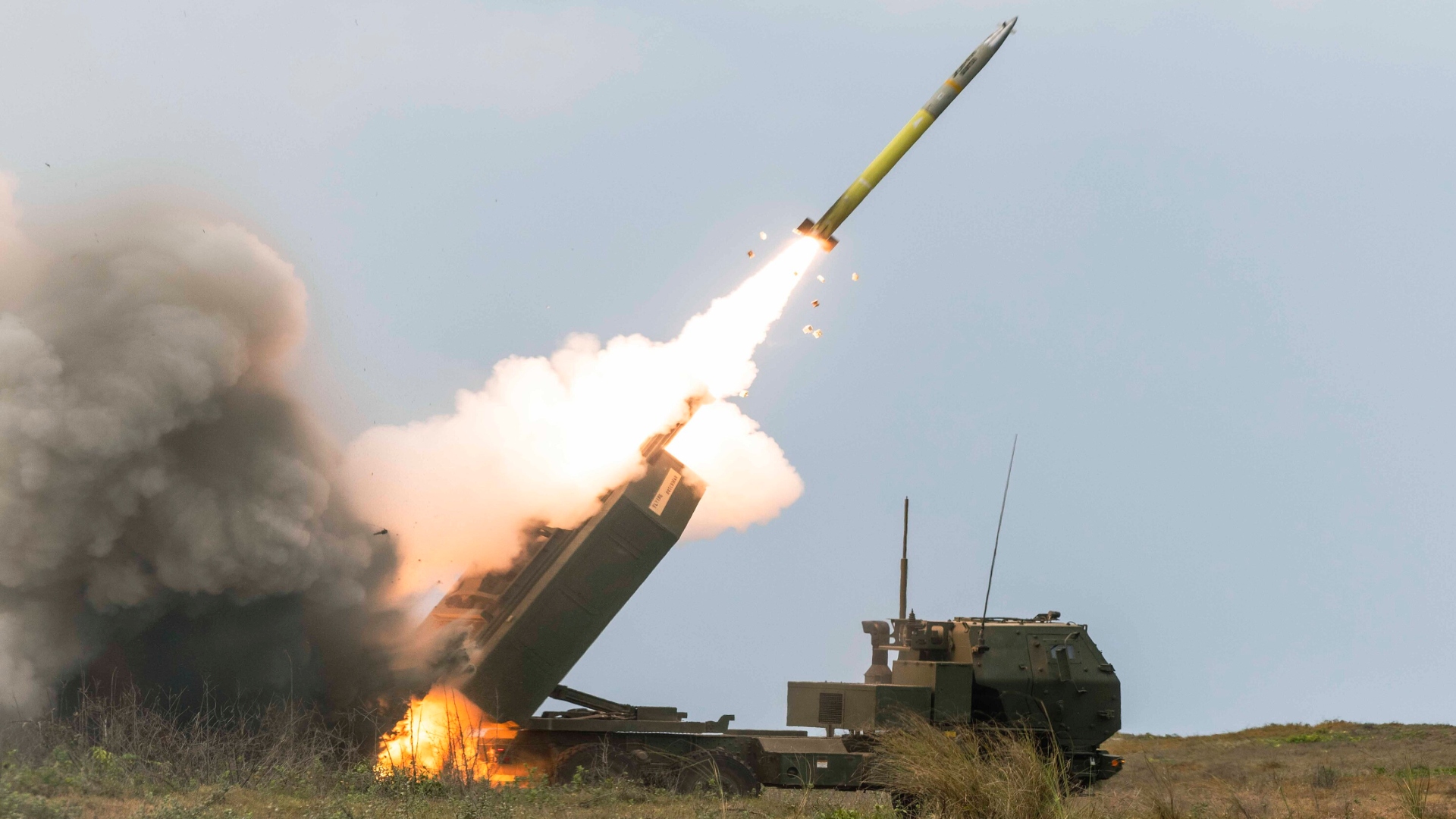
HIMARS Attack. Image Credit: Creative Commons.
The U.S. had struck Kharg Island once, back in March, although that attack was focused on military targets and not on the Persian Gulf island’s energy facilities.
However, in the months since, Trump has occasionally threatened to attack those facilities, or in some cases “take” the island, viewing it as an easy way to bring Iran to their knees.
“At some point in the not too distant future, we will be taking Kharg Island, and other oil infrastructure points, and assume total control of their Oil and Gas Markets,” Trump said in a June Truth Social post, although soon after that the threats were abandoned in favor of the peace talks that led to the Memorandum of Understanding ceasefire.
Why is Kharg Island important? An analysis by The Independent looked at that this week.
Iran’s Hub
Kharg Island is in the Persian Gulf, 16 miles off the Iranian coast.
The island has a population of about 8,000, and is the focal point of about 90 percent of Iran’s oil exports.
Iran, in order to deter another attack, has “fortified the island with additional surface-to-air missiles and laid traps including anti-personnel and anti-armor mines in the waters surrounding it,” the newspaper said.
Should the U.S. attack the oil facilities on Kharg Island, in a manner similar to Iran’s A.I. video, it would likely hurt Iran, but would also destabilize global oil markets.
There’s also the possibility of doing something else Trump has threatened: that the U.S. would “take” the island.
What An Invasion Would Look Like
“Should he [Trump] take Kharg, rather than destroy it, he can not only ensure the regime can never again pay the salaries of its bureaucrats and soldiers,” Michael Rubin wrote for the American Enterprise Institute earlier this year, called “The Ultimate Checkmate to Iran,” before the war began.
“The IRGC, of course, could target Kharg with ballistic missiles, but that would sign their death warrant.
Not only would Trump respond in kind, but such action would end Iranian oil exports for months to come, again leaving salaries unpaid.”
However, there are arguments against doing so.
A U.S. takeover of Kharg Island would prolong the war, while committing U.S. personnel to the region indefinitely.
It would be a familiar story from the Forever Wars of the earlier part of this century, according to the Independent analysis: The initial invasion and takeover of the island wouldn’t be the hardest part, but holding Kharg Island would require 800 to 1,000 troops, who would require support indefinitely.
“Extremely Risky”
Back in June, TWZ looked at what it would take to capture and hold Kharg Island.
Taking and holding Kharg Island, the report said, “would be an extremely risky operation, by all accounts.”
Army Gen. Joseph Votel, a former CENTCOM leader, told TWZ at the time that it was odd for Trump to announce his intentions in advance to attack Kharg Island.
“Military commanders always want to preserve the principle of surprise in any operation – it helps reduce risk and often times gives us the tactical edge,” the general said. He went on to call a potential seizure of Kharg Island “a significant undertaking.”
“Not only will it involve ground troops to actually control the terrain – but also tactical delivery means, air cover, a strike campaign to set the conditions and then all the resources to protect this force while they are on the Island,” the general told TWZ.
That report also cited CNN in stating that a senior Pentagon official and two other Administration officials had stated that plans for such an attack had been “drawn up for months but continuously shelved because the operation was considered too risky.”
Meanwhile, Neil Quilliam of Chatham House told The Independent that taking over the Island would “likely send the markets into a tailspin.”
About the Author: Stephen Silver
Stephen Silver is an award-winning journalist, essayist, and film critic, and contributor to the Philadelphia Inquirer, the Jewish Telegraphic Agency, Broad Street Review, and Splice Today. The co-founder of the Philadelphia Film Critics Circle, Stephen lives in suburban Philadelphia with his wife and two sons. For over a decade, Stephen has authored thousands of articles that focus on politics, national security, technology, and the economy. Follow him on X (formerly Twitter) at @StephenSilver, and subscribe to his Substack newsletter.


