

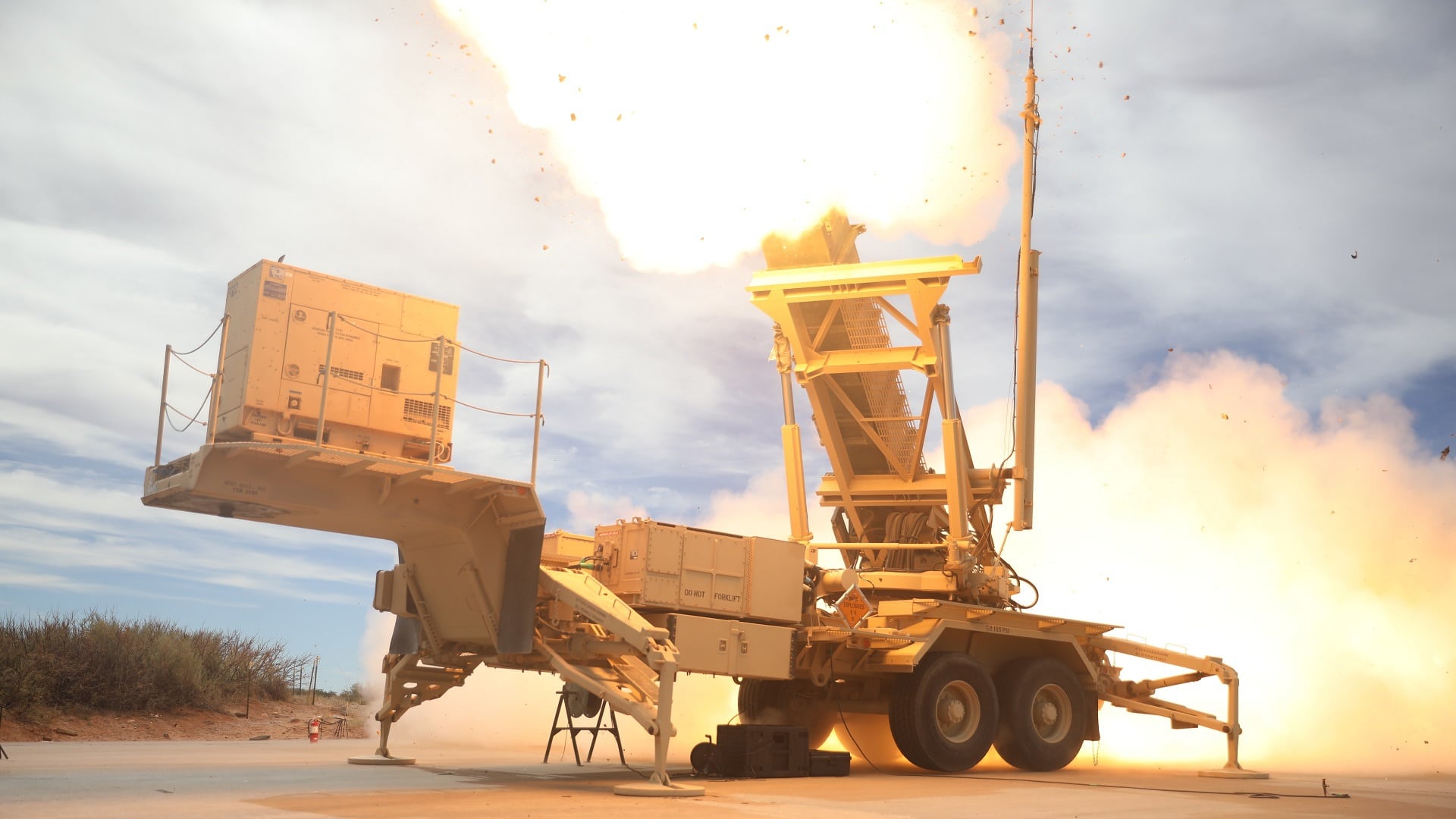
WARSAW, POLAND – The US Secretary of State Marco Rubio has confirmed that Washington and Kyiv are still negotiating a licensing agreement that could eventually allow Ukraine to establish its own production line for US PAC-3 interceptor missiles. These are the actual effectors fired by the Patriot missile defense system.
But, as The Economist recently wrote, Ukraine is “going Winchester”, which is a slang military term for running out of ammunition. President Volodymyr Zelensky has repeatedly pleaded with all nations that have the Patriot in their inventories to donate some of their missiles to Ukraine. Production of these missiles was maxed out long ago, and available inventories are the only source for Ukraine to acquire more of the missiles it needs to defend itself.
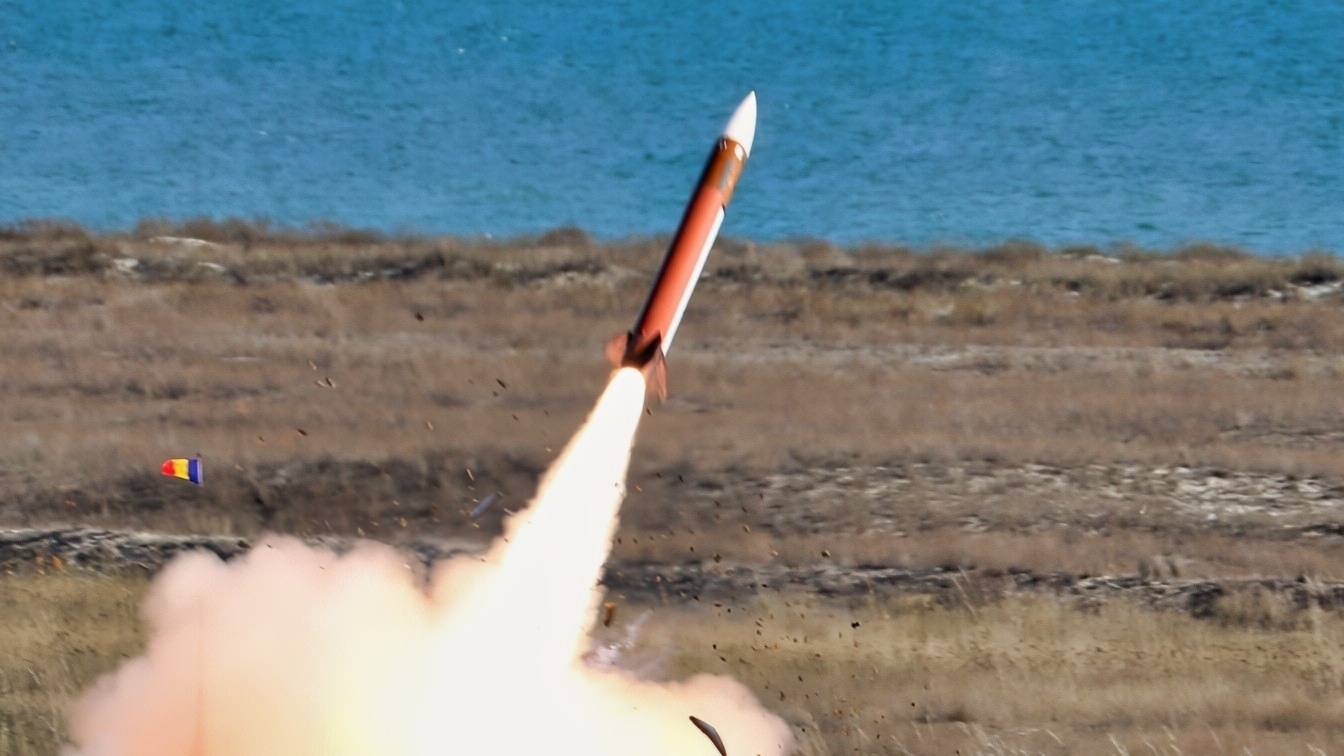
The Romanian Army’s 74th Patriot Regiment conducted the country’s first PATRIOT missile system live-fire exercise at the Capu Midia test firing range in Romania Nov. 14-15, 2023. Romania received the first of seven PATRIOT systems in 2020 through a foreign military sales case executed by the U.S. Army Security Assistance Command. (Courtesy photo)
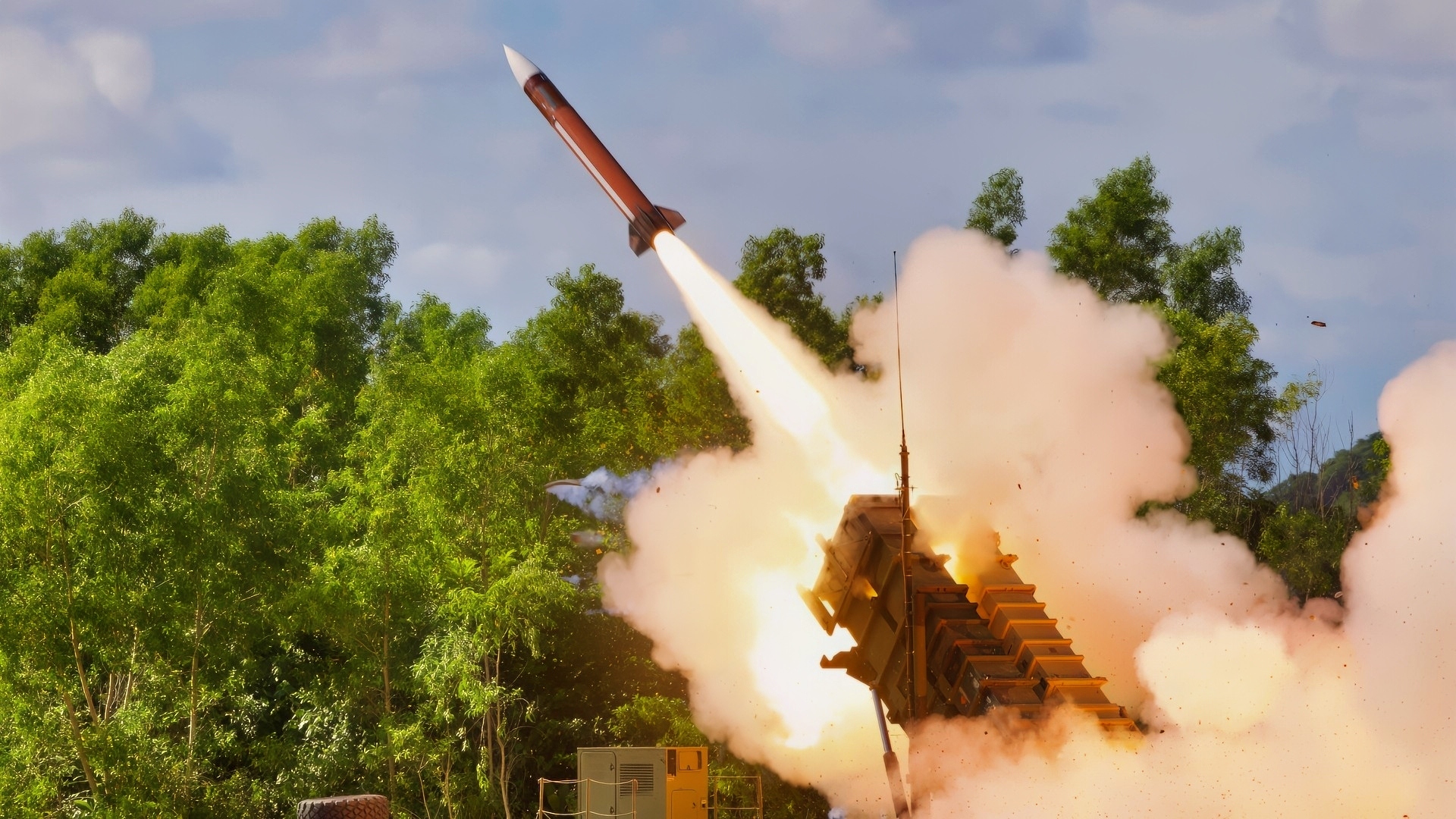
KOROR, Palau — A Patriot Advanced Capability 2 Interceptor missile is fired from an M903 Patriot Launching Station assigned to Battery D, 1st Battalion, 1st Air Defense Artillery Regiment during the patriot live fire portion of Exercise Tenacious Archer 25 on Aug. 21, 2025. Exercise Tenacious Archer 25 is a training event designed to build interoperability, capacity, and relationships that deter aggression and promote peace through strength. The exercise sharpens the brigade’s ability to operate across multiple domains, reinforcing U.S. Army Pacific’s commitment to regional security and stability.(U.S. Army photo by Capt. Frank Spatt)
The Patriot Missile Shortage
Meanwhile, Kyiv is being bombarded sometimes hourly with attacks of intensity and duration that have not been seen since the beginning of Russia’s February 2022 full-scale invasion. “Every anti-ballistic missile package saves the lives of our people. And every night that we lack them results in casualties,” Zelensky said.
Rubio’s announcement is therefore not just a surprise, but a hopeful one at that. Since US President Donald Trump had promised Zelensky at the July 2026 NATO summit in Ankara, Turkey, that Ukraine would be given the blueprints to build its own Patriot missiles, the issue seemed to have been partially reversed, if not to the point of being “dead on arrival.”
Too many concerns had been raised about the possibility that the technology of the Boeing-made Ka-band seeker for these missiles falling into the wrong hands should a production line be established in Ukraine.
No Immediate Solution
But Rubio revealed the conversations remained active and that a Ukraine license-production agreement was not a dead issue during an interview with Fox News’s Brian Kilmeade on Wednesday, 2 September.
“That’s being negotiated as we speak,” Rubio said when asked if he opposed giving Ukraine a production license to manufacture its own Patriot missiles. However, he added, “[T]hat is not an immediate solution. Ramping up production and constructing the production facilities for a weapon as sophisticated as these Patriot interceptor missiles could take several years.
This is virtually the same story as with other foreign-made systems for which Ukraine has been provided the blueprints and technical documentation. Any domestic Ukrainian production is years away – and most likely well after the fighting in the current conflict ends.
Understandably, Kyiv is desperate to obtain more of the Patriot missiles before the nation faces another winter of Russian missile and drone attacks. Moscow has made a tradition of striking Ukraine’s power plants and electricity grids during winter months so that the civilian population will be deprived of heat, light and water.
Meanwhile, Ukraine’s “winter resilience plans” that are put into motion when these power facilities are hit are only 47 percent complete, according to the most recent audit. This announcement was made two weeks ago in a parliamentary session by Prime Minister Sergei Koretskiy, but he did not state the date on which the audit was conducted.
Increasing Demand But No New Supplies
Rubio explained that the demand for interceptor missiles has become “the No. 1 defense need on the planet.” In addition to Ukraine, nations in the Middle East are seeking to acquire them, he explained.
He also repeated a phrase that has been heard throughout the conflict, namely that the United States has its own defense requirements. Washington cannot afford to see its own stockpiles fall below minimal levels required for preparedness to take on any new conflict – or an upsurge in hostilities with the ongoing situation in the Middle East.
US Navy Retired Rear Admiral Mark Montgomery, who is a senior director at the Washington, DC-based Foundation for Defense of Democracies, told Radio Free Europe/Radio Liberty that a Ukrainian Patriot production line would be of substantial benefit but would have no near-term impact on the war.
“The idea that the US is going to work with Ukraine – for Ukraine to eventually license and build Patriots – is admirable, but that’s years away,” Montgomery said. Licensing and establishing production could take at least 18 months, and potentially two or three years, he said.
“That will not produce Patriots for Ukraine anytime in 2026 or 2027, and maybe not even 2028,” he continued. “So while that’s interesting, that’s not going to change the status quo of the conflict with Russia.”
About the Author: Reuben F. Johnson
Reuben F. Johnson has thirty-six years of experience analyzing and reporting on foreign weapons systems, defense technologies, and international arms export policy. Johnson is the Director of Research at the Casimir Pulaski Foundation. He is also a survivor of the Russian invasion of Ukraine in February 2022. He worked for years in the American defense industry as a foreign technology analyst and later as a consultant for the U.S. Department of Defense, the Departments of the Navy and Air Force, and the governments of the United Kingdom and Australia. In 2022-2023, he won two awards in a row for his defense reporting. He holds a bachelor’s degree from DePauw University and a master’s degree from Miami University in Ohio, specializing in Soviet and Russian studies. He lives in Warsaw.


