

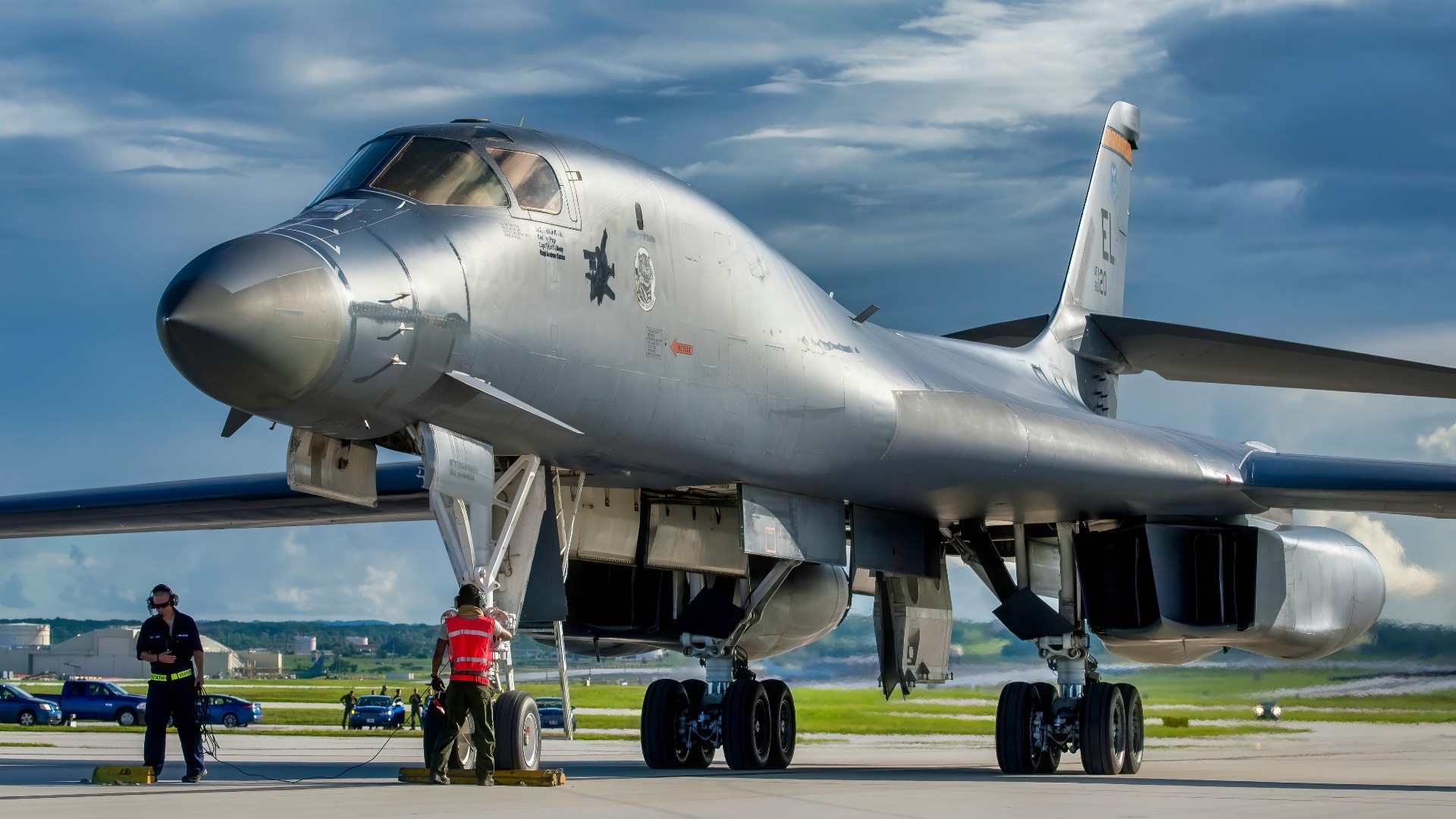
U.S. Iran War Drags On – But How Might It End? – The United States and Israel launched joint strikes on Iran on February 28. But now, over half a year on, no one seems to know when it might wrap up.
Vance: We Don’t Know When War Will End
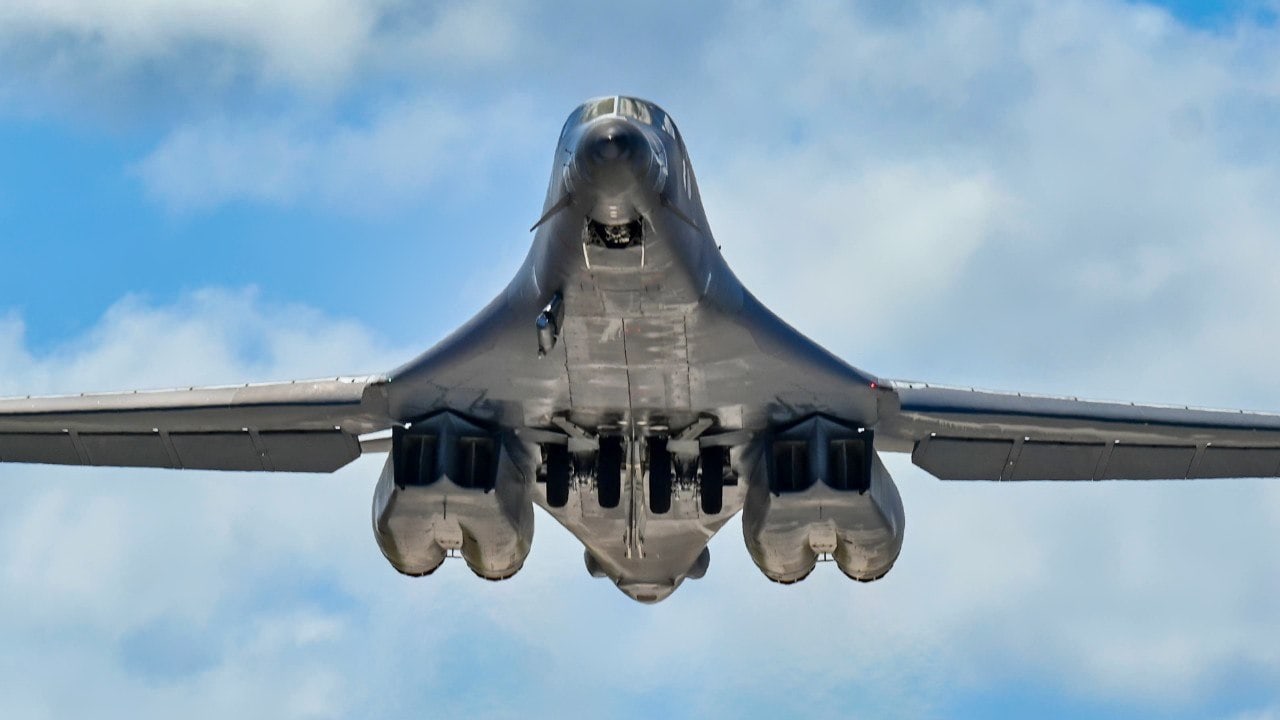
B-1B Lancer Bomber. Image Credit: Creative Commons.
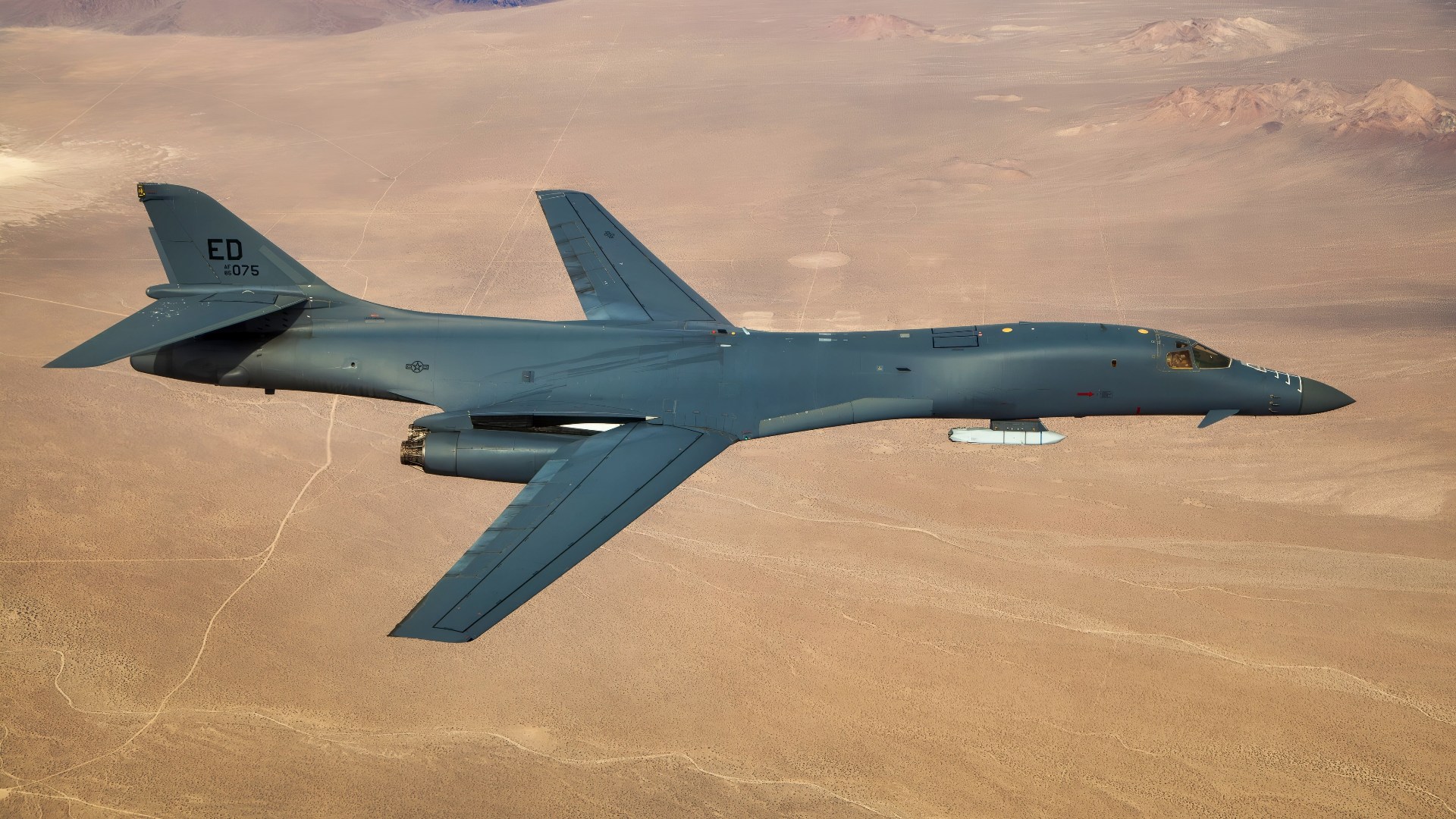
A B-1B Lancer with a Joint Air-to-Surface Standoff Missile (JASSM) flies in the skies above Edwards Air Force Base, California, Nov. 20. The flight was a demonstration of the B-1B’s external weapons carriage capabilities. (Air Force photo by Ethan Wagner)
Vice President JD Vance told journalists on Thursday that he “wouldn’t call it a war.” When quizzed over when exactly the war would end, he admitted that he “[didn’t] know the answer to that question. You would have to ask the Iranians.” He also said that talks would not be restarting while Iran continued targeting commercial vessels.
“The president’s been very clear: We’re not talking to them, and we’re not going to talk to them unless they stop shooting at commercial shipping,” he said, according to CBS News.
The Iranian regime does not seem open to accepting any of Washington’s terms.
Vance’s comments came after the U.S. renewed strikes on Iran over the weekend, the first such major U.S. strikes since the end of July.
The fresh exchange of fire comes after the June memorandum of understanding between Washington and Tehran failed to result in a lasting peace deal.
Jason Campbell, a senior fellow at the Middle East Institute, told the BBC that the Trump administration now appears willing to tolerate “some form of stasis.”
“I think they are satisfied with maintaining the blockade and with allowing some periodic targeting against Iran’s capability to upset the shipping lane in the strait,” he said.
Tehran’s Financial Woes
The rial, Iran’s national currency, reached 2.2 million to the U.S. dollar over the past week amid the war. Long lines continue to form outside gas stations in Tehran and Mashhad, even as officials consider changes to Iran’s heavily subsidized gasoline prices. A sudden 50% price increase in November 2019 helped trigger huge nationwide protests, which the regime violently curtailed.
Ahmad Zeidabadi, a reformist Iranian journalist who has previously been jailed by the regime, has said that Tehran’s “real economy cannot survive endless isolation.”
He explained that the country’s actual strength lay in “protecting citizens’ livelihoods through practical diplomacy, not in clinging to dogmatic slogans.”
Meanwhile, hard-line supporter of the regime, Hossein Shariatmadari, lashed out at any Iranian officials questioning whether it is worth the economic risk of continuing to enrich uranium.
He claimed that questioning this program during the war was tantamount to “ideological surrender,” which would spur Washington on.
Will Sanctions Work?
Aniseh Bassiri Tabrizi, an associate fellow at Chatham House, told the BBC that economic pain alone was unlikely to change Tehran’s position in the near term.
She claimed she did not “feel like there is the sense from the Iranian side that the economic squeeze is going to alter the Iranian calculation any time soon.”
“That does not mean Iran is not looking for an off-ramp, but I think what we are seeing is that it is waiting for the US to go back to the MoU, or to at least offer some sort of concession.
“Tehran does not want to cave in to US pressure or alter its own approach in response to sanctions or additional attacks,” she claimed.
Just four commodity vessels were recorded as having transited the strait on Thursday, Reuters said. Prior to the conflict, some 125 large commercial vessels crossed it daily.
Separately, Lloyd’s List Intelligence said that it had recorded 102 transits last week.
Energy Prices Still Climbing
Brent crude is now above $97 a barrel, compared with around $65 before the war broke out in February. American consumers are also suffering, with average U.S. gasoline prices now at $4.14 per gallon and diesel at $5.82 per gallon.
Republicans Doubt War Will End Before Midterms
A GOP staffer told the online magazine Politico that the party had “run out of time” to end the war before the midterm elections in November.
A top White House official also told the outlet that candidates now assume the conflict will still be ongoing during the election.
President Donald Trump continues to stress that Tehran cannot cope with this level of economic and military pressure forever.
“As soon as it’s over — which I don’t think will be very much longer, I don’t know how much more they can take,” Trump said Wednesday.
Former British ambassador to Iran Nicholas Hopton is less convinced, telling the BBC that the recent “spike in military action is not going to produce Iran’s capitulation,” and that easing sanctions would be his preferred route.
But whether with sanctions or without, Tehran is hardly known for its willingness to compromise with the West.
About the Author: Georgia Gilholy
Georgia Gilholy is a journalist based in the United Kingdom who has been published in Newsweek, The Times of Israel, and the Spectator. Gilholy writes about international politics, culture, and education.


