

The Iran War Could Cost the West for Years – Iran is preparing to deal with the economic consequences of the war, not by ending the conflict and accepting America’s terms, but by implementing government measures designed to mitigate the impact of what could be another six months of war.
On Sunday, September 6, Iran’s Economy Ministry said it had established an “Economic War Headquarters” to coordinate the government’s response to wartime disruption, with Deputy Economy Minister Morteza Zamanian saying the body would address problems affecting businesses, trade, financing and other parts of the economy. Economy Minister Ali Madanizadeh also promised to implement a series of domestic reforms as Tehran attempts to navigate worsening U.S. sanctions and ongoing restrictions on its oil exports.
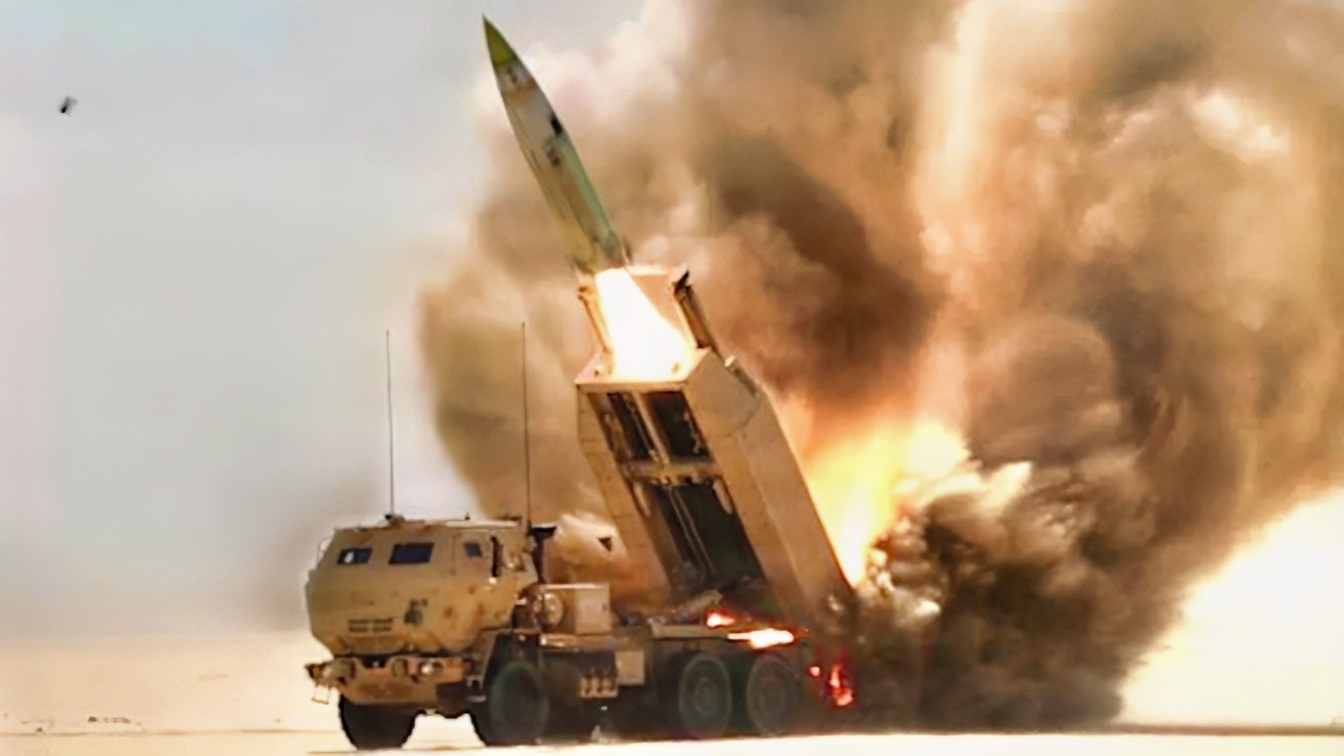
ATACMS Like Used in Ukraine Creative Commons
The World Will Hurt
The announcement comes as the U.S. ramps up military strikes against Iran, too, following roughly a month of relative calm, striking three Iranian oil tankers on Saturday. The strikes came after Iranian ballistic missiles targeted two U.S. Navy warships. Iran has also warned that further attacks would now be met with a faster and heavier response than before.
After six months of conflict, the war shows no sign of slowing down, and the economic damage is very visible inside Iran. But those costs won’t end as soon as the bombing stops, and they’re even being felt outside of Iran.
Western economies are struggling under the weight of rising oil prices and inflation; borrowing costs are rising, and the United States will also be forced to spend vast sums to replace weapons that took years to stockpile.
There are major consequences the West will feel well into 2027 and beyond — and those consequences will only worsen the longer the war continues.
Energy and Shipping Costs
The most immediate problem for the world is energy. Six months of disruption in the Strait of Hormuz have forced producers and shipping companies to find alternative routes, to use shuttle services, and look for increasingly creative ways to get oil out of the Persian Gulf and onto the international market. All of that has been expensive, and those costs are forcing prices up for consumers.
Asian spot liquefied natural gas (LNG) prices reached $23.20 per million British thermal units in early September, which is more than twice their prewar level. Container shipping prices from Asia to the United States are rising, too.
Maritime intelligence firm Sea-Intelligence Maritime Analysis also estimated that the war has added $5.5 billion to container carriers’ fuel bills, too.
Peter Sand, chief analyst at freight intelligence firm Xeneta, also told Reuters that shipping offers one of the clearest indications of the scale of the problem.
“If you want to know how seriously to take the threat of an energy crisis, look at container shipping rather than oil markets because the risk is priced into the spiraling freight rates far more clearly,” he said.
Those costs are likely to outlast the war, too.
Inflation Means Higher Borrowing Costs
Higher energy and transportation costs are feeding directly into inflation in Western economies.
The International Monetary Fund has described the increase in commodity prices caused by the Iran war as a “textbook negative supply shock,” whereby companies are forced to pay more for energy and transportation, and those costs are then passed on to consumers. Rising prices then mean economic growth weakens as household purchasing power declines.
That means higher interest rates.
Central banks typically raise rates when inflation is too high, making mortgages, credit cards, and business loans more expensive.
The European Central Bank has already said that the energy shock caused by Iran is a major factor behind renewed inflation, and economists surveyed by Reuters in early September said that they expect eurozone inflation to remain above the ECB’s 2% target until late 2027, keeping borrowing costs higher for longer.
America Has to Rebuild Its Arsenal
Washington also faces the huge cost of replacing its missile arsenal and recovering from the direct costs of the war. The Center for Strategic and International Studies estimated in June that additional Pentagon costs from the conflict had already reached roughly $35 billion to $43 billion, including more than $26 billion in munitions.
Money alone won’t fix every problem, either. The United States expended more than 850 Tomahawk cruise missiles during the first four weeks of fighting alone, while stocks of Patriot and THAAD interceptors have also fallen significantly, too.

A Terminal High Altitude Area Defense (THAAD) interceptor is launched from the Pacific Spaceport Complex Alaska in Kodiak, Alaska, during Flight Experiment THAAD (FET)-01 on July 30, 2017 (EDT). During the test, the THAAD weapon system successfully intercepted an air-launched, medium-range ballistic missile (MRBM) target.
‘Estimates put the country’s remaining Patriot stockpiles in the hundreds, not thousands. Mark Cancian, a senior advisor at CSIS, warned that the shortage is so serious because there are “no good alternatives,” thereby leaving American forces vulnerable to ballistic missiles once the stocks are too low.
At existing production rates, CSIS estimates that restoring inventories to prewar levels could take years. That’s not only expensive, but it makes the United States vulnerable for years.
Even if Trump were to end the war now, the costs will be felt for years to come.
About the Author: Jack Buckby
Jack Buckby is a British researcher and analyst specializing in defense and national security, based in New York. His work focuses on military capability, procurement, and strategic competition, producing and editing analysis for policy and defense audiences. He brings extensive editorial experience, with a career output spanning over 1,000 articles at 19FortyFive and National Security Journal, and has previously authored books and papers on extremism and deradicalization.


